


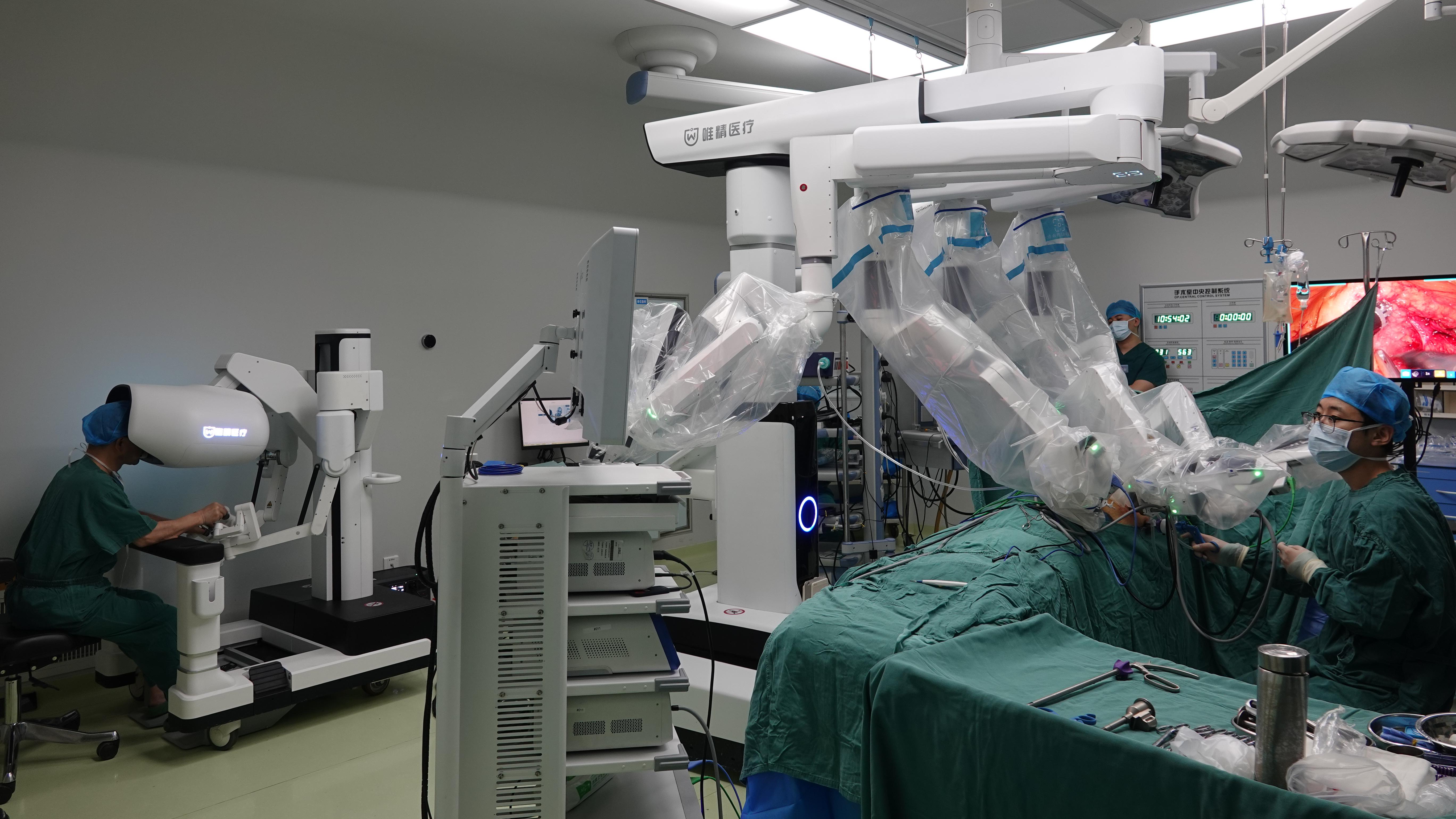
A surgery on a Lao patient is underway at Xishuangbanna Dai Autonomous Prefecture People's Hospital, Yunnan Province, southwest China, January 31, 2026. (Photo: Courtesy of Xishuangbanna Dai Autonomous Prefecture People's Hospital)
On January 31, 2026, at Xishuangbanna Dai Autonomous Prefecture People's Hospital in Yunnan, southwest China, Ms Khanlar from Phongsaly Province, Laos, successfully underwent a robot-assisted right nephrectomy, marking the first time in Yunnan that a domestically produced surgical robot was used to operate on a foreign patient.
Led by Professor Ding Mingxia from the First People's Hospital of Yunnan Province, the procedure lasted only one hour, with blood loss under 20 milliliters.
"The Chinese doctors are highly skilled, and robotic surgery has freed me from the torment of illness," said the patient after the operation.
This case reflects just one facet of cross-border medical collaboration in Yunnan. Advanced medical technologies in the border region not only serve local residents but also extend quality care to neighboring countries, allowing medical mutual assistance to take root through daily practice.
Just months earlier, on October 13, 2025, a three-day-old boy from Myanmar fell critically ill. The medical green channel at Menglong border checkpoint in Xishuangbanna cleared all entry procedures within three minutes, enabling a swift cross-border lifesaving effort, for which Yunnan's hospital was fully prepared.
Ten days later, over 200 public health professionals from six countries gathered in Kunming, capital of Yunnan, for the 15th International Conference on Public Health among Greater Mekong Sub-regional Countries.
"Infectious diseases do not carry passports, and our cooperation should not have borders," said Xia Xueshan, president of Kunming Medical University, at the conference.
From cross-border data sharing and telemedicine to joint emergency response and routine collaboration, a regional health corridor is emerging along Yunnan's borders.

A scene of the 15th International Conference on Public Health among Greater Mekong Sub-regional Countries, Kunming, Yunnan Province, October 24, 2025. (Photo: Courtesy of Health Commission of Yunnan Province)
Classrooms without borders
International medical collaboration often faces challenges due to differences in education systems and professional standards. Yunnan's approach begins where learning starts: in the classroom.
In 2021, Kunming Medical University partnered with Thailand's Mahidol University to launch Yunnan's first Sino-foreign cooperative medical education program on nursing. Together, the two universities developed an integrated curriculum that maintains international nursing standards while incorporating region-specific modules such as "Community Prevention of Lancang-Mekong Endemic Diseases" and "Cross-Border Ethnic Health Cultures." All students complete clinical internships at leading Chinese hospitals.
The inaugural cohort achieved a 100 percent dual-degree attainment rate, with more than 80 percent of graduates advancing to further studies.
Building on this success, the model expanded to Europe in 2025 through a partnership between Kunming Medical University and France's University of Lorraine to establish a Sino-French medical college.
"We are not here to deliver a ready-made 'China model,'" explained Professor Li Lihua, the program lead. "Rather, we are co-creating educational solutions that respond to the real health needs of this region."
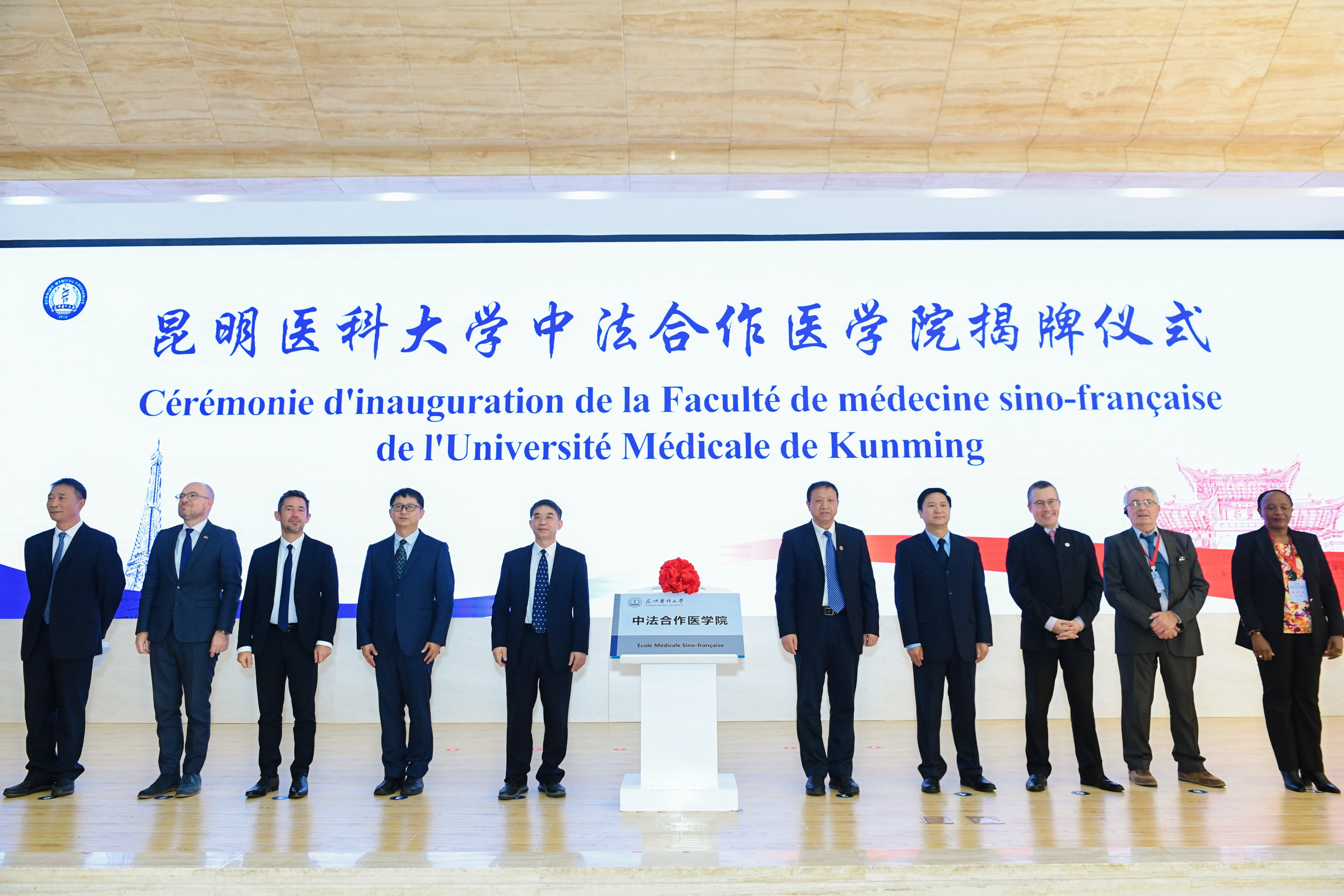
The inauguration ceremony for the Sino-French medical college, a joint initiative established by Kunming Medical University in collaboration with the University of Lorraine in Kunming, Yunnan, October 20, 2025. (Photo: Courtesy of Kunming Medical University)
Bridges of care
The true impact of medical education unfolds when graduates return home to heal. Kunming Medical University' MBBS program (Bachelor of Medicine and Bachelor of Surgery) exemplifies this, having trained more than 3,000 medical professionals from over 60 countries, while also supplying Yunnan with over 200,000 healthcare professionals across nine decades.
The curriculum is deliberately designed for real-world impact. Courses in epidemiology and infectious disease integrate case studies on cross-border prevention and control, complemented by hands-on training at the Yunnan Provincial Infectious Disease Hospital.
Dr Wattanasirirux Rinlapus, a Thai graduate specializing in infectious diseases, applies her systematic Yunnan-based studies of melioidosis and scrub typhus directly in her home practice. Another alumnus, Hasan Shahriar from Bangladesh, now provides health management for Chinese enterprises in his country and was honored with the 2024 "China-Bangladesh Ambassador Friendship Award."
Through such paths, these mobile healers have become dynamic human bridges, actively strengthening the ties of health and cooperation between China and its neighbors.

A view of the city of Kunming, capital of Yunnan Province. (Photo: VCG)
Profound shift
True sustainability arises from empowering local capabilities to grow independently.
Since 1983, Yunnan has been regularly sending medical teams to Uganda. Over more than four decades, 86 medical professionals have not only provided direct care but have concentrated on building a self-reliant local medical force, through teaching rounds, surgical demonstrations and laboratory training.
This approach runs even deeper in neighboring countries linked by rivers and mountains. Since its launch in 2016, the "Lancang-Mekong Bright Journey" project has organized ophthalmologists from Yunnan to travel repeatedly to Myanmar and Laos, performing free cataract surgeries for over 1,900 impoverished patients.
Yet each mission is far from a simple, one-off "fly-in" surgery. Teams work side-by-side with local hospitals, offering hands-on guidance throughout the entire process, from patient screening to postoperative care, while also donating essential equipment.
"In the past, our main goal was to complete difficult surgeries and demonstrate skill," said Professor Zhong Hua, who has participated in five Bright Journey missions. "Now, our greatest concern is making sure that after we leave, local medical staff can independently perform surgeries to the same standard."
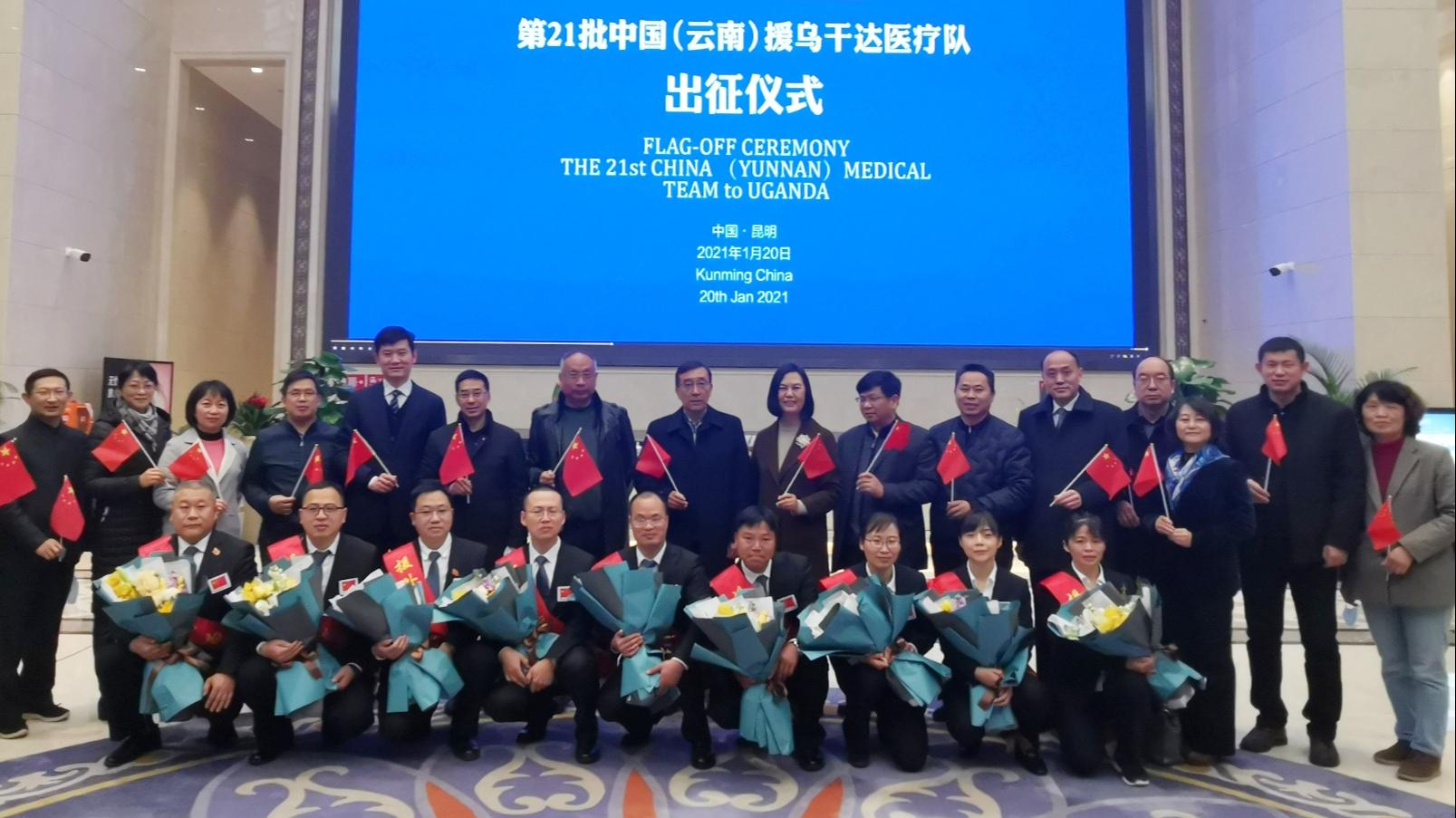
The 21st Chinese Medical Team to Uganda set off from Kunming, Yunnan Province, embarking on a year-long medical mission in Uganda, January 20, 2021. (Photo: Courtesy of Health Commission of Yunnan Province)
Institutionalized cooperation
Since its establishment in 2019, the "South and Southeast Asia Medical Education and Service Alliance" has grown to include 58 member institutions across 13 countries. Through regular presidential forums, shared online course resources, and collaborative research, it continues to elevate the overall quality of medical education in the region.
Looking ahead, cooperation is becoming more institutionalized and innovative. Efforts are systematically expanding from traditional fields like clinical medicine and nursing to emerging interdisciplinary areas such as tropical medicine and digital public health. Preparations are underway for the "Cross-Border Infectious Disease Joint Laboratory," which aims to standardize and share disease surveillance data regionally, creating a platform for early epidemic warning and coordinated response.
From the academic halls along the Lancang River to upstream village clinics of the Mekong, each cross-border initiative helps weave a stronger, more resilient health safety net for the region. This journey began by responding to people's most pressing health needs and continues to be built on a foundation of equality, respect and mutual benefit.