


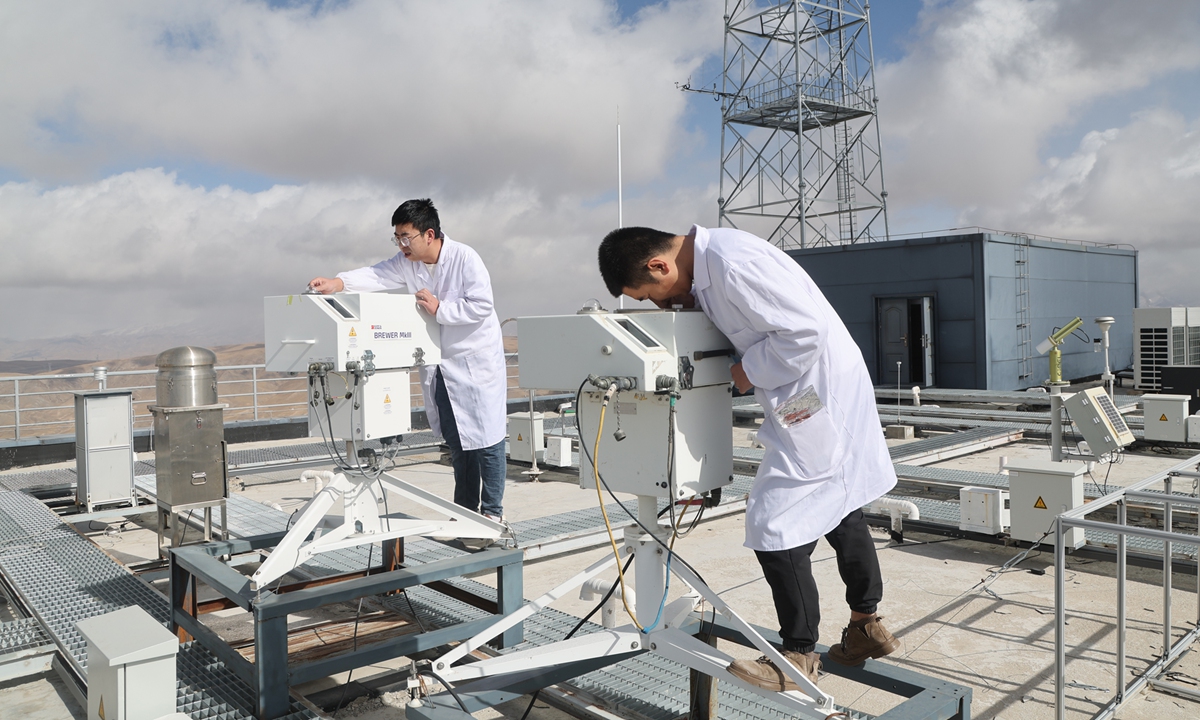
Staff members inspect measuring equipment at the Waliguan Baseline Observatory in Northwest China's Qinghai Province on February 5, 2026. (Photo: VCG)
In an era marked by unprecedented global transformations, the world stands at a critical crossroads, grappling with deepening deficits in peace, development, security, and governance. As humanity faces unparalleled challenges during this tumultuous period, Xi Jinping, general secretary of the Communist Party of China (CPC) Central Committee and Chinese president, has put forth a solemn call to action through the Global Development Initiative (GDI), the Global Security Initiative (GSI), the Global Civilization Initiative (GCI), and the Global Governance Initiative (GGI). The four pivotal initiatives address the pressing issues of our time, offering viable pathways and robust support for building a community with a shared future for humanity.
Rooted in the rich historical experiences of the CPC's century-long struggle and infused with the wisdom of China's traditional culture, these initiatives are expected to unite the world in the pursuit of common progress and stability. To offer a deeper understanding of the four global initiatives, and elaborate on their significance on a global scale, the Global Times has launched a series of articles.
In this installment, Global Times reporters Xie Wenting and Ding Yazhi (GT) spoke with former UN under-secretary-general Erik Solheim (Solheim) to hear his views on the significance of the GGI and its value for today's world.
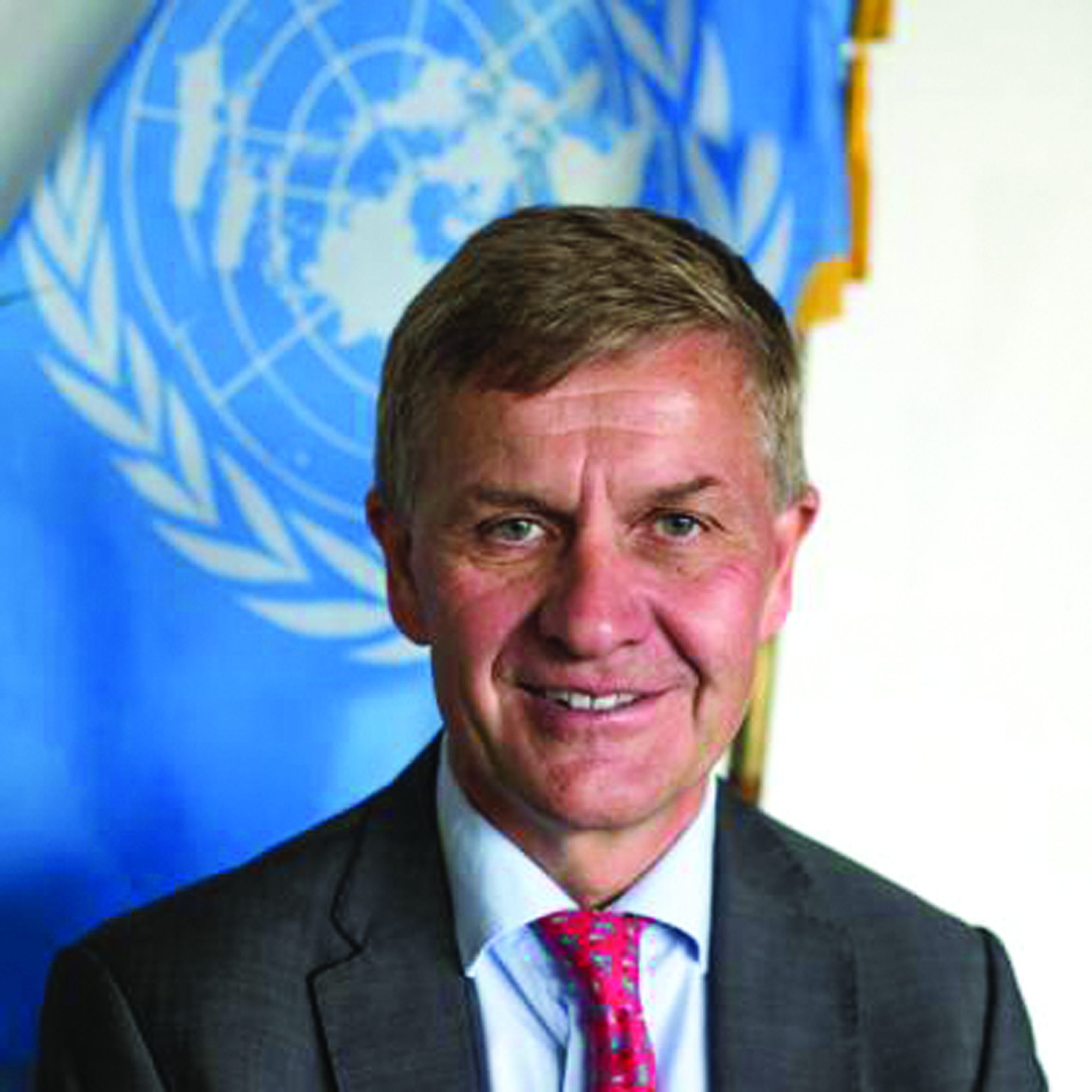
Erik Solheim (Photo: Screenshot from UNEP website)
GT: The Global Governance Initiative (GGI) was first proposed at the "Shanghai Cooperation Organisation (SCO) Plus" Meeting in September 2025, with its core principles centered on adhering to sovereign equality, abiding by international rule of law, practicing multilateralism, advocating the people-centered approach and focusing on taking real actions. How do you evaluate the unique value or practical significance of the GGI for the current global governance system?
Solheim: As a key participant in global dialogue, the core value of the GGI proposed by China lies in the establishment of a series of principles that can be expected to be widely recognized by countries around the world. These principles are not only in general terms agreed by major Global South countries, but also supported by many European countries. They will become an important foundation for the future development of the world and promote the world to move in a more equal and peaceful direction. They will help build a global system that respects the sovereignty of all countries, does not interfere in the internal affairs of other countries and is more people-oriented.
The fundamental appeal of this initiative lies in the fact that the principles treat all countries equally. Whether it is a major country like China or the US, or a small Pacific Island Country or a small African country with limited voice in global affairs, all should receive equal respect. If we deviate from the principle of sovereign equality, the world will fall into the law of the jungle where "might makes right." Only by abiding by the principle of respecting national sovereignty and treating all countries, big or small, equally, can a more peaceful world be built.
GT: What specific challenges do you think the principle of "adhering to sovereign equality" currently faces? What specific measures should multilateral institutions like the United Nations take to ensure that the voices and interests of every nation can be heard and respected?
Solheim: Throughout history, the gap in strength between countries has always existed, but this does not mean that powerful countries can act recklessly in the modern world. All kinds of philosophical thoughts in the world essentially revolve around respect for all human beings, and such concepts should also be integrated into the current era: Since every individual deserves respect, every country should also be treated with respect, regardless of its territory size or strength.
At present, the specific challenges faced by the principle of "adhering to sovereign equality" mainly fall into two categories. First, the lag of the old international system. The old international institutions represented by the UN were established under the international structure 80 years ago. The staffing and power distribution of the institutions were biased toward the powerful countries at that time and don't reflect the 21st century. The population of Global South countries accounts for 85 percent of the total human population. Asia is 60 percent of the global population and the UN does not have any headquarters in Asia. Therefore, we need to carry out profound reforms. We also need new institutions who can add power to the global system in the multipolar age.
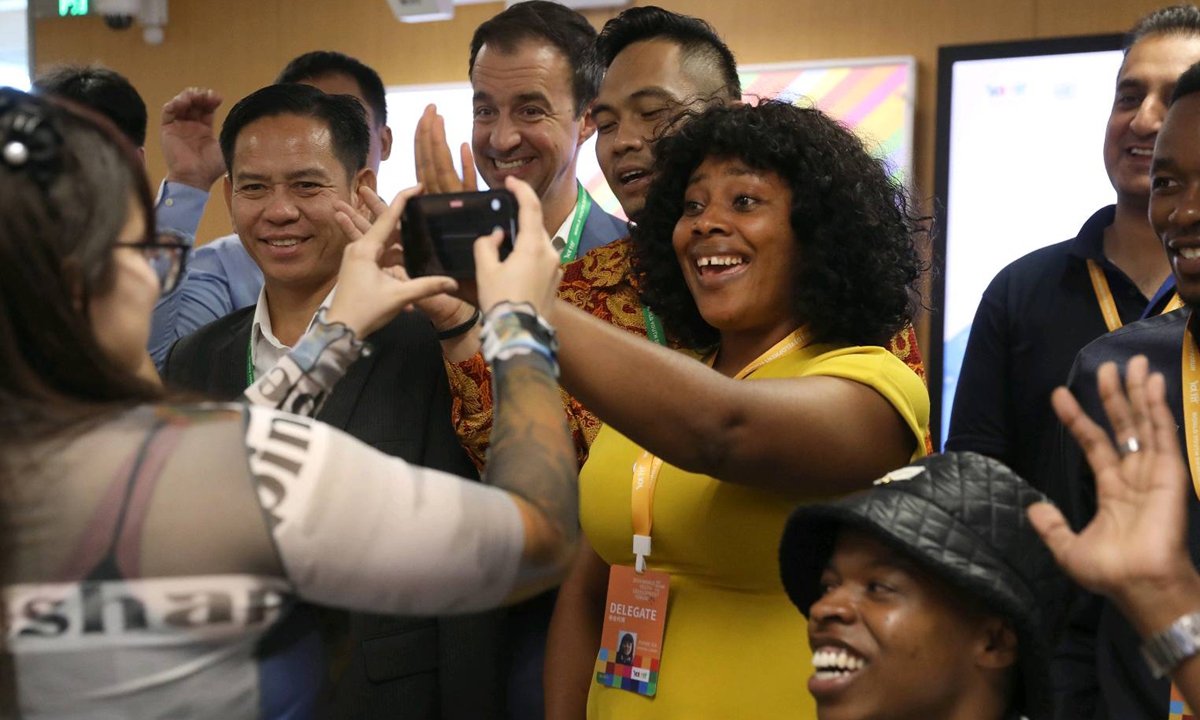
Youth from various countries pose for a group photo after a roundtable discussion on global governance reform at the Renmin University of China in Beijing, on August 13, 2024. (Photo: VCG)
GT: China always emphasizes practical cooperation. In your opinion, how does this focus on practical cooperation bring a more realistic and down-to-earth meaning to the idea of "collective responsibility" and common development?
Solheim: Previously, people regarded sovereign equality as a "shield," because in the past global order, the sovereignty of small and weak countries was more often being impacted and interfered with. After the colonial age where a few European powers interfered in every corner of the world, sovereignty and UN membership became a shield for smaller countries in the 20th century.
We need to continue to value the principle of sovereignty for every country, while also highlighting collective responsibility for common global goods such as fighting climate change or pandemics, contributing to global trade and economic growth. China, with its zero-tariff policy for Africa, treats African countries as equal cooperation partners. With practical actions, China helps these countries obtain development opportunities, which is a proactive fulfillment of the value of sovereign equality: Sovereign equality should not only stay at the level of non-interference, but also enable every country to have equal development rights.
GT: You have long championed the sustainable development agenda. In addressing transnational issues such as climate, environment and development, what do you see as the biggest shortcomings in the current international system? How can these issues be addressed?
Solheim: The biggest challenge facing the sustainable development agenda is not global, but at the national level. We must make sure that the green transition is fair and that we build a broad green coalition behind renewable energies, green transport and more.
Many countries struggle with this. In the US, there is a deep polarization also on the green agenda. Young people in cities mostly support renewable energies and electric cars, while working class people and particularly people in rural areas are critical and sometimes oppose green reforms. This is a cultural divide which must be overcome by better stories, a more inclusive language, less finger pointing and more broad-based policies from environmentalists. Similar, if not as deep, divides exist in Europe. For China, it's essential to make sure green policies are not only for the young and trendy in Guangdong or Zhejiang provinces, but also for the old farmer in Henan Province or coal worker in Shanxi Province. China has been much more successful in bridging these divides than the West, but it is an area in which we should exchange experiences and learn from each other.
Globally, all major nations want to move fast in a green direction. This applies to China, India, Europe and all the major powers of the Global South. The US is now the main outlier. The current US government's idea of going back to the fossil fuel era will mainly harm US workers, not the global environment. When the US refuses to cooperate, the rest of the world should move ahead and invite the US to join when its ready in the future.
GT: What core differences do you perceive between the "international rule of law" emphasized by China and the "rules-based international order" often referenced by Western countries?
Solheim: The old "rules-based international order" often cited by the West was essentially a set of rules with double standards, designed to serve the interests of Western countries, particularly the US. In the last few decades, the US involved itself in many regime change operations in other countries - through military invasions, support for coups, financial support to political parties and more. The US launched a number of wars - in Vietnam, Iraq, Libya and many other places - in complete disregard for the principles of a rules-based order. The global economic order was also very favorable for developed nations.
In contrast, the "international rule of law" currently favored by the Global South is founded on unified and equitable rules. It requires all countries, whether large or small, Western or from the Global South, to adhere to the same set of rules. Its core principles include respecting the sovereignty of all nations, non-interference in internal affairs and ensuring that relevant multilateral systems serve everyone, rather than merely focusing on procedures and formalities. For example, the GGI explicitly calls for providing an equal development environment for all countries, ensuring that no double standards arise based on a nation's power or geographic location.
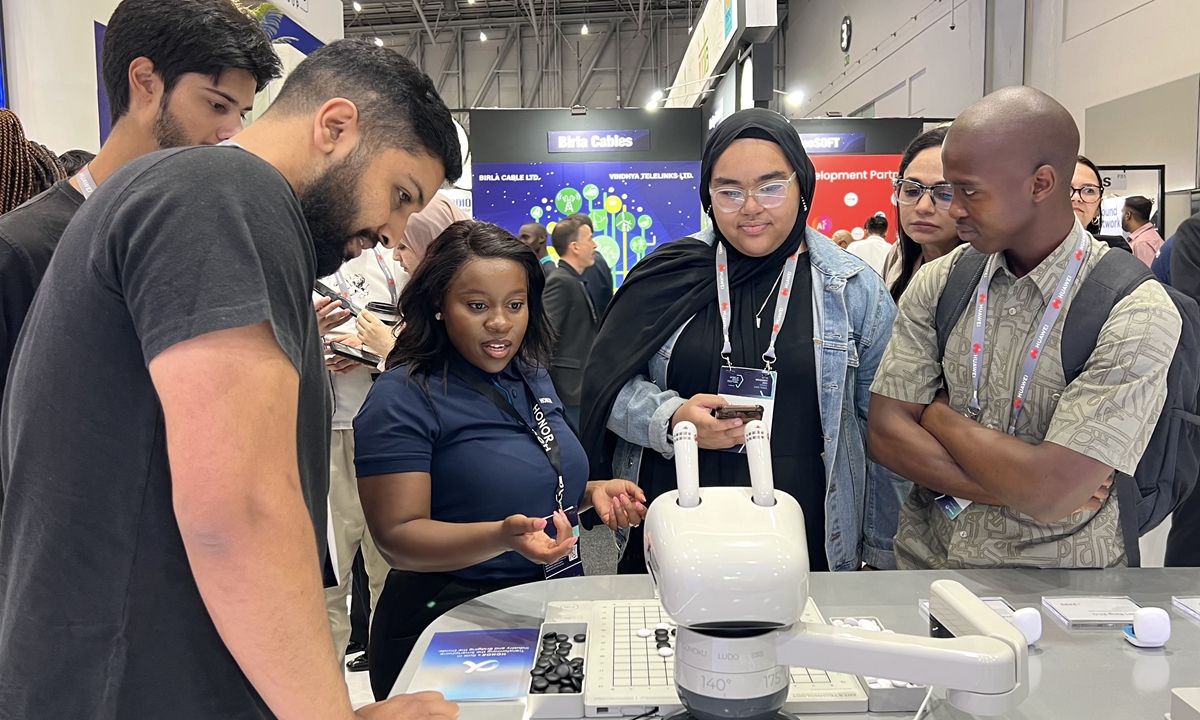
Guests visit the Chinese enterprise exhibition area at the 2025 Africa Tech Festival in Cape Town, South Africa, on November 11, 2025. (Photo: VCG)
GT: Currently, international rules are mostly shaped by developed countries. In your view, how can future international rules be reformed to more fairly reflect the interests and needs of developing countries? What role do you think China can play in this process?
Solheim: For the future international rules to reflect the interests of developing countries more fairly, it is necessary to conform to the trend of the global power center shift. New rules must reflect the rise of the Global South:
First of all, developing countries must take more discourse power in rule-making. With the improvement of the economic and political influence of Global South countries, such as the continuous growth of China's super effective manufacturing ecosystem and the expansion of the economic volume of countries such as India, Indonesia and many more, the Global South will be key to the negotiation and formulation of international rules. At the same time, each developing country also needs to adhere to its own values and interests, and transmit its development demands to the rule-making process through multilateral dialogue.
As an influential developing country, China can help other developing countries participate in rule-making. China has an economic scale comparable to that of the US, and its production efficiency and green development capabilities are leading the world. In partnership with other Global South countries, China can shape the international system so that it serves the interests of the 85 percent of the global population living in developing countries.