


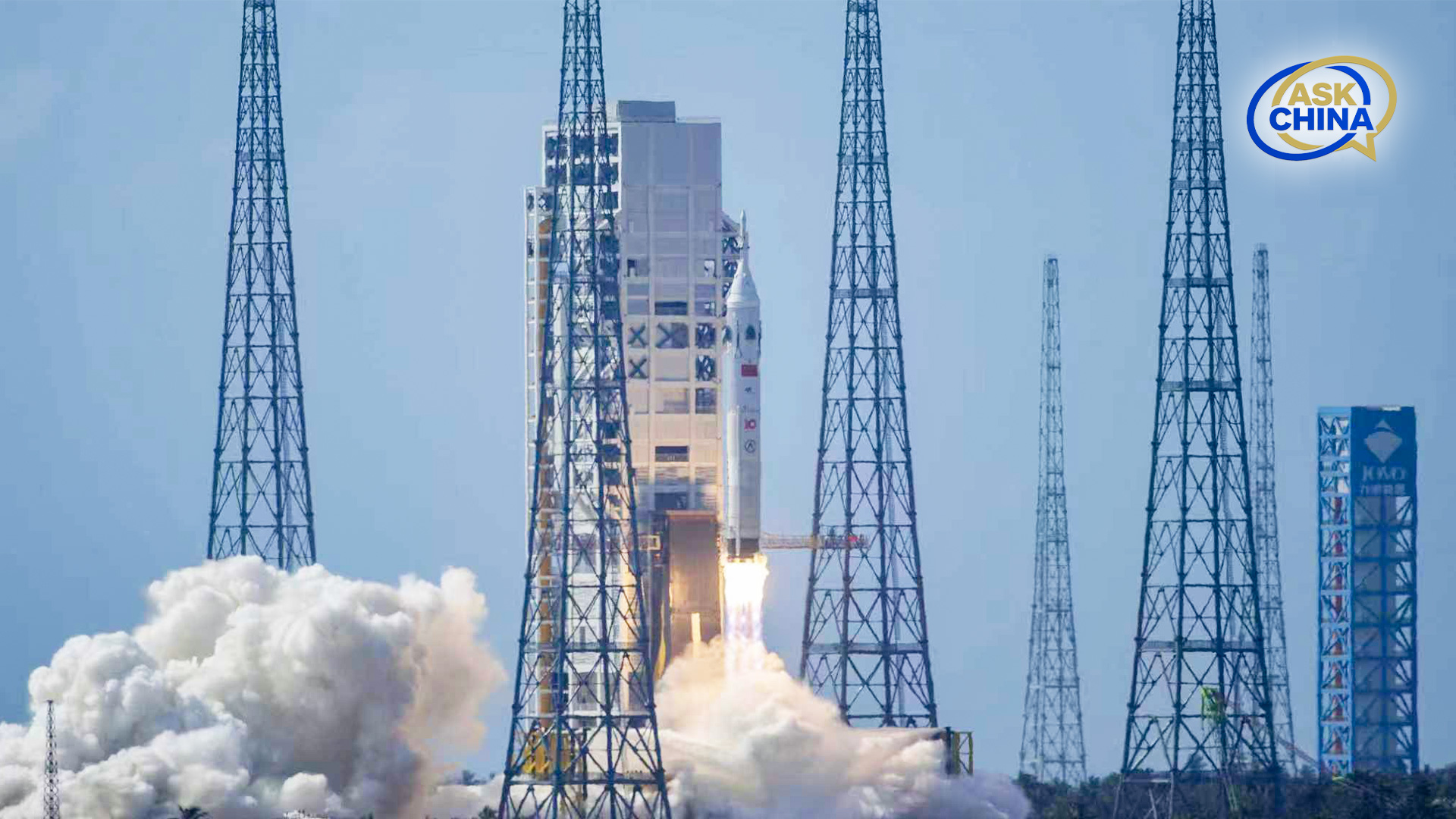
China conducts crucial flight tests for its next-generation crewed lunar exploration systems, February 11, 2026.
Editor's note: CGTN recently launched the Ask China campaign to respond to questions from international audiences curious about China's development. We invite experts, journalists, researchers and professionals to address selected questions submitted by viewers around the world. Deng Ying is a journalist at CGTN Español. In this article, she explains how China's next generation of AI-driven and robotic technologies is expected to emerge from the coordinated development of multiple frontier industries rather than from a single breakthrough. The views expressed are those of the author and do not necessarily reflect the positions of CGTN.
In China, discussions about the future of artificial intelligence and robotics are often framed around the concept of "future industries" (未来产业). Rather than focusing on a single breakthrough invention, policymakers describe a broader transformation driven by frontier technologies that are still in early stages of development or industrialization but carry strong strategic potential.
According to a joint policy document issued by seven government agencies1, including the Ministry of Industry and Information Technology, future industries are defined as sectors powered by cutting-edge innovation, with the capacity to reshape economic structures and influence long-term national competitiveness.
These industries are grouped into six major directions: future manufacturing, future information, future materials, future energy, future space and future health.
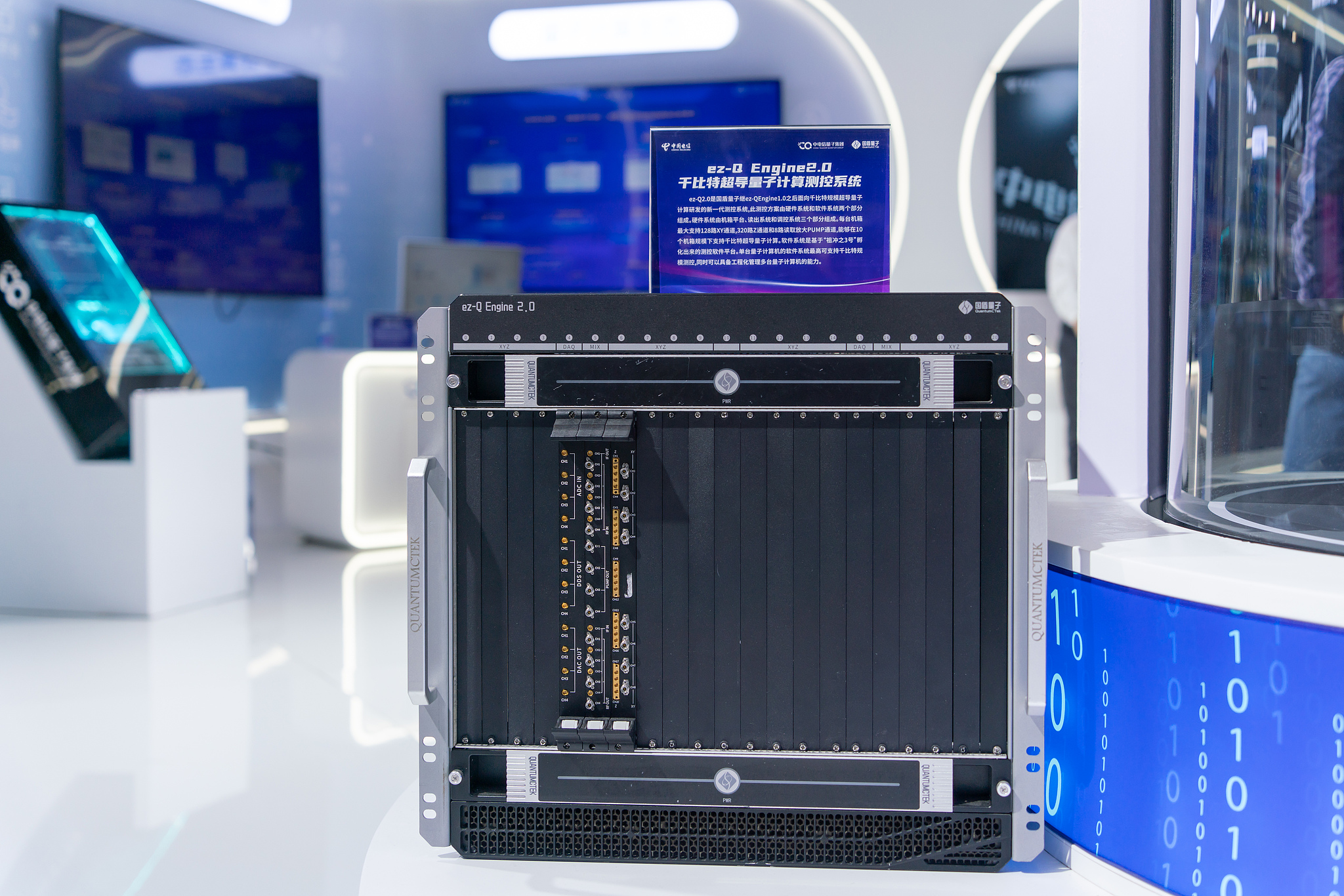
China Telecom Quantum Group showcases its latest achievements in the field of quantum technology at the 2025 Digital Intelligence Technology Ecosystem Conference in Guangzhou, Guangdong Province, December 5, 2025. /VCG
These six categories encompass a range of technologies already mapping out the global innovation frontier: generative AI and humanoid robotics, quantum information technology and brain-computer interfaces, bio-manufacturing and the metaverse, next-generation display systems, advanced communication networks, and new forms of energy storage.
Within this landscape, China's 15th Five-Year Plan has identified six priority areas for forward-looking planning: quantum technology, bio-manufacturing, hydrogen energy and nuclear fusion, brain-computer interfaces, sixth-generation mobile communications (6G), and "embodied intelligence."
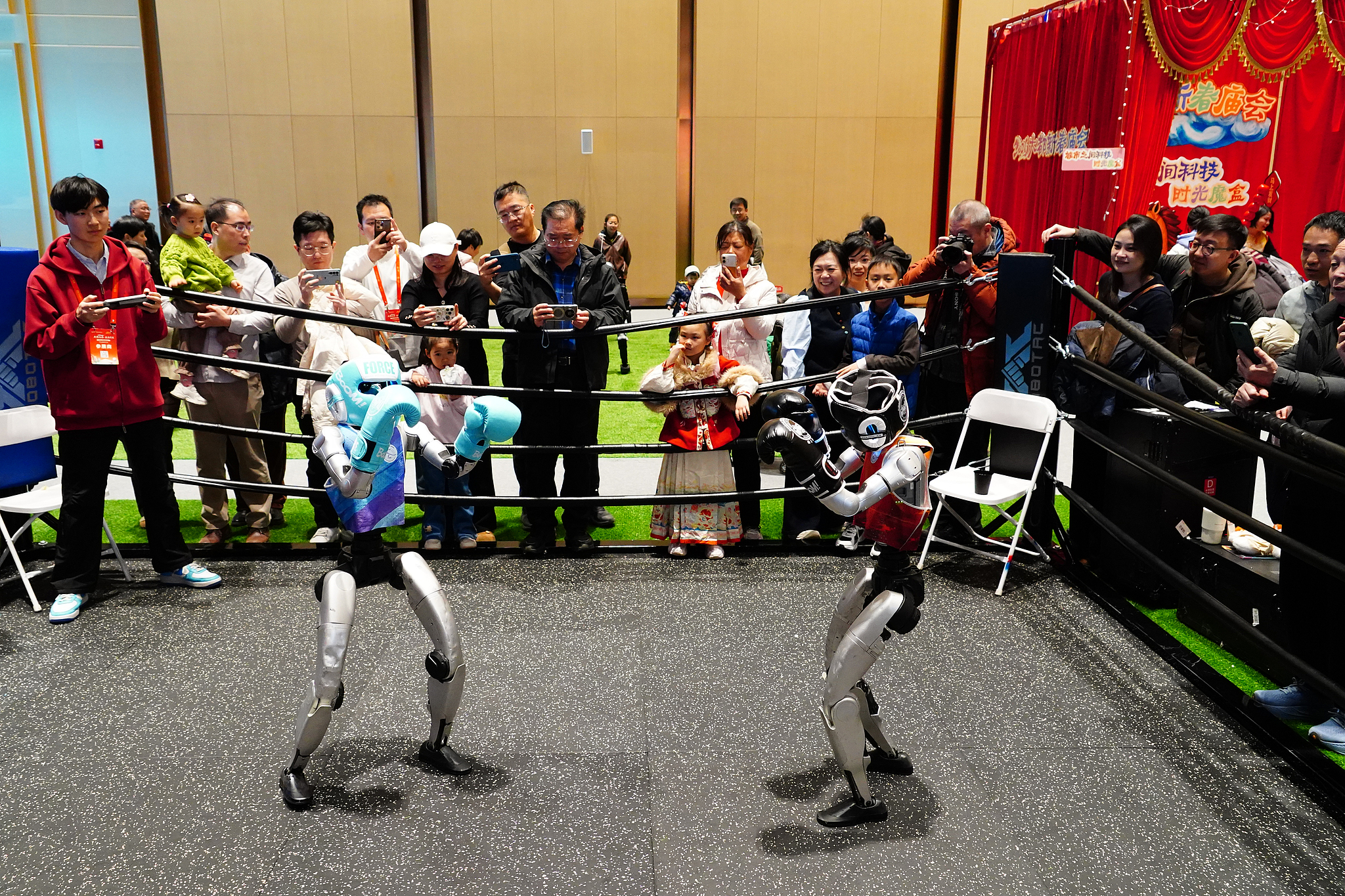
Robots appear on the boxing competition stage in a temple fair in Beijing, February 18, 2026. /VCG
Embodied intelligence refers to AI systems integrated with physical entities – for example, robots capable of perceiving their environment, making decisions and interacting with the real world. Unlike purely digital AI systems, embodied intelligence merges algorithms with hardware – sensors, actuators and motors – enabling robots to perceive, act and learn from experience in order to carry out real-world tasks.
To understand China's strategy in developing future industries, we need to delve into the policy framework. The project is not merely a technological ambition; it is first and foremost, an economic modernization imperative. Traditional industries require new technologies to upgrade productivity, while emerging industries need new technological platforms to expand. Underpinning both layers is a shared foundation: the expectation that innovation in AI, robotics, energy, and biotechnology will create new products and services that improve everyday life.
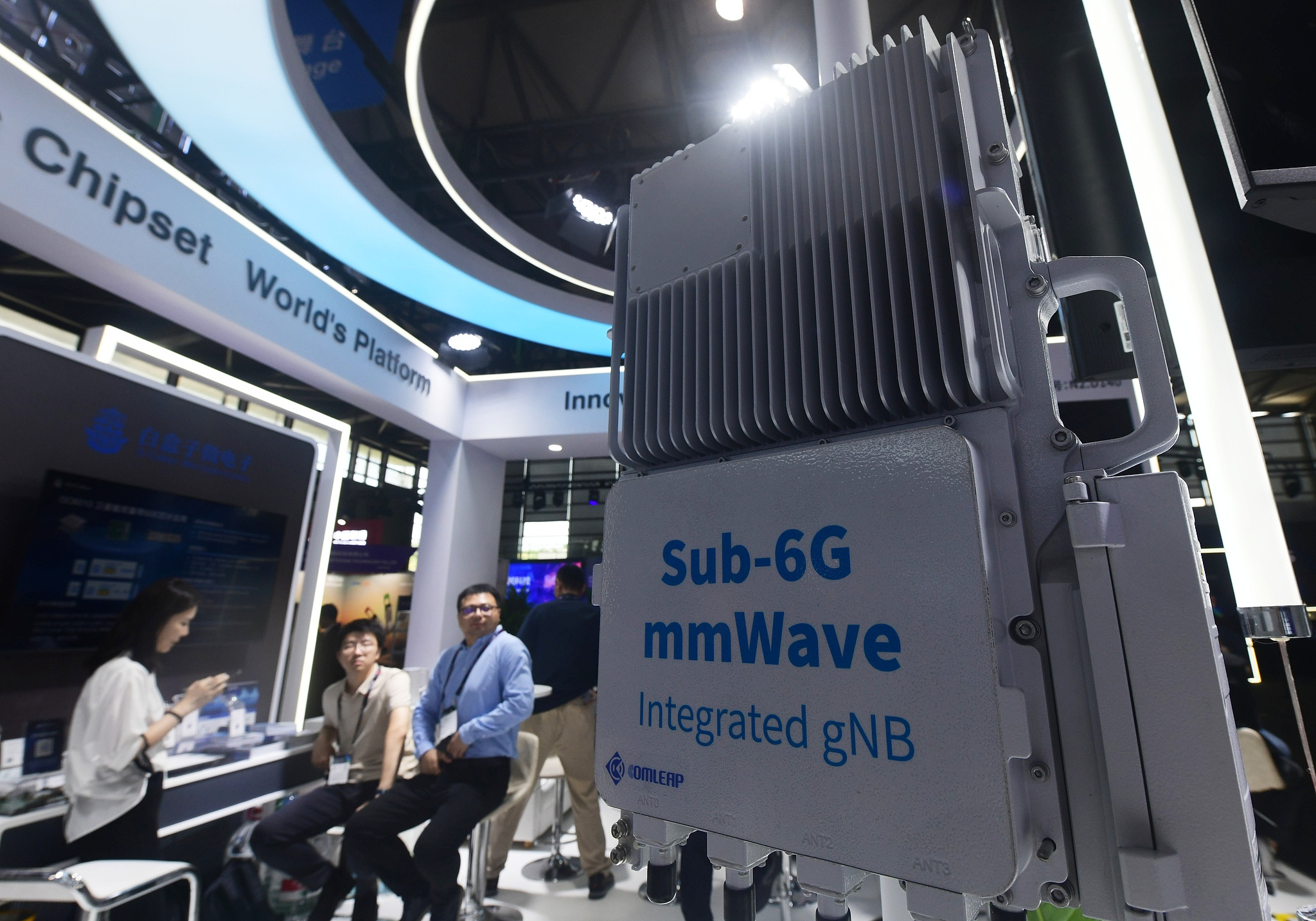
Scientific breakthroughs are described as the bedrock of this strategy, with the policy emphasizing the need to advance core technologies in priority sectors, accelerate commercialization and strengthen enterprises as the bridge between lab innovation and industrial application.
Importantly, the strategy does not suggest that any single technology – whether humanoid robots or generative AI – will define the future. Instead, it envisions innovation emerging from the coordinated development of multiple frontier fields. Artificial intelligence, robotics, quantum technology, advanced energy systems, biotechnology, and communication networks are treated not as isolated pursuits, but as interconnected components of a broader innovation ecosystem.
In this sense, the next generation of AI-driven and robotic technologies in China is likely to arise from the gradual integration of advances across many scientific domains, rather than from a single dramatic breakthrough. This is not science fiction; this is governance. The focus, ultimately, is on building long-term capacity, strengthening industrial foundations, and ensuring that new technologies translate into tangible economic and social benefits for the Chinese people.
1.Ministry of Industry and Information Technology et al. Implementation Opinions on Promoting the Innovative Development of Future Industries 工业和信息化部等七部门联合印发的《关于推动未来产业创新发展的实施意见》