


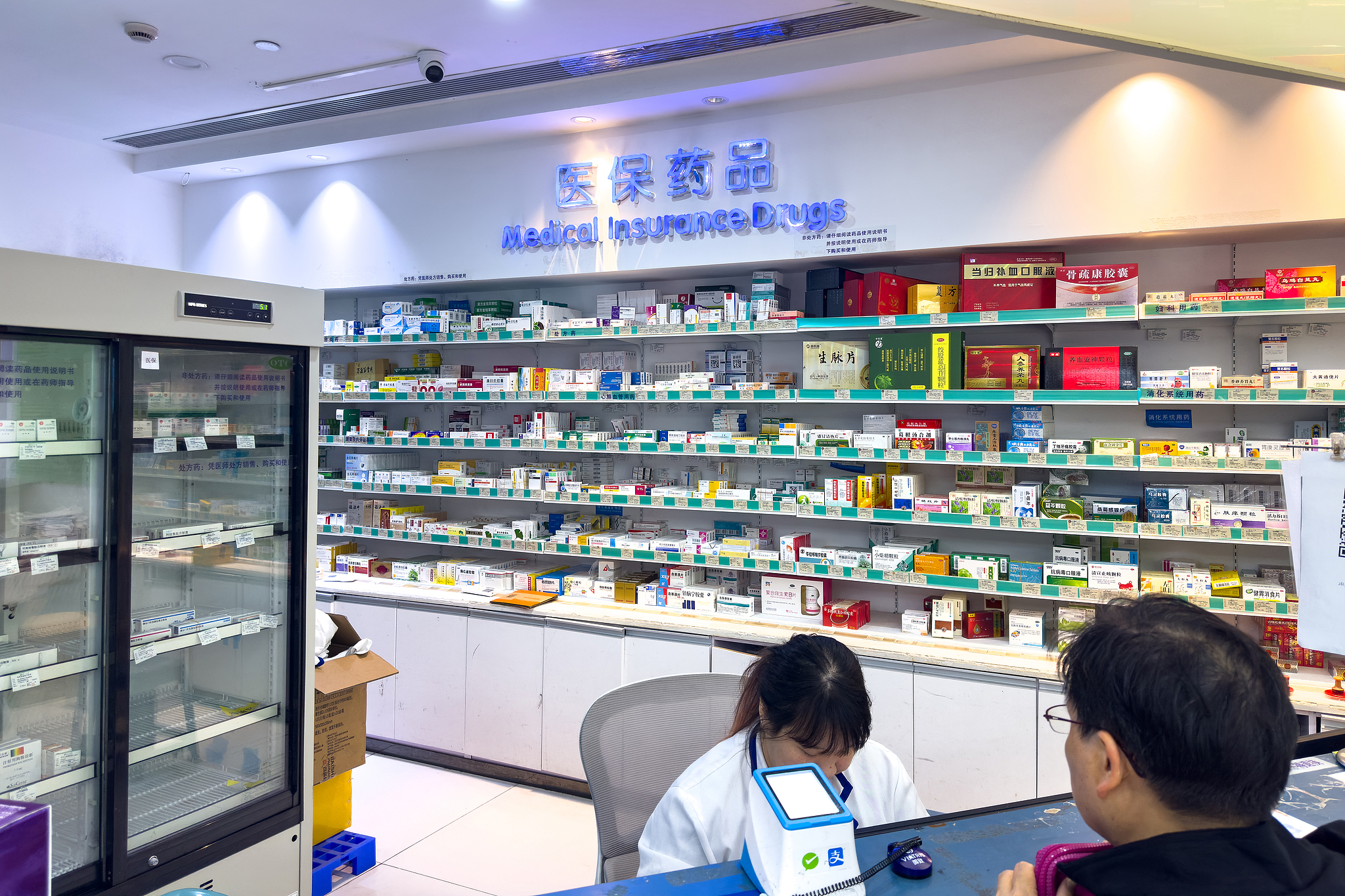
A resident purchases medical insurance-covered drugs at a pharmacy in Shanghai, China, May 31, 2025. (Photo: CFP)
Recent years have seen a shift in China's medical landscape, moving from basic coverage toward a system defined by high-quality service and reduced financial burdens. The country has established the world's largest healthcare system, according to China's National Health Commission, ensuring that over 90 percent of households can reach their nearest medical facility within 15 minutes.
While the basic medical insurance coverage rate remains stable at approximately 95 percent, data from the National Healthcare Security Administration (NHSA) shows that China continues working to refine the quality of this safety net through digital innovation and deeper procurement reforms.
Making 'life-saving' treatments affordable
One of the most significant shifts in the sector has been the drastic reduction in the cost of high-value medical consumables and drugs. This is driven by the centralized volume-based procurement (VBP) program initiated in 2018.
Since then, the NHSA has conducted nine rounds of state-organized drug procurement, covering 374 types of drugs – including anti-infection, cardiovascular, and chronic disease medications. Eight of these rounds are now fully in effect, with the lower prices available to patients nationwide.
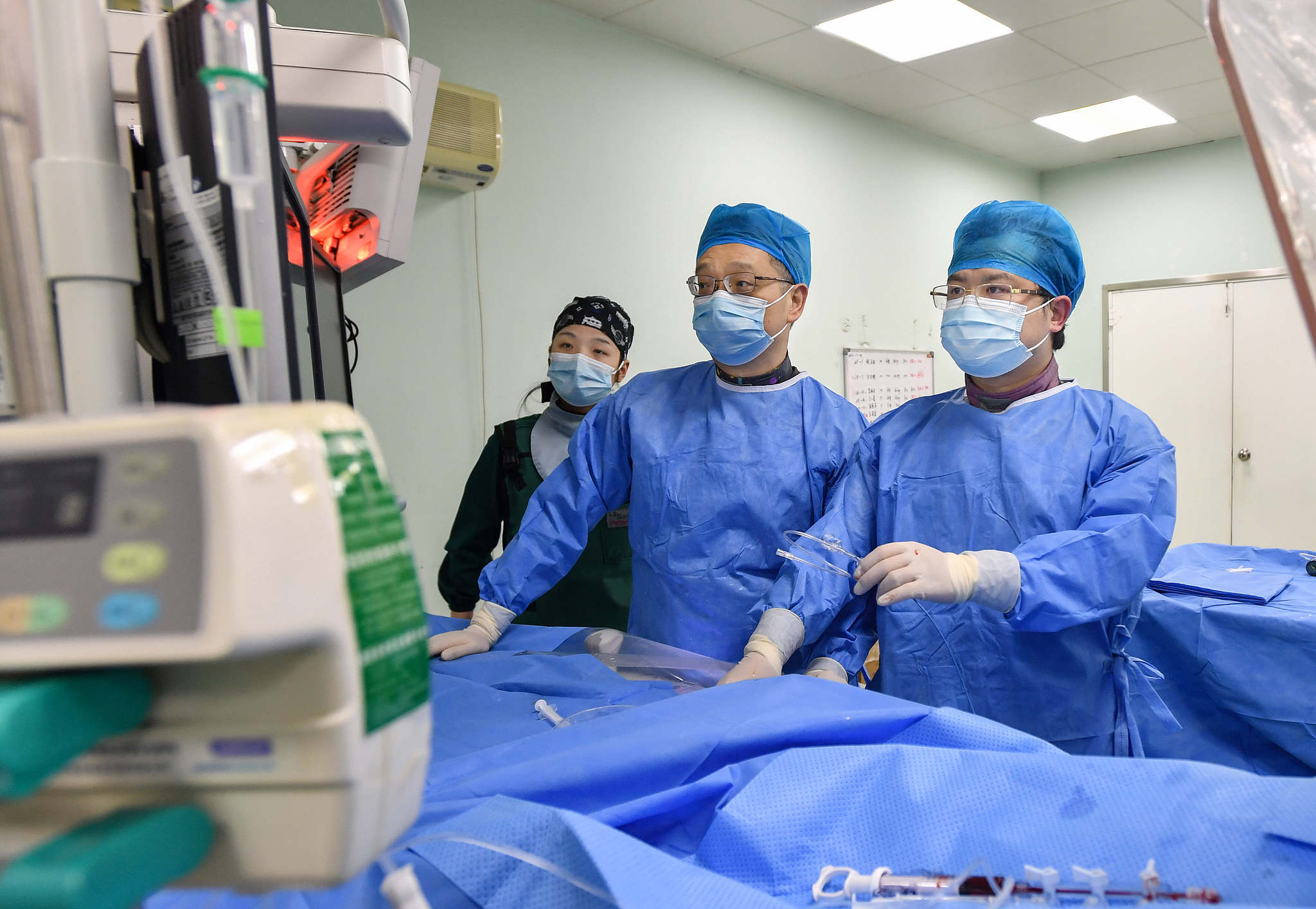
Doctors implant a cardiac stent at a hospital in Wuhan, central China's Hubei Province. Following national centralized volume-based procurement, the average price of a cardiac stent has dropped by over 90 percent. (Photo: CFP)
The impact on out-of-pocket costs has been substantial. For example, the average price of coronary stents has plummeted by over 90 percent, from roughly 13,000 yuan to 800 yuan (about $1,882 to $116). In January 2026, the NHSA concluded its sixth national VBP for high-value consumables, covering 12 types of devices like drug-coated balloons and urological intervention products. Patients are expected to access these lower-priced options by May 2026.
A new policy implemented early this year is also making pharmacies more functional and affordable. It allows retail chains to set up internal service platforms where licensed pharmacists can provide remote prescription reviews and medication counseling. Designated pharmacies can now offer the same insurance benefits as local clinics. Patients no longer face higher costs at the pharmacy, as they now enjoy the same deductibles, reimbursement ratios and coverage limits as they would at clinics.
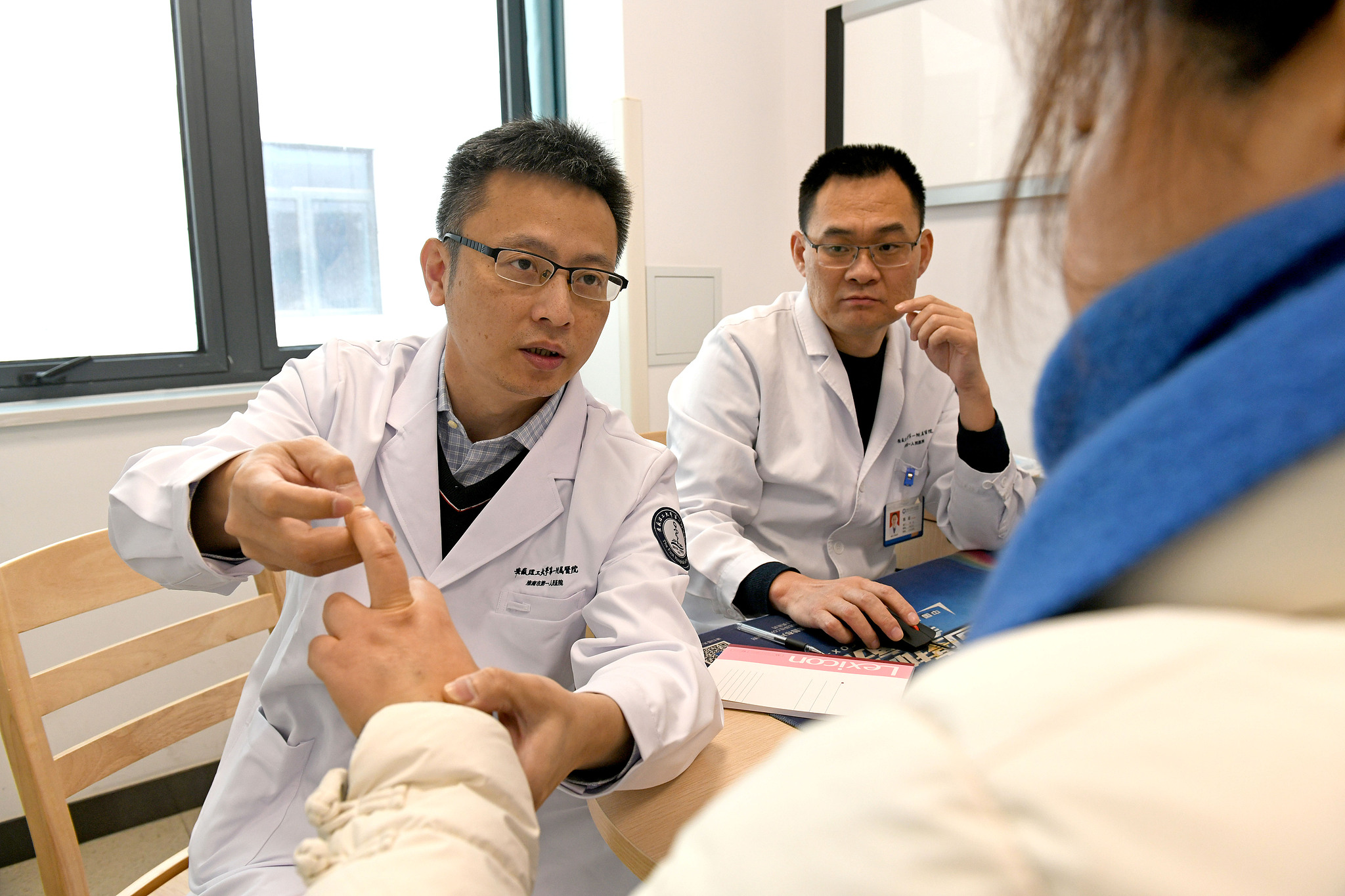
Experts from a hospital in Shanghai provide free medical consultations to residents in Huainan, east China's Anhui Province, February 8, 2026. (Photo: CFP)
Bridging regional gaps and empowering local healthcare
To bridge the gap in medical expertise between urban and rural areas, China is facilitating the movement of high-quality resources to the grassroots level through cross-regional partnerships. An example is the collaboration between Fudan University Shanghai Cancer Center and Lujiang County People's Hospital in Anhui Province, which enables patients to receive specialized care locally rather than traveling to a distant metropolis.
"Our mission extends beyond providing consultations; it is about cultivating a sustainable local workforce," a member of the assistance team from Fudan University Shanghai Cancer Center told the China Media Group.
By implementing a "mentorship and training" model – where experts perform regular surgeries in Lujiang while local staff undergo advanced training in Shanghai – the program ensures that high-level oncology expertise remains rooted in the county long-term.
Accessibility is further supported by the direct cross-province settlement scheme. In the first quarter of 2025, medical expenses for nearly 70.8 million patients incurred outside their home provinces were directly settled on site, and 651,600 medical institutions had been incorporated into this nationwide streamlined settlement scheme.
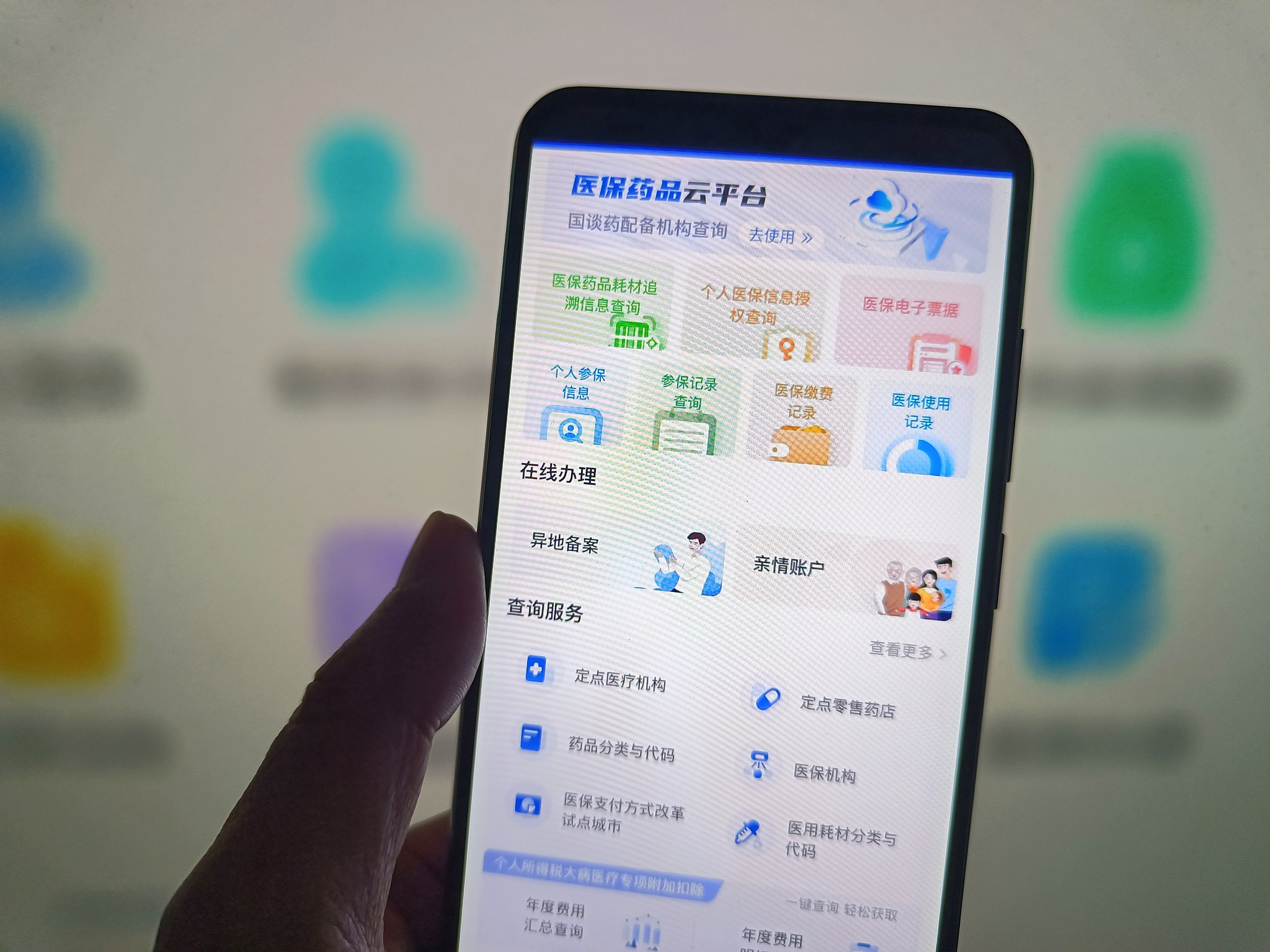
A smartphone screen displays a mini-program used for comparing medical insurance drug prices across designated pharmacies. (Photo: CFP)
Tech-driven services
Smart tech is streamlining the patient experience through improved data transparency. For instance, a mini program for comparing medical insurance drugs at designated pharmacies went nationwide in January this year. Citizens can check real-time drug prices and inventory at nearby pharmacies on their mobile phones, ensuring a more informed and convenient purchasing experience.
China is also accelerating smart healthcare by promoting cloud-based sharing of medical imaging data. NHSA Director Zhang Ke noted that the goal is to achieve nationwide mutual recognition of medical imaging by the end of 2027. This initiative replaces physical films with digital "cloud films" that can be securely accessed by doctors across regions, eliminating the need for patients to carry physical scans and reducing redundant examinations.
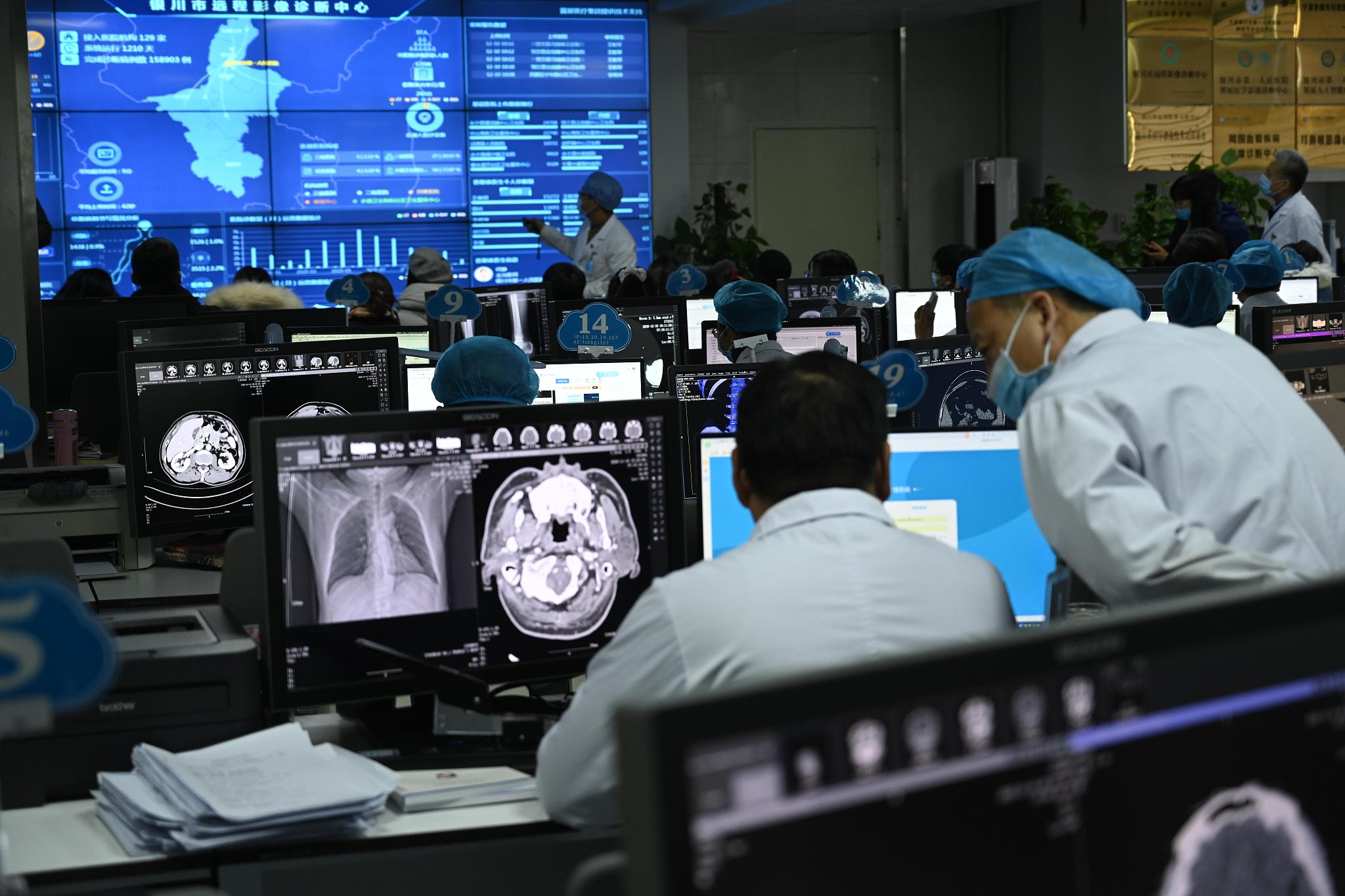
The remote imaging diagnostic center of No. 1 People's Hospital of Yinchuan, capital of northwest China's Ningxia Hui Autonomous Region. (Photo: CFP)
To enhance user experience, many facilities now offer "cardless" services. At health centers in rural Ningxia, patients can complete the reimbursement process via facial recognition systems connected to the national medical insurance platform, significantly reducing wait times.
The steady progress of these clinical and digital advancements is backed by substantial financial commitment. Director Zhang noted that the national medical insurance fund has spent a cumulative 12.13 trillion yuan since the start of the 14th Five-Year Plan (2021-2025). He emphasized that this fund provides a reliable safety net for patients while simultaneously driving medical innovation and industrial upgrades.