


JOHANNESBURG, March 10 (Xinhua) -- Chinese automotive brands are rapidly expanding their footprint in South Africa, with their market share growing faster than many expected as local consumers increasingly prioritize affordability, technology, and value, industry executives say.
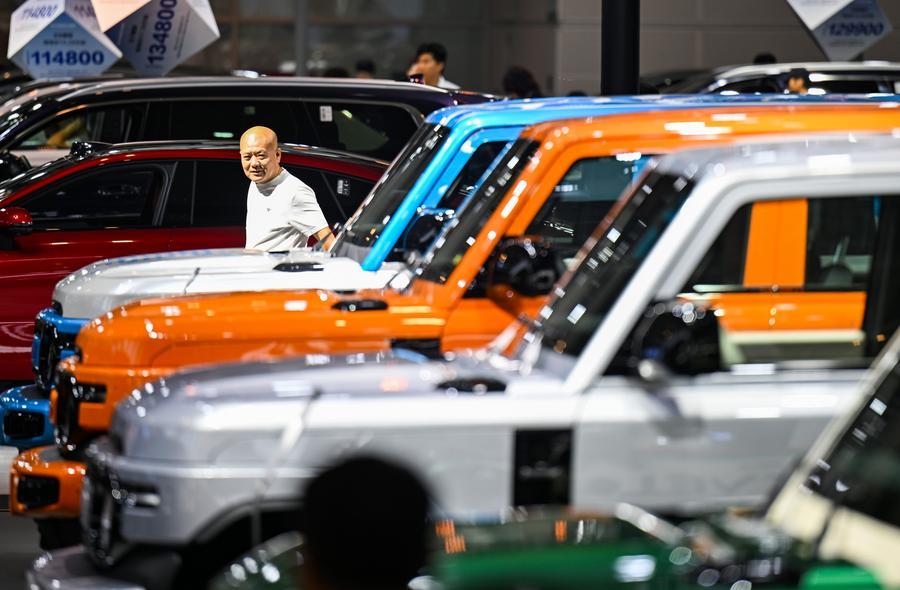
People visit the booth of iCAR during the China Motor Show (Tianjin) 2025 in north China's Tianjin, Sept. 30, 2025. (Photo: Xinhua)
Market observers note that the rise of Chinese vehicles is largely driven by a strong value proposition in an economy where consumers face increasingly tight household budgets.
"The South African market differs from those with higher disposable incomes," said an executive, who requested to remain anonymous, at a prominent dealership south of Johannesburg. "Chinese manufacturers offer vehicles that deliver 70 to 85 percent of the features found in premium German brands, but at 50 to 60 percent of the price."
This pricing advantage has resonated with buyers seeking modern features without a premium price tag. According to TransUnion's Q1 2025 Mobility Insights Report, combined sales for Chinese brands jumped by more than 64 percent year-on-year in early 2025.
Beyond affordability, technology is a primary draw. Chinese automakers are introducing advanced hybrid and plug-in hybrid models at accessible price points. "In a country sensitive to fuel prices, these technologies make a significant difference," another dealership executive noted.
Perceptions have shifted dramatically over the past decade. Initial scepticism regarding quality and reliability has faded as manufacturers have improved products, expanded dealer networks, and strengthened after-sales support.
"The improvement in quality has been rapid," the executive added, citing GWM and Haval as key examples. "They have introduced aggressive warranties, often seven years or 200,000 km, which has bolstered buyer confidence."
Real-world owners echo this sentiment. Midrand resident Puleng Motsoeneng, who purchased a Haval SUV last year, said: "I bought it for the price, but the comfort and fuel economy have exceeded my expectations." Similarly, Kele Maimela, another Midrand buyer, chose Chery for its superior features and warranty compared to legacy competitors.
Industry analysts note that this shift is forcing traditional manufacturers to rethink pricing strategies. While brands like Toyota remain market leaders, the combined share of Chinese brands, including Chery and GWM, has risen significantly, often at the expense of higher-priced legacy marques.
The expansion is also anchoring local investment. Chinese manufacturers have increased their stake in dealership networks and supply chains. Notably, Chery has recently expanded its footprint within the domestic automotive ecosystem, further creating jobs in sales and logistics.
Experts believe this growth reflects strengthening trade ties between China and South Africa. Looking ahead, analysts expect the sector to continue expanding, though internal competition among Chinese brands may intensify.
"Not all new entrants will survive," warned the Johannesburg-based executive. "The market is currently crowded. The larger, proven brands with established support networks are the ones most likely to thrive in the long run."