


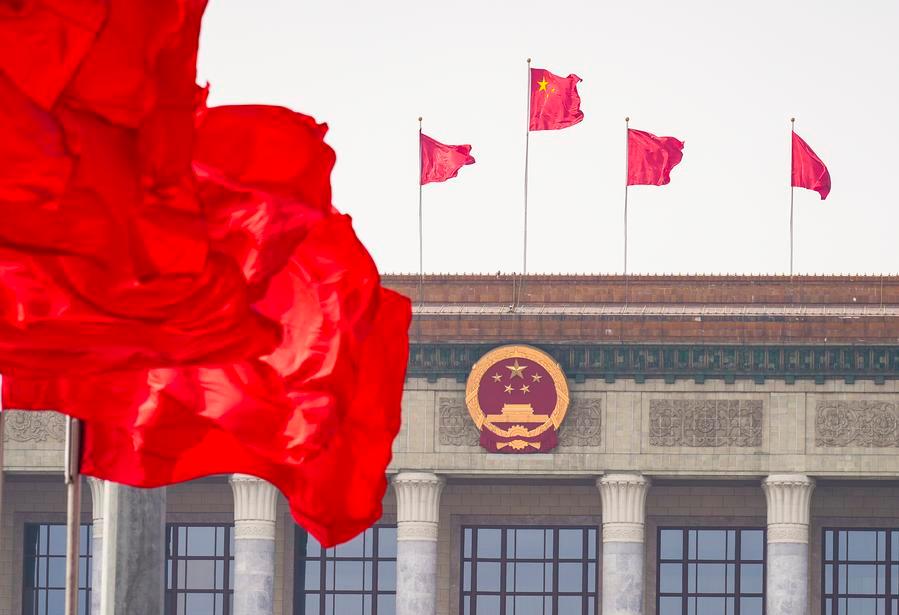
This photo taken on March 12, 2026 shows the Great Hall of the People ahead of the closing meeting of the fourth session of the 14th National People's Congress in Beijing, capital of China. (Photo: Xinhua)
"Coming to Beijing to cover China's annual 'two sessions' has been completely different from my previous visits to the country," said Fabián Pizarro, head of the China Phenomenon program at Chile's Radio Cooperativa.
In the past, his reporting had mainly focused on the economy, culture or specific international cooperation projects, with his camera capturing the finer details of a major country's development. But this time, he felt as though he had "entered directly into the very heart of China's political process."
As a journalist who has long observed China, Pizarro regards being on the scene at the "two sessions" as a uniquely valuable opportunity.
"I am not just reporting the news," he said. "I am also observing, at close range, how China discusses and determines its development direction for the coming years. Only by seeing this clearly can one better understand how China's political system operates."
He also noted that the atmosphere at the "two sessions" reveals a strong sense of "institutionalization" and "strategic thinking." As he put it, "Here, the focus is no longer on a single isolated story, but on the overall direction of national development—economic growth, innovation, social well-being and long-term planning."
This holistic perspective led Pizarro to reexamine his previous experiences in China. He found that he had discovered a key to unlocking the secrets behind the changes he had witnessed. "The changes I previously saw in China's streets, neighborhoods, and everyday life can all trace their source back to this place—they have been translated into public policies and strategic plans for the years ahead."
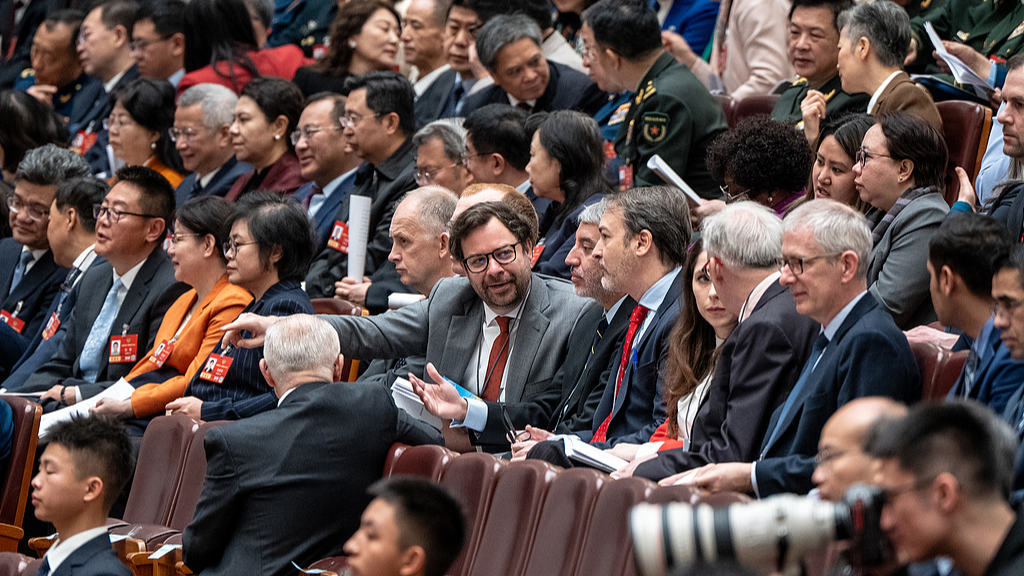
Foreign envoys and reporters at the second plenary meeting of the fourth session of the 14th National People's Congress in Beijing, China, March 9, 2026. (Photo: VCG)
During several days of reporting, one scene left a particularly deep impression on him. Before the meeting began, deputies from across China's provinces entered the Great Hall of the People one after another. Many wore ethnic costumes with strong local characteristics or displayed distinctive symbols from their own regions. "Thousands of deputies intermingling with hundreds of journalists documenting the moment—what that scene conveys is something that can hardly be fully captured through a few official documents," Pizarro said. "You have to be there in person to truly understand it."
In Pizarro's notebook, three priorities were clearly listed, with the 15th Five-Year Plan at the top. In addition, technological innovation and industrial modernization were also central to his reporting, because “these areas will have a direct impact on the global economy."
At the same time, he paid close attention to discussions on expanding domestic demand and promoting high-quality development. "This shows that China is working to optimize its economic model and energize its domestic market," he said. "That also carries major significance for global trading partners, including Chile."
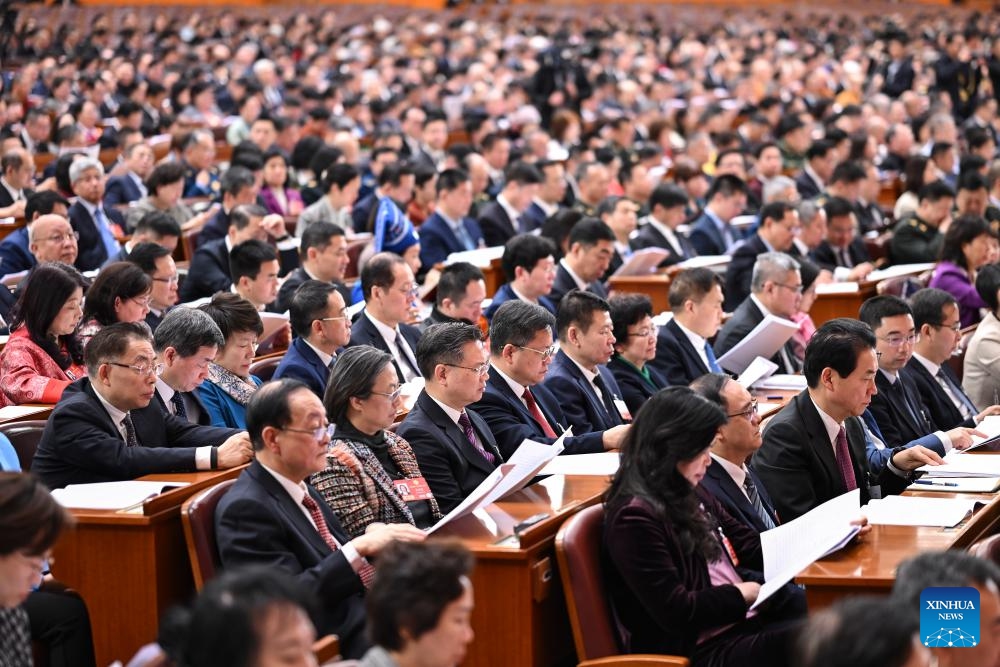
The third plenary meeting of the fourth session of the 14th National Committee of the Chinese People's Political Consultative Conference is held at the Great Hall of the People in Beijing, capital of China, March 8, 2026. (Photo: Xinhua)
China's continued commitment to economic openness and international cooperation encouraged Pizarro, because "China is a crucial trading partner for many Latin American countries." He also saw enormous potential for China and Latin America to open up new space for cooperation in fields such as renewable energy and electric mobility. He is convinced that every signal released at the "two sessions" will ultimately resonate in Chile, thousands of miles away.
Pizarro has already mapped out the focus of his work after returning to Chile. He plans to introduce to the Chilean public, through a series of in-depth programs, the power of "long-term planning."
"The 'two sessions' make it quite clear that many of China's important decisions in the economic, technological and social fields are made within a framework of clear strategic planning," he said.
For Pizarro, the "two sessions" are a window into seeing more clearly that China is not only developing but also thinking with great seriousness about what kind of development it should pursue.
"Recording that behind-the-scenes thinking is precisely the responsibility of foreign journalists like myself," Pizarro said.