


BEIJING, March 16 (Xinhua) -- China aims to have 100,000 fuel cell vehicles nationwide by 2030, double the 2025 level, according to a circular jointly issued by three departments, including the Ministry of Industry and Information Technology.
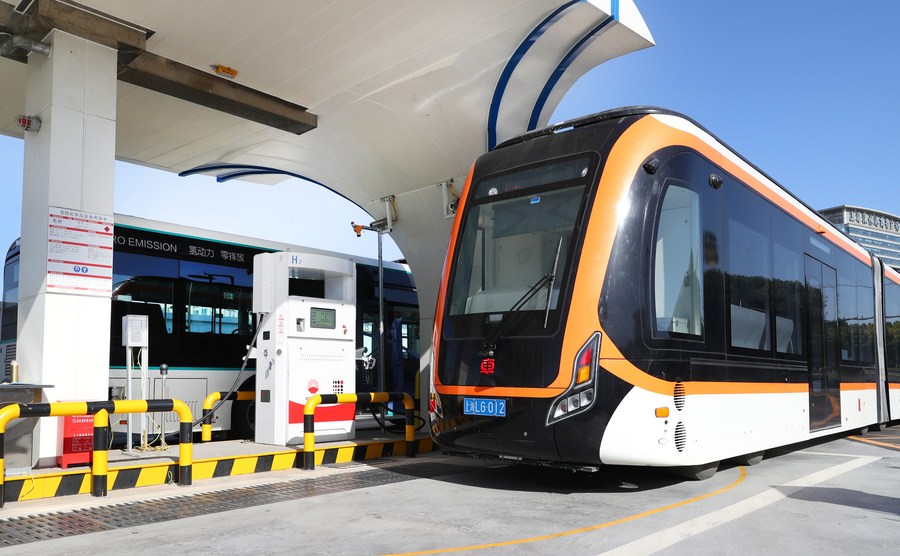
A medium-capacity hydrogen fuel cell-powered public bus (R) approaches a hydrogen refueling station in Lingang new area of Pudong New Area in east China's Shanghai, Dec. 15, 2022. (File photo: Xinhua)
The circular, which focuses on piloting the comprehensive application of hydrogen energy, sets a goal of cutting end-user hydrogen prices to below 25 yuan (about 3.62 U.S. dollars) per kg by 2030 -- and around 15 yuan in advantageous regions -- while fostering hydrogen power as a new driver of economic growth.
China's hydrogen industry has progressed from "zero to one" but still faces challenges such as limited application scenarios, high costs, and difficulties in storage and transportation, the ministry noted. The pilot program will prioritize fuel cell vehicles, hydrogen-powered industrial applications, and innovative uses of hydrogen.
Pilots should be applied by city clusters as the main participants. The central government will provide reward funds to these city clusters, with each pilot period lasting four years. The maximum reward for a single city cluster during the pilot period will not exceed 1.6 billion yuan, according to the document.
By the end of 2025, nearly 40,000 hydrogen fuel cell vehicles had been sold nationwide, and 574 hydrogen refueling stations with a combined daily refueling capacity of over 360 tonnes had been built, placing China among the world's leading countries in the sector, the ministry added.