


China's west-to-east power transmission project has delivered more than 1 trillion kilowatt-hours of clean electricity to east China's Jiangsu Province, providing strong support for energy security and low-carbon transition in the Yangtze River Delta, according to data released by State Grid Jiangsu Electric Power Company.
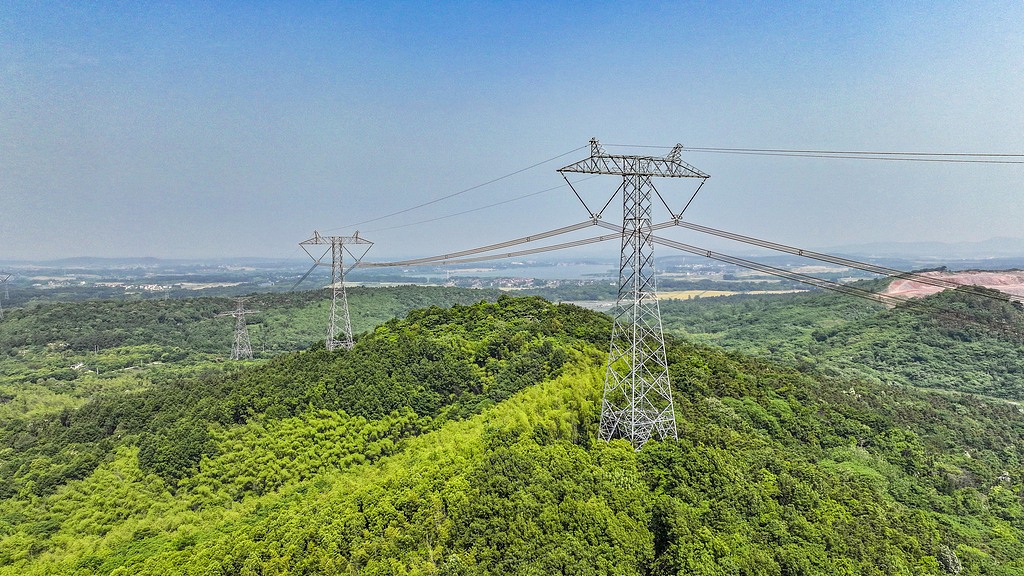
Ultra-high-voltage transmission towers of the west-to-east power transmission project are seen in Changzhou, east China's Jiangsu Province, May 15, 2024. (Photo: VCG)
The cumulative volume has reached 1.08 trillion kWh, enough to meet the annual electricity demand of approximately 360 million households.
The west-to-east power transmission project, a key national strategy designed to channel surplus electricity resources from western regions to energy-intensive eastern areas, is increasingly shifting toward clean energy as China advances its carbon reduction goals.
Clean energy now accounts for more than 50% of the electricity transmitted to Jiangsu, supporting carbon emission reductions of over 460 million tonnes. The system's maximum daily transmission capacity has reached 31.5 million kilowatts, meeting nearly a quarter of the province's electricity demand.
At a policy briefing on March 7, National Development and Reform Commission official Chen Lei said that during the 15th Five-Year Plan (2026-2030) period, the country's west-to-east power transmission capacity is expected to exceed 420 million kilowatts, further strengthening nationwide energy allocation and green development.