


"Boao Zero-Carbon Demonstration Zone" enters stage of normalized zero-carbon operation
Xinhua
1774362559000
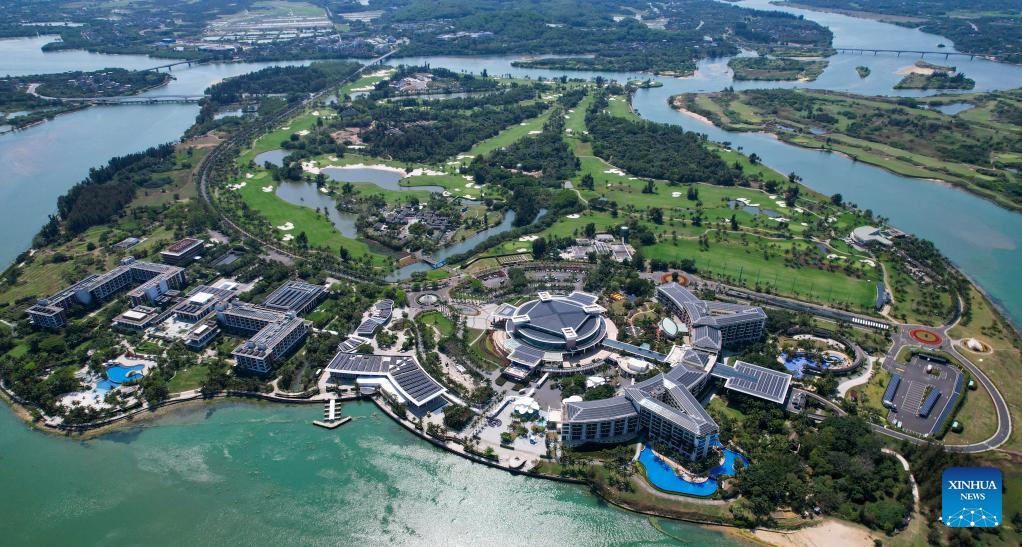
An aerial drone photo taken on March 19, 2026 shows the Boao zero-carbon demonstration zone in Boao, south China's Hainan Province. Since the "Boao Near-Zero Carbon Demonstration Zone" was renamed the "Boao Zero-Carbon Demonstration Zone" in March 2025, the area has achieved notable progress in energy conservation and carbon reduction and has fully entered a stage of normalized zero-carbon operation. According to measured data, energy-related carbon dioxide emissions from buildings and municipal infrastructure in the zone dropped from 11,350.1 tonnes in 2019 to about 14.6 tonnes in 2025, a reduction of 99.9 percent. The zone generated 29 million kWh of green electricity a year, meeting its yearly power demand of about 19.4 million kWh, with the remaining 9.6 million kWh fed into the grid. (Xinhua/Yang Guanyu)
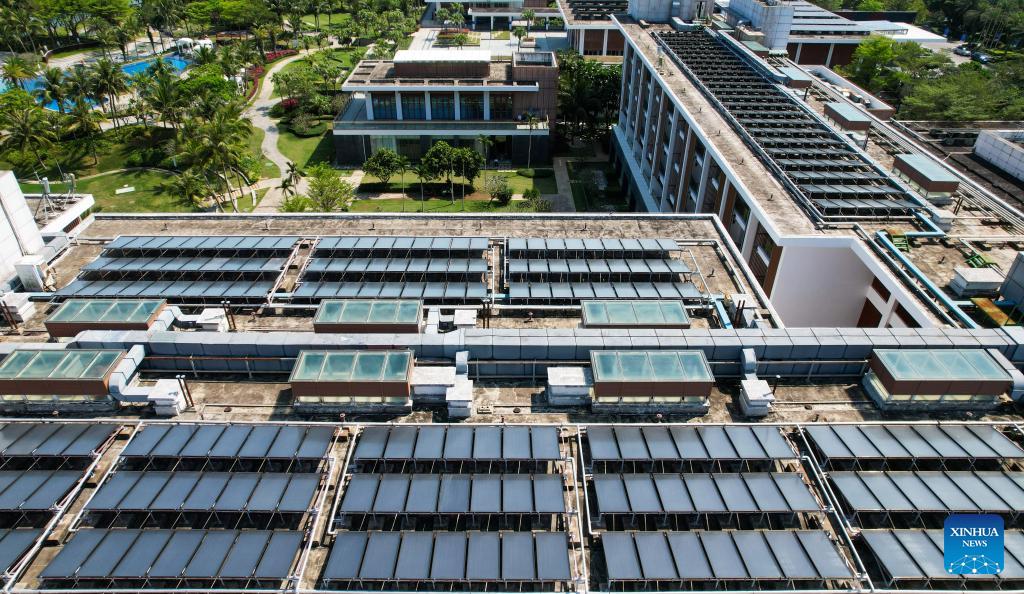
An aerial drone photo taken on March 19, 2026 shows the Dongyu Island Hotel in the Boao zero-carbon demonstration zone in Boao, south China's Hainan Province. Since the "Boao Near-Zero Carbon Demonstration Zone" was renamed the "Boao Zero-Carbon Demonstration Zone" in March 2025, the area has achieved notable progress in energy conservation and carbon reduction and has fully entered a stage of normalized zero-carbon operation. According to measured data, energy-related carbon dioxide emissions from buildings and municipal infrastructure in the zone dropped from 11,350.1 tonnes in 2019 to about 14.6 tonnes in 2025, a reduction of 99.9 percent. The zone generated 29 million kWh of green electricity a year, meeting its yearly power demand of about 19.4 million kWh, with the remaining 9.6 million kWh fed into the grid. (Xinhua/Yang Guanyu)
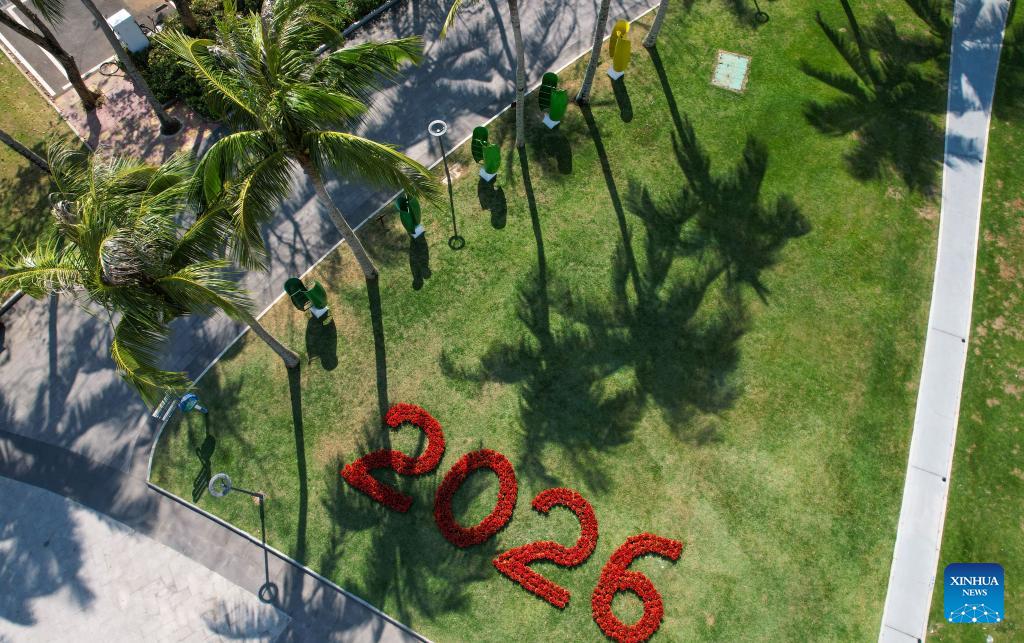
An aerial drone photo taken on March 19, 2026 shows wind energy collectors near a road in the Boao zero-carbon demonstration zone in Boao, south China's Hainan Province. Since the "Boao Near-Zero Carbon Demonstration Zone" was renamed the "Boao Zero-Carbon Demonstration Zone" in March 2025, the area has achieved notable progress in energy conservation and carbon reduction and has fully entered a stage of normalized zero-carbon operation. According to measured data, energy-related carbon dioxide emissions from buildings and municipal infrastructure in the zone dropped from 11,350.1 tonnes in 2019 to about 14.6 tonnes in 2025, a reduction of 99.9 percent. The zone generated 29 million kWh of green electricity a year, meeting its yearly power demand of about 19.4 million kWh, with the remaining 9.6 million kWh fed into the grid. (Xinhua/Yang Guanyu)
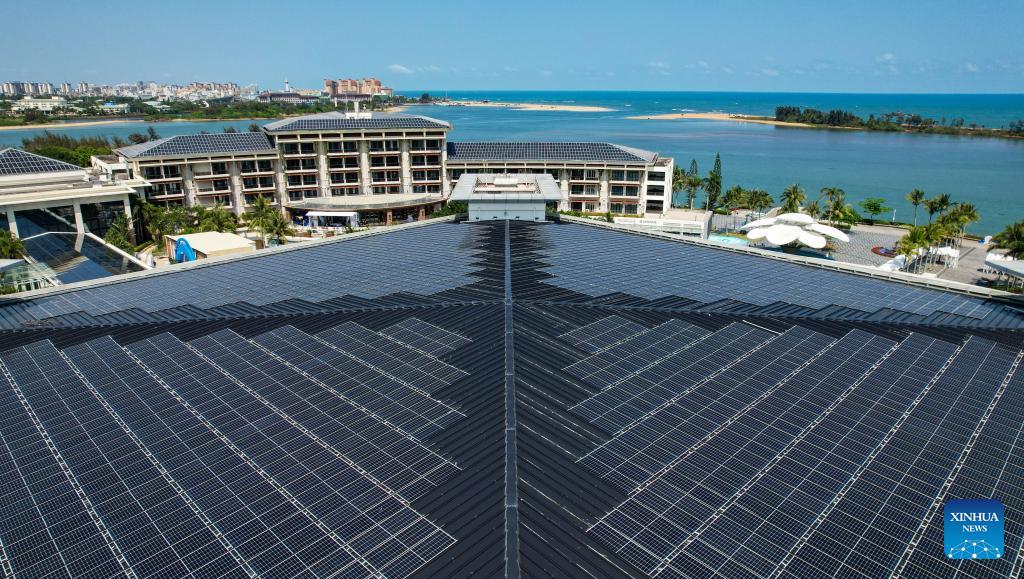
An aerial drone photo taken on March 19, 2026 shows photovoltaic devices on the roof of the Boao Forum for Asia (BFA) International Conference Center and the BFA hotel in the Boao zero-carbon demonstration zone in Boao, south China's Hainan Province. Since the "Boao Near-Zero Carbon Demonstration Zone" was renamed the "Boao Zero-Carbon Demonstration Zone" in March 2025, the area has achieved notable progress in energy conservation and carbon reduction and has fully entered a stage of normalized zero-carbon operation. According to measured data, energy-related carbon dioxide emissions from buildings and municipal infrastructure in the zone dropped from 11,350.1 tonnes in 2019 to about 14.6 tonnes in 2025, a reduction of 99.9 percent. The zone generated 29 million kWh of green electricity a year, meeting its yearly power demand of about 19.4 million kWh, with the remaining 9.6 million kWh fed into the grid. (Xinhua/Yang Guanyu)
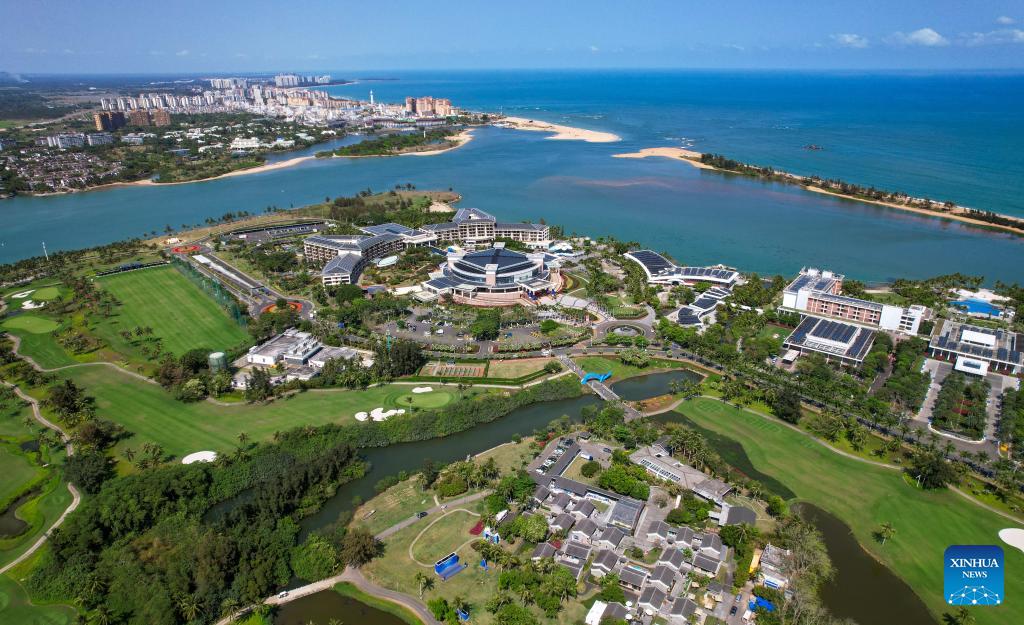
An aerial drone photo taken on March 19, 2026 shows the Boao zero-carbon demonstration zone in Boao, south China's Hainan Province. Since the "Boao Near-Zero Carbon Demonstration Zone" was renamed the "Boao Zero-Carbon Demonstration Zone" in March 2025, the area has achieved notable progress in energy conservation and carbon reduction and has fully entered a stage of normalized zero-carbon operation. According to measured data, energy-related carbon dioxide emissions from buildings and municipal infrastructure in the zone dropped from 11,350.1 tonnes in 2019 to about 14.6 tonnes in 2025, a reduction of 99.9 percent. The zone generated 29 million kWh of green electricity a year, meeting its yearly power demand of about 19.4 million kWh, with the remaining 9.6 million kWh fed into the grid. (Xinhua/Yang Guanyu)
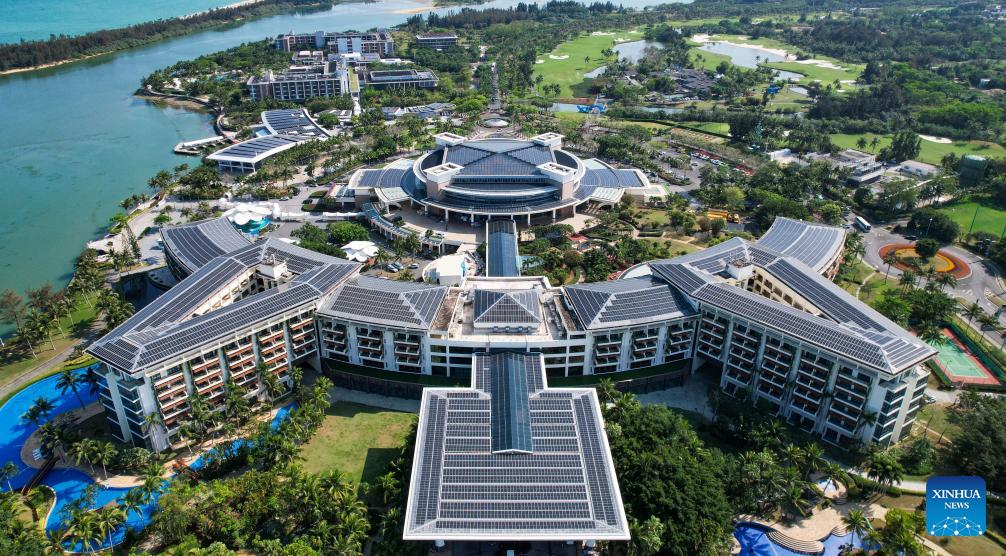
An aerial drone photo taken on March 19, 2026 shows photovoltaic devices on the roof of the Boao Forum for Asia (BFA) International Conference Center and the BFA hotel in the Boao zero-carbon demonstration zone in Boao, south China's Hainan Province. Since the "Boao Near-Zero Carbon Demonstration Zone" was renamed the "Boao Zero-Carbon Demonstration Zone" in March 2025, the area has achieved notable progress in energy conservation and carbon reduction and has fully entered a stage of normalized zero-carbon operation. According to measured data, energy-related carbon dioxide emissions from buildings and municipal infrastructure in the zone dropped from 11,350.1 tonnes in 2019 to about 14.6 tonnes in 2025, a reduction of 99.9 percent. The zone generated 29 million kWh of green electricity a year, meeting its yearly power demand of about 19.4 million kWh, with the remaining 9.6 million kWh fed into the grid. (Xinhua/Yang Guanyu)
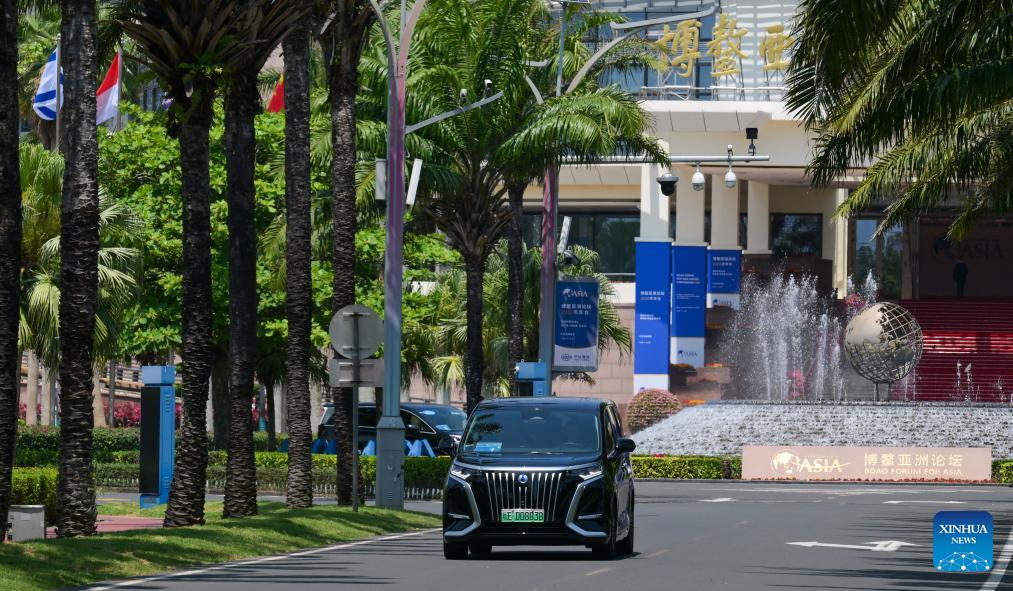
An electric vehicle is seen on a street in the Boao zero-carbon demonstration zone in Boao, south China's Hainan Province, March 24, 2026. Since the "Boao Near-Zero Carbon Demonstration Zone" was renamed the "Boao Zero-Carbon Demonstration Zone" in March 2025, the area has achieved notable progress in energy conservation and carbon reduction and has fully entered a stage of normalized zero-carbon operation. According to measured data, energy-related carbon dioxide emissions from buildings and municipal infrastructure in the zone dropped from 11,350.1 tonnes in 2019 to about 14.6 tonnes in 2025, a reduction of 99.9 percent. The zone generated 29 million kWh of green electricity a year, meeting its yearly power demand of about 19.4 million kWh, with the remaining 9.6 million kWh fed into the grid. (Xinhua/Yang Guanyu)
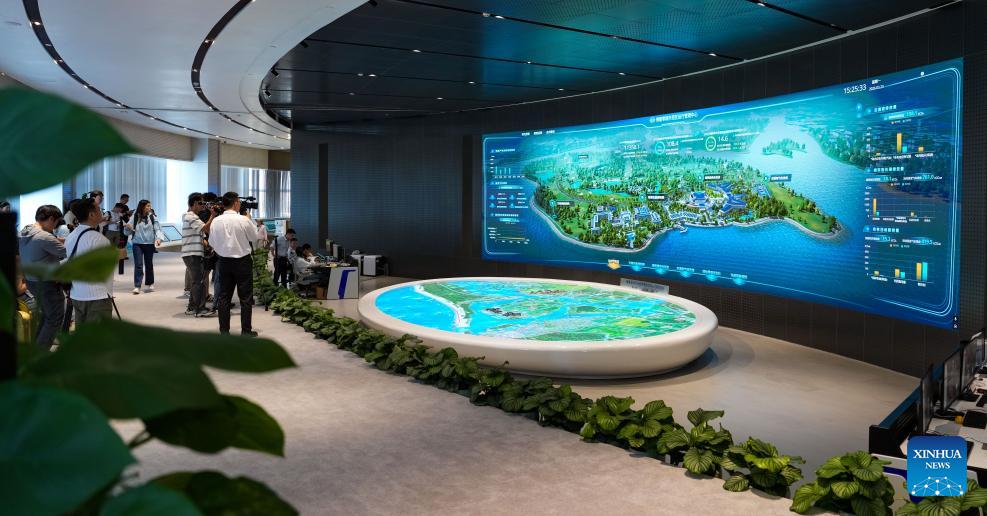
This photo taken on March 23, 2026 shows an operation management center of the Boao zero-carbon demonstration zone in Boao, south China's Hainan Province. Since the "Boao Near-Zero Carbon Demonstration Zone" was renamed the "Boao Zero-Carbon Demonstration Zone" in March 2025, the area has achieved notable progress in energy conservation and carbon reduction and has fully entered a stage of normalized zero-carbon operation. According to measured data, energy-related carbon dioxide emissions from buildings and municipal infrastructure in the zone dropped from 11,350.1 tonnes in 2019 to about 14.6 tonnes in 2025, a reduction of 99.9 percent. The zone generated 29 million kWh of green electricity a year, meeting its yearly power demand of about 19.4 million kWh, with the remaining 9.6 million kWh fed into the grid. (Xinhua/Yang Guanyu)
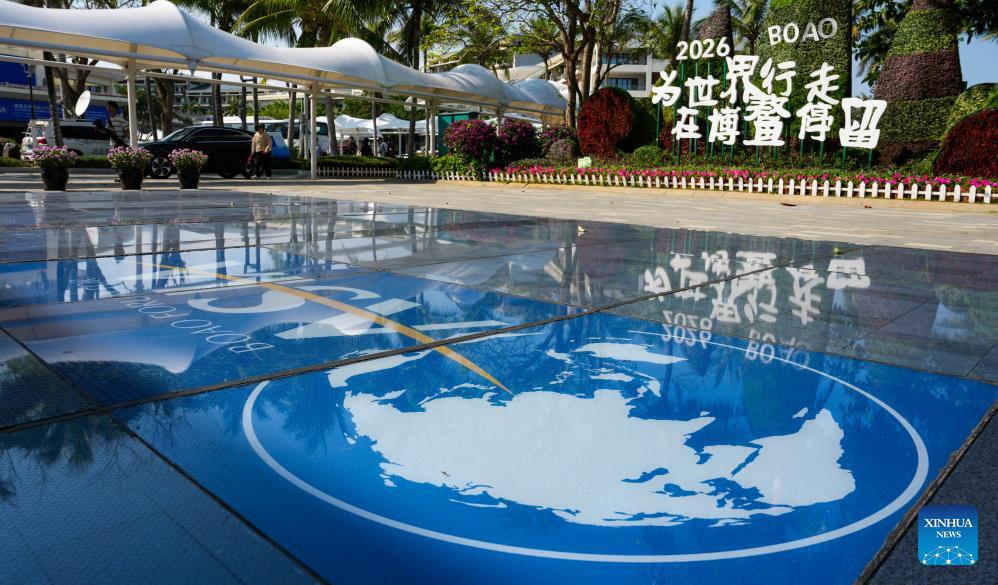
This photo taken on March 23, 2026 shows the outdoor photovoltaic floor tiles in the Boao zero-carbon demonstration zone in Boao, south China's Hainan Province. Since the "Boao Near-Zero Carbon Demonstration Zone" was renamed the "Boao Zero-Carbon Demonstration Zone" in March 2025, the area has achieved notable progress in energy conservation and carbon reduction and has fully entered a stage of normalized zero-carbon operation. According to measured data, energy-related carbon dioxide emissions from buildings and municipal infrastructure in the zone dropped from 11,350.1 tonnes in 2019 to about 14.6 tonnes in 2025, a reduction of 99.9 percent. The zone generated 29 million kWh of green electricity a year, meeting its yearly power demand of about 19.4 million kWh, with the remaining 9.6 million kWh fed into the grid. (Xinhua/Yang Guanyu)
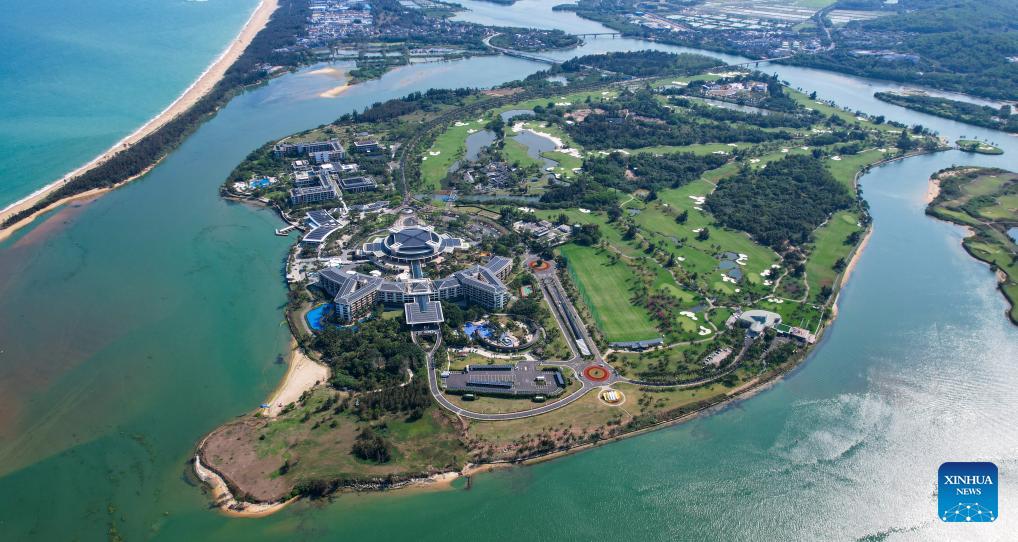
An aerial drone photo taken on March 19, 2026 shows the Boao zero-carbon demonstration zone in Boao, south China's Hainan Province. Since the "Boao Near-Zero Carbon Demonstration Zone" was renamed the "Boao Zero-Carbon Demonstration Zone" in March 2025, the area has achieved notable progress in energy conservation and carbon reduction and has fully entered a stage of normalized zero-carbon operation. According to measured data, energy-related carbon dioxide emissions from buildings and municipal infrastructure in the zone dropped from 11,350.1 tonnes in 2019 to about 14.6 tonnes in 2025, a reduction of 99.9 percent. The zone generated 29 million kWh of green electricity a year, meeting its yearly power demand of about 19.4 million kWh, with the remaining 9.6 million kWh fed into the grid. (Xinhua/Yang Guanyu)
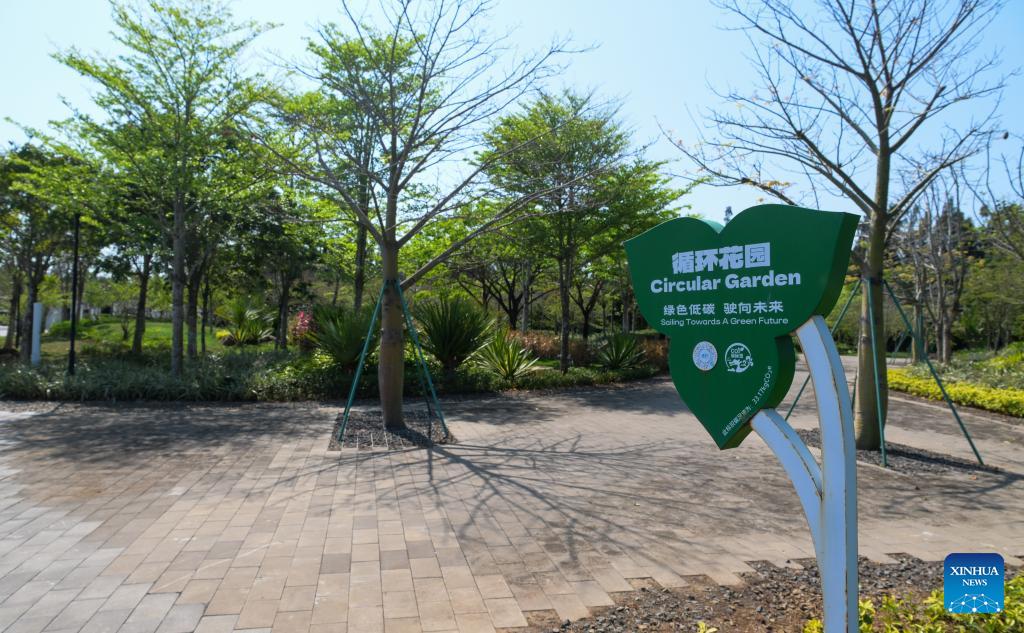
This photo taken on March 19, 2026 shows the Circular Garden in the Boao zero-carbon demonstration zone in Boao, south China's Hainan Province. Since the "Boao Near-Zero Carbon Demonstration Zone" was renamed the "Boao Zero-Carbon Demonstration Zone" in March 2025, the area has achieved notable progress in energy conservation and carbon reduction and has fully entered a stage of normalized zero-carbon operation. According to measured data, energy-related carbon dioxide emissions from buildings and municipal infrastructure in the zone dropped from 11,350.1 tonnes in 2019 to about 14.6 tonnes in 2025, a reduction of 99.9 percent. The zone generated 29 million kWh of green electricity a year, meeting its yearly power demand of about 19.4 million kWh, with the remaining 9.6 million kWh fed into the grid. (Xinhua/Yang Guanyu)