


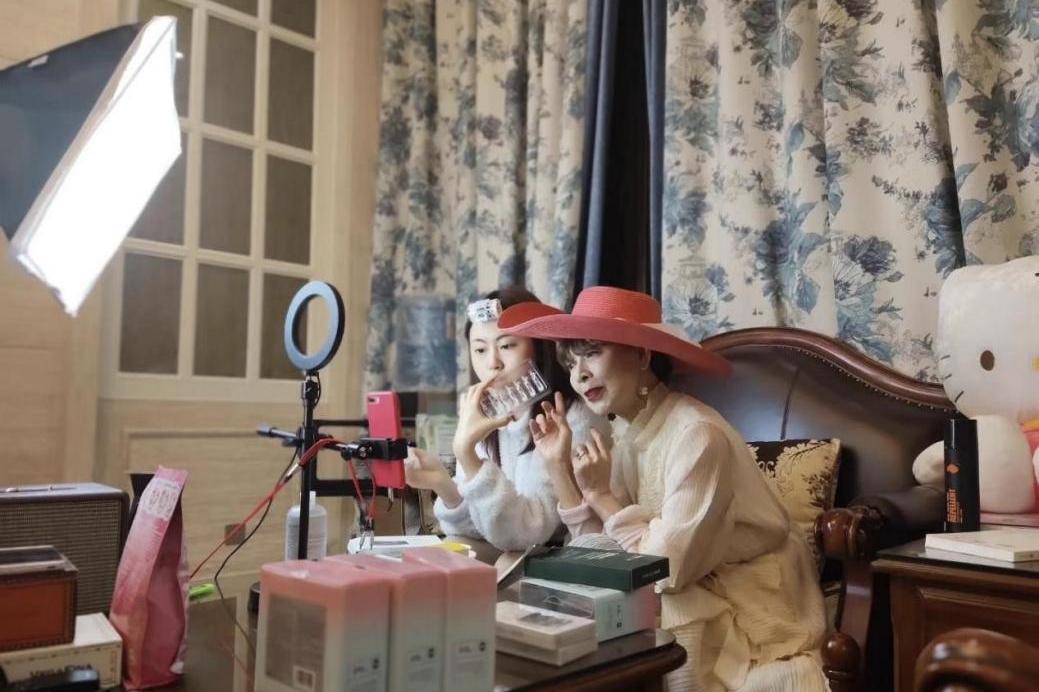
A fashion influencer in her eighties (right) does a livestream. (Photo provided by the Communication University of China Press)
On social media platforms, senior users are quietly reshaping perceptions of aging. Today, it's common to see 90-year-old men sipping bubble tea and playing basketball, or women in their sixties confidently sharing their life stories through short videos.
According to a statistical report on China's internet development, by June 2025, the number of internet users aged 60 and above in China had reached 161 million, with an internet penetration rate exceeding 52 percent within this demographic. Transitioning from passive users to active content creators, seniors are entering the digital age with a newfound sense of presence.
Take Mr. Wang, a 90-year-old who shares his vibrant life on short video platforms. Bubble tea, traditional Nuo dance, basketball, and urban explorations are regular features of his content.
"I used to plan five 'one-hour activities' each day: basketball, dance, music practice, news reading, and outdoor time with my wife. Since starting my social media account, that has become six activities, adding an hour for posting, reading comments, and replying," Wang wrote in his 2025 year-end summary. "It's been my busiest year since retiring."
His journey began unexpectedly at the end of 2024 when a video of him ordering bubble tea went viral. Inspired by the response, Wang started sharing his daily life online. Within just over a year, he evolved from a novice who struggled with basic tasks like forwarding links to a popular creator with over 100,000 followers.
His story is far from unique. According to the global travel media platform Travel and Tour World, senior content creators are increasingly influencing audiences' travel and consumption decisions, thanks to their authenticity and natural relatability.
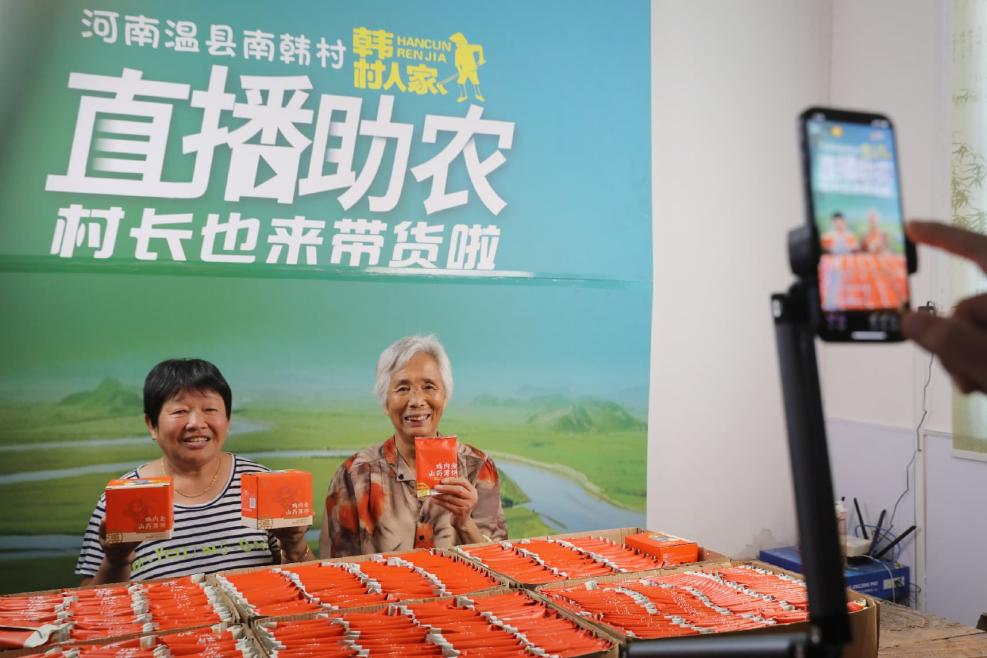
Two seniors sell local farm produce via livestream in Nanhan village, Jiaozuo, central China's Henan province. (Photo/Xu Hongxing)
Why do videos by seniors resonate so strongly with younger viewers?
Jin Yong'ai, a professor at the Population Development Studies Center of Renmin University of China, explained that seniors bring valuable life experience and resonant stories. In the fast-paced online world, their calm and sincere communication offers young people both insight and emotional comfort.
"The warmth and wisdom of older generations can help ease the anxiety and loneliness many young people feel, while also giving seniors a stronger sense of fulfillment," Jin added.
Xin Tao, a senior engineer at the China Research Center on Aging, noted that the rise of older creators reflects broader social and technological changes. "This trend is driven by multiple factors, including desires for self-realization and social participation, platform incentives and targeted support, intergenerational collaboration, and a more inclusive cultural mindset," he said.
Through content creation, Xin emphasized, seniors are not only boosting digital engagement and cultural preservation but also transforming their rich human capital into a new driver of social development.
There's another influencer who calls herself "Chaoyi" online, which means "fashionable aunt." From sharing her energetic daily life as a sanitation worker to showcasing her creativity in handcrafting a baby room, the 61-year-old woman has gained over 300,000 followers in just over a year with her optimistic and humorous style.
Like many older creators, she is curious about new things. However, she still relies on her son and daughter-in-law for much of the video production work.
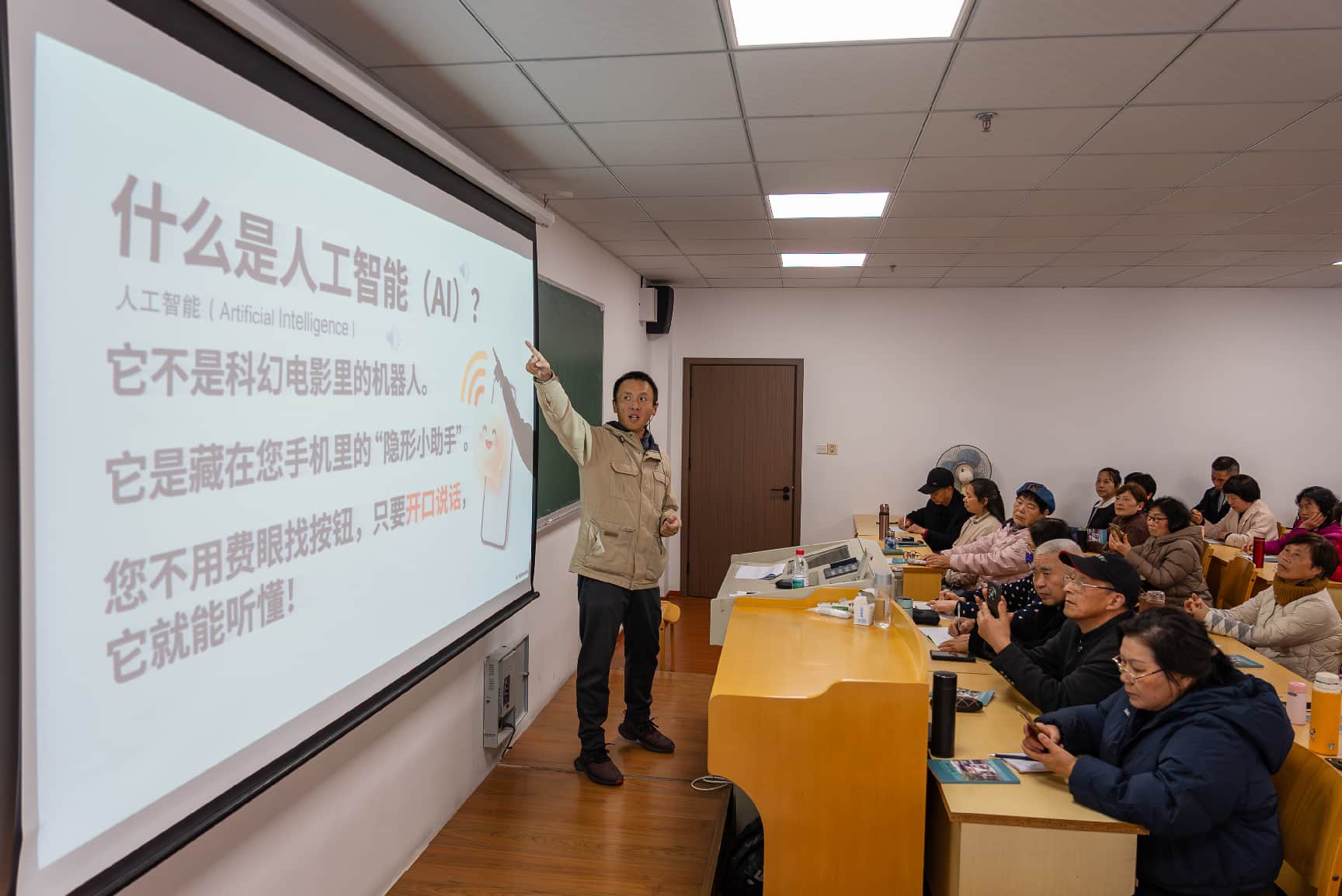
Seniors learn what AI can do at a university for the aged in Jinhua, east China's Zhejiang province. (Photo/Lou Jiyang)
Her experience reflects a broader reality. For many seniors, fully mastering digital tools and independently producing content remains a challenge. To help bridge the digital divide, China has introduced a national standard on age-friendly smart multimedia terminals. Communities across the country regularly offer smartphone training, while user-friendly AI-powered devices are being rolled out, combining technological accessibility with human-centered support.
Meanwhile, Deng Hong, a 72-year-old Chinese expatriate in France, greets her audience cheerfully: "Hello everyone, I'm Hongjie, living in France." Creating short videos has added a vibrant new dimension to her life. "I want to show my confidence in life and share positive energy through my videos," she said. "I'm planning to learn video editing myself. With today's powerful AI tools, I will be able to add scripts to my videos in the future."
"Older people should not be seen simply as a group in need of care," Jin emphasized. "They are actively participating in society." Recent survey data from her research team showed that in areas such as instant messaging and online payments, seniors' internet usage is now largely on par with other age groups.
From Wang's six "one-hour activities," to Chaoyi's family-assisted creativity, and to Deng Hong's exploration of AI, a growing number of older creators are finding their unique rhythms in the digital world, redefining what it means to age in the modern era.