


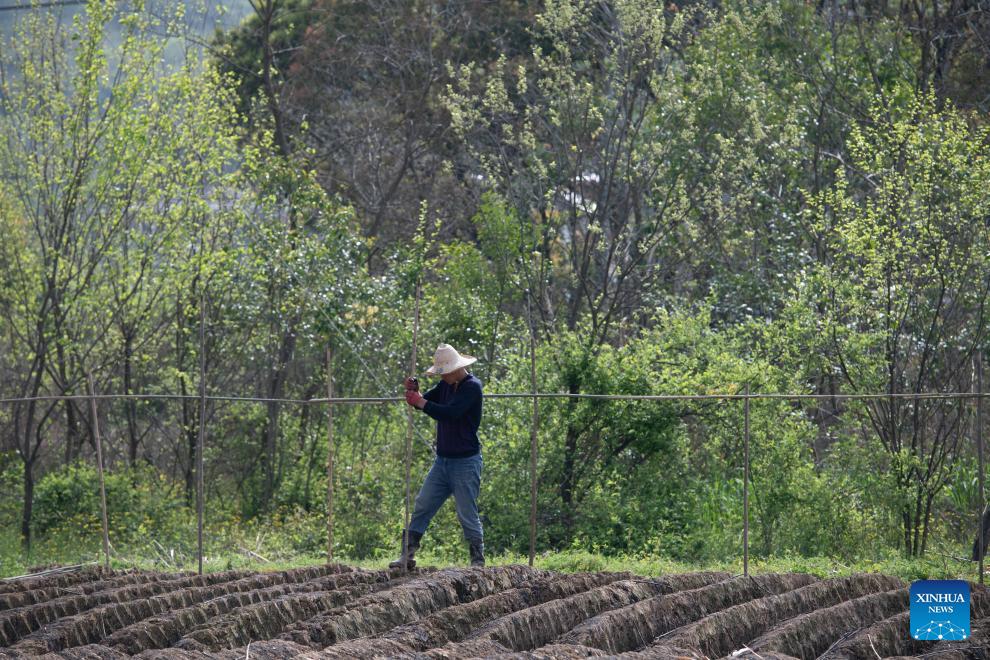
A farmer builds ginger sheds in a field in Datong Town of Tongling, east China's Anhui Province, on April 5, 2026. Around the Qingming Festival, farmers in Tongling are busy ridging fields, planting white ginger, applying fertilizer, and building ginger sheds.
Tongling white ginger cultivation in Anhui has a history of over 2,000 years. People here have long cultivated an indigenous variety known as white ginger. Based on differences in the characteristics and growing conditions of ginger and rice, locals have developed an ecological planting pattern that improves the use of water and land resources and enhances plant disease control. Over time, distinctive ginger-growing techniques have also been developed, including ginger pavilions for seed preservation and germination, high-ridge planting, and shading sheds.
In 2023, the Tongling White Ginger Plantation System was recognized by the Food and Agriculture Organization of the United Nations as a Globally Important Agricultural Heritage System (GIAHS). (Xinhua/Zhang Duan)
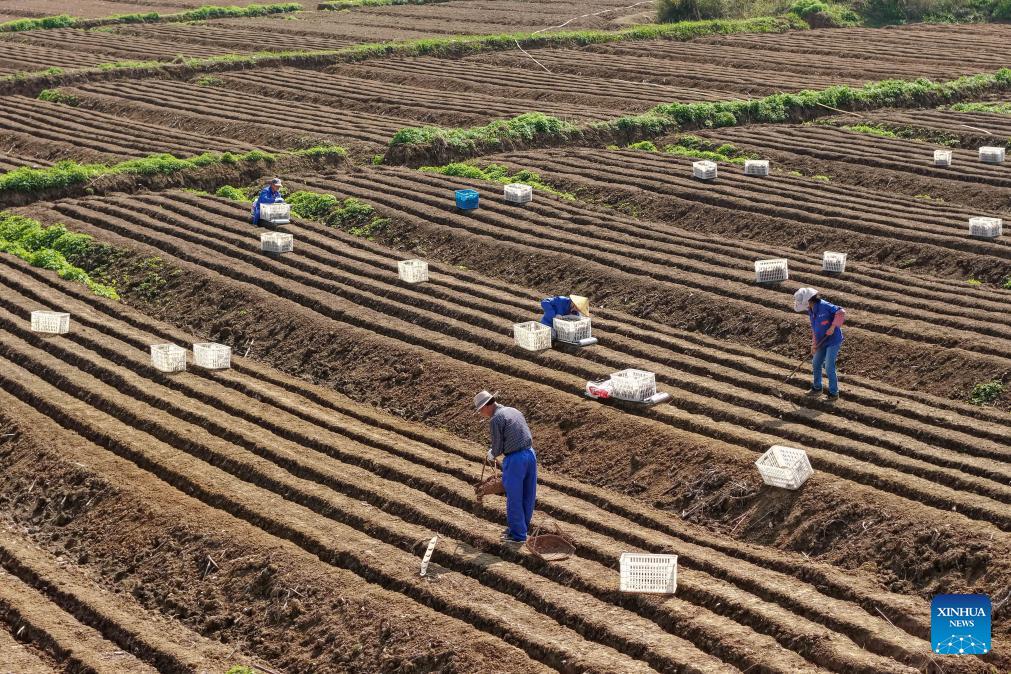
A drone photo taken on April 2, 2026 shows farmers working in the fields in Tianmen Town of Tongling, east China's Anhui Province. Around the Qingming Festival, farmers in Tongling are busy ridging fields, planting white ginger, applying fertilizer, and building ginger sheds.
Tongling white ginger cultivation in Anhui has a history of over 2,000 years. People here have long cultivated an indigenous variety known as white ginger. Based on differences in the characteristics and growing conditions of ginger and rice, locals have developed an ecological planting pattern that improves the use of water and land resources and enhances plant disease control. Over time, distinctive ginger-growing techniques have also been developed, including ginger pavilions for seed preservation and germination, high-ridge planting, and shading sheds.
In 2023, the Tongling White Ginger Plantation System was recognized by the Food and Agriculture Organization of the United Nations as a Globally Important Agricultural Heritage System (GIAHS). (Photo by Chu Zhuchuan/Xinhua)
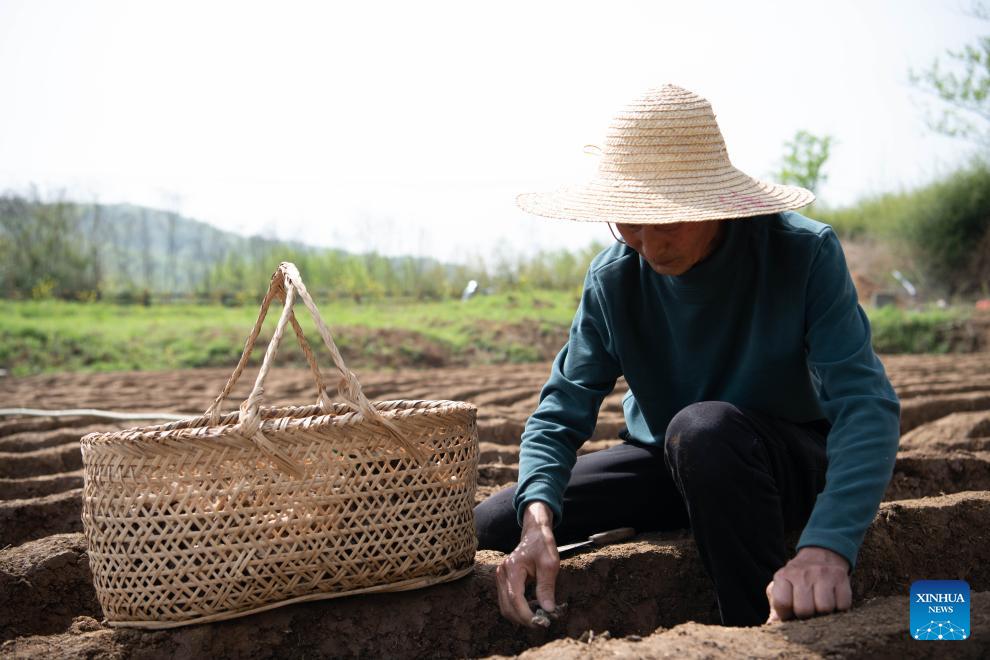
A farmer plants white gingers in a field in Datong Town of Tongling, east China's Anhui Province, on April 5, 2026. Around the Qingming Festival, farmers in Tongling are busy ridging fields, planting white ginger, applying fertilizer, and building ginger sheds.
Tongling white ginger cultivation in Anhui has a history of over 2,000 years. People here have long cultivated an indigenous variety known as white ginger. Based on differences in the characteristics and growing conditions of ginger and rice, locals have developed an ecological planting pattern that improves the use of water and land resources and enhances plant disease control. Over time, distinctive ginger-growing techniques have also been developed, including ginger pavilions for seed preservation and germination, high-ridge planting, and shading sheds.
In 2023, the Tongling White Ginger Plantation System was recognized by the Food and Agriculture Organization of the United Nations as a Globally Important Agricultural Heritage System (GIAHS). (Xinhua/Zhang Duan)
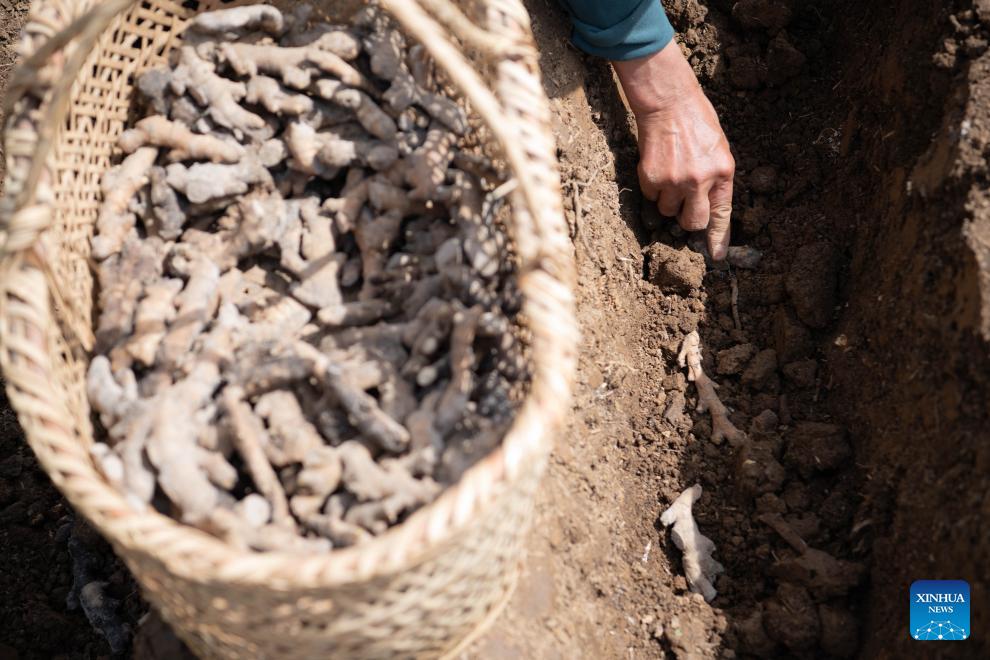
A farmer plants white gingers in a field in Datong Town of Tongling, east China's Anhui Province, on April 5, 2026. Around the Qingming Festival, farmers in Tongling are busy ridging fields, planting white ginger, applying fertilizer, and building ginger sheds.
Tongling white ginger cultivation in Anhui has a history of over 2,000 years. People here have long cultivated an indigenous variety known as white ginger. Based on differences in the characteristics and growing conditions of ginger and rice, locals have developed an ecological planting pattern that improves the use of water and land resources and enhances plant disease control. Over time, distinctive ginger-growing techniques have also been developed, including ginger pavilions for seed preservation and germination, high-ridge planting, and shading sheds.
In 2023, the Tongling White Ginger Plantation System was recognized by the Food and Agriculture Organization of the United Nations as a Globally Important Agricultural Heritage System (GIAHS). (Xinhua/Zhang Duan)
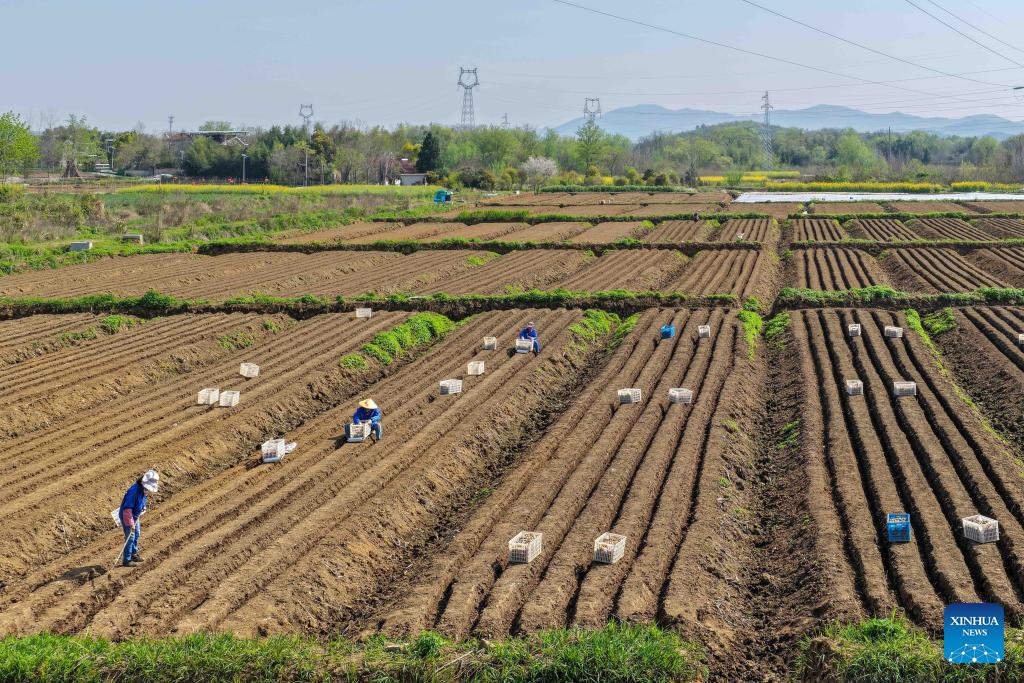
A drone photo taken on April 2, 2026 shows farmers working in the fields in Tianmen Town of Tongling, east China's Anhui Province. Around the Qingming Festival, farmers in Tongling are busy ridging fields, planting white ginger, applying fertilizer, and building ginger sheds.
Tongling white ginger cultivation in Anhui has a history of over 2,000 years. People here have long cultivated an indigenous variety known as white ginger. Based on differences in the characteristics and growing conditions of ginger and rice, locals have developed an ecological planting pattern that improves the use of water and land resources and enhances plant disease control. Over time, distinctive ginger-growing techniques have also been developed, including ginger pavilions for seed preservation and germination, high-ridge planting, and shading sheds.
In 2023, the Tongling White Ginger Plantation System was recognized by the Food and Agriculture Organization of the United Nations as a Globally Important Agricultural Heritage System (GIAHS). (Photo by Chu Zhuchuan/Xinhua)
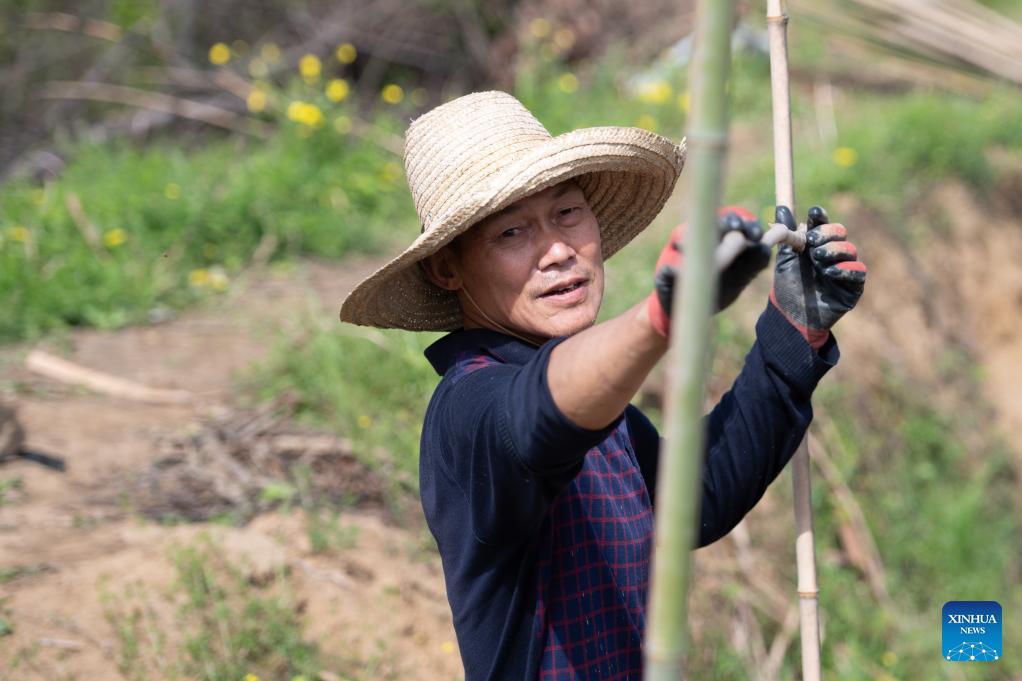
A farmer builds ginger sheds in a field in Datong Town of Tongling, east China's Anhui Province, on April 5, 2026. Around the Qingming Festival, farmers in Tongling are busy ridging fields, planting white ginger, applying fertilizer, and building ginger sheds.
Tongling white ginger cultivation in Anhui has a history of over 2,000 years. People here have long cultivated an indigenous variety known as white ginger. Based on differences in the characteristics and growing conditions of ginger and rice, locals have developed an ecological planting pattern that improves the use of water and land resources and enhances plant disease control. Over time, distinctive ginger-growing techniques have also been developed, including ginger pavilions for seed preservation and germination, high-ridge planting, and shading sheds.
In 2023, the Tongling White Ginger Plantation System was recognized by the Food and Agriculture Organization of the United Nations as a Globally Important Agricultural Heritage System (GIAHS). (Xinhua/Zhang Duan)
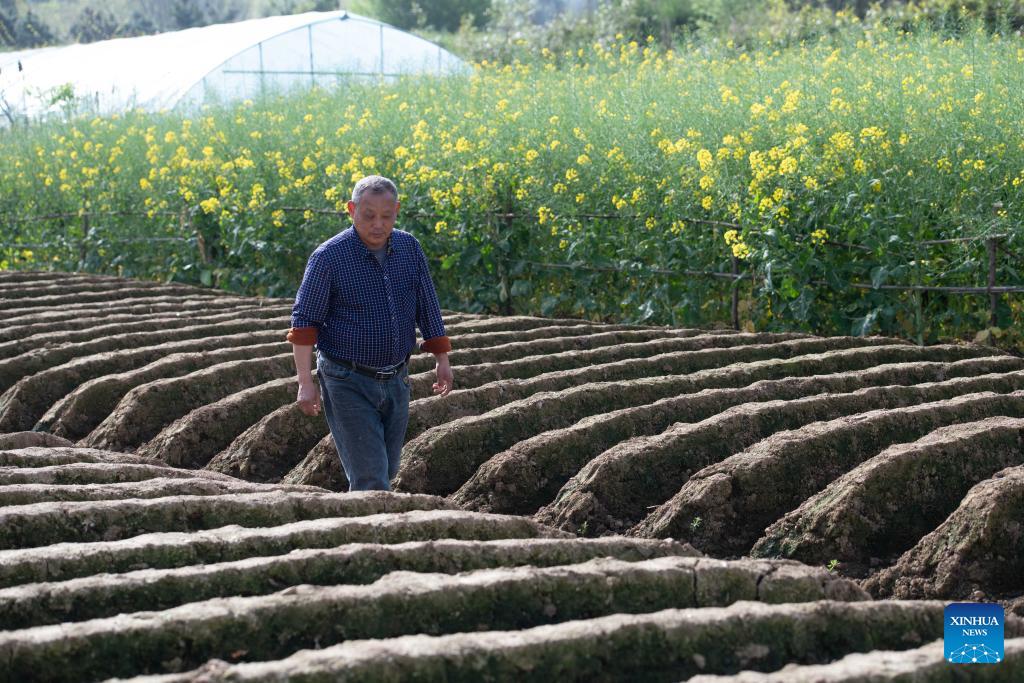
A farmer checks on white gingers in a field in Datong Town of Tongling, east China's Anhui Province, on April 5, 2026. Around the Qingming Festival, farmers in Tongling are busy ridging fields, planting white ginger, applying fertilizer, and building ginger sheds.
Tongling white ginger cultivation in Anhui has a history of over 2,000 years. People here have long cultivated an indigenous variety known as white ginger. Based on differences in the characteristics and growing conditions of ginger and rice, locals have developed an ecological planting pattern that improves the use of water and land resources and enhances plant disease control. Over time, distinctive ginger-growing techniques have also been developed, including ginger pavilions for seed preservation and germination, high-ridge planting, and shading sheds.
In 2023, the Tongling White Ginger Plantation System was recognized by the Food and Agriculture Organization of the United Nations as a Globally Important Agricultural Heritage System (GIAHS). (Xinhua/Zhang Duan)
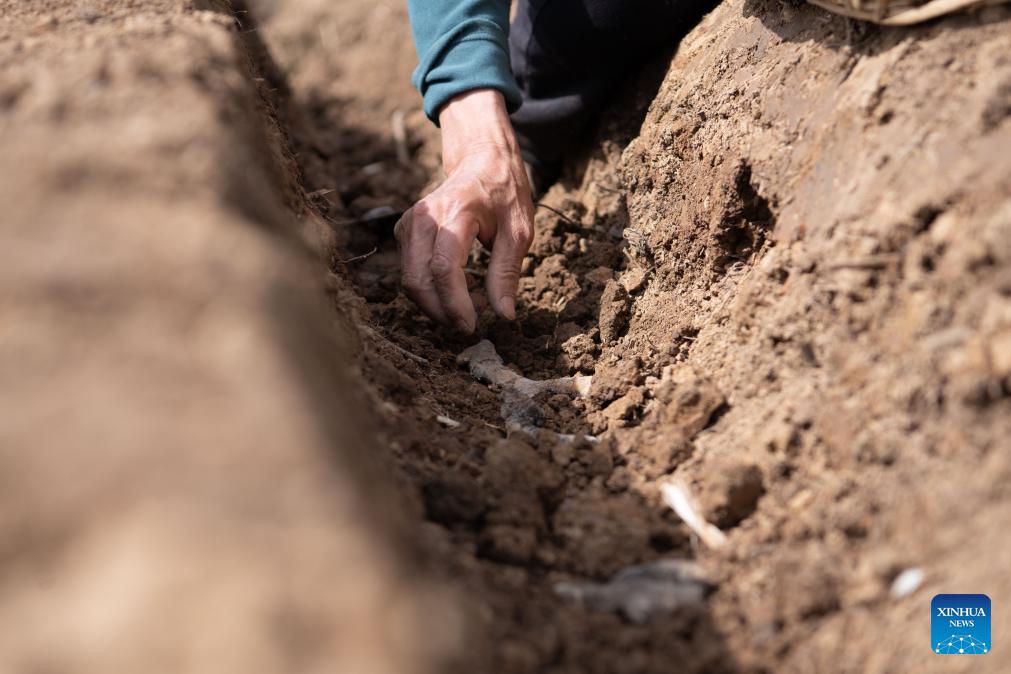
A farmer plants white gingers in a field in Datong Town of Tongling, east China's Anhui Province, on April 5, 2026. Around the Qingming Festival, farmers in Tongling are busy ridging fields, planting white ginger, applying fertilizer, and building ginger sheds.
Tongling white ginger cultivation in Anhui has a history of over 2,000 years. People here have long cultivated an indigenous variety known as white ginger. Based on differences in the characteristics and growing conditions of ginger and rice, locals have developed an ecological planting pattern that improves the use of water and land resources and enhances plant disease control. Over time, distinctive ginger-growing techniques have also been developed, including ginger pavilions for seed preservation and germination, high-ridge planting, and shading sheds.
In 2023, the Tongling White Ginger Plantation System was recognized by the Food and Agriculture Organization of the United Nations as a Globally Important Agricultural Heritage System (GIAHS). (Xinhua/Zhang Duan)
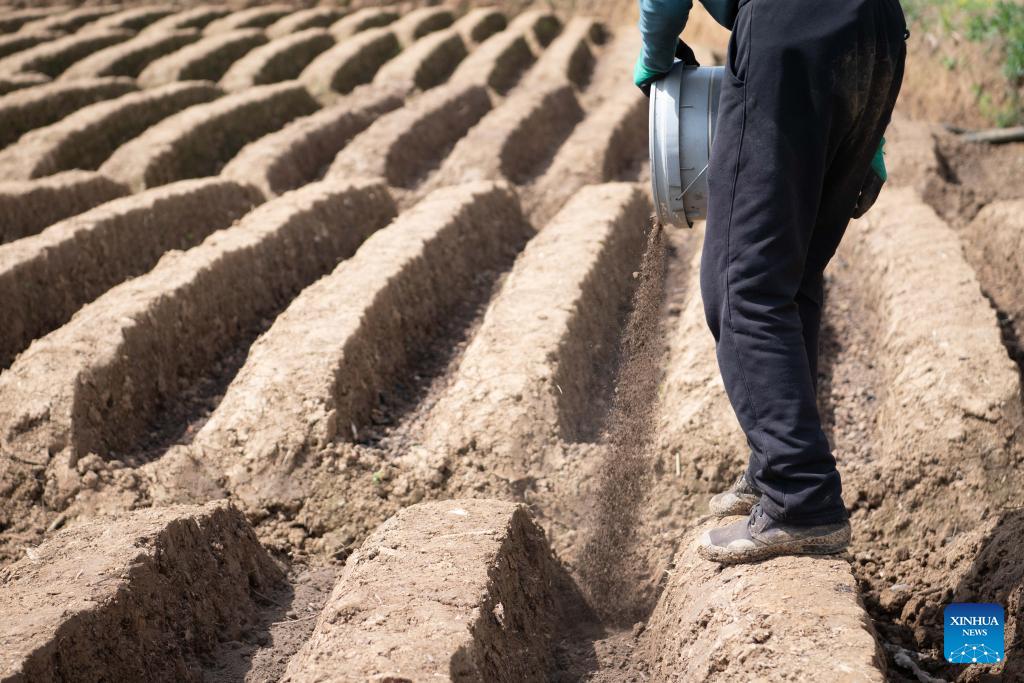
A farmer applies fertilizer in a field in Datong Town of Tongling, east China's Anhui Province, on April 5, 2026. Around the Qingming Festival, farmers in Tongling are busy ridging fields, planting white ginger, applying fertilizer, and building ginger sheds.
Tongling white ginger cultivation in Anhui has a history of over 2,000 years. People here have long cultivated an indigenous variety known as white ginger. Based on differences in the characteristics and growing conditions of ginger and rice, locals have developed an ecological planting pattern that improves the use of water and land resources and enhances plant disease control. Over time, distinctive ginger-growing techniques have also been developed, including ginger pavilions for seed preservation and germination, high-ridge planting, and shading sheds.
In 2023, the Tongling White Ginger Plantation System was recognized by the Food and Agriculture Organization of the United Nations as a Globally Important Agricultural Heritage System (GIAHS). (Xinhua/Zhang Duan)
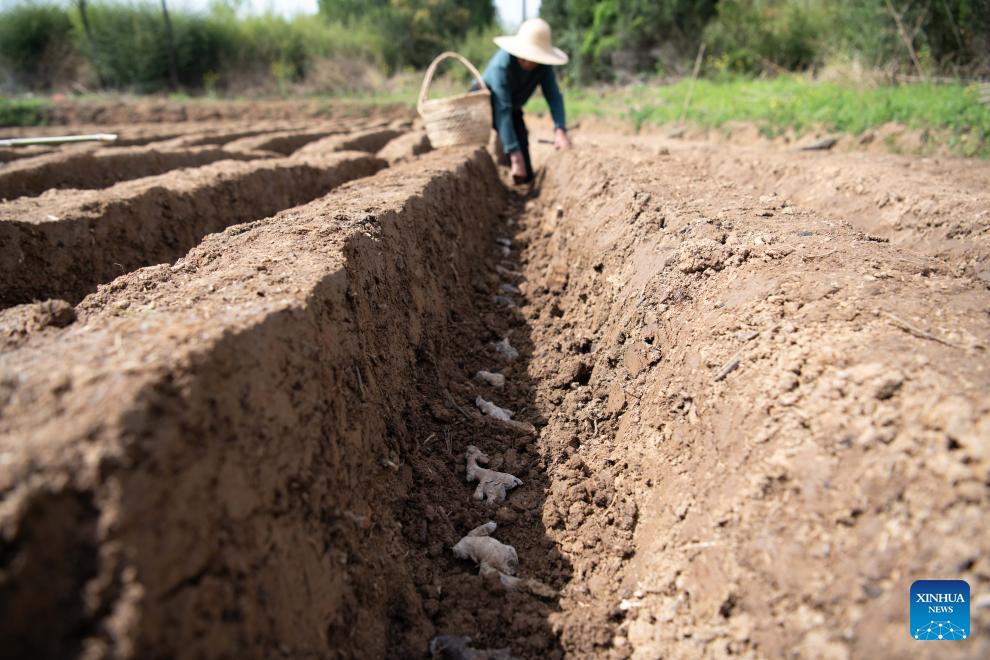
A farmer plants white gingers in a field in Datong Town of Tongling, east China's Anhui Province, on April 5, 2026. Around the Qingming Festival, farmers in Tongling are busy ridging fields, planting white ginger, applying fertilizer, and building ginger sheds.
Tongling white ginger cultivation in Anhui has a history of over 2,000 years. People here have long cultivated an indigenous variety known as white ginger. Based on differences in the characteristics and growing conditions of ginger and rice, locals have developed an ecological planting pattern that improves the use of water and land resources and enhances plant disease control. Over time, distinctive ginger-growing techniques have also been developed, including ginger pavilions for seed preservation and germination, high-ridge planting, and shading sheds.
In 2023, the Tongling White Ginger Plantation System was recognized by the Food and Agriculture Organization of the United Nations as a Globally Important Agricultural Heritage System (GIAHS). (Xinhua/Zhang Duan)