



Snow falls in the Taklimakan Desert, northwest China's Xinjiang Uygur Autonomous Region, January 29, 2026. /VCG
This year, Hotan Prefecture in northwest China's Xinjiang Uygur Autonomous Region plans to rehabilitate over 2.23 million mu of desertified land, including the planting of 266,900 mu of artificial forest, with 150,700 mu scheduled for spring planting. At present, regions in Xinjiang have fully launched the green barrier expansion project along the edges of the Taklimakan Desert.
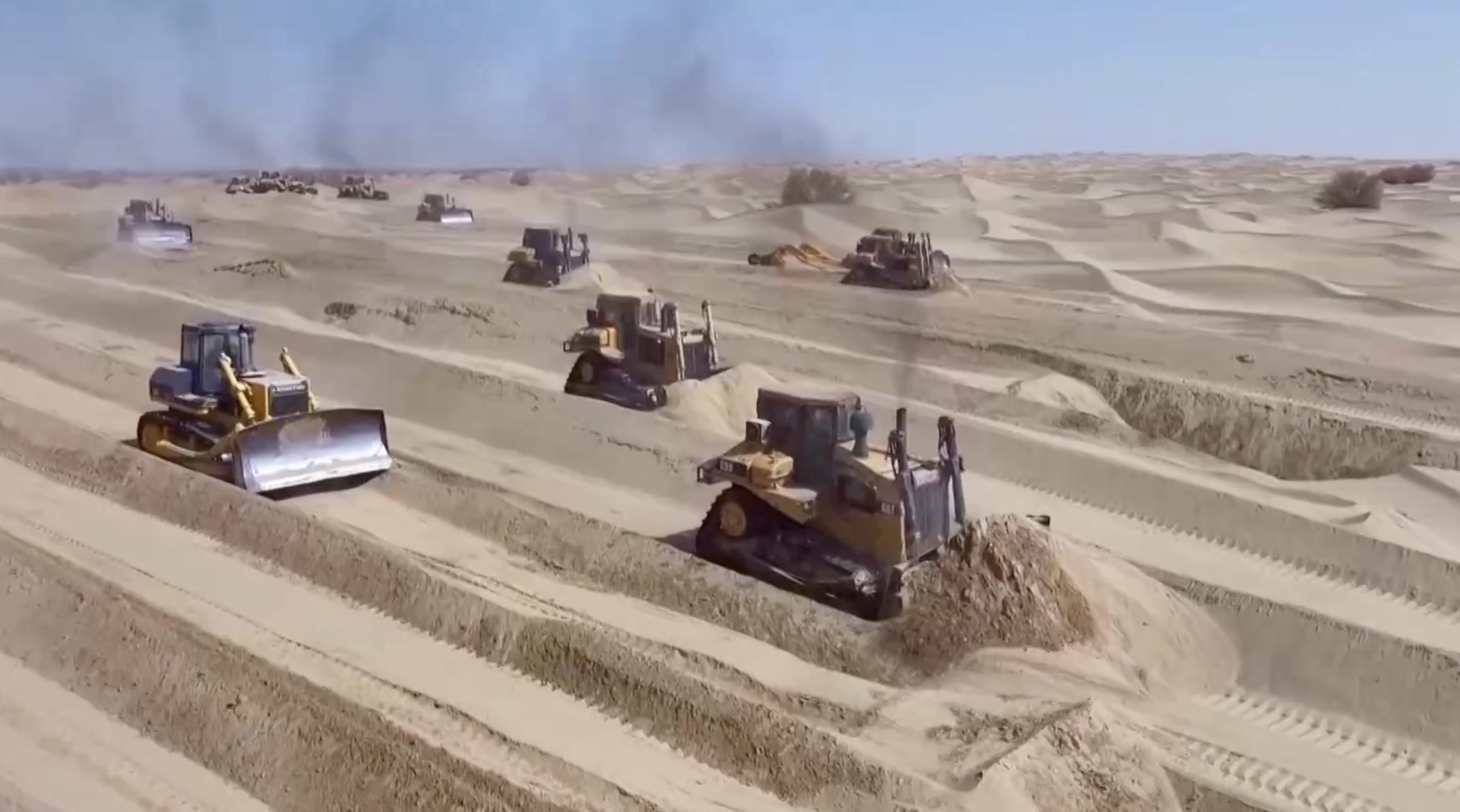
The bulldozers are leveling the dunes. /CMG
At a desert control site in Hotan, towering sand dunes – some reaching four to five meters high – stretch across the landscape. Before any planting can begin, heavy machinery moves in to reshape the terrain. Bulldozers level the dunes by shaving off the peaks and filling in the depressions, while graders follow to smooth and compact the surface. This approach helps prevent loose sand from drifting, creating more stable conditions for planting.
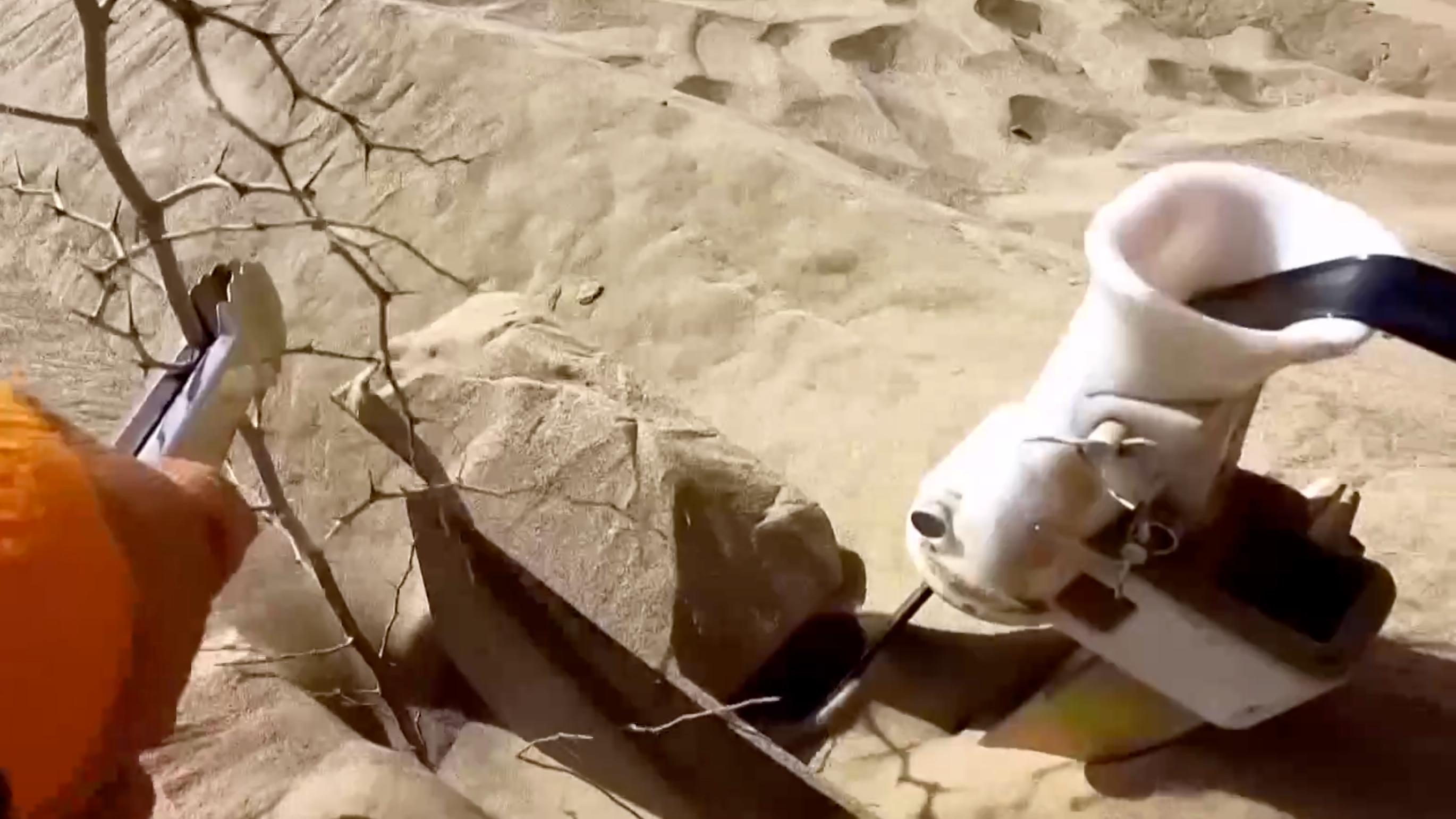
Seedlings are planted with the help of tree-planting machines. /CMG
Tree-planting machines, now widely used in the region, can plant seedlings and lay drip irrigation tapes simultaneously. A single dual-track machine can plant more than 13,000 trees per day, over ten times the efficiency of traditional manual methods.
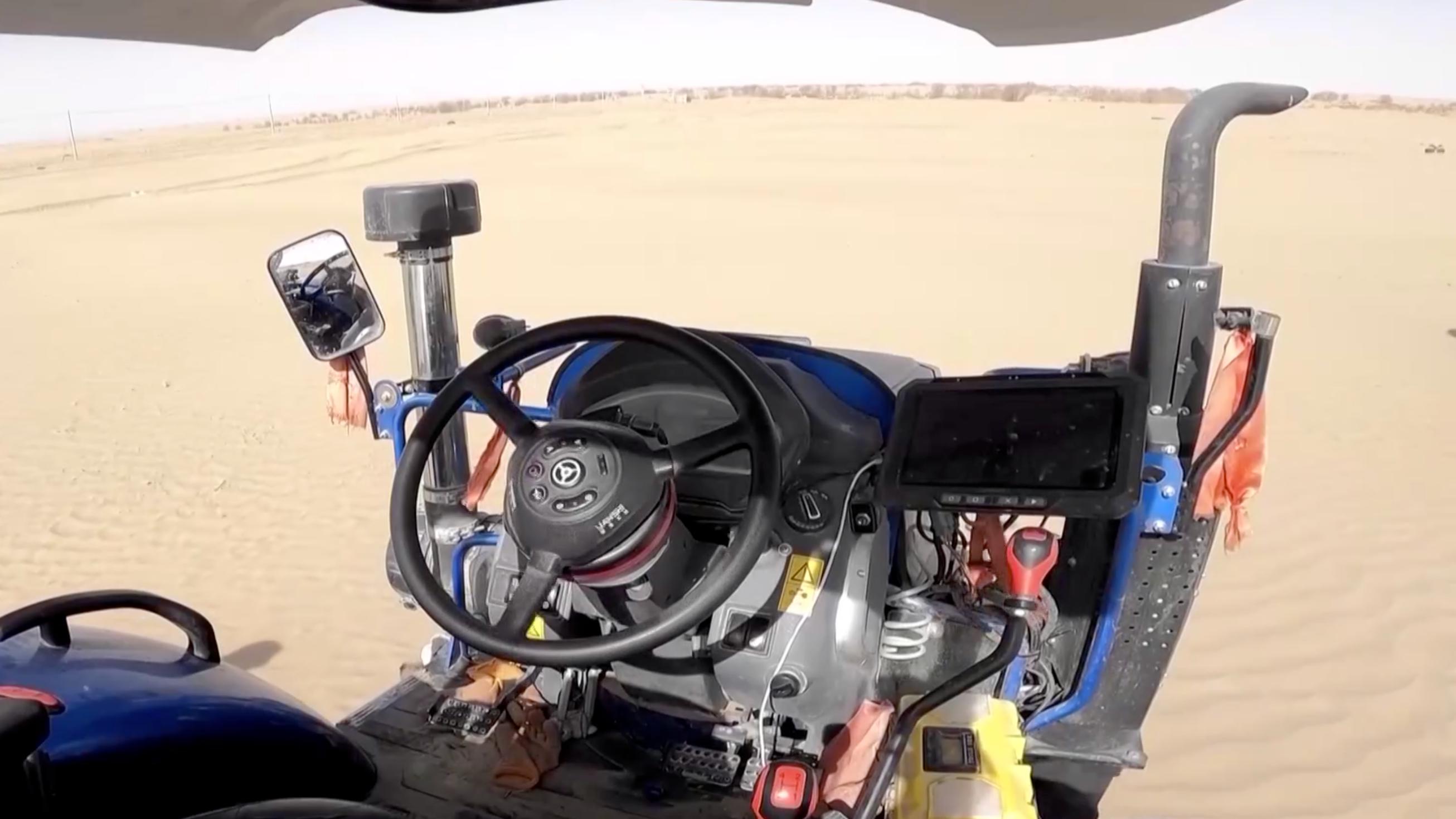
Autonomous tree-planting machines are at work. /CMG
Some of these machines operate autonomously, guided by China's BeiDou Navigation Satellite System. Moving at a steady pace, they leave behind straight rows of newly planted saplings, spaced about five meters apart.
The gaps between rows are not left unused. Seeders follow behind, distributing alfalfa and rapeseed into the gaps. This intercropping method allows the land to serve multiple purposes, stabilizing soil while also supporting vegetation growth.

A view of the Taklimakan Desert in autumn, northwest China's Xinjiang Uygur Autonomous Region, November 1, 2025. /VCG