


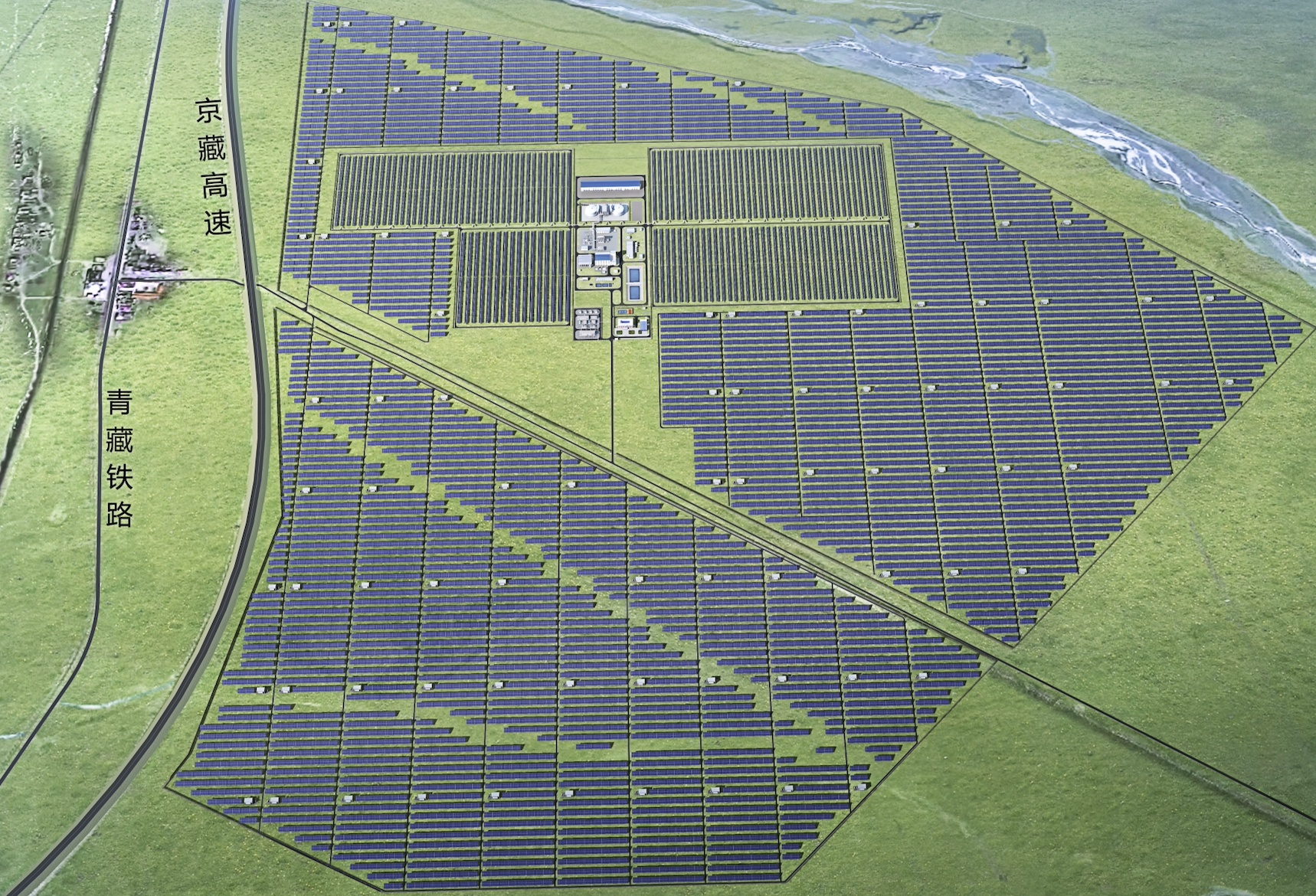
A render of the Wumatang clean energy project with labels marking the name of a highway and a railroad. /CMG
A massive clean energy project broke ground on Monday in southwest China's Xizang Autonomous Region, marking a major step forward in reliable renewable power.
Located in Dangxiong County at an elevation of 4,550 meters, the site is officially the highest trough-style solar thermal plant in the world.
How the tech works
Most people are familiar with standard solar panels that turn light directly into electricity. This project, also known as the Wumatang Project, uses a different method called concentrated solar power (CSP).
Instead of flat panels, it uses a vast field of curved, U-shaped mirrors to focus sunlight onto long tubes filled with a special oil. This heated oil is then used to warm up giant tanks of molten salt. This setup essentially functions like a massive thermal battery.
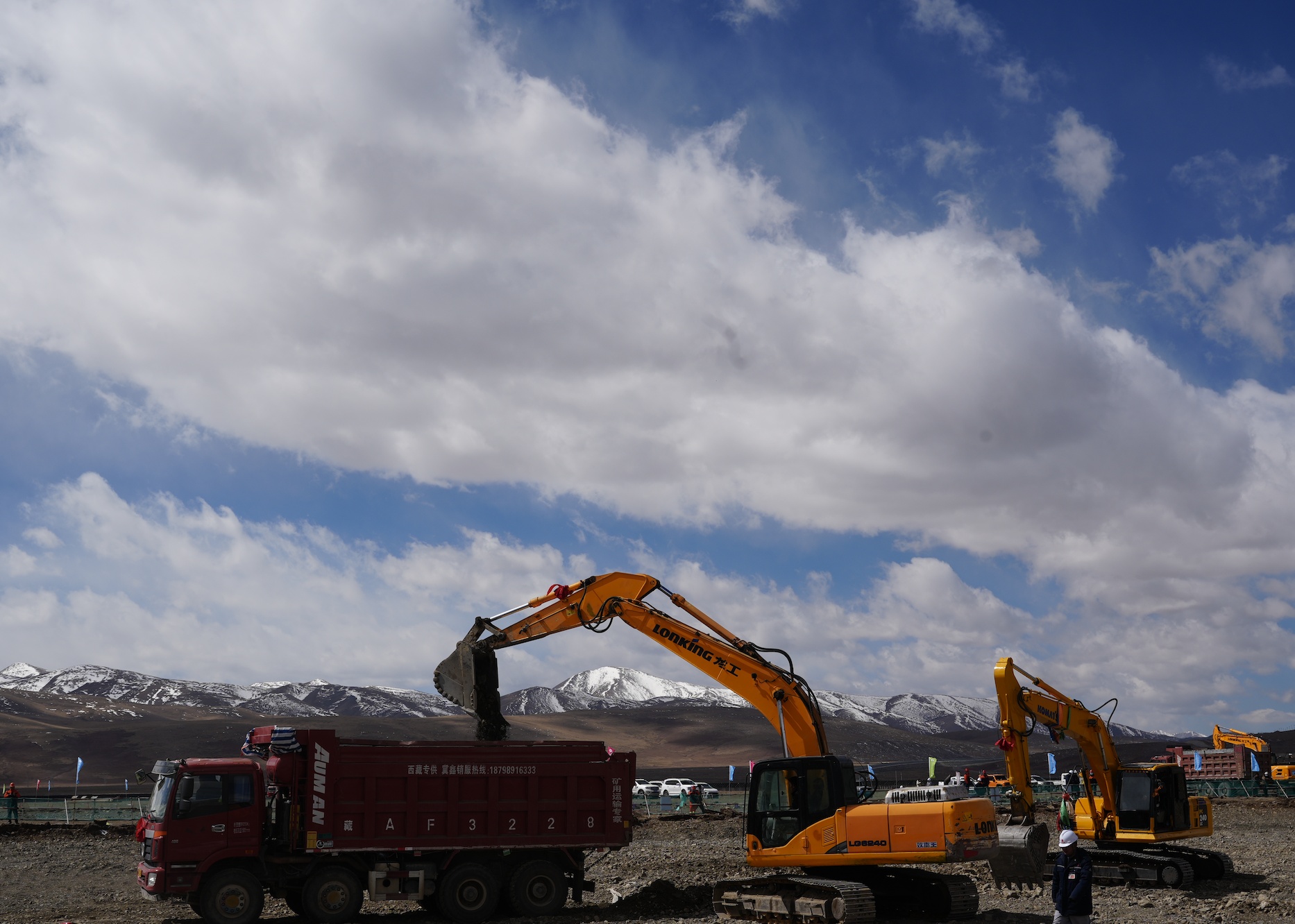
Workers and engineers start building a solar thermal plant for a clean energy project near Wumatang Town, Dangxiong County, southwest China's Xizang Autonomous Region, April 6, 2026. /CMG
While typical solar panels stop producing power the moment the sun goes down or a cloud passes by, this plant can store the sun's heat to keep generating electricity for up to six hours after dark, helping to address the intermittency that can challenge power grids.
Building in extreme conditions
Building a high-tech facility at nearly 5,000 meters above sea level presents brutal challenges. The air is thin and the temperature swings between day and night are extreme.
To keep workers safe, the project team has installed specialized heating and oxygen systems in living quarters, along with high-pressure oxygen chambers for faster recovery.
Environmental and local impact
The project is designed to coexist with the local environment using a "solar-plus-grazing" model. The solar equipment is raised to allow local livestock to graze freely underneath, preserving the traditional lifestyle of the region's herders.
Once the complex is fully operational in 2027, it is expected to generate roughly 719 million kilowatt-hours of clean electricity annually. This will replace the burning of approximately 216,900 tonnes of coal each year – cutting carbon dioxide emissions by more than 652,300 tonnes and helping to keep the region's air clean.
The facility is being developed by China General Nuclear Power Corporation (CGN).