



A coffee festival is held in Zhoushan, east China's Zhejiang Province, July 13, 2025. (Photo: VCG)
From waking up to falling asleep, modern life in China runs on services. A typical urban white-collar worker relies on dozens of services each day, demonstrating the efficiency, connectivity and inclusiveness of China's digital-enabled service ecosystem.
A day in the life vividly illustrates the scale and penetration of service consumption. At 7 a.m., a smartphone alarm and weather app signal the start of the day, supported by digital platforms, big data algorithms, cloud computing and mobile internet. By 8:30 a.m., subways, ride-hailing and shared bikes take over, backed by intelligent transport systems, real-time traffic monitoring and cashless payment.
At lunchtime, food delivery connects consumers to restaurants through integrated logistics, rider dispatching systems and third-party payment platforms. After work, dining out, express delivery and on-demand home cleaning add further layers of convenience. Even before bed, smart devices track sleep quality, bringing health management services directly to households.
Behind these simple daily routines lies a vast, efficient and inclusive service system that has evolved from a supplementary industry into a core engine of China's economic transformation. The robust development of China's service industry has not only reshaped people's lifestyles but also redefined the structure and momentum of the national economy.
As the 15th Five-Year Plan kicks off, China is stepping up efforts to foster new growth areas in consumer services, including public health, smart elderly care, cultural tourism, community services and on-demand home services.
This year's government work report further emphasizes improving national standards for the service sector and building the "China service" brand. This strategic policy push underscores the country's shift from volume-focused expansion to quality-oriented upgrading, positioning service consumption as vital to both people's well-being and long-term economic vitality.
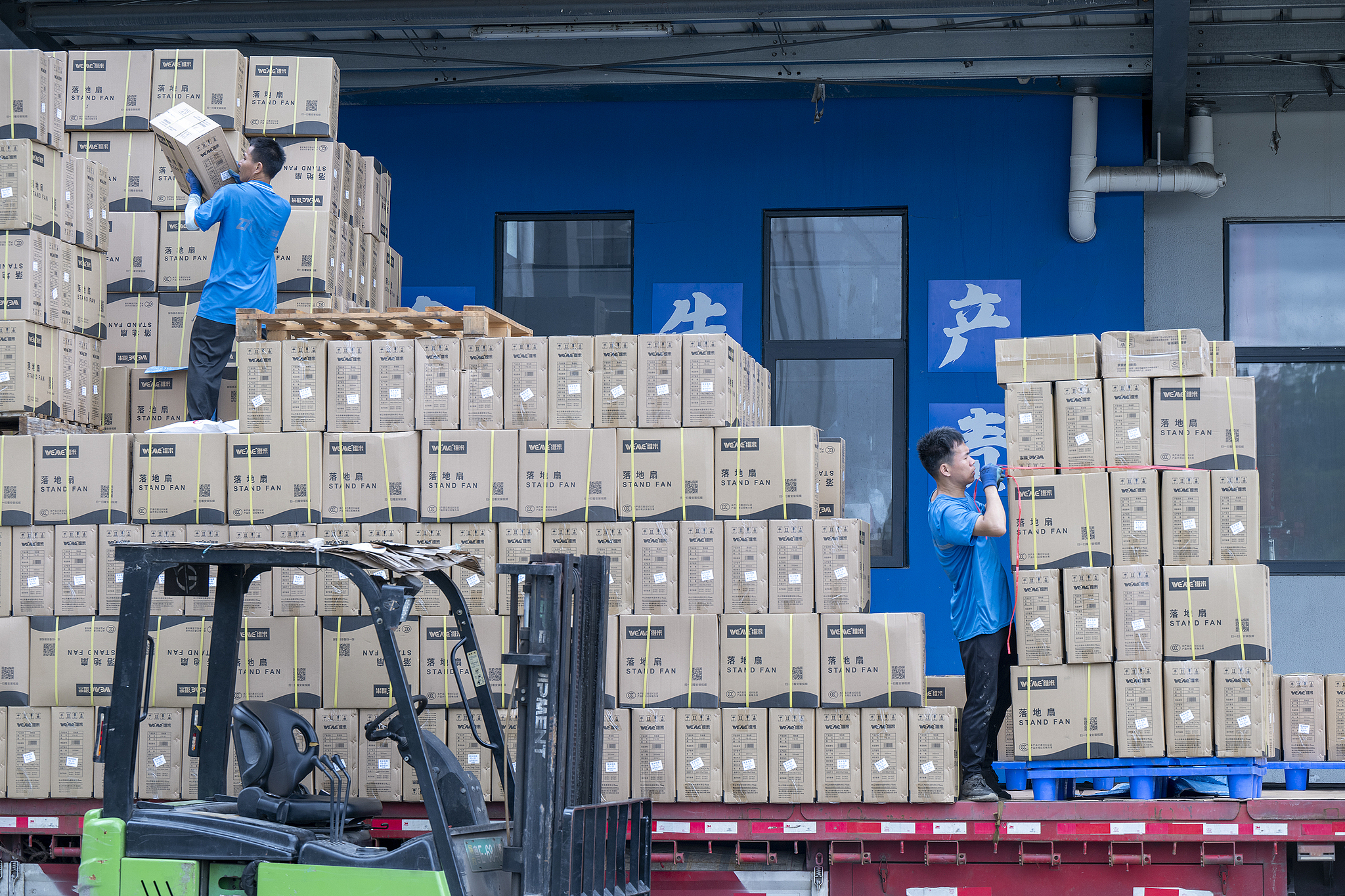
Workers coordinate the loading and unloading of express parcels at an e-commerce express industrial park in Wuzhou, south China's Guangxi Zhuang Autonomous Region, May 21, 2024. (Photo: VCG)
Rising momentum of service consumption
In 2025, the added value of China's service sector accounted for 57.7% of its GDP, contributing 61.4% to national economic growth, according to the National Bureau of Statistics. The country's household per capita service expenditure accounted for 46.1% of residents' per capita consumption expenditure.
Meanwhile, the service sector, as a massive "reservoir" for employment, currently absorbs approximately 50 percent of the total workforce, indicating significant potential for further job growth in the field.
Notably, the expansion of service consumption in China has been both steady and remarkable. In recent years, the scale and proportion of service consumption have continued to rise, becoming the most dynamic part of household spending.
Services have evolved from a supporting role to a stabilizing cornerstone of the national economy, replacing traditional sectors as the primary contributor to GDP growth and job creation – a transformation that reflects a fundamental upgrade in consumer demand: as living standards improve, Chinese households are spending more on experience, convenience, health, culture and self-improvement.
Concrete examples illustrate this shift in vivid detail. Catering and tourism have become major pillars of service consumption, with weekend getaways, themed inns, intangible cultural heritage experiences and nighttime economy projects drawing large crowds. During major holidays, scenic spots, performance venues and local cultural blocks are often fully booked, showing strong consumer enthusiasm for experiential services.
Home services have also grown rapidly, with standardized cleaning, nursing, childcare and elderly care services widely available via mobile apps. Families can book one-time cleaning, long-term childcare or elderly companionship with just a few taps, greatly easing the pressure of household chores.
Digital education, online medical consultation and community services have also become regular items in household spending, especially for young parents and elderly residents, who benefit from convenient, accessible and affordable service resources.
With the rapid rise of "Made in China," sectors such as technology services, modern logistics, and testing and inspection services are entering a golden age of development. These services boost industrial efficiency and create high-quality jobs, forming a virtuous cycle with manufacturing upgrading.
In addition, consumer services covering food, clothing, housing, transportation, wellness and entertainment have continuously created new scenarios and business formats to meet the people's growing needs for a better life.
Wan Zhe, professor at Beijing Normal University, noted that service consumption now accounts for nearly half of all household spending, serving as a core driver of overall consumption growth.
Closely connecting people's livelihood, economic growth and employment, high-quality service supply can unlock trillions of yuan in consumption potential, Wan said, adding that the vigorous development of service consumption is crucial for establishing a long-term mechanism to expand domestic demand and build a new development paradigm.
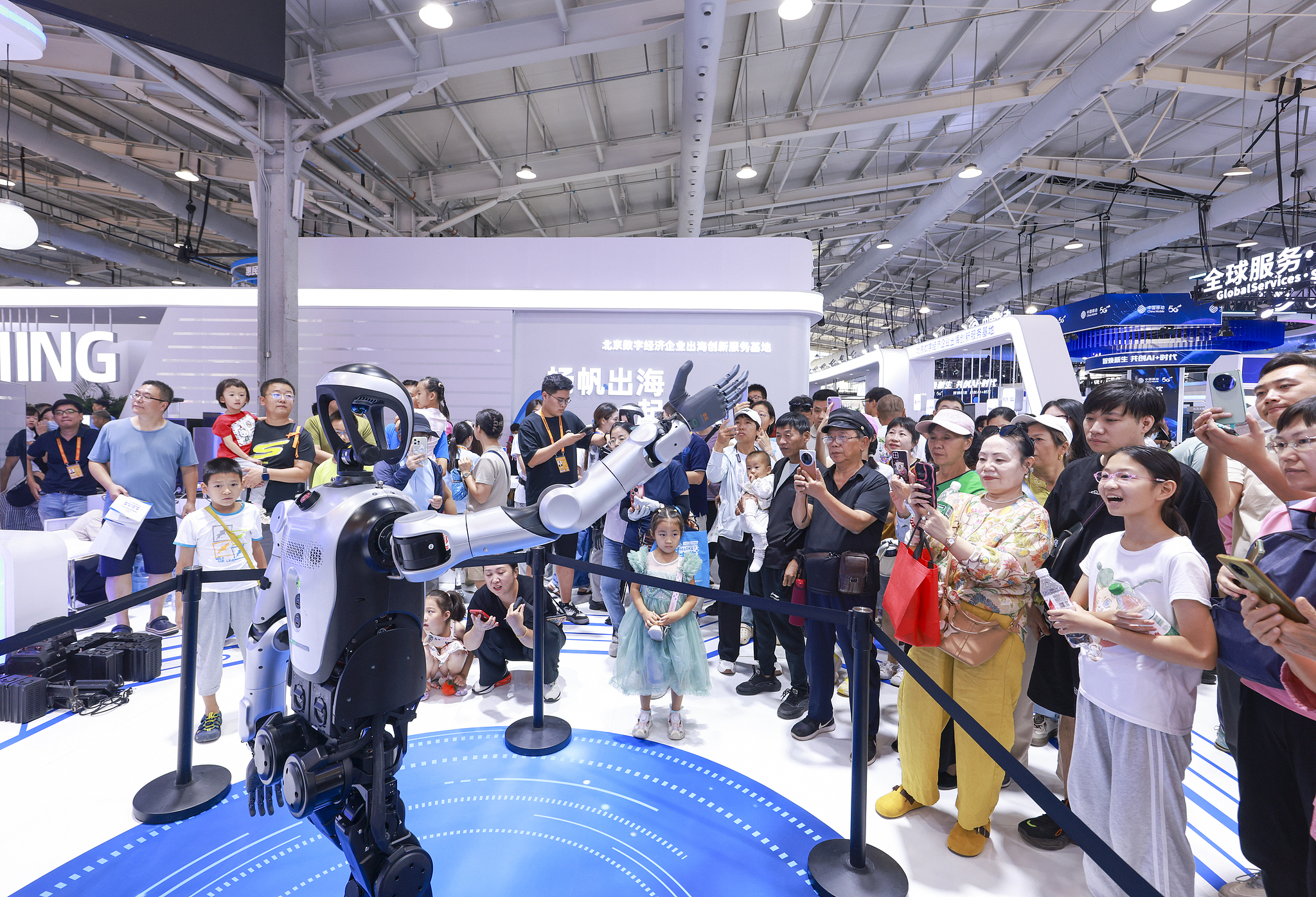
People watch robot performance at the 2025 China International Fair for Trade in Services in Beijing, China, September 14, 2025. (Photo: VCG)
Opening wider to the world
Meanwhile, China's trade in services is opening wider to the world, with service consumption going global at an accelerated pace. In 2025, the country's total volume of trade in services surpassed 8 trillion yuan (around $1.2 trillion) for the first time, up 7.4% year on year, while service exports grew 14.2%, according to the Ministry of Commerce.
Inbound tourist trips exceeded 150 million last year, up 17% year on year, while spending topped $130 billion, according to the Ministry of Culture and Tourism. Travel service exports surged 49.5%, and the implementation of the 240-hour visa-free transit policy has helped boost inbound visitor numbers by nearly 30%.
Expanding the import and export of high-quality services through high-standard opening up serves as a key priority in scaling up and upgrading the service sector and enhancing the "China service" brand.
From continuously reducing restrictions on foreign market access and promoting the orderly expansion of opening up in sectors such as telecommunications, internet, education, culture and healthcare, to hosting major fairs such as the China International Fair for Trade in Services and the Global Digital Trade Expo, China is sharing development opportunities in the service sector with all countries.
Supported by policy guidance, digital empowerment, and resilient domestic demand, "China service" is poised to become a globally trusted hallmark of quality, efficiency and innovation.