


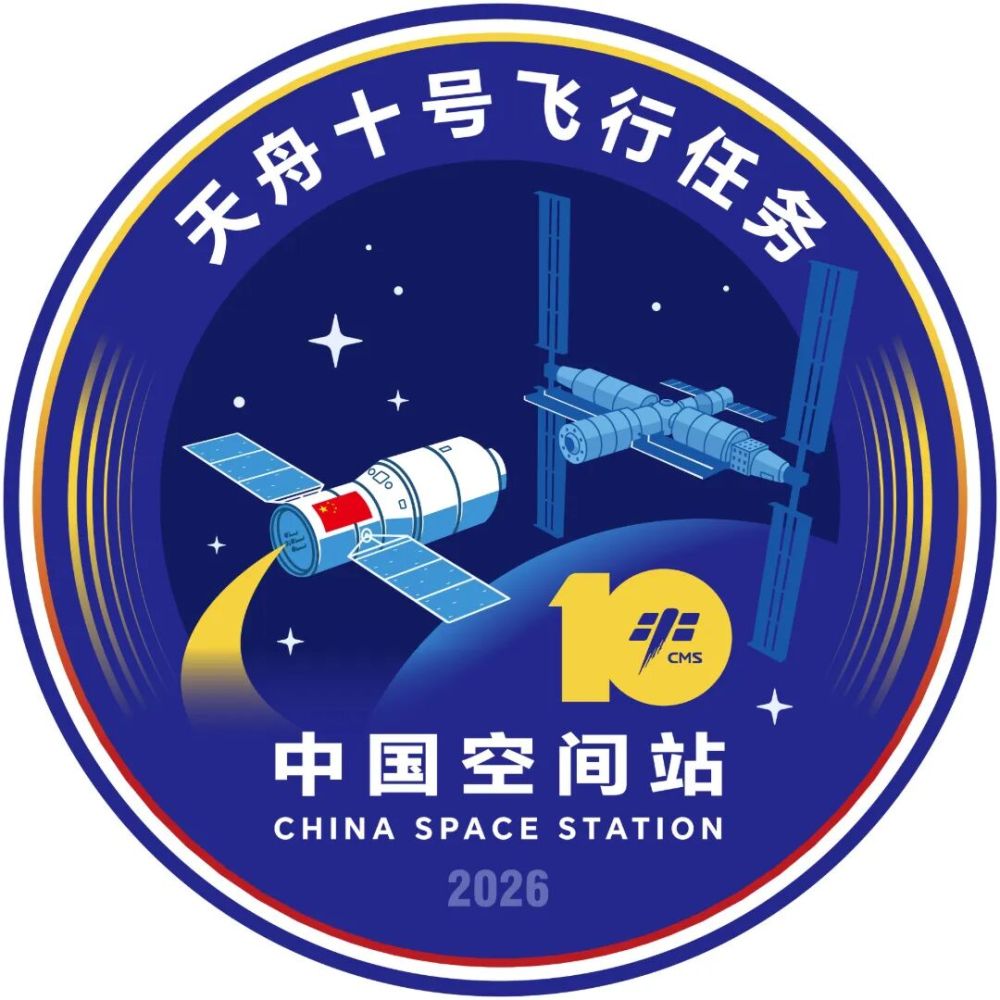
The logo for China's Tianzhou-10 cargo mission.
China Manned Space Agency (CMSA) on Tuesday unveiled the logo for Tianzhou 10 cargo mission, one of the three flight missions to China's Tiangong space station currently planned for 2026.
The logo features a design with a cosmos-blue colored background. The Tianzhou cargo spacecraft at the center traverses a golden trajectory towards the Tiangong space station, with the stylized numeral 10 integrated with the CMSA emblem alongside the visual center.
The circular shape of the logo symbolizes the wishes for the mission's success and the harmony between space and Earth, with the gradient accent color from gold to red highlighting the intrepid courage of China's aerospace professionals, CMSA explained.
The launch will mark the 10th mission of the Tianzhou-class uncrewed cargo spacecraft and the night resupply mission to the Tiangong space station. Tianzhou-9, the last resupply mission, was launched on July 15, 2025.
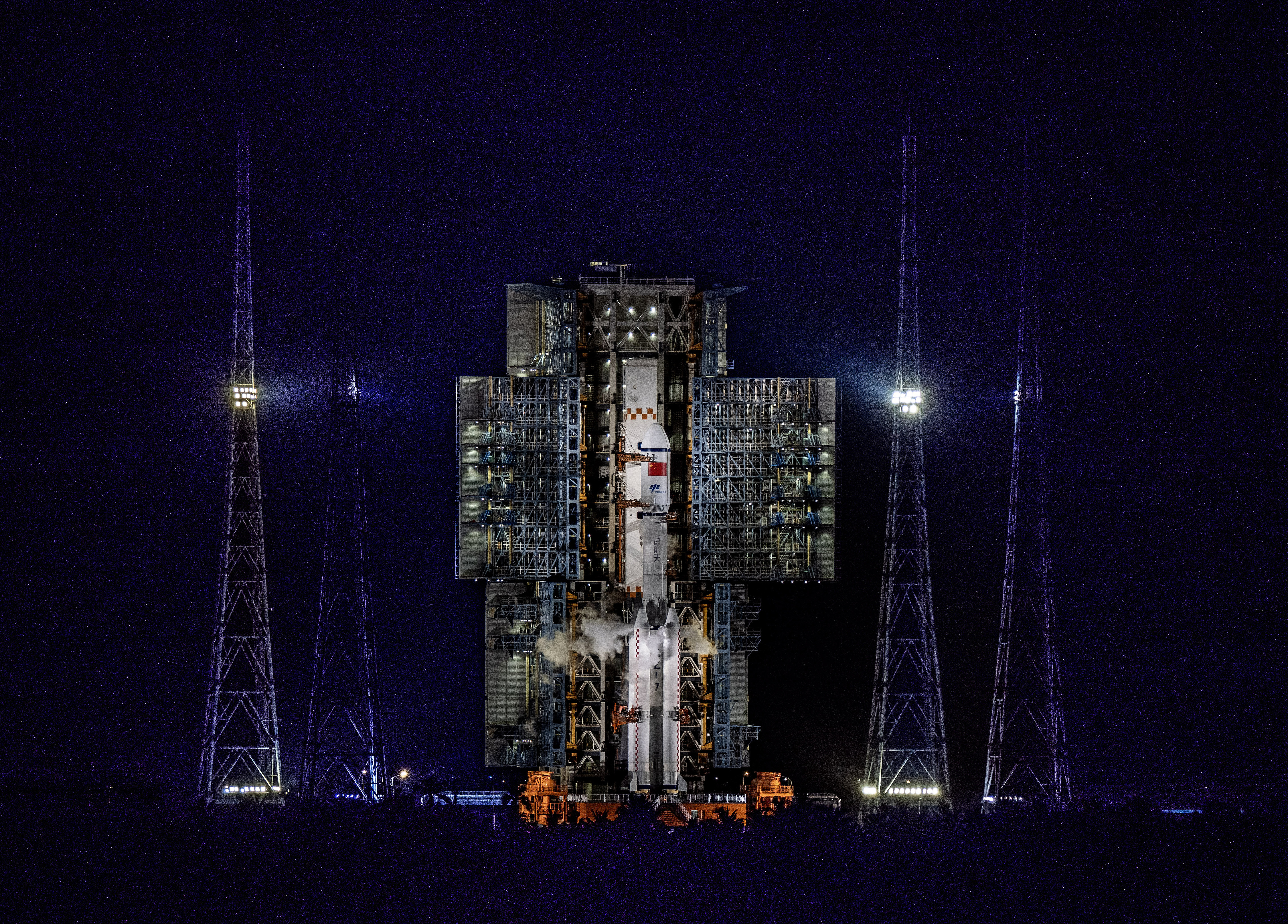
A Long March-7 Y10 rocket carrying Tianzhou-9 cargo spacecraft, waiting to be launched at Wenchang Spacecraft Launch Site in Hainan Province, on July 15, 2025. (Photo: VCG)
According to CMSA, Tianzhou-10 cargo spacecraft will be launched from the Wenchang Space Launch Site in 2026. The vessel will dock at the backward port of the space station's core module.
Tianzhou-10 will deliver crew supplies, maintenance spares, propellant and new EVA suits, reported Xinhua. Its payload also includes experiment samples for applied-science projects. When the spacecraft deorbits, it will burn up in the atmosphere and dispose of the waste collected from the space station.
China has also planned for two crewed missions to the Tiangong space station in 2026, according to CMSA.
Crews from the Hong Kong and Macao Special Administrative Regions are expected to participate in space station flight missions as early as this year. One crew member from the Shenzhou 23 mission will undertake a one-year extended-duration experiment on board the Tiangong space station.
(With inputs from Xinhua)