


JINAN, April 11 (Xinhua) -- With peonies in full bloom, the 2026 Heze Peony International Communication Forum opened on Saturday in the city of Heze, east China's Shandong Province, bringing together guests from China and abroad to discuss how the flower can serve as a bridge for cultural exchange and mutual understanding.
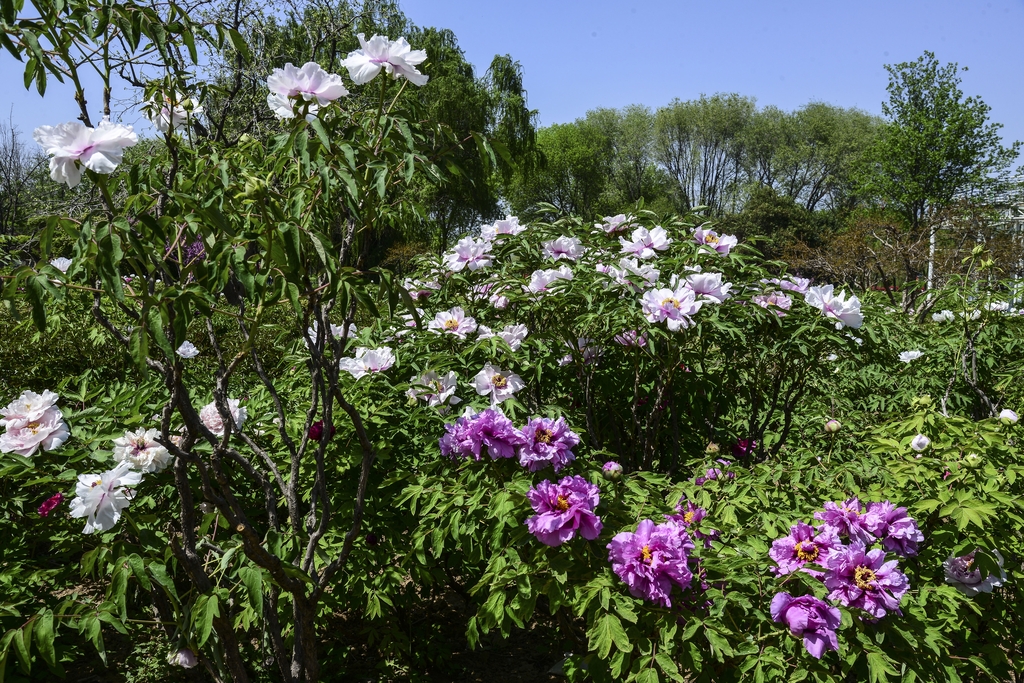
File photo: IC
Centered on the theme "Blooming Across the World, Cultivating Shared Beauty," the event brought together officials, experts, and scholars from home and abroad to explore connotations and contemporary values in peony culture. The forum is part of the 2026 World Peony Conference, a month-long event that kicked off on Friday.
In Chinese culture, the peony has long symbolized prosperity, vitality, and the people's aspiration for a better life. Participants at the forum said such symbolism can also resonate across borders, offering a language of beauty and emotion that is widely understood and shared.
That resonance has particular meaning in Heze, one of China's best-known peony-growing regions. With a cultivation history spanning over 1,500 years and a rich cultural legacy surrounding the flower, Heze, known as China's "peony capital" with 1,308 varieties of peonies, attracted 9.92 million visitors during its peony festival last year, up 14.8 percent from a year earlier.
"Flowers are an aesthetic language that transcends national borders," said Zhang Lun, secretary of the Heze Municipal Committee of the Communist Party of China (CPC), noting that they are promoting both "peonies going global" and "flowers coming to Heze."
Heze has built overseas peony gardens in Bulgaria, Serbia and Thailand, while Bulgaria's roses and Nepal's alpine rhododendrons will soon be introduced in the city, according to the forum's agenda.
For some participants, the flower's value lies not only in its beauty but also in its ability to foster deeper dialogue among different cultures.
"Geography has placed us at opposite ends of the earth, but shared interests have brought us side by side," said Rodrigo Mendes Araujo, Counselor for Energy, Mines, and Intellectual Property at the Embassy of Brazil in China. "We may speak different languages, but we both understand the language of peony."
"Whenever we think of China, peonies come to mind. When people from different countries admire flowers and enjoy their beauty, I believe they will come to realize that the differences between us aren't actually that great, because all human beings share a common sense of beauty," said Dario Famularo, an Italian sinologist at Sichuan International Studies University.
He added that learning to understand each other through appreciating flowers is a good example, as every communication needs to start from a common ground. "As the Italian song goes, to make everything, a flower is needed. And today, that flower can be a peony."
Guests from other countries expressed similar views.
"In Russia, the peony, a symbol of wealth, prosperity and splendor, is also one of the most beloved and widely cultivated flowers. I actually grow 28 different varieties of peony in my garden," said Tatiana Bakurova, Principal of Oryol State First High School in Russia.
"Although Oryol and Heze are separated by 6,500 kilometers, the peony has blossomed into a bridge of friendship," said Bakurova, noting that over the past two years, her school has maintained close communication with Heze in culture and education, including co-hosting the Mid-Autumn Festival and the New Year celebrations.
"Through the exquisite decorations and artworks China offered to us, we were able to get up close to Chinese culture and learn about its traditions, arts and philosophy," she added.
The development of Heze is closely tied to the peony, which has evolved from a cultural icon into a key economic driver. The city is now home to more than 120 local enterprises that are engaged in producing and exporting peony-related products, developing over 260 varieties sold to more than 30 countries and regions, including the United States, France, Germany and Japan. The industry's total output value exceeded 13 billion yuan (about 1.9 billion U.S. dollars) in 2025.
What was once primarily appreciated as an ornamental flower has gradually given rise to a broader industrial chain, helping turn cultural resources into products, brands and new sources of growth.
Peonies have also been a game-changer for local livelihoods, boosting the incomes of over 500,000 people. In Mudan District, which literally means "peony," more than half of local farmers are involved in the peony-related industry, working in areas such as greenhouse cultivation, essential oil extraction, handicrafts and livestreaming sales.
"In the intelligent era, the peony brand needs to be empowered by technologies to develop more application scenarios and serve the younger generations around the world," said Yu Tao, vice president of China International Communications Group (CICG), noting that the local peony industry supports its brand development and various applications.
For instance, local company Longchi Peony Industry Co., Ltd. leverages technology to maximize the value of the entire peony plant. According to the company, technology has enabled more than 150 product varieties, and they continue to work with research institutions to develop deep processing.
The peony industry has moved beyond planting into daily chemicals and nutritional health products. Local companies have also created peony-themed cultural products such as carved porcelain, silk and Hanfu, a traditional Chinese attire adorned with intricate embroidery.
Using modern technology, Heze Yaoshun Peony Biotechnology Co., Ltd. has developed a range of health and skincare products from peonies, including the trendy traditional Chinese brands Yaoshun Peony and Essence of Peony. "They are youthful and stylish, perfect fusions of tradition and modernity," said Li Jinghao, general manager of the company.