


As the world celebrates International Day of Human Space Flight on Sunday, China's manned space program is reaching new milestones, moving from low-Earth orbit toward deep-space exploration.
The International Day of Human Space Flight commemorates Yuri Gagarin's historic flight 65 years ago, when the Soviet cosmonaut became the first human to orbit Earth aboard Vostok 1. China became the third country capable of independent manned spaceflight in 2003, when Yang Liwei piloted the Shenzhou-5 spacecraft to orbit around Earth. Since then, Chinese astronauts, or taikonauts, have progressed from single-day missions to six-month stays, from initial orbital flights to spacewalks, and from single spacecraft to a fully operational space station.
Space station missions
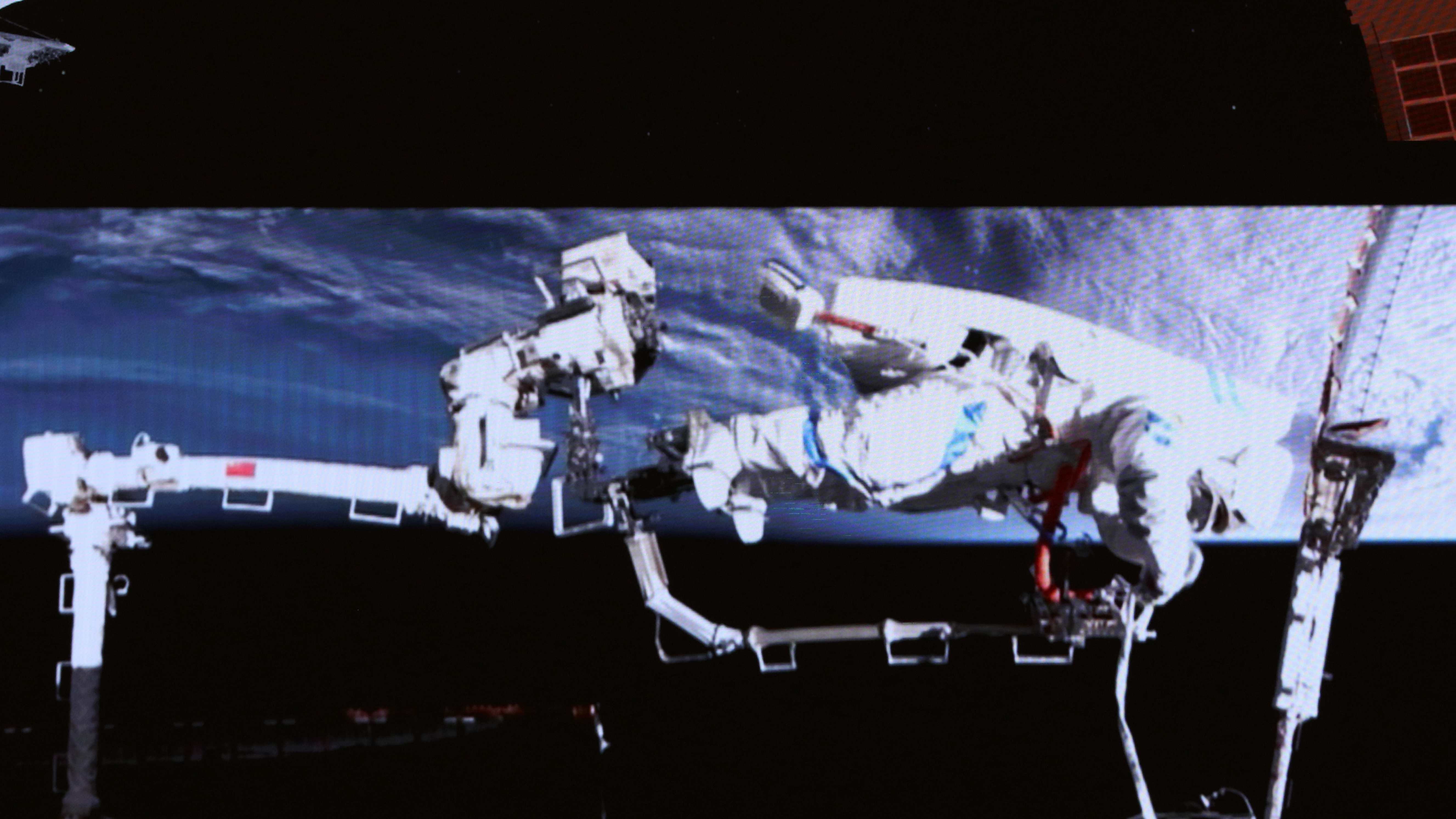
A Shenzhou-21 taikonaut during the second spacewalk. /CMG
The Shenzhou-21 taikonauts have been in orbit for over five months. During their mission, the trio have conducted two spacewalks, completed multiple scientific experiments and technological tests, and carried out routine space station maintenance and operations aboard the space station smoothly.
In the upcoming missions, the country's manned space program will see participation from payload specialists from Hong Kong and Macao special administrative regions. One member of the Shenzhou-23 crew will begin a year-long stay in orbit as part of an extended mission trial.
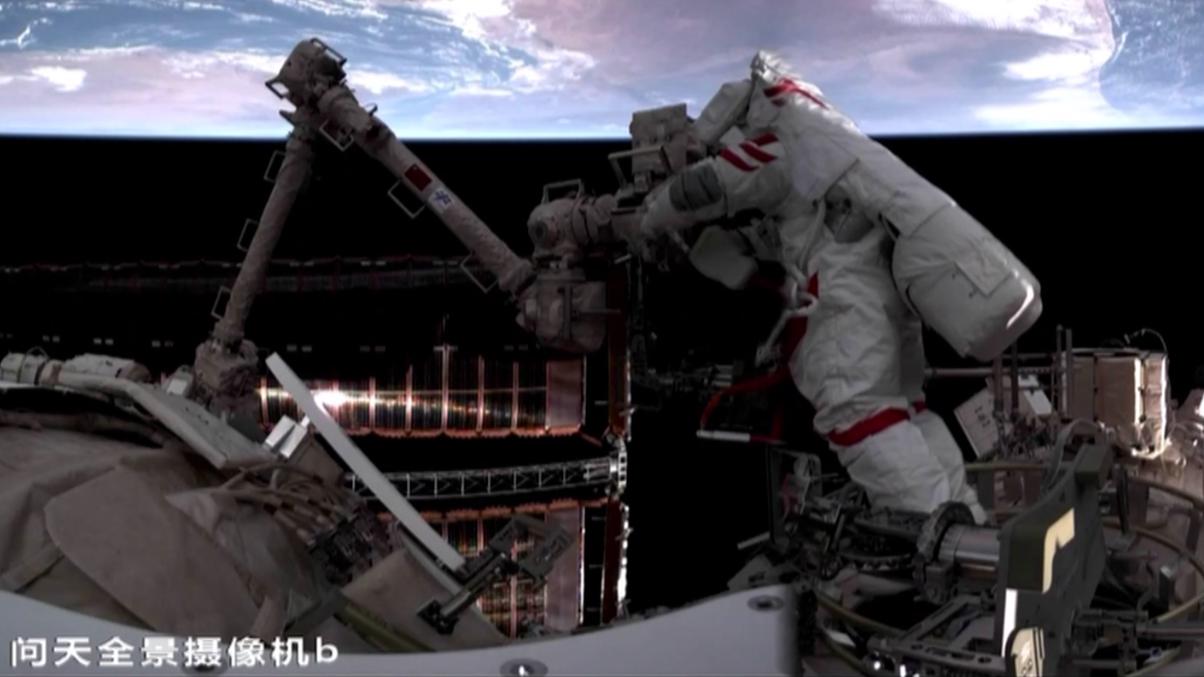
A Shenzhou-21 taikonaut during the first spacewalk. /CMG
China is also stepping up international cooperation in human spaceflight.
Last year, China and Pakistan signed an agreement on astronaut selection and training. Under current mission plans, one Pakistani astronaut will take part in a short-term flight to the Chinese space station as a payload specialist, conducting scientific experiments on behalf of Pakistan.
Lunar exploration
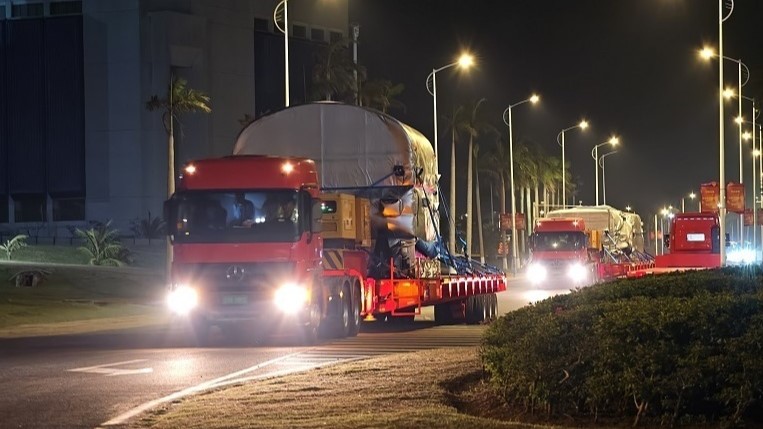
Transporting parts of China's Chang'e-7 lunar probe. /CMG
China is also advancing toward lunar exploration. The Chang'e-7 probe has arrived at the Wenchang Space Launch Site ahead of a planned liftoff in the second half of 2026.
The Chang'e-7 mission will test high-precision lunar soft-landing, legged rover mobility, surface hopping and exploration of permanently shadowed lunar craters, while conducting international scientific cooperation at the moon's south pole.
The mission represents a deeper integration of China's manned lunar exploration and unmanned lunar probe programs, utilizing capabilities and experience accumulated over decades through the country's manned space and Chang'e missions.
Earlier in February, China completed a low-altitude verification of its Long March-10 carrier rocket and a maximum dynamic pressure escape flight test of the Mengzhou spacecraft, marking a major step forward towards its first crewed lunar landing by 2030.
The Long March-10 rocket series is designed for China's manned lunar exploration, while the Mengzhou spacecraft will support both deep-space missions and operations aboard its space station.
The manned lunar landing will usher in a new era of China's space exploration, with goals including constructing the International Lunar Research Station.
Advancing space logistics
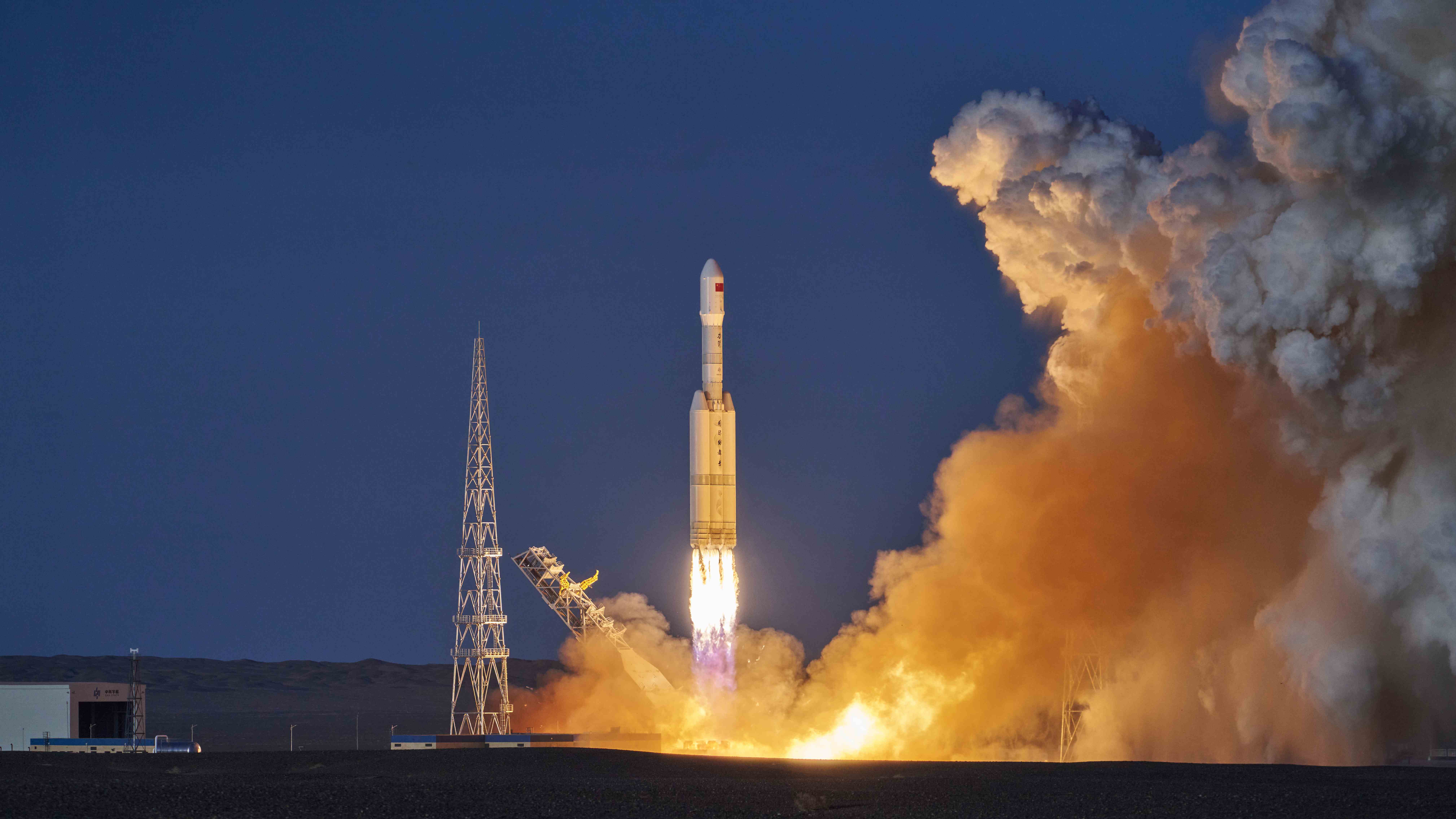
China's commercial space company CAS Space successfully launches its Kinetica-2 carrier rocket, March 30, 2026. /CAS Space
China is also enhancing its space logistics capabilities. On March 30, the Kinetica-2 Y1 rocket successfully sent three satellites into the preset orbit, marking a new stage in low-cost space cargo transportation.
Among them is the New March-01 technology demonstration satellite, a mini space laboratory, that will conduct multiple in-orbit experiments using commercial off-the-shelf technologies, while the New March-02 satellite, also known as the Qingzhou prototype test spacecraft, is designed for three years of orbital operations, demonstrating China's growing capability for flexible, reliable and diversified space logistics.
From the space station to lunar ambitions, China's manned space program is steadily expanding its reach, combining long-term orbital missions and international cooperation.