


BEIJING, April 13 (Xinhua) -- A new study led by Chinese scientists, published in the journal Nature, has identified a key gene that helps rice fight off bacterial blight and shown how this defense can be rebuilt from the ground up.
For the past 15 years, rice farmers across Asia have faced a growing threat as bacterial blight has spread more rapidly and caused increasing damage. Warmer temperatures have intensified typhoons that help drive the spread of the disease, while modern rice varieties have become less diverse, making them more vulnerable to bacterial infection.
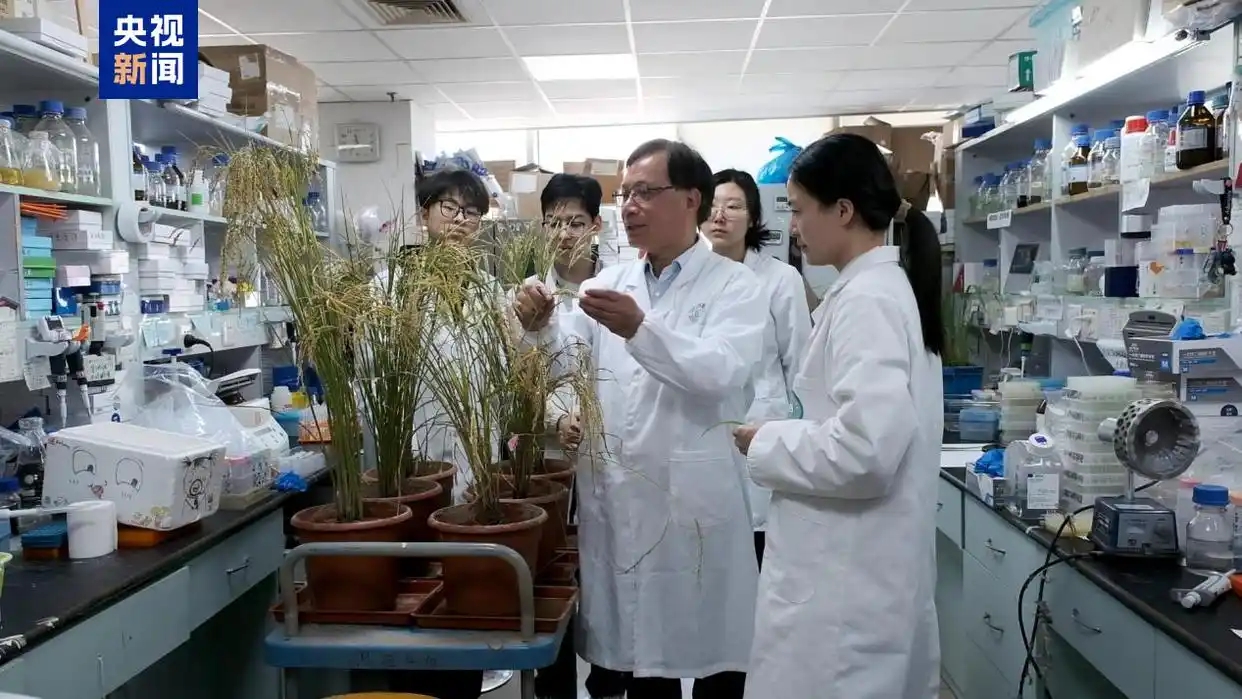
The research team conducts rice disease-resistance breeding research. (Photo: CMG)
A team led by researchers from the Center for Excellence in Molecular Plant Sciences (CEMPS) under the Chinese Academy of Sciences discovered a new resistance gene, which they named Xa48, in an indica rice variety called "Shuangkezao."
This gene works like a security system. When harmful bacteria attack, the Xa48 gene helps the rice plant recognize the invader and quickly mount a strong defense. The scientists also identified the specific bacterial protein that triggers this reaction, which they named XopG. Once Xa48 detects XopG, it breaks down certain proteins that normally keep its immune system in check, allowing the plant to fight off the infection.
The study also showed that combining two different types of immune defenses works best. The team used two resistance genes -- one called Xa21 and the newly discovered Xa48 -- to create a powerful, two-layered defense system. This approach gave rice plants broad and lasting protection against the disease without hurting their growth.
This new technology has already been used in real rice breeding programs in China, according to He Zuhua, a researcher at the CEMPS. "The research has moved quickly from the lab to the field, helping farmers grow healthier rice with less need for chemical pesticides."
This discovery not only helps solve a long-standing puzzle about how rice domestication shaped disease resistance but also provides a practical tool for securing rice production in a warming world, He added.