


China's rapidly growing e-sports industry is transforming entertainment consumption but also creating a diverse range of new jobs. As the sector continues to expand, it is emerging as a key driver of the digital economy and opening up diverse career paths for young people.
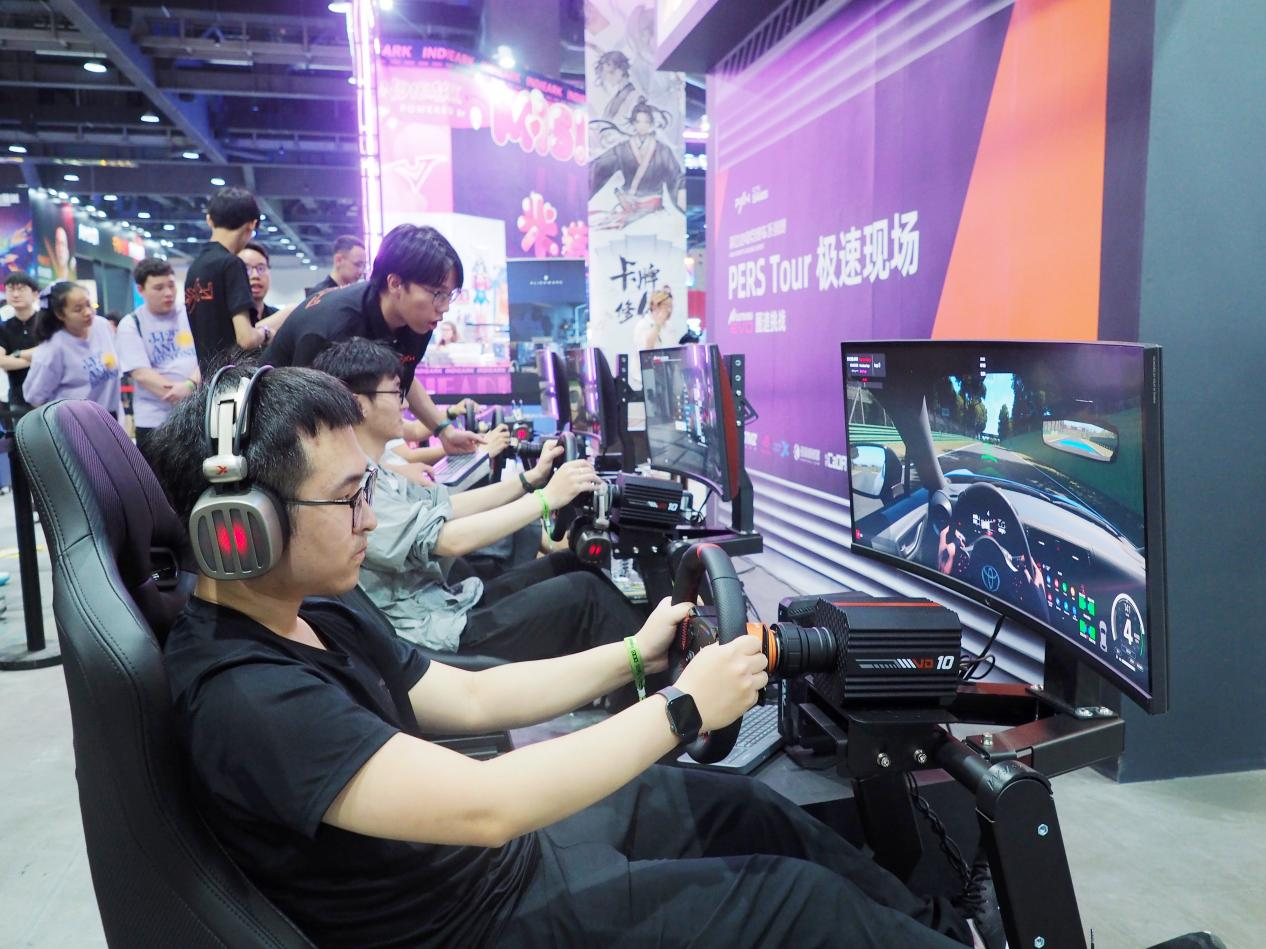
Gaming enthusiasts play a racing simulator game at a gaming festival held in Beijing on June 28, 2025. (Photo: Du Jianpo)
A prominent example is Xu Bicheng, known globally by his screen name "Yinuo," a professional gamer who won an e-sports gold medal at the Arena of Valor Asian Games Version. He first realized his exceptional gaming talent while still in school. In 2019, his club was acquired by a professional gaming club, marking his entry into the fast-evolving world of competitive gaming.
Today, China's e-sports industry has grown into a vast ecosystem. According to a 2025 report on China's e-sports industry released by the China Audio-Video and Digital Publishing Association, the sector has become a major engine driving digital culture and new forms of consumption. In 2025, China remained the world's largest e-sports market, with total industry revenue reaching 29.33 billion yuan ($4.3 billion) and a user base of 495 million.
At the heart of this ecosystem are professional players and streamers. In 2019, China's Ministry of Human Resources and Social Security officially recognized e-sports players and event managers as new professions.
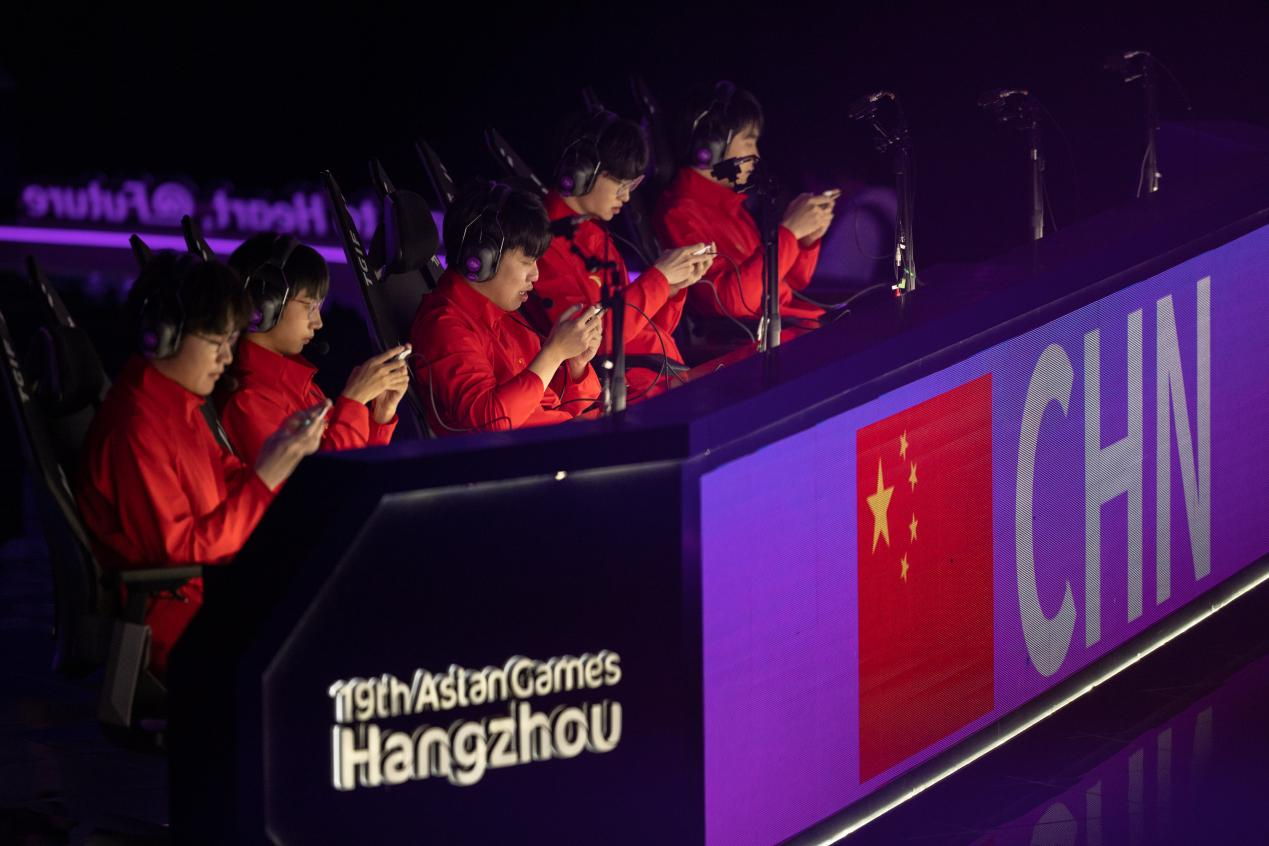
Chinese athletes compete in the Arena of Valor Asian Games Version final match at the 19th Asian Games in Hangzhou, East China's Zhejiang Province on September 26, 2023. (Photo: Yi Fan)
Unlike casual gaming, professional e-sports is highly structured and competitive. Teams operate with dedicated staff, including head coaches, coaches, and managers. Similar to professional football leagues, the King Pro League (KPL) features only 18 franchised teams, making opportunities for professional players extremely limited.
Yinuo exemplifies this new wave of digital athletes, commanding a massive following among youth. On Chinese short video platform Douyin, he has over 8.4 million followers and 280 million likes, while his Sina Weibo microblog attracts more than 5.3 million followers. His livestreamed matches routinely attract hundreds of thousands of viewers.
The growing influence of e-sports is increasingly recognized by academics. Huang Xinyuan, a professor at the School of Animation and Digital Arts, Communication University of China, noted that e-sports has become integral to young people's lifestyles. In 2017, the university became the first in China to launch an undergraduate program in e-sports.
"E-sports is no longer just entertainment. It represents a way of life," Huang said, recalling the electrifying atmosphere at live competitions.

People visit the 22nd ChinaJoy, formally known as the China Digital Entertainment Expo and Conference, in Shanghai on August 1, 2025. (Photo: Xu Peiqin)
The industry's reach continues to expand both online and offline. In 2023, e-sports debuted as an official medal event at the Asian Games. In 2025, the KPL Grand Finals drew over 62,000 in-person attendees, setting a new Guinness World Record for the largest live audience ever at a single e-sports event.
Looking ahead, e-sports will play an even bigger role. The upcoming 2026 Asian Games will feature 11 e-sports events, an increase from seven at the 19th Asian Games held in Hangzhou in 2023.
Behind the scenes, a growing workforce supports live streaming and event broadcasting. Statistics show that live streaming is the primary revenue source for the industry, generating over 23.7 billion yuan in 2025, accounting for 80.81 percent of total revenue.
At the same time, the integration of e-sports with sectors such as culture, tourism, and technology is creating hybrid jobs. Opportunities now span event operations, content creation, data analysis, commentary and hosting, venue management, and merchandise development, forming an employment ecosystem worth tens of billions of yuan across the value chain.
From full-time employment to flexible gig work, e-sports-related careers have become a major option for younger generations.
A 2024 report on the development of e-sports-related jobs showed that the industry had more than 650,000 full-time positions in 2024, with about 80 percent located in first-tier and emerging first-tier cities. Meanwhile, flexible roles such as "e-sports instructors" are expanding rapidly, providing new digital employment opportunities for young people.
Education is evolving to meet industry demand. In 2017, "electronic competitive sports and management" was listed as a new major for vocational schools. Eight years later, China introduced "game art design" as a new undergraduate major. So far, 139 universities across the country offer e-sports-related programs, training more than 40,000 students annually and building a steady pipeline of talent.
Enterprises are also actively involved. According to a representative from the e-sports division of Chinese tech giant Tencent, which also runs many online games in China, initiatives such as talent reserve programs and joint training schemes with universities aim to align education with industry needs. "We hope to transform the popularity of e-sports events into a sustained talent dividend through a mature ecosystem," the representative noted.
Local governments are also stepping up support. Guangzhou in East China's Guangdong Province aims to become one of the world's most influential e-sports cities by 2030. Shanghai plans to build globally recognized branded tournaments and attract top international events. Xiamen in Fujian Province has introduced policy measures to promote the high-quality development of the gaming industry.
Both on and off the screen, China's e-sports industry is thriving — fueling innovation, creating jobs, and shaping a new generation of digital careers.