


Public consultation ends on China’s draft financial law, clearing path for first comprehensive finance basic law
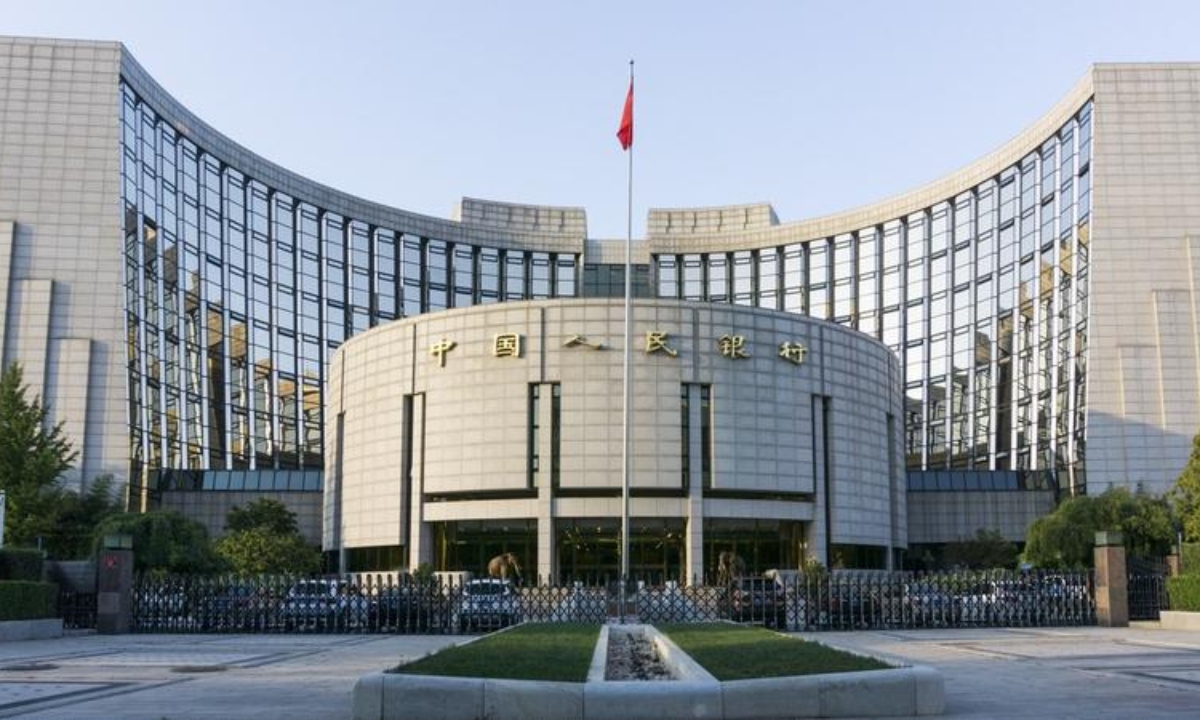
The headquarters of the People's Bank of China in Beijing (Photo: IC)
The public comment period for China's draft financial law ended on Sunday, marking a further step closer to the rollout of the country's first comprehensive basic law for the financial sector. Analysts said that the document ushers in a new era in China's rule of law, which will provide the legal bedrock and predictability for the development of the financial sector.
The draft financial law consists of 11 chapters and 95 articles. It sets out provisions on the direction and overall requirements of financial work, the modern central bank system, regulation of financial institutions, financial products and services, the financial market system, financial regulation, risk disposal mechanisms, high-quality financial development and security, and legal liabilities.
"The drafting of the law lays a solid institutional foundation for building China into a financial powerhouse. It ushers in a new era in China's rule of law in the financial sector, establishing the legal bedrock for the industry's development while providing predictability for the sector," Tian Lihui, dean of the Institute of Financial Development at Nankai University, told the Global Times on Sunday.
First, the law achieves a systemic leap from "fragmented patchwork" to "holistic architecture" at the institutional level, unifying the regulatory framework to enhance governance efficacy. Second, it establishes a risk disposal mechanism in practice, fortifying the legal defense line for "tightened regulation and risk prevention." Third, at the strategic level, it leverages the authority and stability of the law to provide the maximum predictability of institutional safeguards for building a financial powerhouse. Provisions guiding development will stimulate innovation, translating the "modern financial system with Chinese characteristics" from concept into actionable norms, according to Tian.
The Central Financial Work Conference held in October 2023 stressed that all types of financial activities should be placed under regulation according to the law. In July 2024, the 3rd plenary session of the 20th Central Committee of the Communist Party of China set the tasks of formulating a financial law.
Li Changan, a professor at the Academy of China Open Economy Studies at the University of International Business and Economics, told the Global Times on Sunday that the draft law features a clear structure and rigorous logic, establishing a systematic regulatory and risk disposal framework and contributing to the high-quality development of China's financial industry.
Since the start of reform and opening-up, China's financial sector has made historic accomplishments. Notably, since the 18th National Congress of the CPC, the country has advanced financial reform and development while effectively managing risks in an orderly fashion. The sector has maintained rapid growth, with financial opening-up progressing steadily, product offerings becoming increasingly diverse, financial services enhancing inclusiveness, and regulation being strengthened and refined, the Xinhua News Agency reported.
China's financial sector achieved remarkable progress during the 14th Five-Year Plan (2021-25) period. It maintained the world's largest foreign exchange reserves for the 20th consecutive year, and secured its second-place standing in both the stock and bond markets, Pan Gongsheng, governor of the People's Bank of China, told a press conference on the country's financial progress during the 14th Five-Year Plan period in September 2025.