


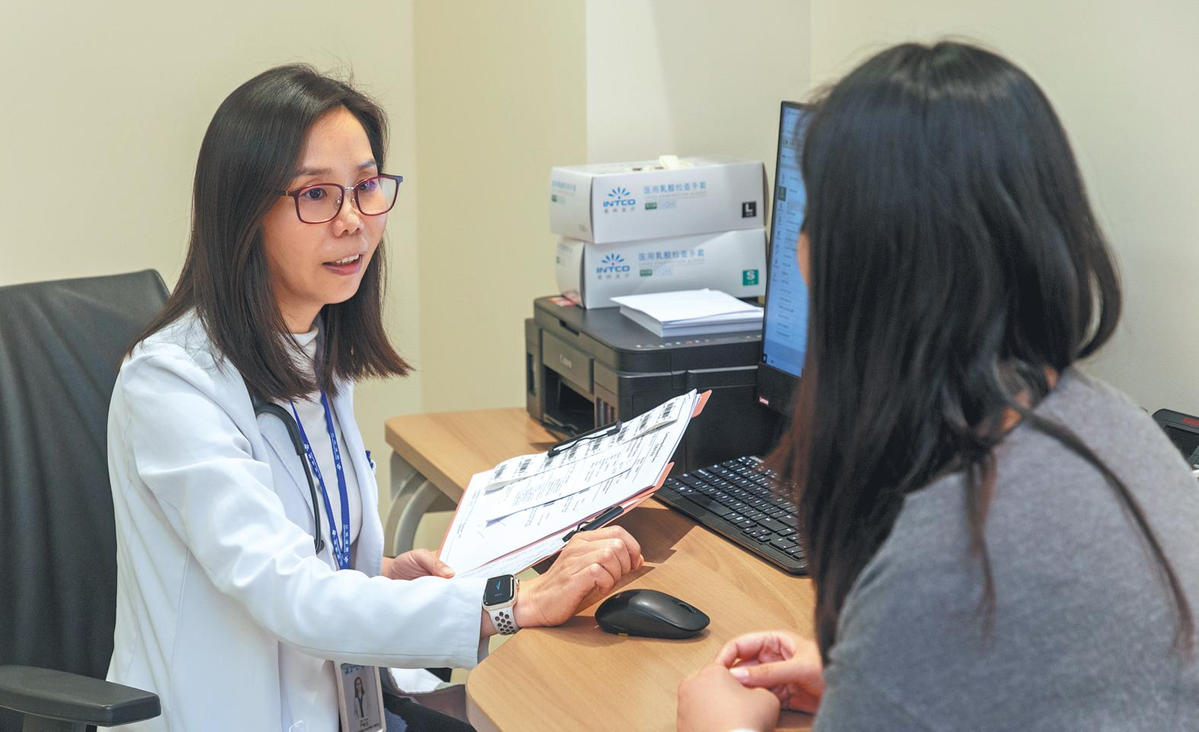
Yan Yiwen (left), a senior physician of the longevity clinic at SinoUnited Health in Shanghai, sees a "health seeker" on March 19. (Photos: China Daily)
Zhu Jie, the first client of SinoUnited Health's longevity clinic in Shanghai, recently "graduated" with significant improvements in weight management and four key health indicators — blood pressure, blood glucose, blood lipids, and uric acid.
More importantly, the 44-year-old entrepreneur — who faces constant mental and physical stress — said he now feels that he has enough energy to get through the day.
The longevity clinic advice he has followed since August on diet, sleep, and exercise has transformed his lifestyle into a healthy one, with good habits now part of his daily routine. It took just three months before his health indicators underwent noticeable changes.
"I could fit into shirts I hadn't been able to wear for over a decade," said Zhu. "At a class reunion everyone said I'm aging in reverse. Such positive feedback motivates me to continue maintaining a healthy lifestyle and lay the foundation for a healthy old age," said Zhu.
Over the past three years, approximately 50 medical institutions nationwide, including more than 10 public hospitals, have established longevity or anti-aging clinics. The most recent one was a center for proactive health and anti-aging medicine opened by the Beijing Geriatric Hospital in March.
These clinics usually take a multidisciplinary approach to health and chronic disease management. Aging is assessed using biomarkers and AI models, with the aim of providing tailored anti-aging plans for individuals with no major diseases, and focusing on early intervention and chronic disease prevention and management.
As people live longer, these clinics are a response to people's hopes to remain healthy and energetic in later life. The patients seeking longevity services are typically proactive about their health, said the doctors.
In early 2024, a document released by the General Office of the State Council on developing the silver economy and enhancing the well-being of the elderly supported the development of the anti-aging industry for the first time.
It proposed promoting the integration of biotechnology, such as genetic testing and molecular diagnostics, with efforts to delay age-related diseases, and developing early-screening products and services for such conditions. Industry experts believe this has also accelerated the embrace of comprehensive health management by public hospitals.
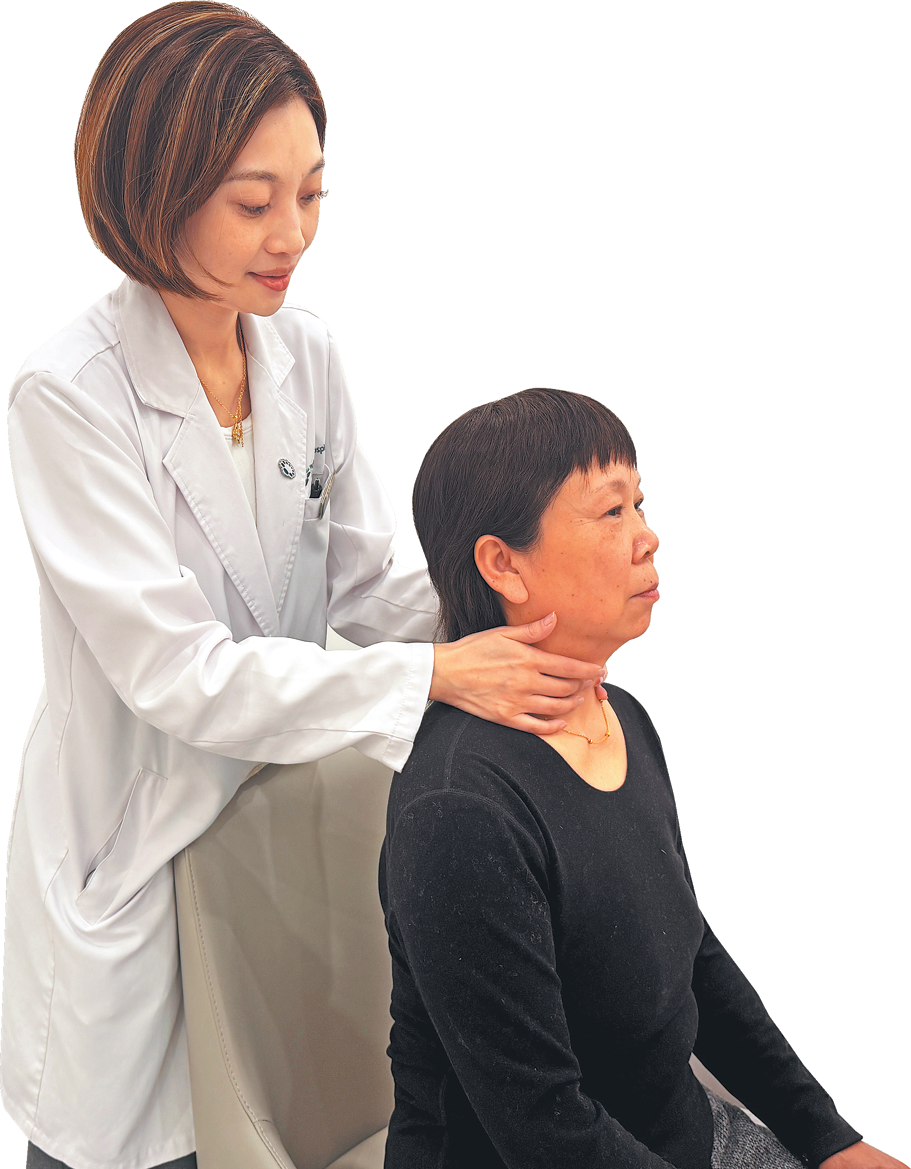
Wu Yihua (left), director of the silver age health center at Parkway Shanghai Hospital, assesses a woman on March 25.
Middle-aged seekers
"Longevity is not just about living longer. It's about living longer in good health," said Shi Haoying, founder and CEO of SinoUnited Health.
She said what makes her clinic different is "personalized precision medicine", which uses cutting-edge technologies to predict, prevent, and manage health risks before they escalate, rather than just treating diseases after they occur.
In August, under the guidance of the Mayo Clinic, the United States-based medical group that introduced longevity clinics, SinoUnited Health opened a longevity clinic in Shanghai after making preparations for over a year.
Its multidisciplinary team includes experts in cardiology, endocrinology, neurology, sports medicine, nutrition, sleep, psychology, general practice, and traditional Chinese medicine. The clinic integrates genetic testing, and molecular and proteomics analysis with advanced imaging and digital platforms, applying the latest global advances in lifestyle medicine and precision healthcare. Innovative therapies, for example, include fecal microbiota transplantation for gut health, a key component of personalized metabolic and immune regulation.
Yan Yiwen, a senior physician at the clinic, said the first step for visitors is a comprehensive health evaluation.
In addition to routine chronic disease management tests like blood lipid and blood glucose levels, the evaluation includes early cancer screening through imaging and blood-based tests. Doctors also pay attention to often-overlooked aspects, such as physical functions, inflammatory responses, and hormone levels.
"For example, physical functions are closely related to our quality of life, our feelings, and energy levels," said Yan. Physical functions can be assessed through tests of muscle strength, balance, six-meter walking speed, and sit-to-stand tests, she added.
"In some cases, young people with poor lifestyle habits may experience premature bone density loss. While this issue may not affect them immediately, it can significantly impact their quality of life in old age," said Yan, who is also a general practitioner and cardiologist.
Zhu was motivated to visit the longevity clinic by some minor health issues he experienced. He had also observed the diminished quality of life of his parents, both in their mid-70s, due to various health reasons.
"I hope that when I reach my parents' age, I will be in a better state, still able to find fulfillment and joy in those later years," he said.
Yan said while they initially targeted individuals age 50 to 65 with the capacity to pay, they found that two-thirds of their patients are between 40 and 50. These individuals are willing to invest in their future health, and spend money to manage potential risks, she said.
"Typical health-seekers come to the longevity clinic as they are experiencing issues like poor sleep, weight gain, reduced energy, and memory lapses. They hope to determine if there are any underlying health problems and address them in advance," said Yan.
This reflects an increased health awareness in society, especially among middle-aged and younger people, who are more proactive about their health compared with the previous generation, according to doctors.
"Identifying potential health risks and having an accurate response plan now is much more cost-effective than treating severe health issues in the future. I see this as a valuable investment with significant benefits," said Zhu.
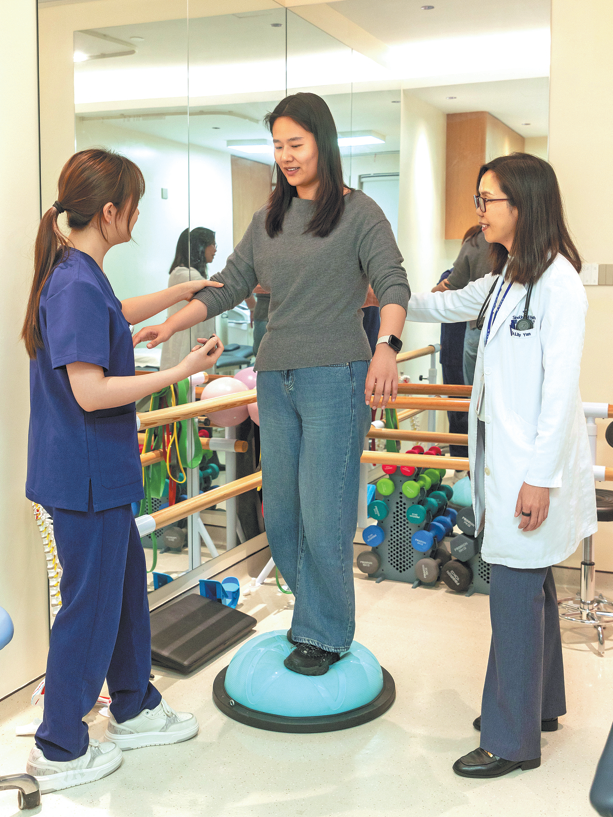
A woman in her 40s takes a balance test at the longevity clinic at SinoUnited Health in Shanghai on March 19.
Lifestyle changes
During his health examination at the longevity clinic, Zhu was found to have coronary issues and received targeted treatment. The clinic also provided him with lifestyle guidance.
He said he appreciated that when he failed to stick to the plan, his doctor adjusted it to make it more achievable.
Coming from Northern China, where people's diets usually consist mainly of meats and heavy flavors, Zhu said adjusting what he ate meant breaking lifelong eating habits, which was a challenge.
"The nutritionist adjusted the plan according to my actual situation, achieving a balance between my diet and my habits, and changing step by step," he said.
Yan said the longevity clinic provides personalized management for patients, with its team offering comprehensive guidance and supervision on nutrition, exercise, and sleep.
"The team creates WeChat groups for real-time responses, detailing what to do if a particular exercise is not feasible, and how to choose dishes when dining at restaurants," she said.
For example, they recommend that patients who are busy with work and have little or no time to exercise, move at every opportunity available. They can walk during office breaks and use resistance bands to exercise during phone meetings.
In June, Parkway Shanghai Hospital established the silver age health center to provide multidimensional assessments for patients. Their aim is to identify potential health risks early, implement full-cycle management, address current issues and plan health strategies for the next three years or more.
The center's doctors also emphasize gradual lifestyle interventions.
"We don't force a one-time change in habits, but guide patients step by step through positive feedback from improvements in health indicators," said Wu Yihua, director of the center.
"Patients usually rely on smart wearable devices and doctor supervision initially, but when they see improvements in weight, blood lipids, and blood sugar during follow-up visits, most can actively develop healthy lifestyle habits, improving adherence to healthy eating and exercise," she said.
Wu cited the recent case of a patient nearly 70 years old. The patient, who frequently attended social engagements, had four poor health indicator readings. He had previously received general medical advice from several hospitals with unsatisfactory results and was unwilling to implement lifestyle changes.
The center adopted a step-by-step approach for him, gradually reducing his smoking and alcohol intake, combined with exercise and medication management. The patient lost about 15 kilograms in six months, achieved normal blood lipid levels, and reduced the status of his fatty liver from severe to the mild to moderate range. The patient was greatly encouraged by the improvements.
Unlike traditional geriatric clinics, which focus on intervention after a disease is diagnosed, Parkway Shanghai said its center emphasizes proactive measures and disease prevention.
"So far, most visits are still driven by the appearance of symptoms of discomfort or minor issues found during physical examinations. We hope that as public awareness of preventive healthcare increases, more elderly people over 65 will prioritize proactive health and prevent chronic diseases early," Wu said.
Developing discipline
Since 2023, longevity medicine has grown as a serious medical field around the globe, while the discipline of anti-aging is entering a rapid development phase, according to experts.
A paper published early last year in The Gerontologist, a Gerontological Society of America journal, identified 14 clinically applicable biomarkers of aging, which were recognized by 60 experts from around the world. Some of these indicators are simple physical examination metrics, such as blood pressure, grip strength, and walking speed, which can be quickly integrated into clinical practice.
In 2024, Xiangya Hospital of Central South University, based in Changsha, Hunan province, developed its own system to determine patients' biological age rather than relying on superficial signs like wrinkles or gray hair.
The hospital compiled years of health examination data of patients, extracting over 140 blood test results and combining them with imaging data, such as ultrasound, electrocardiograph and CT scans, to train an AI model known as "the aging clock".
Now, after a visitor undergoes a health check at the clinic, the AI model can quickly compare their monitoring data, and estimate their biological age.
If the model could incorporate multi-dimensional data, including DNA methylation, telomere length, and genetic testing, the hospital said it would be able to establish a more accurate aging assessment system.
Experts noted that while the anti-aging discipline is developing rapidly, it is still in an exploratory phase, and efforts are currently underway to establish clinical diagnostic standards that can be extended nationwide.