


Village in China's Jiangxi becomes ideal home for grey herons

Xu Weishui (L) and a villager observe grey herons in Dazizui Village of Duchang County, east China's Jiangxi Province, April 9, 2026.
In Dazizui Village, more than 8,000 grey herons inhabit in a lakeside grove. With a large wetland area and abundant vegetation, the village boasts a favorable ecological environment. Since 1998, grey herons have been nesting here, leading the village to gradually become known as "grey heron village."
Grey herons feed on small fish, shrimps, and snails in marshes, lakes, and ponds. To help those grey herons struggling to find food, villagers release fry into the ponds. They also gather branches and place them by the lake to help grey herons build nests.
In 2003, villagers voluntarily formed a bird protection patrol team, setting up watch huts and taking turns guarding at night to prevent egg theft.
Under the villagers' careful protection, more grey herons have arrived and nested in the village. In 2016, villagers raised funds collectively to build 11 iron artificial nest racks. Each "iron tree" has five nests for grey herons to build nests for breeding.
For 28 years, the villagers of Dazizui have made continuous conservation efforts to guard those grey herons. (Xinhua/Wan Xiang)
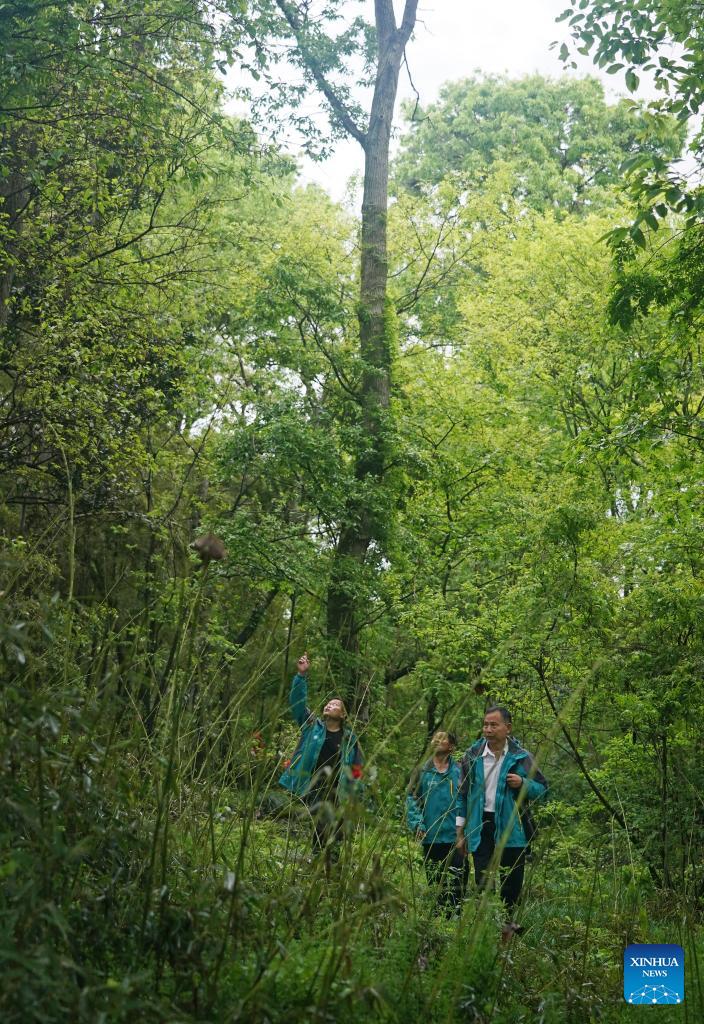
Xu Weishui (1st R) and villagers patrol in a grove where grey herons nest in Dazizui Village of Duchang County, east China's Jiangxi Province, April 9, 2026.
In Dazizui Village, more than 8,000 grey herons inhabit in a lakeside grove. With a large wetland area and abundant vegetation, the village boasts a favorable ecological environment. Since 1998, grey herons have been nesting here, leading the village to gradually become known as "grey heron village."
Grey herons feed on small fish, shrimps, and snails in marshes, lakes, and ponds. To help those grey herons struggling to find food, villagers release fry into the ponds. They also gather branches and place them by the lake to help grey herons build nests.
In 2003, villagers voluntarily formed a bird protection patrol team, setting up watch huts and taking turns guarding at night to prevent egg theft.
Under the villagers' careful protection, more grey herons have arrived and nested in the village. In 2016, villagers raised funds collectively to build 11 iron artificial nest racks. Each "iron tree" has five nests for grey herons to build nests for breeding.
For 28 years, the villagers of Dazizui have made continuous conservation efforts to guard those grey herons. (Xinhua/Wan Xiang)
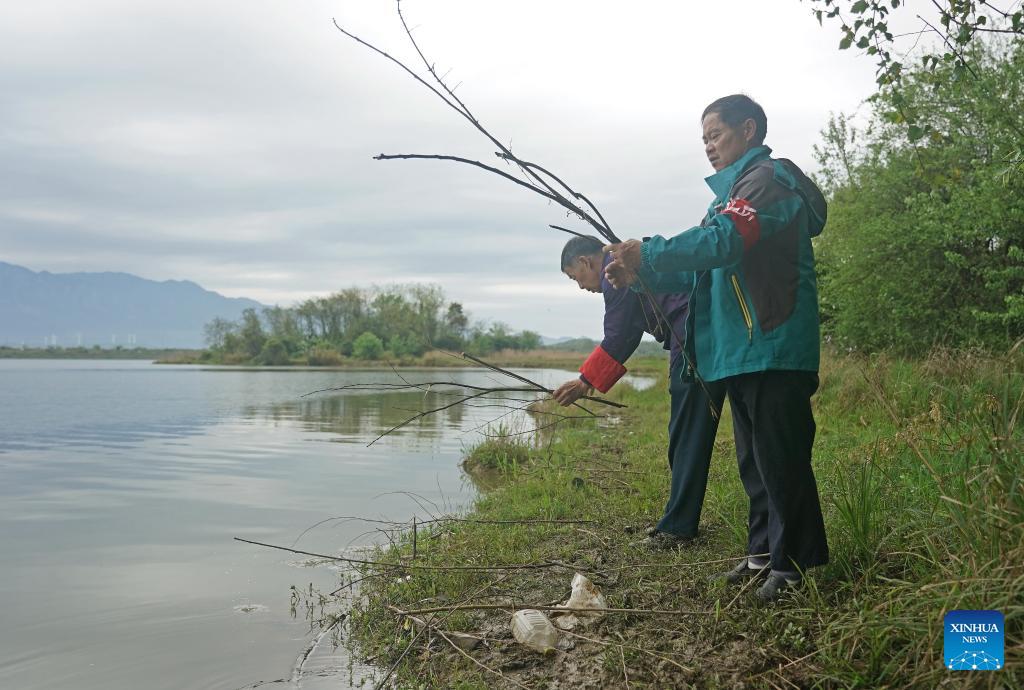
Xu Guosong (R) picks branches and places them by the lakeside to help grey herons gather nest-building materials in Dazizui Village of Duchang County, east China's Jiangxi Province, April 9, 2026.
In Dazizui Village, more than 8,000 grey herons inhabit in a lakeside grove. With a large wetland area and abundant vegetation, the village boasts a favorable ecological environment. Since 1998, grey herons have been nesting here, leading the village to gradually become known as "grey heron village."
Grey herons feed on small fish, shrimps, and snails in marshes, lakes, and ponds. To help those grey herons struggling to find food, villagers release fry into the ponds. They also gather branches and place them by the lake to help grey herons build nests.
In 2003, villagers voluntarily formed a bird protection patrol team, setting up watch huts and taking turns guarding at night to prevent egg theft.
Under the villagers' careful protection, more grey herons have arrived and nested in the village. In 2016, villagers raised funds collectively to build 11 iron artificial nest racks. Each "iron tree" has five nests for grey herons to build nests for breeding.
For 28 years, the villagers of Dazizui have made continuous conservation efforts to guard those grey herons. (Xinhua/Wan Xiang)
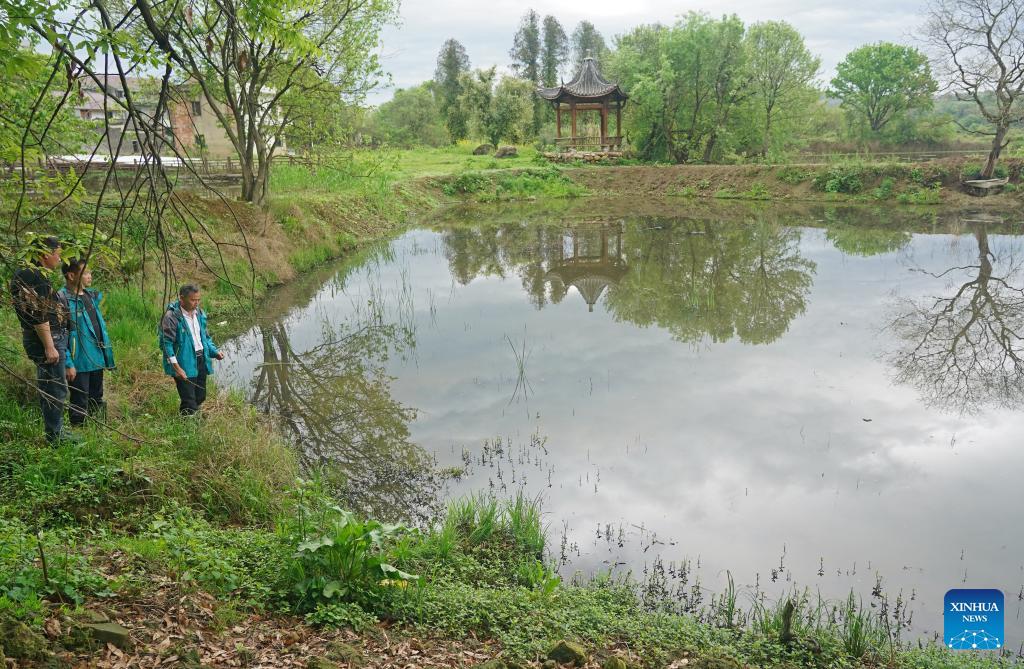
Xu Weishui (1st R) and villagers patrol beside a pond where fry were released in Dazizui Village of Duchang County, east China's Jiangxi Province, April 9, 2026.
In Dazizui Village, more than 8,000 grey herons inhabit in a lakeside grove. With a large wetland area and abundant vegetation, the village boasts a favorable ecological environment. Since 1998, grey herons have been nesting here, leading the village to gradually become known as "grey heron village."
Grey herons feed on small fish, shrimps, and snails in marshes, lakes, and ponds. To help those grey herons struggling to find food, villagers release fry into the ponds. They also gather branches and place them by the lake to help grey herons build nests.
In 2003, villagers voluntarily formed a bird protection patrol team, setting up watch huts and taking turns guarding at night to prevent egg theft.
Under the villagers' careful protection, more grey herons have arrived and nested in the village. In 2016, villagers raised funds collectively to build 11 iron artificial nest racks. Each "iron tree" has five nests for grey herons to build nests for breeding.
For 28 years, the villagers of Dazizui have made continuous conservation efforts to guard those grey herons. (Xinhua/Wan Xiang)
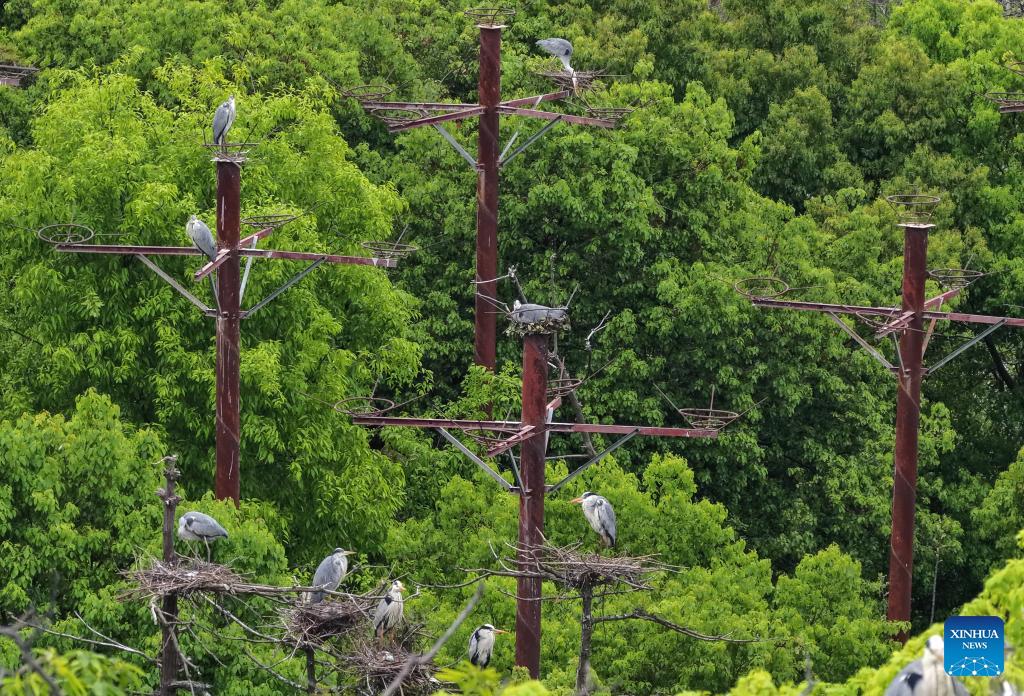
A drone photo taken on April 8, 2026 shows grey herons resting on iron racks built by villagers in Dazizui Village of Duchang County, east China's Jiangxi Province.
In Dazizui Village, more than 8,000 grey herons inhabit in a lakeside grove. With a large wetland area and abundant vegetation, the village boasts a favorable ecological environment. Since 1998, grey herons have been nesting here, leading the village to gradually become known as "grey heron village."
Grey herons feed on small fish, shrimps, and snails in marshes, lakes, and ponds. To help those grey herons struggling to find food, villagers release fry into the ponds. They also gather branches and place them by the lake to help grey herons build nests.
In 2003, villagers voluntarily formed a bird protection patrol team, setting up watch huts and taking turns guarding at night to prevent egg theft.
Under the villagers' careful protection, more grey herons have arrived and nested in the village. In 2016, villagers raised funds collectively to build 11 iron artificial nest racks. Each "iron tree" has five nests for grey herons to build nests for breeding.
For 28 years, the villagers of Dazizui have made continuous conservation efforts to guard those grey herons. (Xinhua/Wan Xiang)
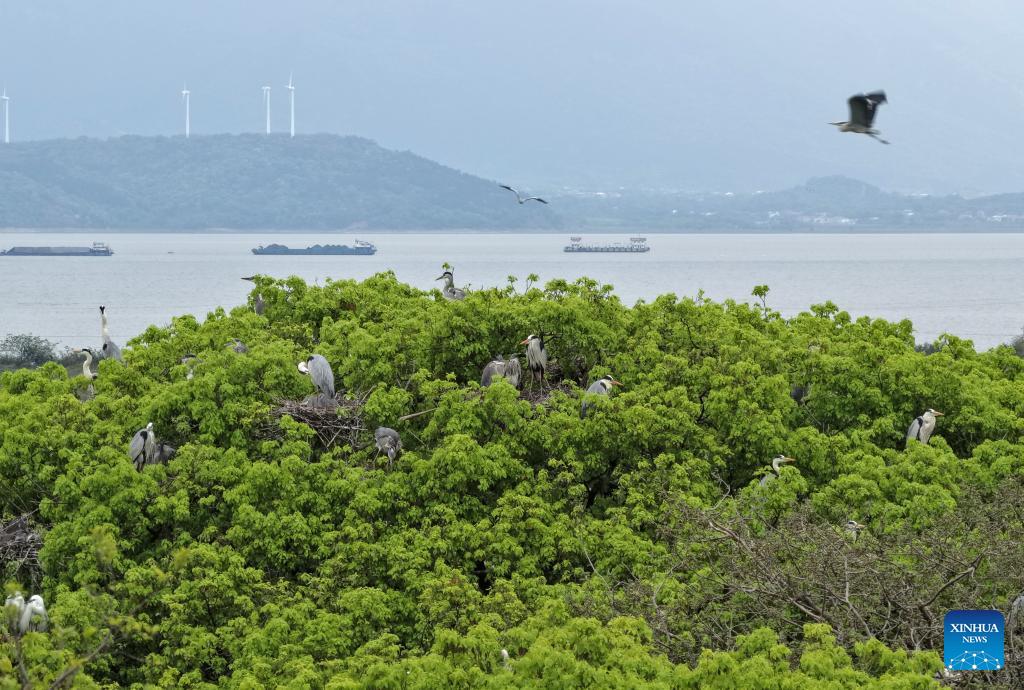
A drone photo taken on April 8, 2026 shows grey herons perching in a grove in Dazizui Village of Duchang County, east China's Jiangxi Province.
In Dazizui Village, more than 8,000 grey herons inhabit in a lakeside grove. With a large wetland area and abundant vegetation, the village boasts a favorable ecological environment. Since 1998, grey herons have been nesting here, leading the village to gradually become known as "grey heron village."
Grey herons feed on small fish, shrimps, and snails in marshes, lakes, and ponds. To help those grey herons struggling to find food, villagers release fry into the ponds. They also gather branches and place them by the lake to help grey herons build nests.
In 2003, villagers voluntarily formed a bird protection patrol team, setting up watch huts and taking turns guarding at night to prevent egg theft.
Under the villagers' careful protection, more grey herons have arrived and nested in the village. In 2016, villagers raised funds collectively to build 11 iron artificial nest racks. Each "iron tree" has five nests for grey herons to build nests for breeding.
For 28 years, the villagers of Dazizui have made continuous conservation efforts to guard those grey herons. (Xinhua/Wan Xiang)
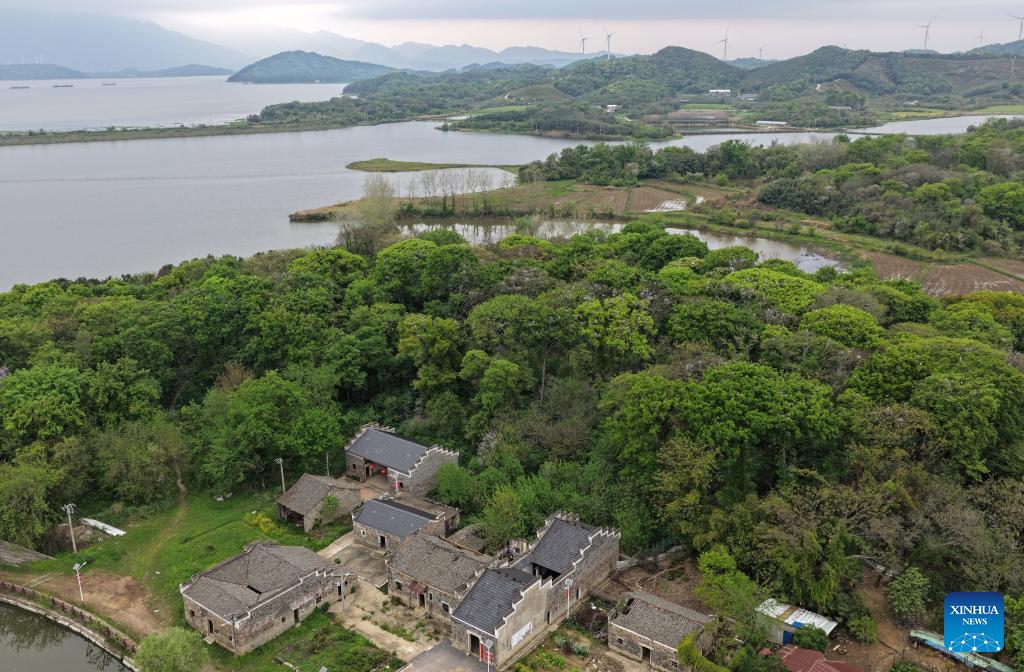
A drone photo taken on April 8, 2026 shows grey herons perching in a grove in Dazizui Village of Duchang County, east China's Jiangxi Province.
In Dazizui Village, more than 8,000 grey herons inhabit in a lakeside grove. With a large wetland area and abundant vegetation, the village boasts a favorable ecological environment. Since 1998, grey herons have been nesting here, leading the village to gradually become known as "grey heron village."
Grey herons feed on small fish, shrimps, and snails in marshes, lakes, and ponds. To help those grey herons struggling to find food, villagers release fry into the ponds. They also gather branches and place them by the lake to help grey herons build nests.
In 2003, villagers voluntarily formed a bird protection patrol team, setting up watch huts and taking turns guarding at night to prevent egg theft.
Under the villagers' careful protection, more grey herons have arrived and nested in the village. In 2016, villagers raised funds collectively to build 11 iron artificial nest racks. Each "iron tree" has five nests for grey herons to build nests for breeding.
For 28 years, the villagers of Dazizui have made continuous conservation efforts to guard those grey herons. (Xinhua/Wan Xiang)
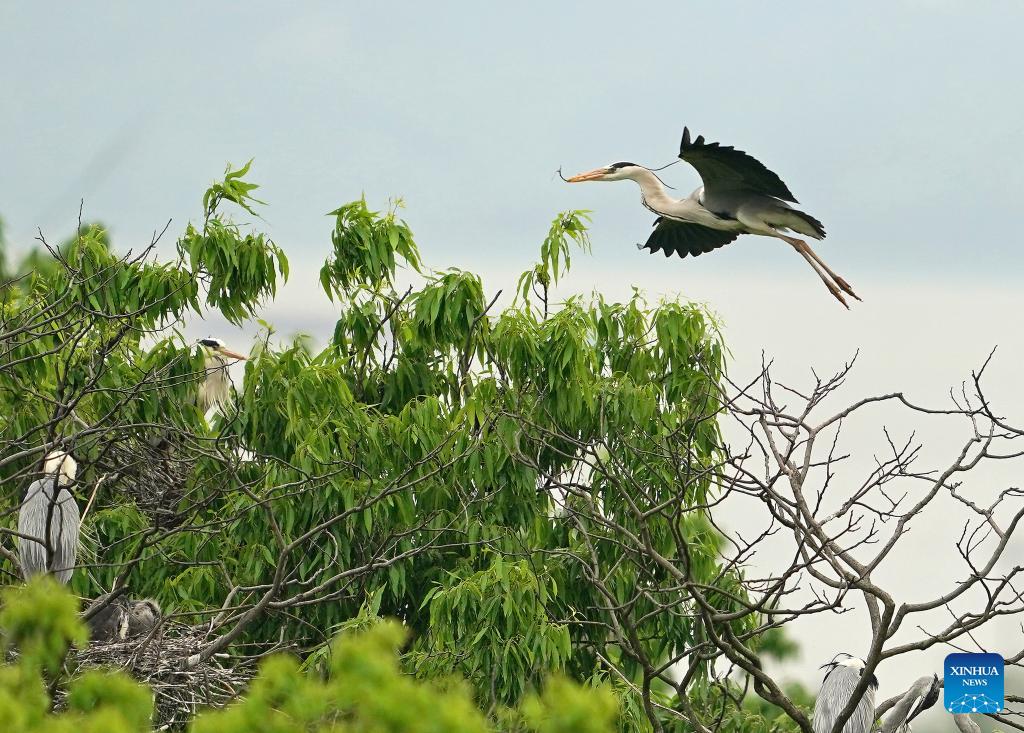
A grey heron carries a branch to build a nest in Dazizui Village of Duchang County, east China's Jiangxi Province, April 8, 2026.
In Dazizui Village, more than 8,000 grey herons inhabit in a lakeside grove. With a large wetland area and abundant vegetation, the village boasts a favorable ecological environment. Since 1998, grey herons have been nesting here, leading the village to gradually become known as "grey heron village."
Grey herons feed on small fish, shrimps, and snails in marshes, lakes, and ponds. To help those grey herons struggling to find food, villagers release fry into the ponds. They also gather branches and place them by the lake to help grey herons build nests.
In 2003, villagers voluntarily formed a bird protection patrol team, setting up watch huts and taking turns guarding at night to prevent egg theft.
Under the villagers' careful protection, more grey herons have arrived and nested in the village. In 2016, villagers raised funds collectively to build 11 iron artificial nest racks. Each "iron tree" has five nests for grey herons to build nests for breeding.
For 28 years, the villagers of Dazizui have made continuous conservation efforts to guard those grey herons. (Xinhua/Wan Xiang)
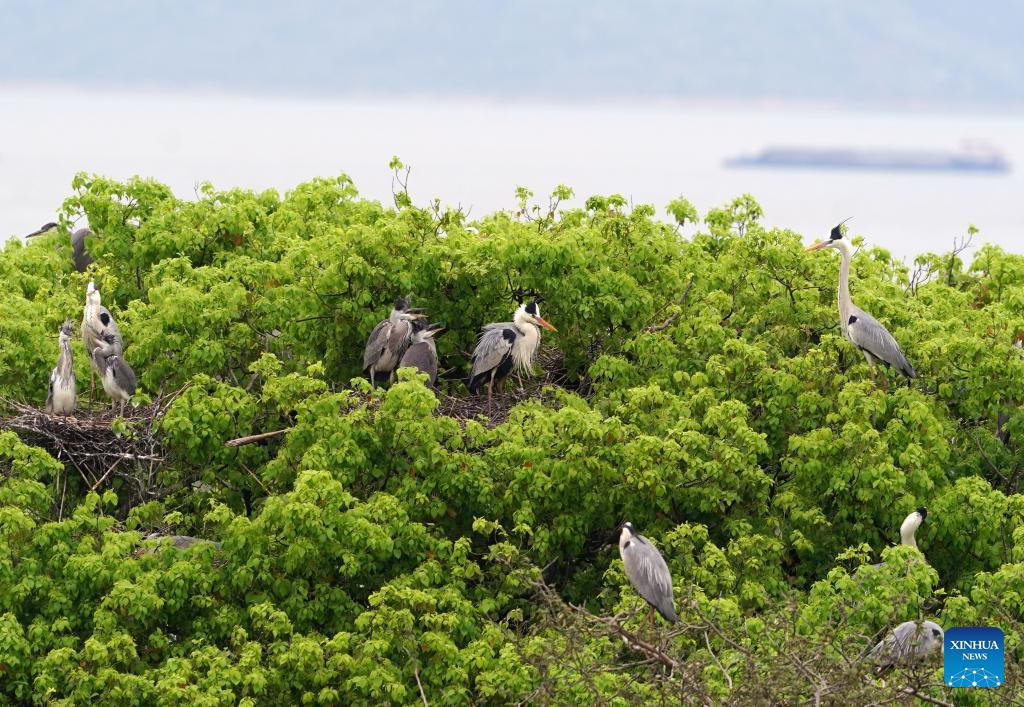
Grey herons perch in a grove in Dazizui Village of Duchang County, east China's Jiangxi Province, April 8, 2026.
In Dazizui Village, more than 8,000 grey herons inhabit in a lakeside grove. With a large wetland area and abundant vegetation, the village boasts a favorable ecological environment. Since 1998, grey herons have been nesting here, leading the village to gradually become known as "grey heron village."
Grey herons feed on small fish, shrimps, and snails in marshes, lakes, and ponds. To help those grey herons struggling to find food, villagers release fry into the ponds. They also gather branches and place them by the lake to help grey herons build nests.
In 2003, villagers voluntarily formed a bird protection patrol team, setting up watch huts and taking turns guarding at night to prevent egg theft.
Under the villagers' careful protection, more grey herons have arrived and nested in the village. In 2016, villagers raised funds collectively to build 11 iron artificial nest racks. Each "iron tree" has five nests for grey herons to build nests for breeding.
For 28 years, the villagers of Dazizui have made continuous conservation efforts to guard those grey herons. (Xinhua/Wan Xiang)

Xu Weishui (2nd L) and Xu Guosong (1st L) promote bird protection knowledge to other villagers in Dazizui Village of Duchang County, east China's Jiangxi Province, April 9, 2026.
In Dazizui Village, more than 8,000 grey herons inhabit in a lakeside grove. With a large wetland area and abundant vegetation, the village boasts a favorable ecological environment. Since 1998, grey herons have been nesting here, leading the village to gradually become known as "grey heron village."
Grey herons feed on small fish, shrimps, and snails in marshes, lakes, and ponds. To help those grey herons struggling to find food, villagers release fry into the ponds. They also gather branches and place them by the lake to help grey herons build nests.
In 2003, villagers voluntarily formed a bird protection patrol team, setting up watch huts and taking turns guarding at night to prevent egg theft.
Under the villagers' careful protection, more grey herons have arrived and nested in the village. In 2016, villagers raised funds collectively to build 11 iron artificial nest racks. Each "iron tree" has five nests for grey herons to build nests for breeding.
For 28 years, the villagers of Dazizui have made continuous conservation efforts to guard those grey herons. (Xinhua/Wan Xiang)
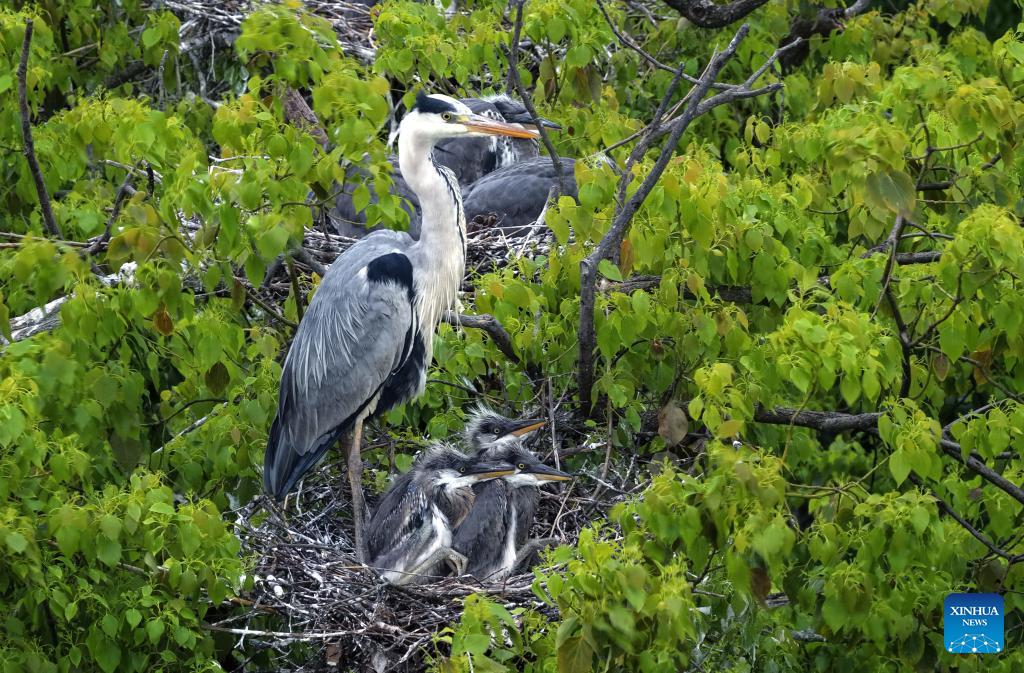
A drone photo taken on April 8, 2026 shows a grey heron and its chicks perching in a grove in Dazizui Village of Duchang County, east China's Jiangxi Province.
In Dazizui Village, more than 8,000 grey herons inhabit in a lakeside grove. With a large wetland area and abundant vegetation, the village boasts a favorable ecological environment. Since 1998, grey herons have been nesting here, leading the village to gradually become known as "grey heron village."
Grey herons feed on small fish, shrimps, and snails in marshes, lakes, and ponds. To help those grey herons struggling to find food, villagers release fry into the ponds. They also gather branches and place them by the lake to help grey herons build nests.
In 2003, villagers voluntarily formed a bird protection patrol team, setting up watch huts and taking turns guarding at night to prevent egg theft.
Under the villagers' careful protection, more grey herons have arrived and nested in the village. In 2016, villagers raised funds collectively to build 11 iron artificial nest racks. Each "iron tree" has five nests for grey herons to build nests for breeding.
For 28 years, the villagers of Dazizui have made continuous conservation efforts to guard those grey herons. (Xinhua/Wan Xiang)