


US cancels envoys' trip to Pakistan; prospects for dialogue-based dispute resolution remain uncertain: Chinese expert
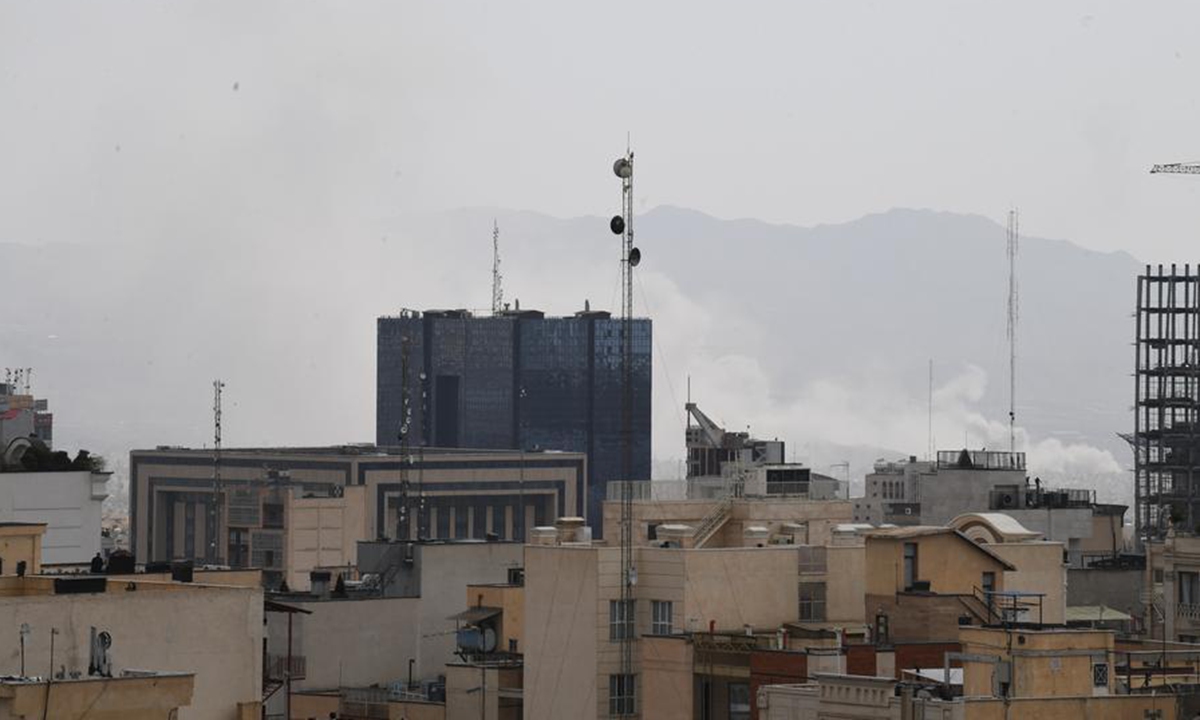
This photo taken on Feb. 28, 2026 shows thick smoke rising in downtown Tehran, Iran. (Photo: Xinhua)
Amid the latest developments in stalled bilateral negotiations, US President Donald Trump has called off a US team's trip to Pakistan for talks on the Iran war, while Iran's President Masoud Pezeshkian said Tehran will not enter into "forced negotiations" with the US, media reported. A Chinese expert noted that although diplomatic channels remain open, prospects for settling disputes through dialogue are growing uncertain.
On Saturday, US President announced in a post on Truth Social that he just canceled the trip of US representatives going to Islamabad, Pakistan, to meet with the Iranian side.
"Too much time wasted on traveling, too much work! Besides which, there is tremendous infighting and confusion within their 'leadership.' Nobody knows who is in charge, including them," Trump said, according to the Xinhua News Agency. The US president also claimed that "we have all the cards, they have none," adding that "if they want to talk, all they have to do is call."
Speaking to reporters outside Air Force One in Florida, US President also reiterated long travel time as a key reason for canceling special envoy Steve Witkoff and Jared Kushner's scheduled trip to Pakistan for a second round of talks with the Iranians, adding that negotiations will be handled over the phone, per CNN.
Meanwhile, in a phone call with Pakistani Prime Minister Shehbaz Sharif, Pezeshkian said ongoing US actions were undermining trust and complicating any path to dialogue, CNN reported on Saturday.
He added that progress would remain difficult unless "hostile actions and operational pressures" from Washington are halted, per CNN.
The announcement by Trump followed the departure of Iran's foreign minister, Abbas Araghchi, from Pakistan, where he presented mediators with a potential framework for ending the conflict, according to Al Jazeera.
Araghchi said in his X post on Saturday that he had a "very fruitful visit to Pakistan, whose good offices and brotherly efforts to bring back peace to our region we very much value." He also said that he is waiting "to see if the US is truly serious about diplomacy."
Araghchi has now left Pakistan and arrived in Oman, per Al Jazeera. He will be visiting Pakistan again after his visit to Oman, NBC News citing state-run news agency IRNA reported.
The US move to cancel the trip reveals the profound rifts between the two sides in resolving differences through diplomatic negotiations, Li Haidong, a professor at China Foreign Affairs University, told the Global Times on Sunday.
The expert noted the diplomatic communication remains a viable and effective tool. As long as both sides are willing to communicate, the channels for diplomatic negotiations will remain open. Yet given the current situation, the prospect of resolving disputes through negotiations remain uncertain, Li added.
Against the backdrop, US military forces continue to enforce "US sanctions and fully implement the blockade against ships entering or departing Iranian ports," US Central Command said on social media Saturday, per Xinhua.
Also, Iran's main military command, Khatam al-Anbiya Central Headquarters, on Saturday reiterated its pledge to react if the US continues its "blockade, banditry and piracy" in the West Asia region, per Xinhua.
The core demands of the Washington and Tehran are widely divergent and incompatible, Li said. Currently, the US cannot force Iran into a compromised settlement, nor can Washington yield to Tehran's core demands.