


China will continue to provide strong impetus for world economic growth: Cuban scholar
Havana (People's Daily) - China's new development blueprint will not only advance its own modernization but also create vital opportunities for the Global South. Luis Fernández, a senior researcher at the Center for International Economic Research at the University of Havana, recently told the People's Daily, "The outline of the 15th Five-Year Plan draws a new blueprint for advancing Chinese modernization and provides valuable development opportunities for developing countries, including Cuba."
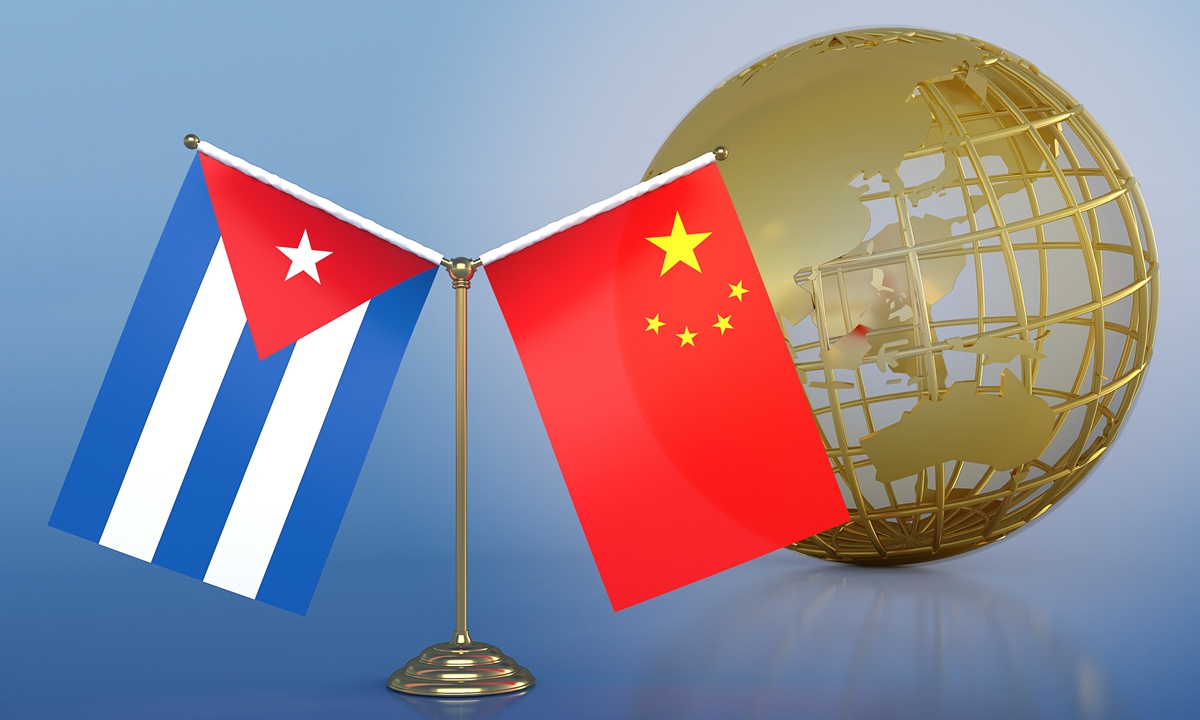
File photo: Xinhua
China achieved remarkable development results during the 14th Five-Year Plan period, elevating its economic strength, technological capabilities and comprehensive national strength to a new level.
"During the 14th Five-Year Plan period, China made important progress in overcoming challenges in key core technologies, and high-tech manufacturing and strategic emerging industries have become important forces driving industrial optimization and upgrading," Fernández said, adding that new quality productive forces have created endogenous power for high-quality development.
Fernández stated that the Communist Party of China (CPC)'s adherence to a people-centered development philosophy left a deep impression on him. "China not only focuses on total economic growth, but is also committed to ensuring that the fruits of development benefit all people more and more fairly," he noted. Ultimately, he emphasized, this is to meet the people's ever-growing needs for a better life.
According to the researcher, the outline of the 15th Five-Year Plan makes specific arrangements for expanding high-level opening-up, which sends a strong signal of China's commitment to open cooperation, mutual benefit and win-win outcomes.
"Currently, in the context of intensifying unilateralism and protectionism, China is continuously expanding its opening-up and promoting investment and trade circulation among countries, which will continue to provide strong impetus for world economic growth," Fernández said.
"Formulating and implementing five-year plans demonstrates a high degree of strategic stability and is an important experience in state governance by the CPC," Fernández said. He explained that this strategic consistency of "drawing a blueprint to the end" is a crucial reason for the continuous advancement of Chinese modernization.
"The formulation of China's five-year plans is a scientific process based on broad democratic participation. This process builds upon a systematic evaluation of the previous planning cycle's implementation while widely absorbing the research results of professional departments and the opinions of the public, thereby ensuring the scientific nature, continuity and stability of the national development strategy at the institutional level," he added.
Fernández emphasized that China's five-year plans also integrate technological progress and the development demands of the times into an overall consideration, promoting high-quality development and cultivating new quality productive forces through forward-looking layouts. These plans are oriented toward solving practical problems in China's development and addressing long-term challenges.
"The outline of the 15th Five-Year Plan lays a more solid foundation for China to basically achieve socialist modernization and also provides experience for developing countries moving toward modernization," Fernández said.
The researcher said that the joint construction of the Belt and Road Initiative is a striking implementation of China's promotion of the building of a community with a shared future for humaniity that injects more momentum into maintaining the stability of global value chains and promotes the healthier and more stable development of the international economic and trade system. He expressed confidence that during the 15th Five-Year Plan period, cooperation between Cuba and China will have broad prospects in fields such as the digital economy, biotechnology, and the medical and healthcare sectors.