


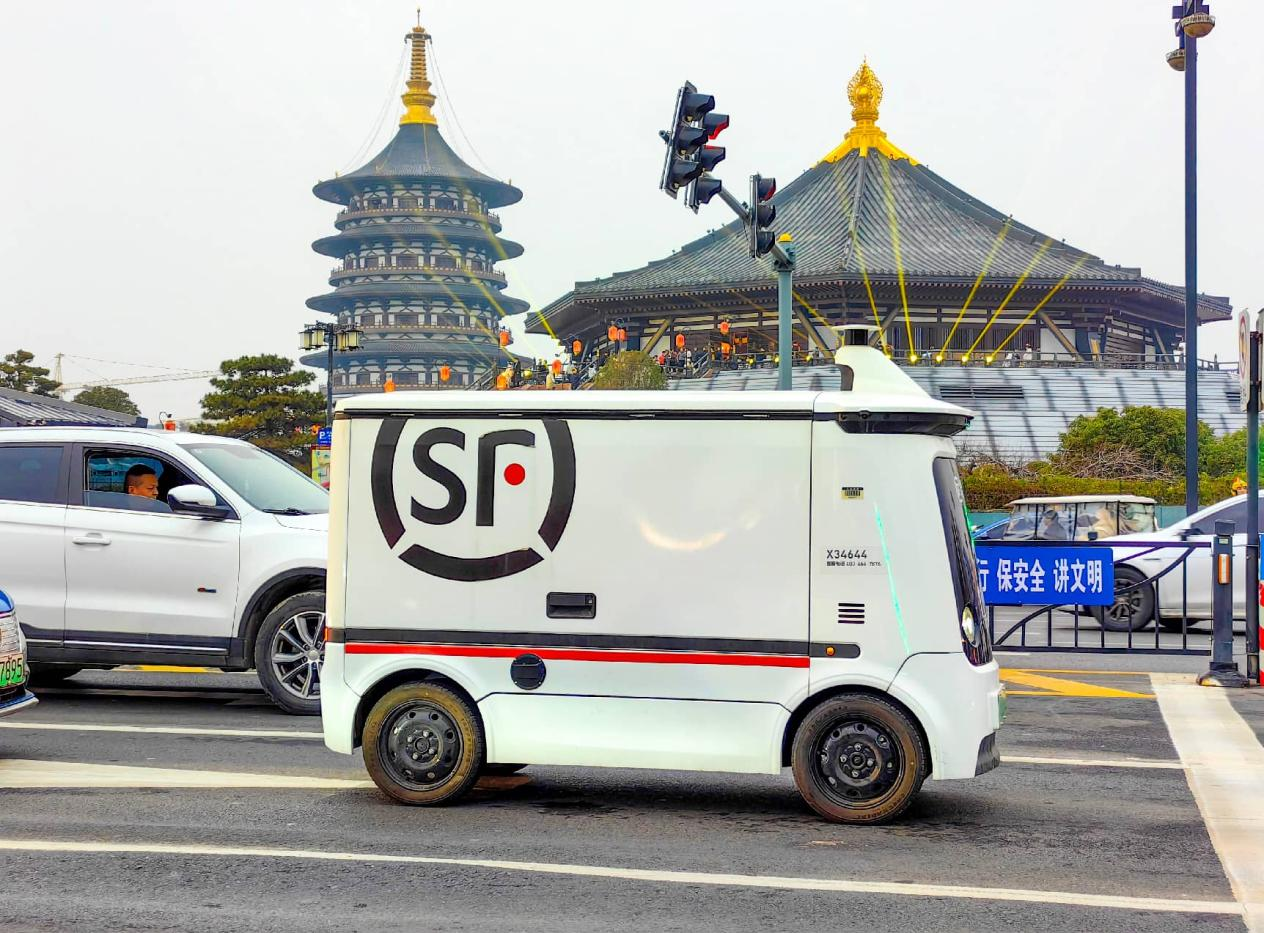
An unmanned express delivery vehicle runs on a street in Luoyang, Henan Province. (Photo: Zhang Yixi)
China's express delivery sector handled 47.73 billion parcels in Q1 of 2026, up 5.8 percent year on year, according to statistics released by the State Post Bureau on April 22.
As a key link between production and consumption, the express delivery industry serves as a real-time barometer of economic activity. What does this growth reveal about China's economy?
While growth slowed from previous years, seasonal factors played a role: the shifting Spring Festival holiday and extended break disrupted early-year operations. By March, activity normalized as demand rebounded—parcel volumes already exceeding last year's levels.
Deeper analysis reveals sustained momentum since the 14th Five-Year Plan (2021-2025). Parcel volumes rose annually, with each new 100-billion-parcel milestone achieved faster than the last. This steady Q1 2026 growth—the first year of the 15th Five-Year Plan (2026-2030)—offers insight into China's economic transition toward new growth drivers and higher-quality development.
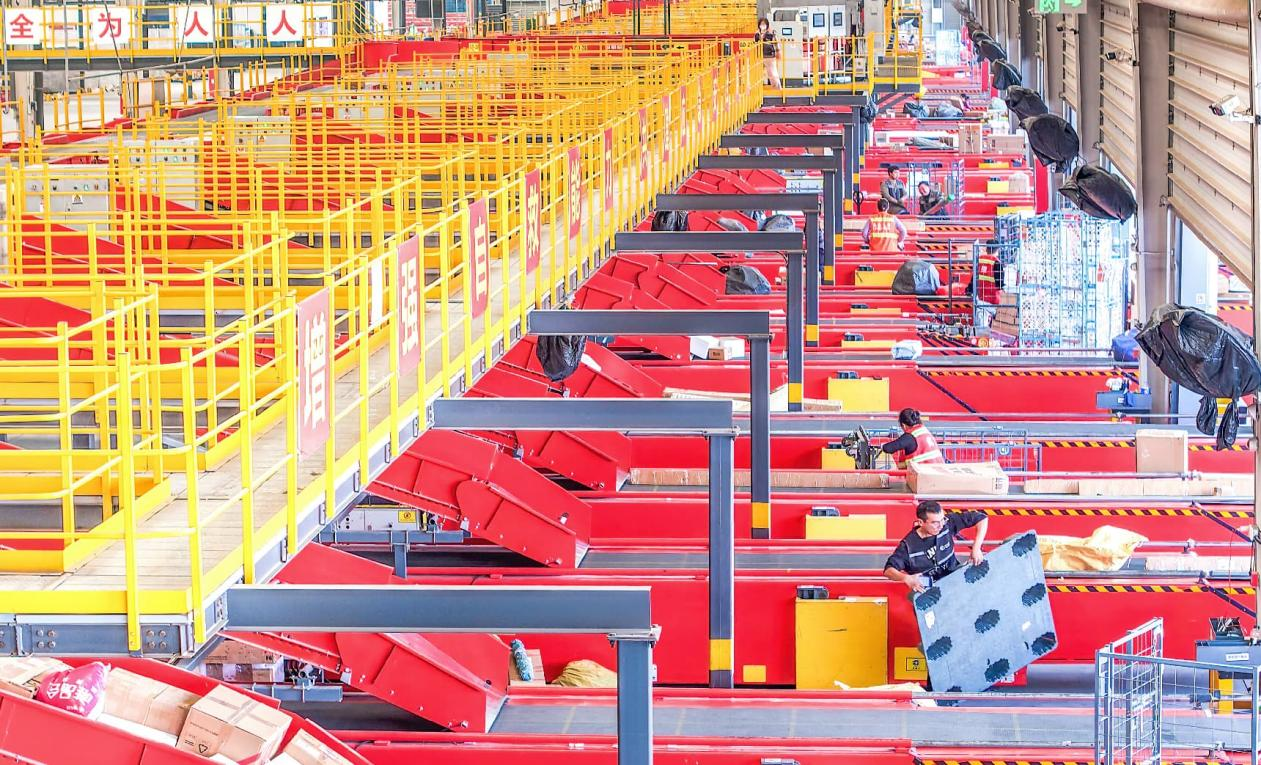
Workers process automatically sorted express delivery parcels on an intelligent sorting line in a logistics park in Suqian, Jiangsu Province. (Photo: Chen Shaoshuai)
Moving toward the new—what drives this momentum?
Technology.
At Jilin's Chagan Lake winter fishing grounds, autonomous last-mile vehicles integrate with rail, road and air networks, delivering fresh fish to Beijing and Shanghai overnight. In Yunnan and Guizhou tea regions, drones have created "aerial tea routes," cutting order damage by 40 percent.
Domestic firm Neolix nearly tripled autonomous vehicle deliveries year on year in Q1. Expanding unmanned delivery cuts costs, improves service quality and builds new competitive advantages.
Another momentum driver comes from new scenarios.
Delivery firms now partner with tourism companies to ship equipment to surfers, work with manufacturers on specialized cargo such as EV batteries and establish urban "micro-warehouses" for flexible storage.
Market demand drives supply-side innovation, extending reach into households and across sectors while opening new market opportunities.
China's comprehensive industrial system and vast domestic market enable faster technology adoption and the emergence of new scenarios. As innovation aligns, express logistics accelerates expansion and upgrading, injecting new momentum into economic circulation.
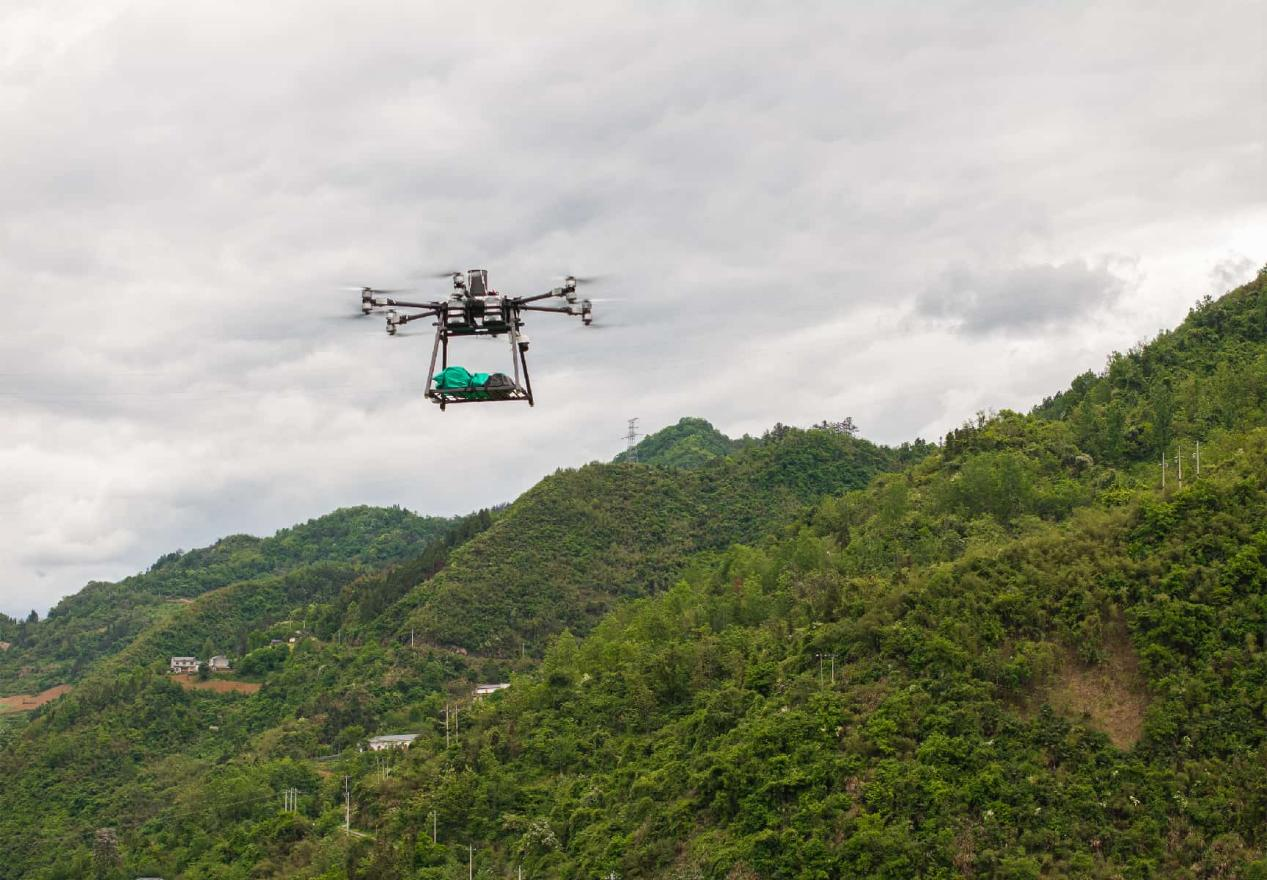
A drone delivers parcels in Zhushan county, Shiyan, Hubei Province. (Photo: Shi Ruhua)
Moving toward higher quality—where is it reflected?
Better structure.
Since 2021, the share of central and western regions in national delivery volume has risen by 7.5 percentage points cumulatively, reaching 32 percent in Q1 2026. These areas now act as new growth engines, reflecting e-commerce expansion westward and broader "free shipping" coverage—signaling more balanced regional development.
Recent modest price increases (including fuel surcharges) go beyond rising oil costs. Since 2025, measures to curb destructive price wars have taken effect. Multiple provinces have raised rates alongside service improvements.
While corrections tempered short-term growth, they signal a healthy shift: from cutthroat pricing to value-based competition.
Both regional rebalancing and market optimization stem from China's efforts to unifiy its national market. By removing bottlenecks, improving circulation efficiency and ensuring fair competition, this integrated market unlocks new sector vitality.
China runs the world's largest delivery network by scale and coverage. Built on tangible capabilities and powered by advanced productive forces, this dynamic, resilient logistics system increasingly indicates high-quality development—reinforcing China's economic vitality.