


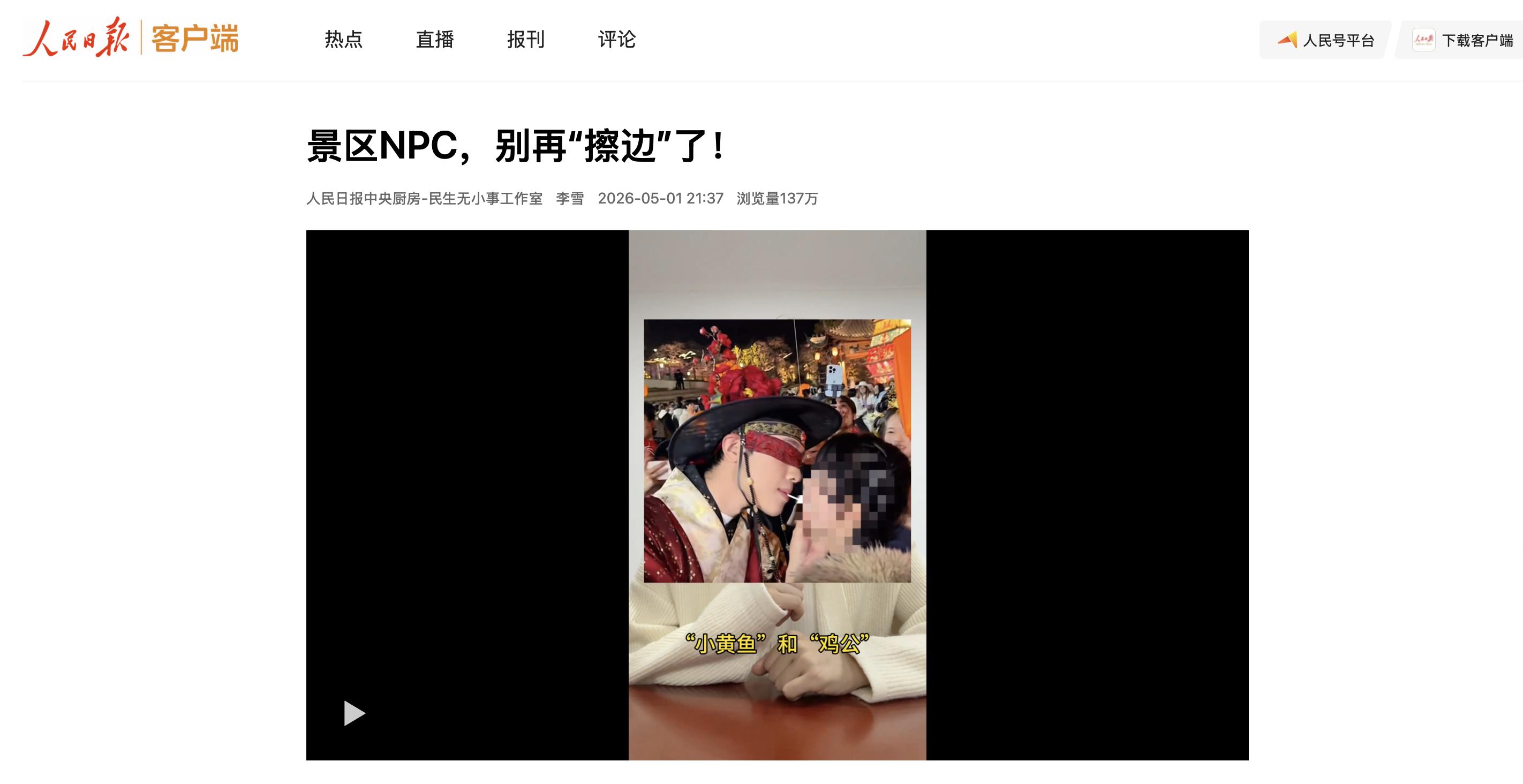
A screenshot of the article published by Minsheng Weekly
In response to criticism on inappropriate interactions of its NPC (non-player characters) performer with tourists, Gexian Village Resort, in East China's Jiangxi Province, issued a public apology on Saturday, saying it takes the matter very seriously and will immediately implement corrective measures.
In recent days, NPC performers such as “Xiaohuangyu” at Gexian Village have quickly gone viral online and sparked public controversy for performances and interactions with visitors featuring flirtatious gestures. For example, some interactions such as “wearing a red bridal veil” and “placing a lollipop into visitors’ mouths using his lips” have sparked widespread criticism, particularly regarding their impact on the large number of minors in the scenic area.
According to the statement released by the resort, the resort will implement measures including optimizing interaction standards, strengthening professional training and establishing a long-term supervision mechanism.
On the same day, the performer “Xiaohuangyu” at the resort also released an apology video via his social media account, saying that he will engage with visitors in a more appropriate and warm manner in the future.
On Friday, Minsheng Weekly, a publication under the People’s Daily, published an opinion piece titled “Scenic Spot NPCs, Stop Pushing the Boundaries.” According to the article, in principle, NPC performers should serve as carriers of cultural expression and enrich visitor experiences. However, some destinations have fallen into unhealthy competition patterns, over-relying on viral appeal, while certain NPC performances have drifted toward vulgar content.
Such performances built on flirtatious content cannot sustain the long-term development of immersive tourism. While suggestive performances and interactions may boost attention and visitor flow in the short term, they carry fundamental weaknesses. Without cultural depth or intrinsic value and relying solely on sensory stimulation and curiosity-driven appeal, they are likely to trigger public controversy. Moreover, these performances are easy to replicate; once widely imitated, they quickly lead to audience fatigue, said the article.
Immersive experiences have become a major trend in the tourism industry, but encouraging NPC performances does not mean allowing unchecked experimentation. The article stressed that immersive experiences should not be limited to superficial costume changes or set changes, but should integrate local history, regional characteristics and cultural heritage to create differentiated experiences. From performer training and interactive content design to storyline development and IP expansion, a full operational system should be built. High-quality NPC performances can significantly increase repeat visits.