


The 2026 Beijing International Automotive Exhibition closed today with 1,451 vehicles on display and a record 181 global premieres. But beyond the numbers, three technological shifts captured the world's attention. Here is what they mean.
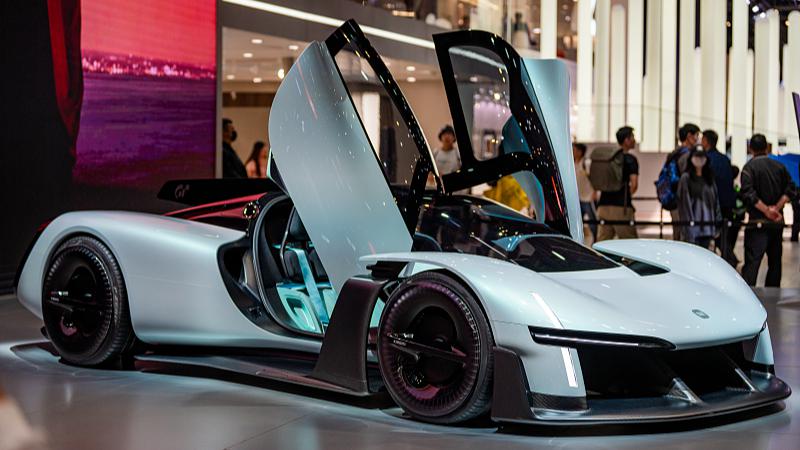
A concept car on display at the Beijing Auto Show 2026 in Beijing, China, April 30, 2026. (Photo: VCG)
What is Physical AI and why does it matter?
For years, in-car AI meant voice assistants that could adjust the temperature. At Auto China 2026, that changed. Physical AI systems can now predict how the real world behaves. Imagine a truck ahead dropping an apple onto the highway. Traditional systems only see the apple once it is in the way. Physical AI anticipates where it will roll and adjusts the car's path before the driver reacts. Huawei's Qiankun ADS 5.0 claims to cut collision risk by 50%. BMW, working with Alibaba and DeepSeek, unveiled an AI that learns driver habits over weeks. Cars without Physical AI may feel dangerous within two years, one engineer warned.
What is L3 autonomy and is it finally here?
Level 2 autonomy, common today, requires hands on the wheel and eyes on the road. Level 3 is different: the car handles most driving on highways or in traffic jams, only asking the driver to take over when necessary. For years, L3 was stuck between regulation and reality. China changed that in late 2025 with a commercial deployment green light. At this year's show, production-ready L3 systems arrived. Huawei's ADS 5.0 became the first to offer license-plate-ready L3 for highways, already in AITO and Arcfox models. BMW and Mercedes-Benz displayed their China-adapted systems. What was a laboratory discussion three years ago is now a purchase option.
What is flash charging and how fast is it?
Range anxiety has long been a barrier to EV adoption. Flash charging using 800-volt architecture solves it. CATL's latest Shenxing Plus battery adds 500 kilometers of range in just eight minutes. Affordable family cars now come with this technology as a standard feature. Infrastructure is catching up too: over 3,000 ultra-fast charging stations are now operational across China's highways, a tenfold increase from 2024. Porsche and Toyota both announced plans to adopt China's charging standard for local models.
What else drew attention?
Flying cars moved closer to reality. XPeng's "Land Aircraft Carrier" drew crowds and international media, reflecting China's push into the low-altitude economy. Off-road EVs with rugged "square-box" designs also became an unexpected highlight, blending tough looks with smart driving.
The bottom line
Global automakers are no longer just selling cars in China. They are integrating China-developed AI, autonomy standards and charging architecture into their global plans. What happens in Beijing no longer stays in Beijing.