


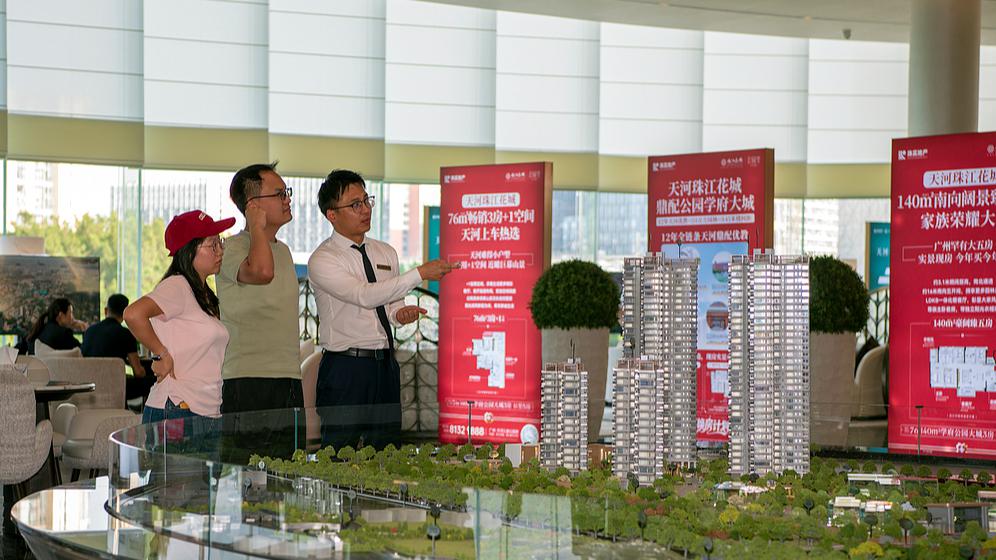
A sales staff presents a residential development to potential buyers in Guangzhou, Guangdong Province, April 25, 2026. (Photo: VCG)
China's property market is beginning to recover, but the rebound remains uneven. Demand is returning in major first-tier cities, while lower-tier cities continue to struggle with excess housing supply.
First-tier cities are seeing renewed activity as buyers re-enter the market after a period of hesitation. Shanghai is leading the recovery with particularly strong performance. Data from the city's real estate trading center shows that pre-owned home transactions reached 31,215 in March, the highest monthly level since March 2021.
Momentum carried into April, with transactions close to 29,000, up 22.3% year-on-year and the highest April figure in a decade. Prices have also stabilized, with official data showing a 0.4% increase in pre-owned home prices in March.
Beijing, Guangzhou, and Shenzhen also recorded gains in both transaction volumes and prices across March and April, pointing to a broader recovery trend in top-tier cities.
The improvement is also visible in the new home market. Prices in first-tier cities edged up by 0.2% in March, reversing flat growth in February and a decline in January. While modest, the increase signals a gradual return of confidence.
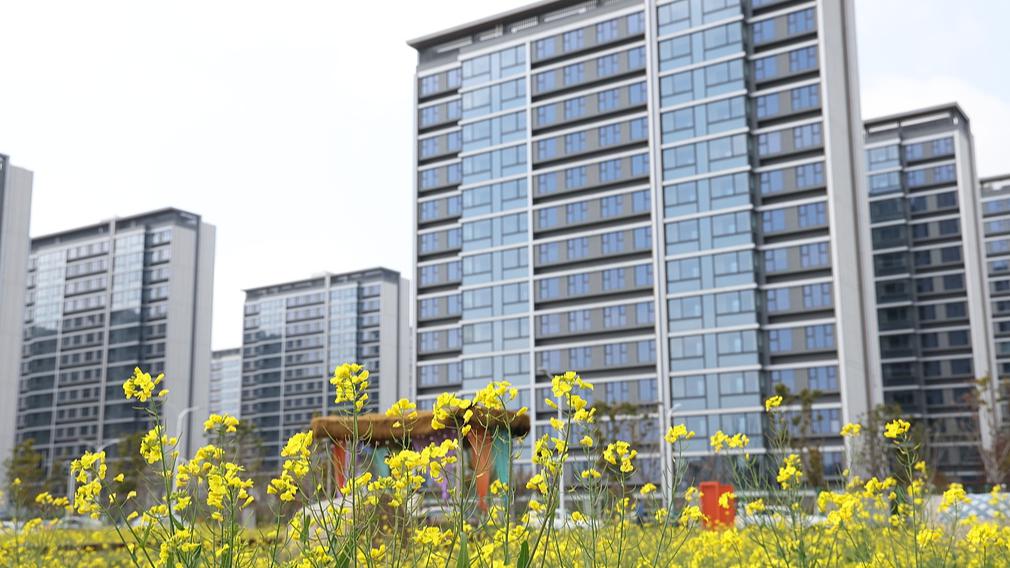
Residential properties on display in Shanghai, March 29, 2026. (Photo: VCG)
Analysts attribute the rebound to the return of first-time buyers and those upgrading their homes. Policy easing, such as relaxed purchase restrictions in Shanghai, has helped release pent-up demand. Upgrade buyers now account for roughly 30% of total demand, providing additional support.
However, the recovery remains uneven. Lower-tier cities are still weighed down by high inventory levels and weaker demand. Analysts describe the trend as a structural recovery, with stronger cities stabilizing while smaller markets lag behind.
Another supporting factor is the improving rent-to-price ratio in first-tier cities, which now exceeds bank deposit rates. Alongside prices that remain below previous peaks, this has made home purchases more attractive.
The rebound in major cities has prompted more optimistic forecasts from global investment banks. Goldman Sachs expects housing markets in cities such as Shanghai and Shenzhen to bottom out in 2026, while JPMorgan Chase forecasts a 3% increase in pre-owned home prices across first-tier cities.