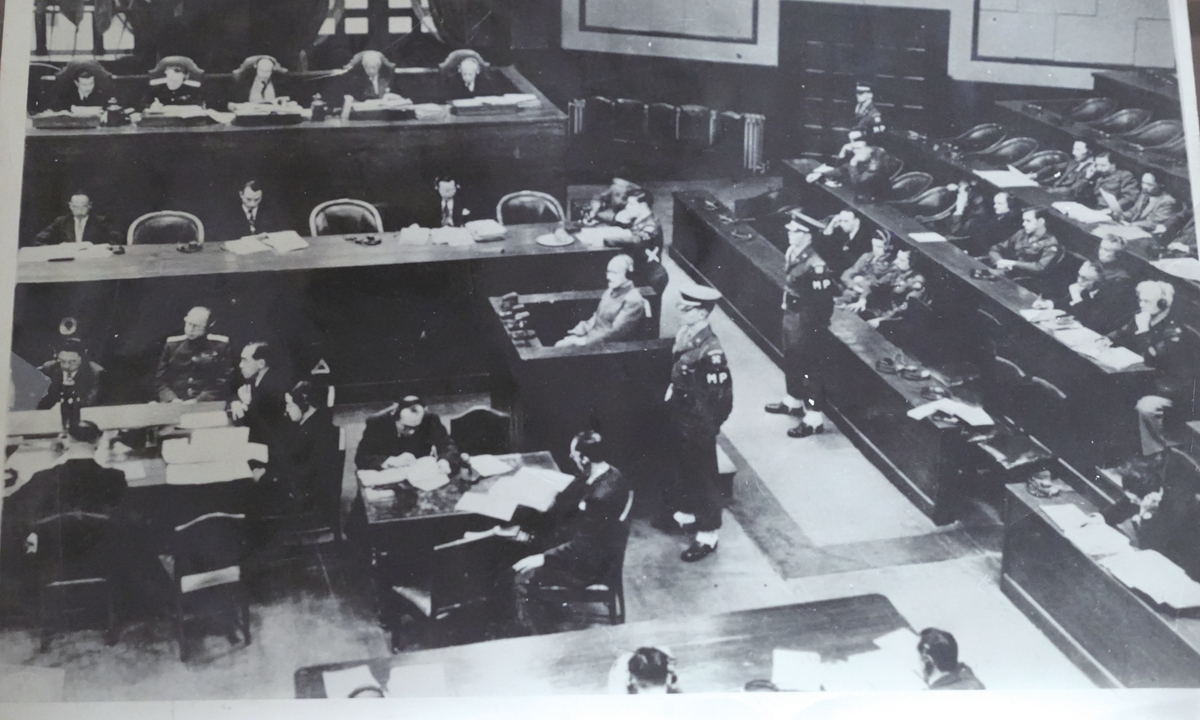
The historical picture of the trial scene at the International Military Tribunal of the Far East Photo: Courtesy of Xiang
The Tokyo Trial delivered a historic verdict on Japan's war crimes and its Class-A war criminals. Yet inside Yushukan in Japan's notorious Yasukuni Shrine, a long-running campaign has unfolded under the guise of a "museum": through semantic sleight of hand and a series of carefully crafted distortions, it openly denies the Tokyo Trial and seeks to rewrite history while glorifying militarism.
Xiang Longwan, honorary director of Center for the Tokyo Trial Studies of Shanghai Jiao Tong University and son of Xiang Zhejun, a Chinese prosecutor at the Tokyo Trial, has once visited this "history whitewashing museum." In an interview with the Global Times, he pointed out that the Tokyo Trial, through its irrefutable judicial evidence, completely negated the aggressive logic of Japanese militarism, and that such "play of words" collapses utterly in the face of historical justice.
The Yushukan Museum stands in the northeastern corner of the notorious Yasukuni Shrine. "Yasukuni Shrine has outright rejected this just trial, which also represents a judgment of civilization. The Yushukan makes no mention about the two-and-a-half-year trial - a landmark just ruling that shaped the post-war global order, arbitrarily erasing this pivotal historical event from its records," Xiang told the Global Times.
The Yushukan's distorted historical views have also drawn criticism from international observers. Gianni Simone, an Italian-born writer who has lived in Japan for a long time, wrote after visiting Yushukan that people often overlooked "the poisonous role played by the Yushukan." He said that "careful reading reveals a clear bias toward playing down Japan's acts of aggression and colonial rule."
The notorious Yasukuni Shrine issued the Yushukan catalogue. This catalogue is a historical exhibition catalogue, pictorial collection, and explanatory material compiled around the so-called museum's collections and exhibition contents.
By comparing the Yushukan catalog with the Tokyo Trial verdict, Xiang exclusively exposed to the Global Times the sordid tactics used by Japan's right wing to deny the Tokyo Trial.
Atsushi Koketsu, professor emeritus at Yamaguchi University in Japan, noted that modern militarists outright reject the Tokyo Trial and attempt to make people forget the fact that imperial Japan was once condemned by the international community. A nation that forgets history shall inevitably face the judgment of history once again.
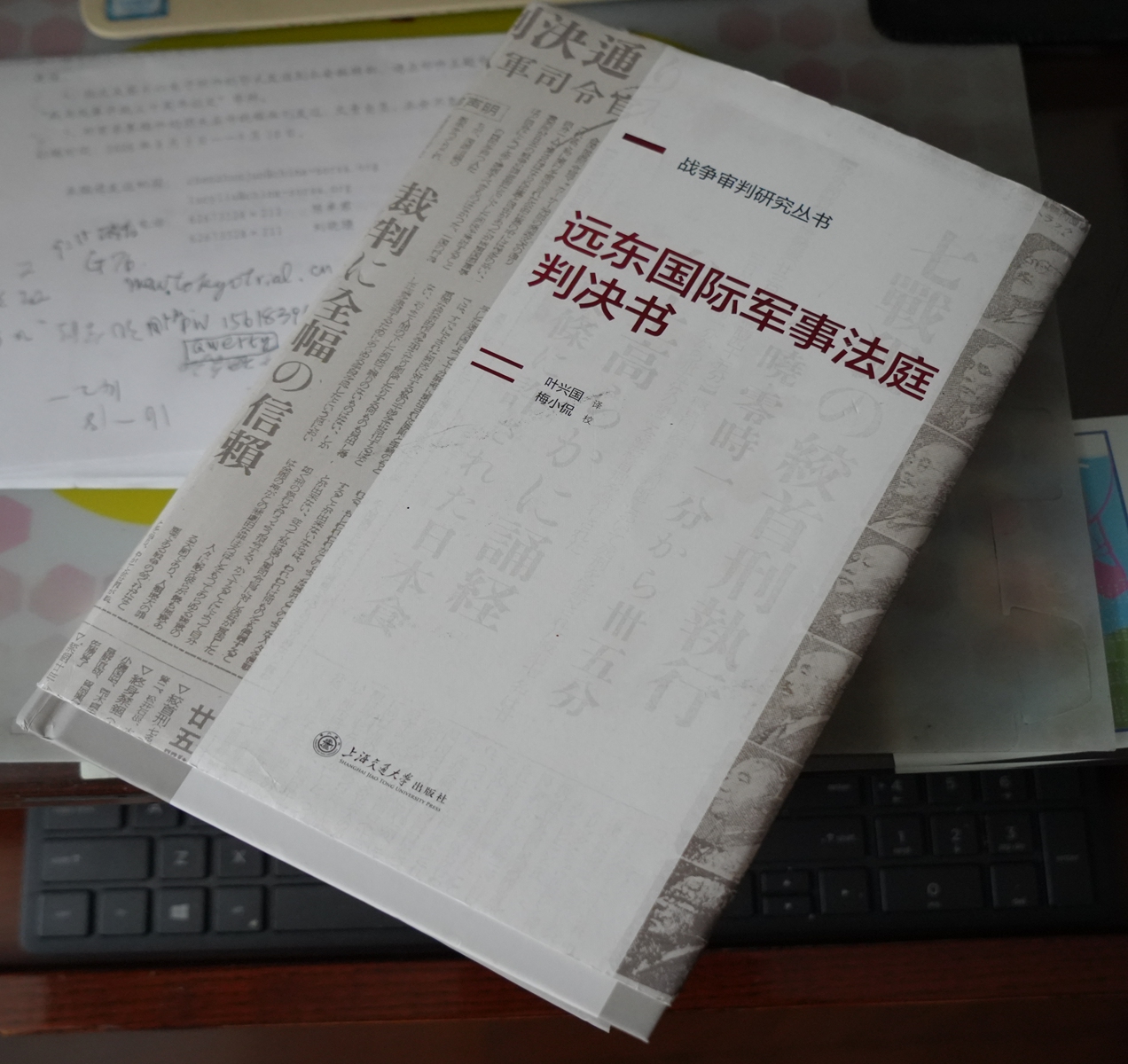
A Chinese-language version book of the Verdict of International Military Tribunal for the Far East Photo: Lu Ting/GT
September 18 Incident: A premeditated aggression
Yushukan catalog: [In September 1931,] resentment toward the overtly anti-Japanese policies of Zhang Xueliang's government, and dissatisfaction with the Japanese government's conciliatory approach to China, smoldered among Japanese residents in Manchuria (especially within the Kwantung Army). Subsequent to the incident, the Kwantung Army helped establish Manchukuo, installing Pu-yi, the last emperor of the Manchurian Dynasty, as head of state.
Tokyo Trial verdict: The evidence is abundant and convincing that the "Mukden Incident" [September 18 Incident] was carefully planned beforehand by officers of the [Japanese] Army General Staff, officers of the Kwantung Army, members of the Cherry Society, and others.
Lugou Bridge Incident: An erased plot of full-scale invasion of China
Yushukan catalog: The North China Incident, which turned the entire North China region into a battlefield by using the minor incident of Japanese troops being fired upon by Chinese forces at Marco Polo Bridge [Lugou Bridge] as a pretext, took place against the backdrop of rising anti-Japanese sentiment in China. There were also elements of Chinese provocation that triggered the Second Shanghai Incident [the Battle of Shanghai]. Chiang Kai-shek resorted to the strategy of consuming Japanese forces in the vast battlefield covering the entire Chinese mainland.
Tokyo Trial verdict: On the night of July 7, 1937, Japanese garrison troops at Lukouchiao [Lugou Bridge] held an unusual manoeuvre; and, alleging that a Japanese soldier was missing, demanded entry into the City of Wanping to conduct a search. Fighting broke out while the Japanese complaint was still under negotiation. The incident might then have been regarded as closed; but that was not the Japanese intention. Within twenty-four hours of the initial conflict, large units of the Kwantung Army began to converge upon the scene of the fighting. Reinforcements having reached North China, new demands were made for the withdrawal of Chinese forces.
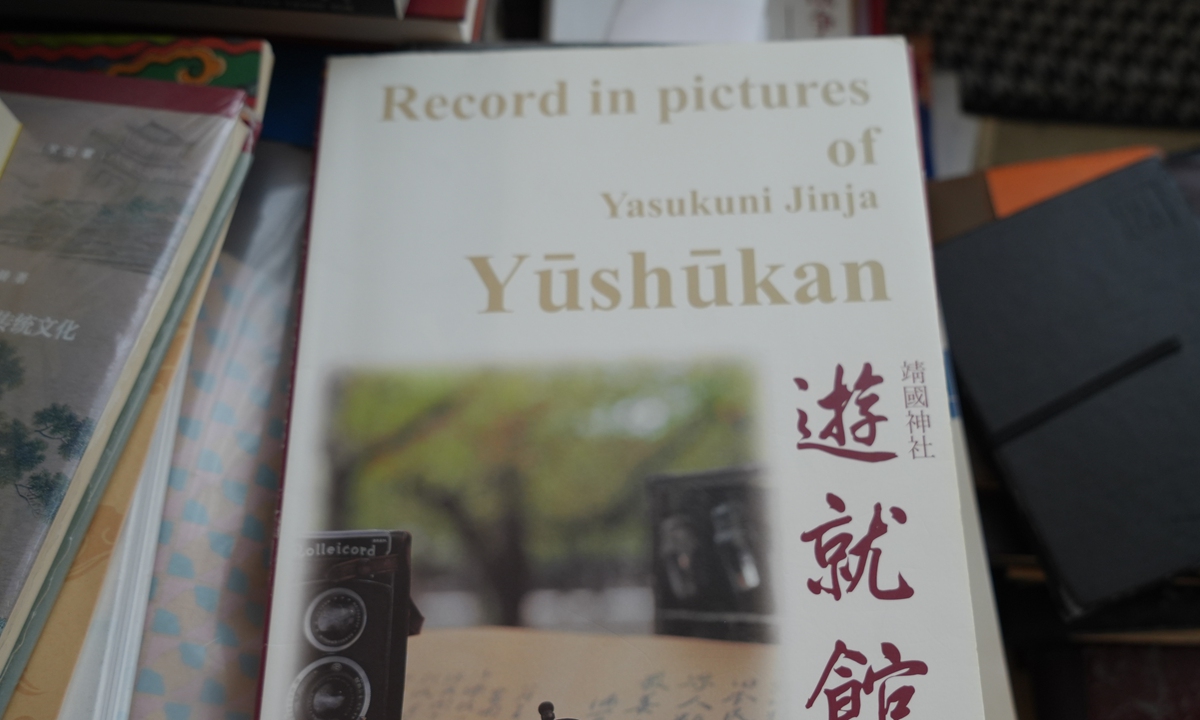
A book of Record in Pictures of Yasukuni Jinja: Yushukan Photo: Lu Ting/GT
Nanjing Massacre: Atrocities whitewashed as 'normal campaign'
Yushukan catalog: The purpose of the Nanking [Nanjing] Campaign was to surround and occupy the capital, thus discouraging the Chinese from continuing their resistance against the Japanese. After the Japanese surrounded Nanking in December 1937, General Matsui Iwane distributed maps to his men with foreign settlements and the Safety Zone marked in red ink. Matsui told them that they were to maintain strict military disciplines and that anyone committing unlawful acts would be severely punished.
Tokyo Trial verdict: On the morning of December 13, 1937, the Japanese soldiers swarmed over the city and committed various atrocities. According to eyewitnesses, the Japanese soldiers were let loose like a barbarian horde to desecrate the city. Individual soldiers and small groups of two or three roamed over the city murdering, raping, looting and burning. There was no discipline whatever, many soldiers were drunk. Soldiers went through the street indiscriminately killing Chinese men, women and children without apparent provocation or excuse until in places the streets and alleys were littered with the bodies of their victims.
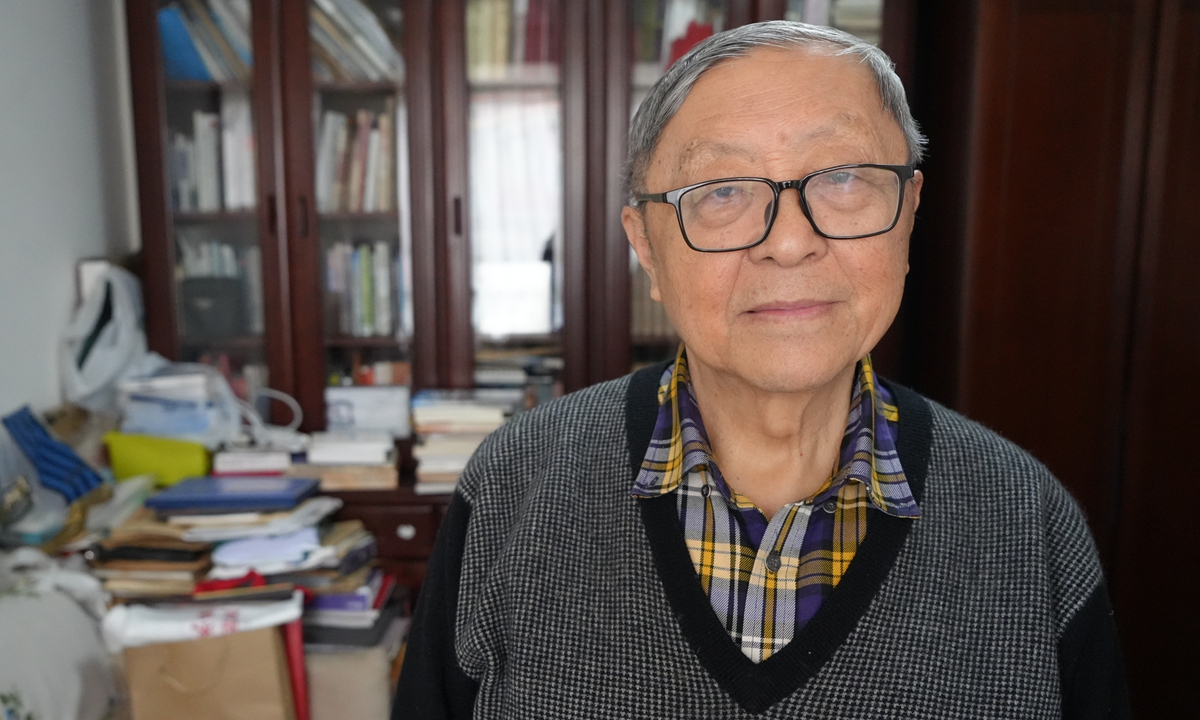
Xiang Longwan, honorary director of the Center for the Tokyo Trial Studies of Shanghai Jiao Tong University Photo: Lu Ting/GT
Xiang Longwan, honorary director of the Center for the Tokyo Trial Studies of Shanghai Jiao Tong University:
The Tokyo Trial conducted prolonged, comprehensive and dedicated hearings on Japan's war crimes of aggression and inhumane atrocities, with prosecutors from multiple nations presenting and cross-examining evidence, and massive conclusive records fully preserved. My father served as a Chinese prosecutor at the trial. Court archives and verdict from the proceedings fully verify the facts of the September 18 Incident, the Lugou Bridge Incident, the Nanjing Massacre and other historical events. Yushukan's claim that the September 18 Incident stemmed from so-called "anti-Japanese policies" is a blatant distortion and falsification of history. The catalog deliberately downplays the nature of aggression, embodying the lingering ideology of Japanese militarism. By twisting wartime contexts, covering up mass atrocities and shifting war responsibilities, the so-called "museum" acts in an egregious manner.
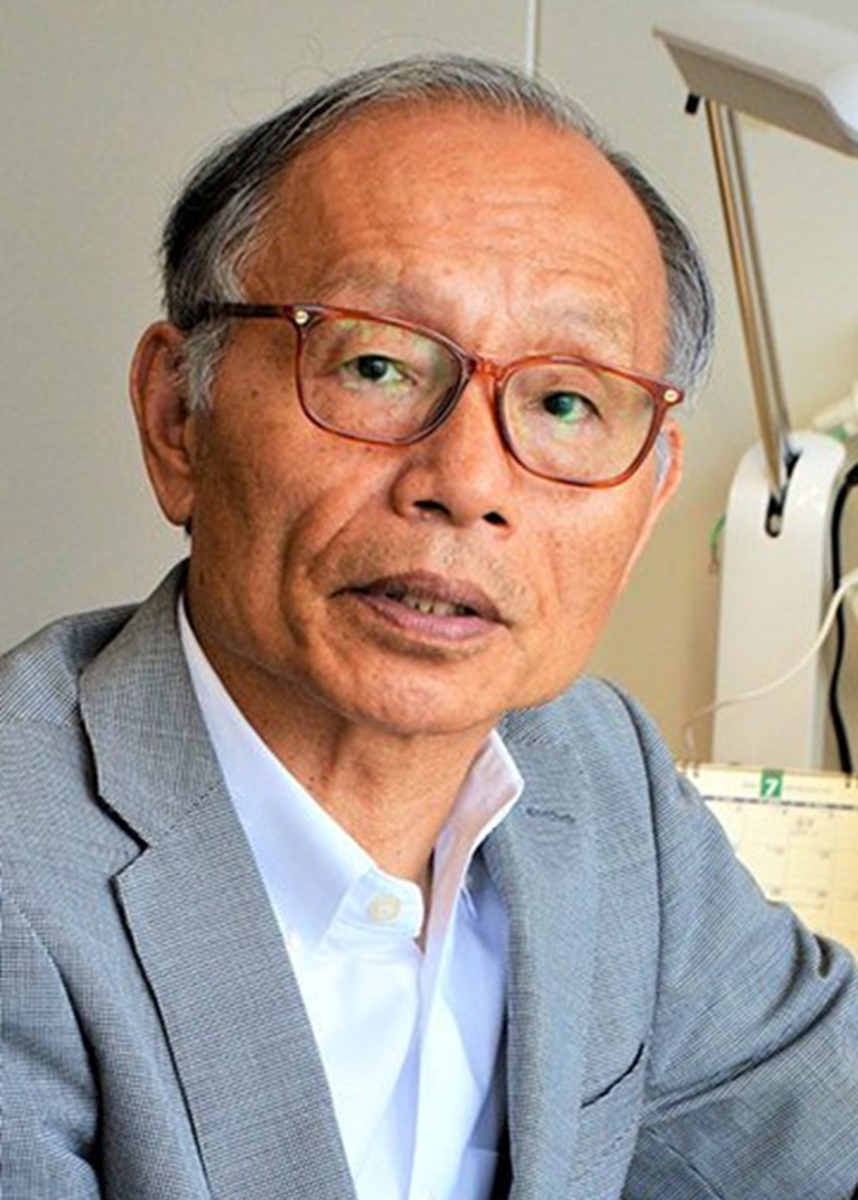
Atsushi Koketsu, emeritus professor at Yamaguchi University in Japan Photo: Courtesy of Koketsu
Atsushi Koketsu, emeritus professor at Yamaguchi University in Japan:
The Tokyo Trial was originally intended to free the Japanese people from the pre-war militarist regime and foster a peaceful, democratic post-war society - the only path for Japan to regain international trust and respect.
In the summer of 1986, I visited the Memorial Hall of the Victims in Nanjing Massacre by Japanese Invaders. Watching documentaries alongside Chinese visitors, I saw them tearful and choked up at harrowing scenes, murmuring how unspeakably tragic and unforgivable the atrocities were.
As a Japanese, I was overwhelmed with shame, a vivid memory that inspired my lifelong historical research. Modern militarists outright deny the Tokyo Trial, seeking to erase international condemnation of imperial Japan. However, a nation that forgets history is doomed to face its judgment once again.


