


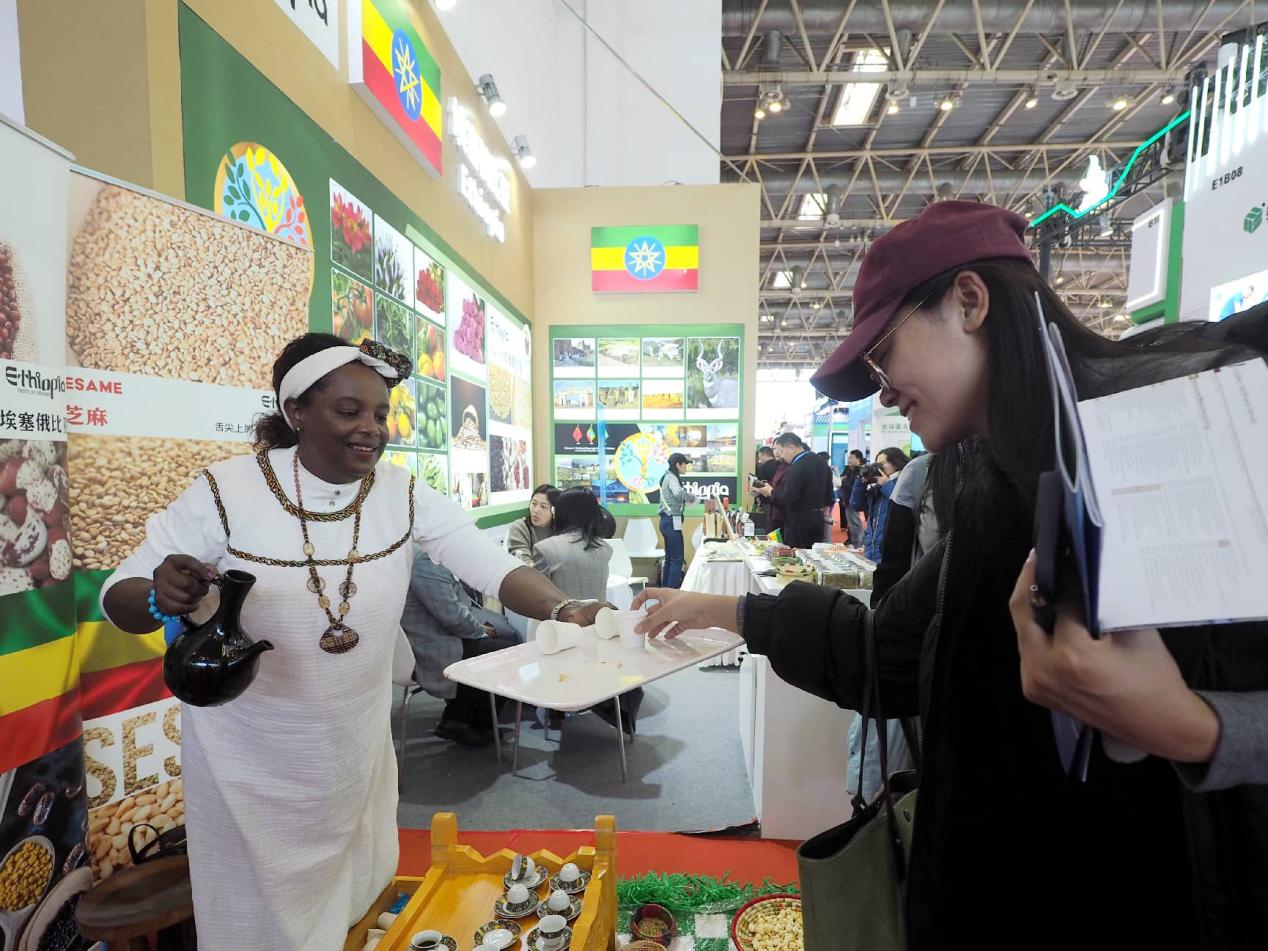
A Chinese woman tastes Ethiopian coffee at the China International Supply Chain Expo. (Photo: Du Jianpo)
Effective from May 1, China extends zero-tariff treatment to all African nations with which it maintains diplomatic relations.
This strategic decision advances China's high-level opening-up policy and coordinates domestic-international development priorities. It substantially implements the principle of China's Africa policy of "sincerity, real results, amity and good faith" while pursuing shared interests through greater good.
This policy marks an epochal milestone in China-Africa relations and international diplomacy. It reflects the enduring traditional friendship between China and Africa -- a relationship strengthened by mutual trust through shifting global landscapes.
The initiative builds upon China's Africa tariff preferences initiated in 2005, which originally covered 190 product categories from 25 countries. Over two decades, the policy has progressively expanded alongside the elevation of bilateral relations to an all-weather China-Africa community with a shared future for the new era.
At this important historical juncture marking the 70th anniversary of diplomatic relations between China and Africa, the full upgrade of zero-tariff treatment to its highest level underscores the consistency of China's Africa policy and Africa's important position in China's overall diplomacy.
The initiative also embodies the global vision of China's diplomacy, which seeks not only its own development but also the development of others.
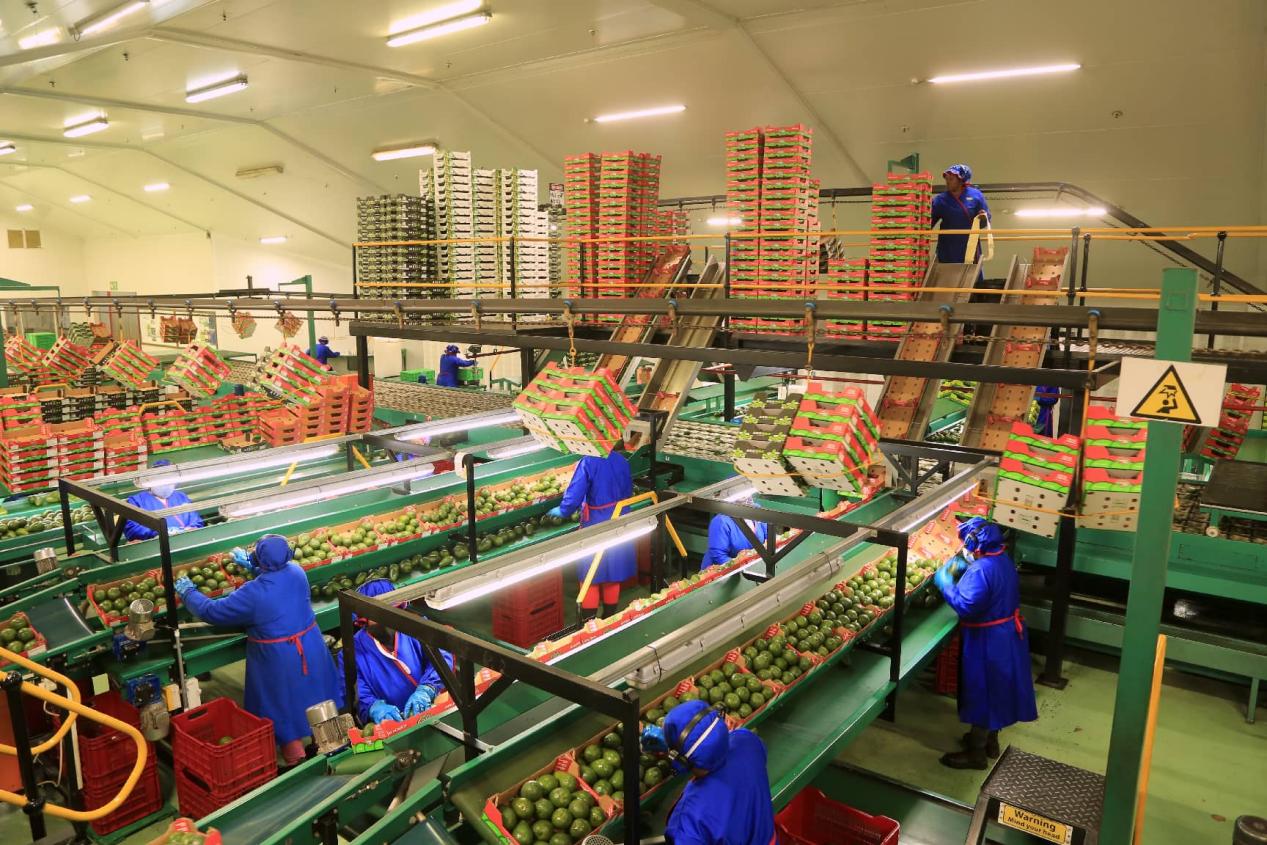
Fresh avocadoes are processed in Limpopo, South Africa. (Photo: Sun Xiang)
Amid rising global protectionism and Middle East instability, China provides institutional guarantees for stable, predictable cooperation. By sharing development opportunities, China and Africa jointly contribute to global stability.
The initiative well explains how China is using its own opening up to promote greater openness worldwide, so as to create a better environment for its foreign trade, investment and development cooperation, foster new strengths in international cooperation and competition, and advance universally beneficial, inclusive economic globalization.
The zero-tariff initiative has injected fresh momentum into the high-quality development of China-Africa cooperation.
While it is unilateral, it creates value in both directions. China has remained Africa's largest trading partner for 17 consecutive years. In the first quarter of 2026, bilateral trade reached 646.56 billion yuan ($94.55 billion), up 23.7 percent year on year. Among this, China's imports from Africa rose by 14.6 percent, while its exports to Africa increased by 29 percent. From January to February, China's new direct investment in Africa grew by 44 percent year on year.
The zero-tariff initiative brings together Africa's aspirations and China's needs. It serves as an important driver for industrial division of labor and coordination, as well as the integration and complementarity of industrial chains between the two sides.
On one hand, it helps expand African exports to China and promote the coordinated development of trade, industry and investment cooperation, thereby strengthening Africa's capacity for independent and endogenous development .
On the other hand, it reduces investment and production costs for Chinese enterprises in Africa, providing diversified and stable overseas supplies for the development of China's new quality productive forces and enhancing the resilience and competitiveness of China's industrial and supply chains.
The zero-tariff initiative ensures that the fruits of China-Africa cooperation benefit the people of both sides.
As China continues to improve and upgrade the "green channel" for African agricultural products entering the Chinese market, zero tariffs are enabling more high-quality African agricultural and food products, such as Ethiopian coffee, Togolese cocoa, Beninese pineapples and dried chili peppers from Rwanda, to enter Chinese households.
These products directly meet the growing demand of the Chinese people for higher-quality and diversified commodities, continuously enhancing the sense of gain and well-being among the people of China and Africa.
As a Chinese saying goes, "The more you give, the more you receive; the more you share, the more you prosper." Zero tariffs create jobs and increase incomes for Africa, while also opening up the vast and promising African market further for Chinese products.
A just cause wins abundant support, and those who walk together can go far. Zero tariffs are a golden hallmark of China-Africa cooperation in the new era. They will stand the test of history, changing times and the will of the people, and will serve as an enduring engine driving the high-quality development of China-Africa cooperation.
(Du Xiaohui is the director-general of the Department of African Affairs of China's Foreign Ministry.)