


URUMQI, May 8 (Xinhua) -- Freight train traffic through Alashankou, also known as Alataw Pass, a major rail gateway in northwest China's Xinjiang Uygur Autonomous Region, has exceeded 3,000 trips so far this year, reaching the mark 19 days earlier than in 2025 as demand for overland trade with Europe and Central Asia continues to rise.
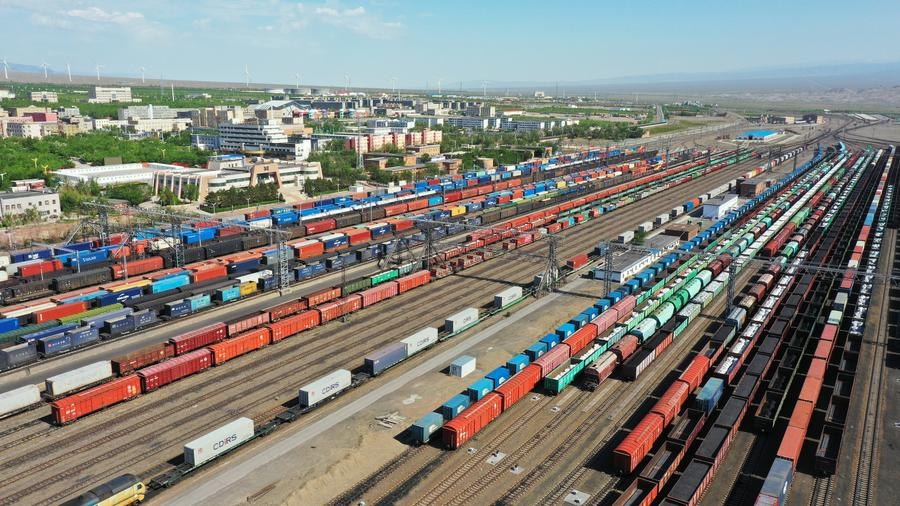
An aerial photo taken on May 17, 2024 shows a view of the Alashankou Port in northwest China's Xinjiang Uygur Autonomous Region. (File photo: Xinhua)
A China-Europe freight train carrying machinery, auto parts and electronic products left Alataw Pass Station at 4 p.m. on Thursday for Malaszewicze in Poland, pushing the number of China-Europe (Central Asia) freight trains handled by the port past the 3,000 threshold, according to China Railway Urumqi Group Co., Ltd.
The faster pace underscores the growing role of Xinjiang's rail ports in China's westbound logistics network, as exporters use overland routes to move manufactured goods to markets across Central Asia and Europe.
Since the start of the year, Alataw Pass has handled more than 20 China-Europe (Central Asia) freight trains per day on average, with the daily peak reaching 35 trains, according to the local railway station. The port's handling capacity and turnaround efficiency have continued to improve, it said.
China's latest national railway operating plan, introduced in the second quarter, added Central Asia-bound freight services departing from Beijing, Tianjin and Zhangjiakou in north China's Hebei Province via Alataw Pass, further expanding the network of rail routes through the border port.
Customs authorities have also worked to reduce cargo dwell time at the port. Measures include faster clearance procedures for inbound grain under conditional release arrangements, and additional night-shift inspections based on company demand.
Those steps have helped reduce storage costs and improve the flow of goods through the border while maintaining follow-up quarantine oversight, said an official with Alataw Pass Customs.
Alataw Pass now serves 128 China-Europe (Central Asia) freight train routes, connecting China with 21 countries including Germany and Poland. More than 200 types of goods move through the port, including auto parts, electronics and daily necessities.