


Beijing (People's Daily) - Around 500 Chinese and European government, business and academic leaders gathered in Beijing on Friday for the China-EU Anniversary & 2026 China Europe International Business School (CEIBS) Innovation Forum, where data governance, economic strategy and bilateral cooperation dominated the discussions.
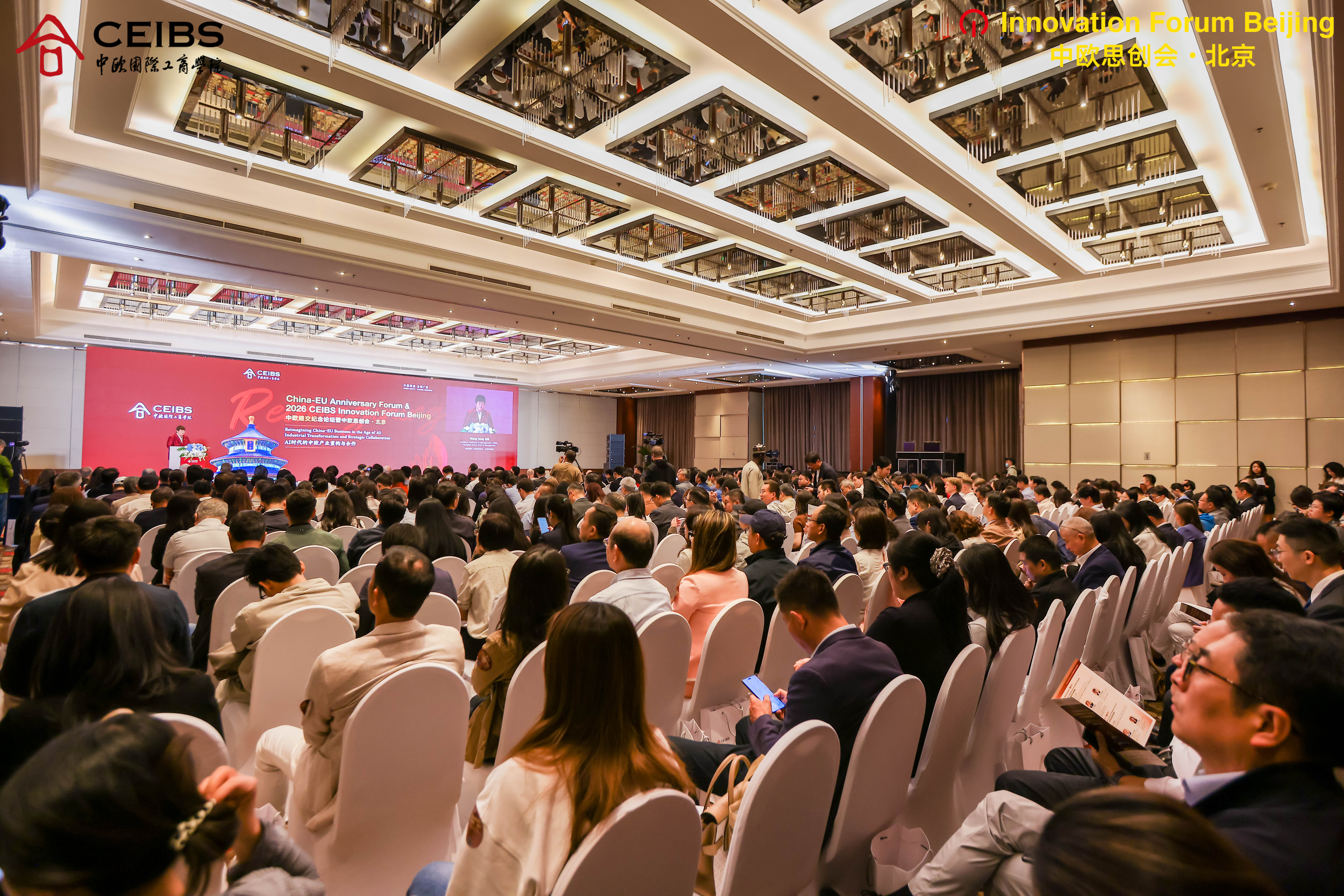
About 500 senior government, business and academic leaders attend the China–EU Anniversary & 2026 CEIBS Innovation Forum in Beijing on Friday, May 8, 2026. (Photo provided to People's Daily)
Data, power and governance
When AI is everywhere, data decides profit, structure and power, said Lan Xiaohuan, the school's professor of economics and bestselling author of How China Works, in a keynote speech to the forum.
Data, not just algorithms or computing power, will increasingly determine industrial structure, economic power and competitive advantage in the AI era, he said.
In the US, access to high-quality training data is increasingly secured through costly bilateral agreements while in China, technology platforms are building proprietary data ecosystems through integrated ownership structures, he said.
Lan identified five emerging ways of understanding data: oil (raw material resource), labour (process), human capital (worker), commons (information source) and land (state-held, operator-processed and market-driven asset).
These competing frameworks will shape future debates around regulation, ownership, public infrastructure and economic governance in the AI era, Lan said.
He also said computing power, chips and foundation models remain as short-term bottlenecks in AI development, whereas the long-term challenge lies in governance as AI expands into increasingly complex real-world scenarios involving broader segments of society.
"How we understand data will fundamentally determine how we understand the future of AI," he said.
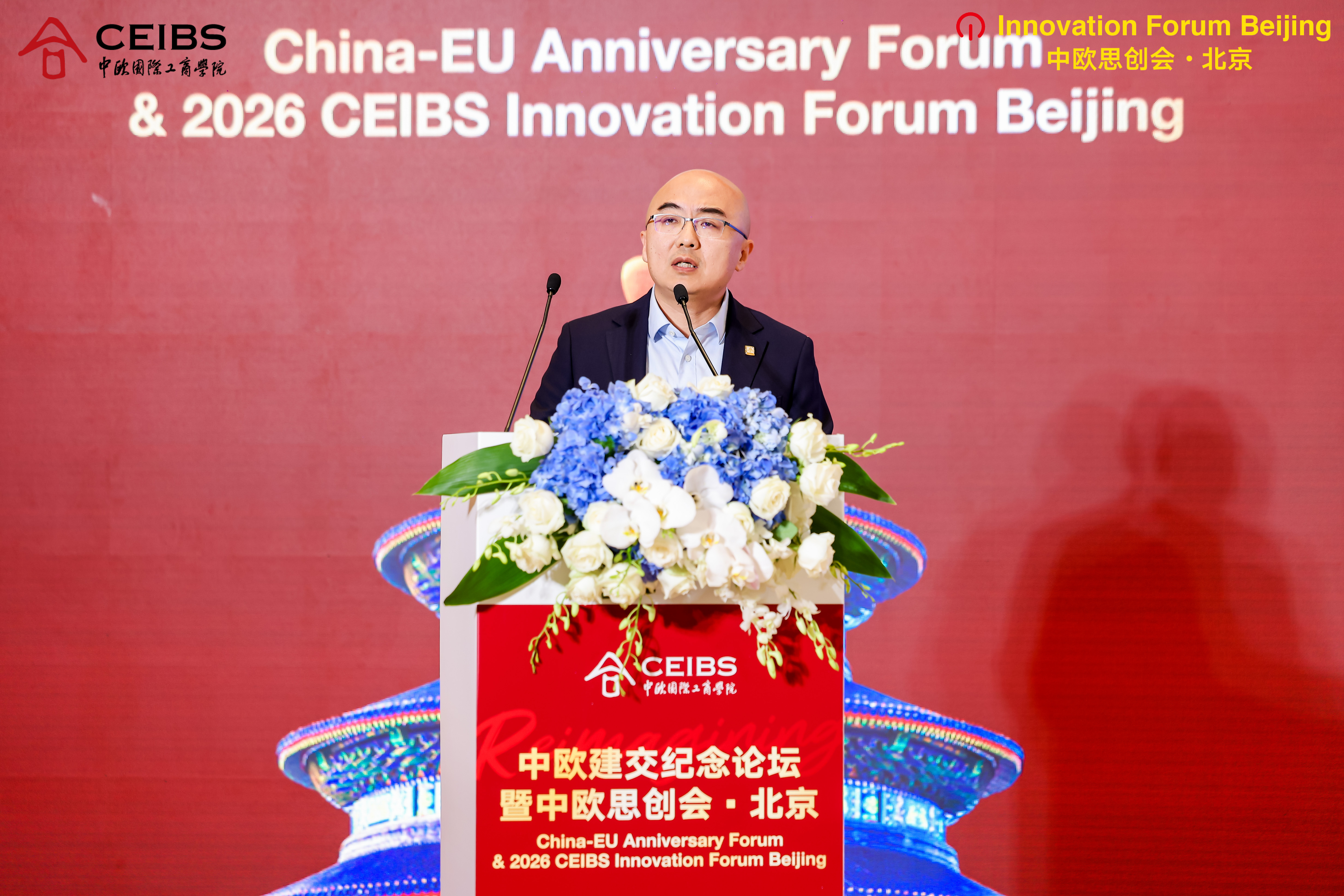
Economics professor Lan Xiaohuan speaks at the CEIBS Innovation Forum in Beijing on Friday, May 8, 2026. (Photo provided to People's Daily)
China-EU relations
In a welcome address, the school president Wang Hong said China and Europe face strategic challenges including industrial integration, two-way corporate expansion and navigating evolving regulatory systems amid AI's deep impact on the global economy and global industrial and supply chain restructuring.
"Openness and cooperation are the only viable paths to effectively addressing global challenges," Wang said.
Delivering opening remarks, Mattias Lentz, deputy head of the EU delegation to China, reflected on the rapid growth of EU-China economic ties over the past five decades. The EU believes in open markets, fair competition and rules-based trade, he said.
"The next 50 years of EU-China relations will be defined by how we turn challenges into collaboration," he said. "The key is to work together to create an environment where adaptation is an opportunity, not an obstacle."
In a video keynote speech, Charles Michel, the school's distinguished professor, former president of the European Council and former prime minister of Belgium, said the EU and China should engage in candid and sincere dialogue on AI despite differences in political systems and histories.
Michel outlined four principles for effective bilateral cooperation in the AI era: active listening, respect for differences, a focus on tangible outcomes and acting at the right speed.
He said China-EU relations are entering a new phase in which scale alone is no longer enough, and added value now matters most — meaning stability, predictability, reciprocity, a level playing field and resilience.
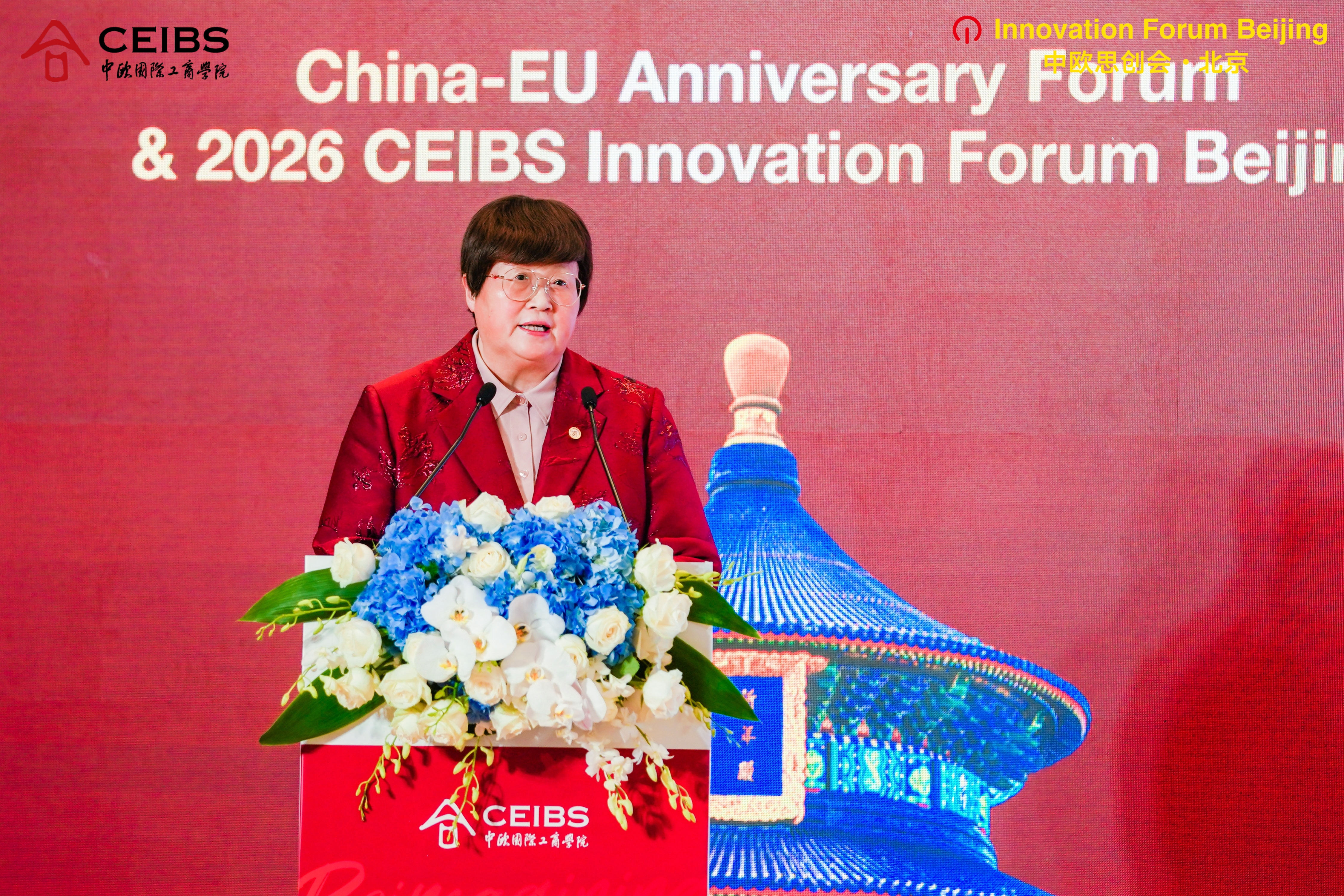
Wang Hong, CEIBS president, addresses the forum in Beijing on Friday, May 8, 2026. (Photo provided to People's Daily)

Mattias Lentz, deputy head of the EU delegation to China, delivers opening remarks at the forum in Beijing on Friday, May 8, 2026. (Photo provided to People's Daily)
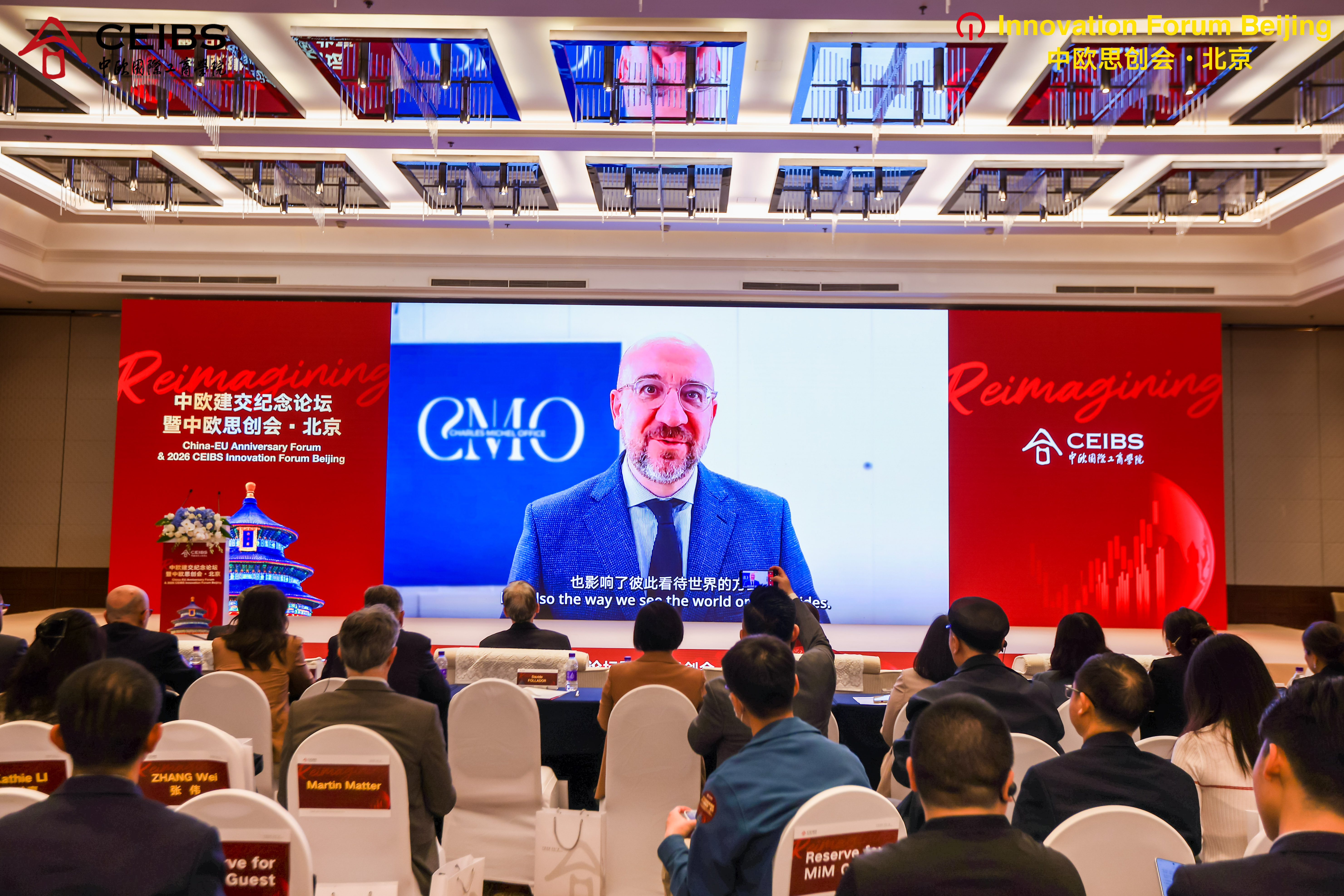
Charles Michel, former president of the European Council and former prime minister of Belgium, addresses the forum via video in Beijing on Friday, May 8, 2026. (Photo provided to People's Daily)
Economic strategy
In the event's first keynote speech, Liu Shijin, former deputy director of the Development Research Center of China's State Council and vice-chairman of the China Development Research Foundation, proposed a framework which distinguishs the "height" and "breadth" of economic growth.
"Height" refers to productivity gains driven by technological innovation, while "breadth" reflects how widely purchasing power and economic opportunity are distributed across society.
Breakthroughs in AI and robotics may strengthen productivity but could pressure employment and income distribution if consumption and social inclusion do not keep pace, he warned.
China's growth model must gradually shift from being driven primarily by investment and exports toward one powered by innovation and consumption during the 15th Five-Year Plan period (2026-2030), he said.
In two panels on China-EU industrial competition and business strategy in the AI era, speakers said Europe mainly focuses on B2B scenarios, while China has a more diversified ecosystem that serves both consumer and business users.
Panelists said that European enterprises boast rich data resources, while Chinese companies hold clear advantages in computing power and algorithms.
Cooperation between Europe and China remains essential amid global volatility, particularly in the US, said speakers.
Panelists expressed optimism about joint efforts between China and Europe in new energy, healthcare, pharmaceuticals and industrial manufacturing.
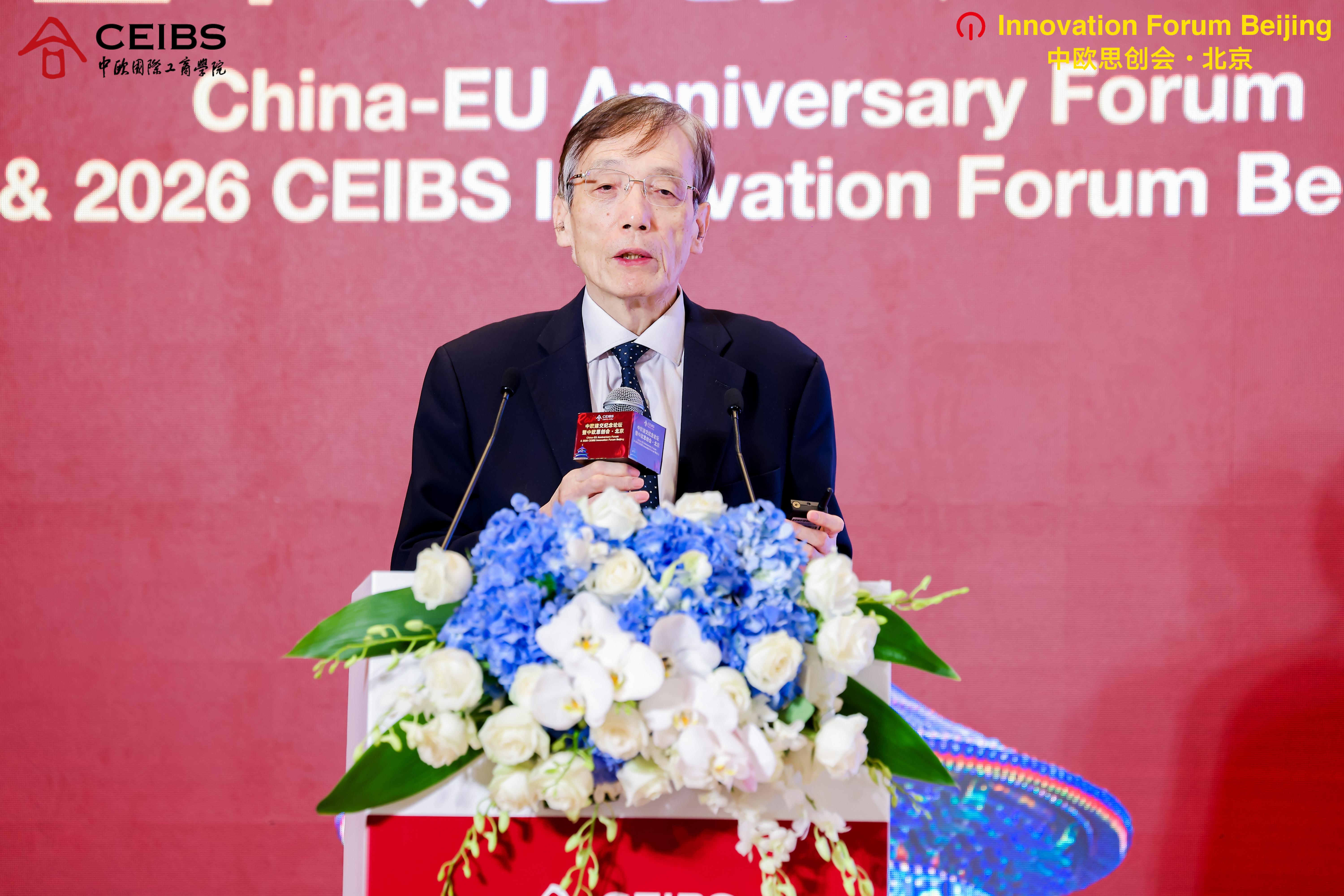
Liu Shijin, former deputy director of the Development Research Center of the State Council and vice-chairman of the China Development Research Foundation, speaks at the forum in Beijing on Friday, May 8, 2026. (Photo provided to People's Daily)
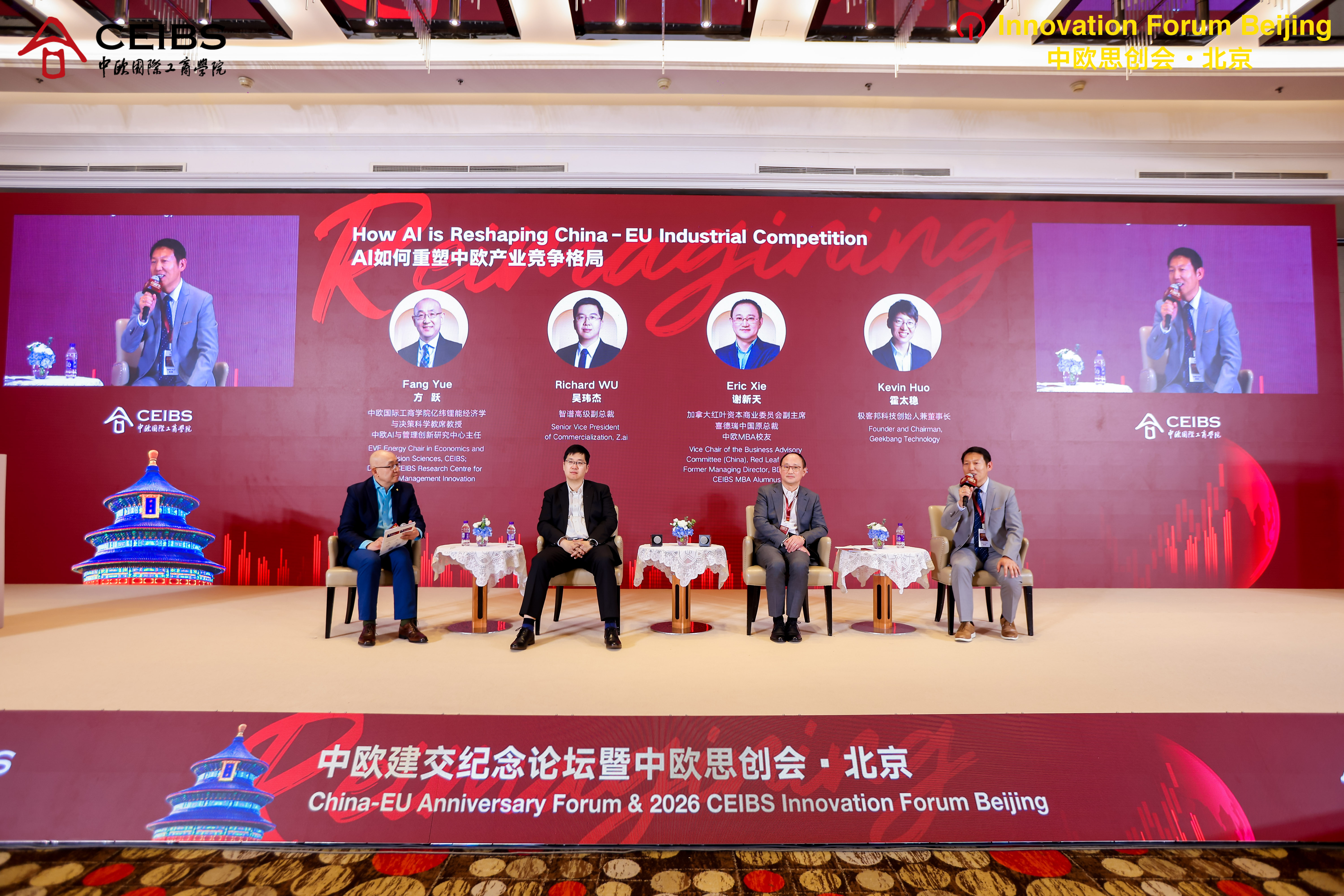
Panelists discuss how AI is reshaping China-EU industrial competition at the forum in Beijing on Friday, May 8, 2026. (Photo provided to People's Daily)
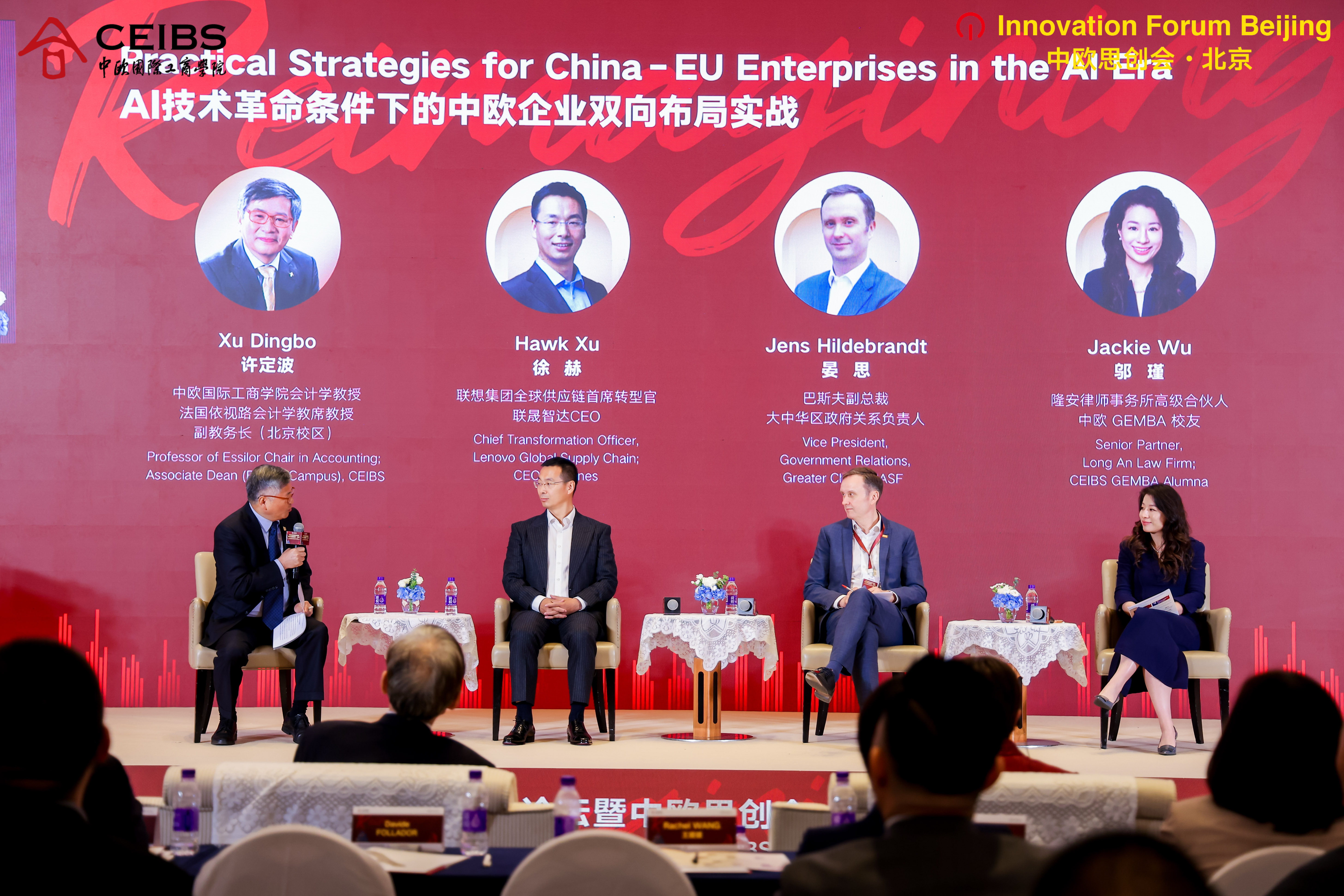
Panelists discuss practical strategies for Chinese and European enterprises in the AI era at the forum in Beijing on Friday, May 8, 2026. (Photo provided to People's Daily)