


Across China, from cutting-edge technology labs and aerospace programs to rural revitalization projects and frontline industrial workshops, young people across China are emerging as a pivotal force driving the country's development.
Fueled by ambition, creativity, and perseverance, they are contributing to innovation, revitalizing communities, and pursuing excellence in their daily work, embodying the dynamism of modern China.
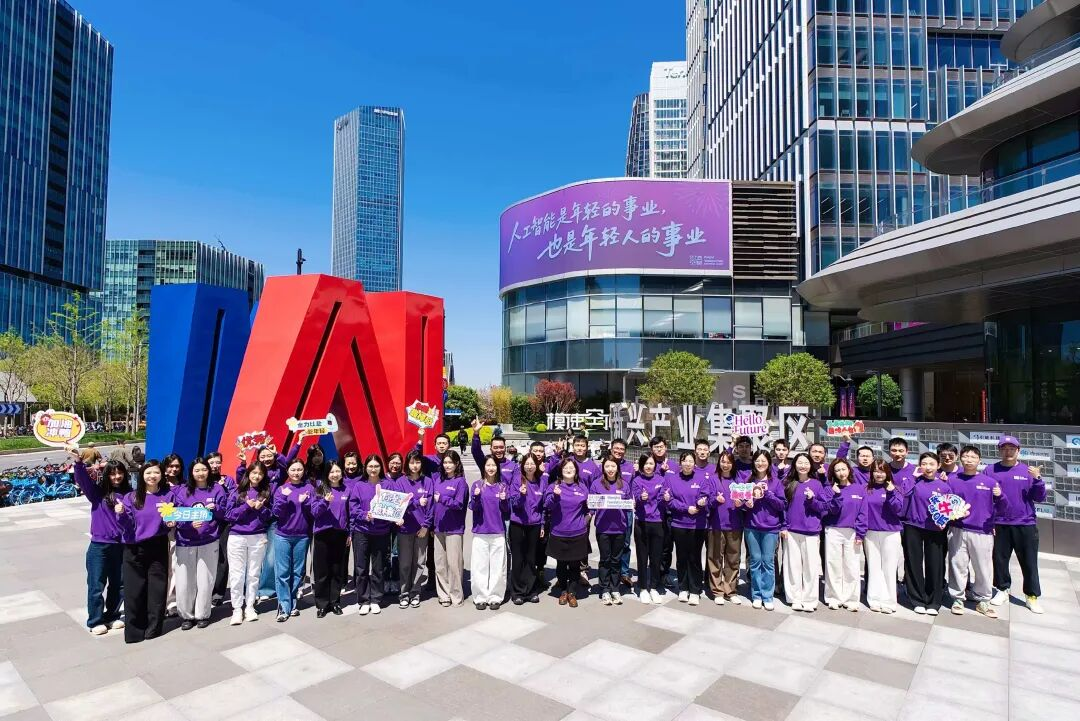
Young innovators pose for a picture at the SMC Shanghai Foundation Model Innovation Center in Shanghai. (Photo from the official account of the media center of Shanghai's Xuhui district on WeChat)
Recently, Chinese President Xi Jinping, in a reply letter to the representatives of the awardees of the China Youth May Fourth Medal and New Era Youth Pioneer award, encouraged young Chinese to stay rooted at their posts, strive for new achievements, and inject their youthful dynamism into advancing China's new journey of development.
Stressing that 2026 marks the opening year of China's 15th Five-Year Plan (2026-2030), Xi said the present time presents a prime opportunity for young people to contribute to the country's development.
The vitality of China's youth is vividly displayed in technological innovation. Late into the night in Shanghai's Xuhui district, the lights remain on at the SMC Shanghai Foundation Model Innovation Center, a large-model AI innovation community. Xia Lixue, an entrepreneur born in the 1990s and CEO of Infinigence, a rising star in China's AI infrastructure landscape, is often seen deep in discussion with his team about computing-power optimization.
Leading a team averaging just 32 years old, Xia focuses on improving the efficient use of domestic computing resources. Collaborating with industry partners, his team launched China's pioneering "computing power ecosystem supermarket" — the SMC computing power dispatching platform — aiming to make computing resources as accessible as utilities like water and electricity for both industries and households.
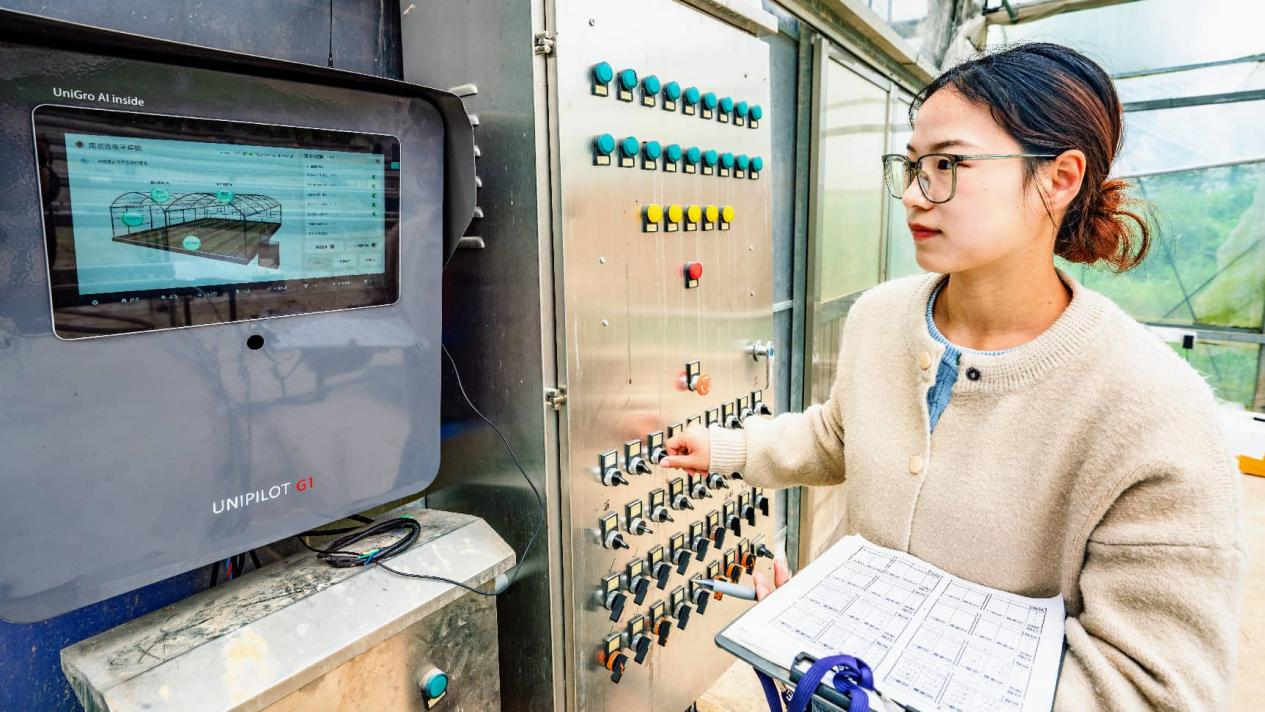
A technician operates an AI-driven irrigation device in a greenhouse in the Nanjing National Agricultural High-tech Industry Demonstration Zone, East China's Jiangsu Province. (Photo provided to the People's Daily)
The SMC innovation community is now home to more than 300 AI companies. Its annual revenue has grown more than twelvefold year on year, while total output has surpassed 100 billion yuan (about $14.68 billion). The average age of entrepreneurs there is under 30. This year, the young innovators in the community received the China Youth May Fourth Medal.
Youthful talent also forms the backbone of China's aerospace sector. Key teams demonstrate remarkable youthfulness: the Beidou satellite network development team averages 31 years old; core personnel for the Chang'e lunar missions average 33; the assembly team for the Mengtian space lab module averages 33; and the Tianwen Mars mission flight control team averages just 30. Propelled by this young ingenuity, China is rapidly evolving from a participant and contributor in global science and technology into a pioneer and leader.
For many young Chinese, the most fulfilling path lies where the country needs them most.
In Kantian Gezhuang village in Laoting county, North China's Hebei Province, rows of tomatoes thrive inside vegetable greenhouses. Li Yao, the village committee director, introduces local agricultural industries to visiting guests.
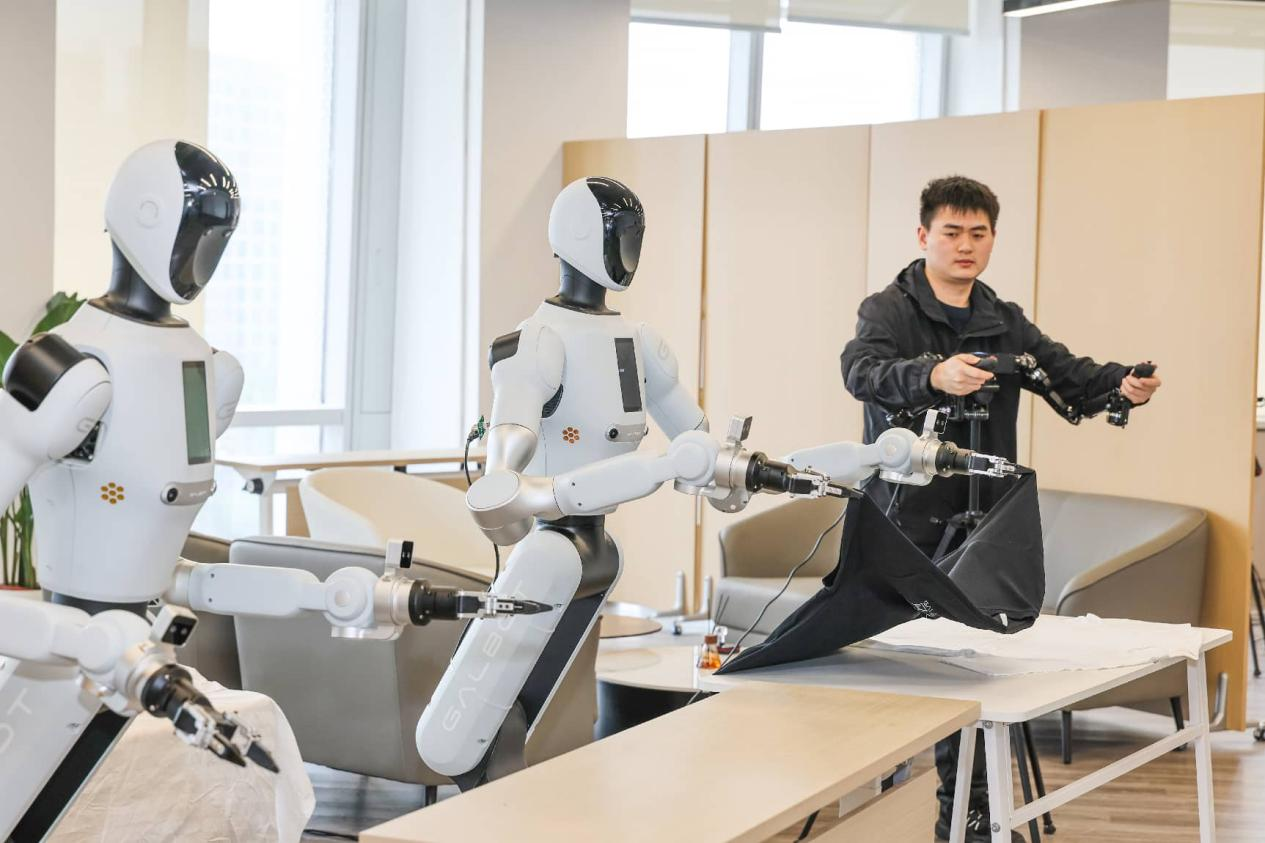
A staff member trains robots to fold clothes at an embodied intelligence training center in Yibin, Southwest China's Sichuan Province. (Photo provided to the People's Daily)
Eight years ago, Li spent his own money to purchase materials, lay wiring and replace lamps, finally lighting up 120 LED streetlights across the village. He also spearheaded the construction of 3,000 meters of gravel farm roads, renovated the water pipeline network, and installed public fitness facilities, dramatically improving the village's quality of life.
"But better roads and brighter lights alone are not enough to raise incomes," Li said. He led villagers in developing high-standard farmland and introduced an aquaponics-based collective farming project alongside facility agriculture. Within a few years, average annual income per mu (667 square meters) of farmland rose from just over 1,000 yuan to 15,000 yuan.
At the northeastern edge of the Hexi Corridor in Northwest China’s Gansu Province lies Minqin county, surrounded by the Tengger and Badain Jaran deserts like an isolated island in a sea of sand. Zhong Lin, a Gen-Zer, grew up there and chose to return home after graduating from university. Along the edge of the Tengger Desert, he has planted saxaul trees across more than 7,000 mu of land through public-interest afforestation efforts, gradually bringing greenery back to the desert landscape.
"Youth takes root downward, while greenery grows upward," reads the description on Zhong's short video account, where he regularly posts content about desertification control and tree planting. Inspired by his efforts, enthusiastic volunteers from across the country have traveled to the desert, joining the fight against desertification.
Young people are also demonstrating dedication and craftsmanship in ordinary positions, honing their skills as they strive for excellence.
Beside an 80,000-ton die-forging press at China National Erzhong Group Deyang Wanhang Die Forging Co, Ltd, Ye Linwei leads his team in operating the massive equipment with meticulous control.
As the machine's first operator and a recipient of the 2023 China Youth May Fourth Medal, Ye has led his team in overcoming numerous technical challenges. Together, they successfully forged multiple high-end aviation components, including the main landing gear outer cylinder and fuselage frame structures for the C919 large passenger aircraft.
Today, China has more than 80 million technical professionals and over 220 million skilled workers, including more than 72 million highly skilled workers. Increasing numbers of young people are pursuing success through technical expertise and contributing to the country.
Wang Qinjin's journey offers another example. After graduation, he worked as a warehouse manager for SF Express before being selected for the company's internal pilot training program. Through relentless physical training, intensive aviation theory study, and rigorous simulator practice, he steadily earned his wings.
From delivery worker to airline captain and eventually flight instructor, Wang has accumulated 6,600 hours of safe flight time, demonstrating that in an era where opportunities are increasingly open to all, hard work can give youth limitless possibilities.
Whether scaling the heights of technological innovation, serving at the grassroots level, or excelling in ordinary jobs, young people across China are pursuing their dreams while staying grounded in reality. Bold in vision yet practical in action, they are bringing to life a flourishing portrait of a youthful and vibrant China.