


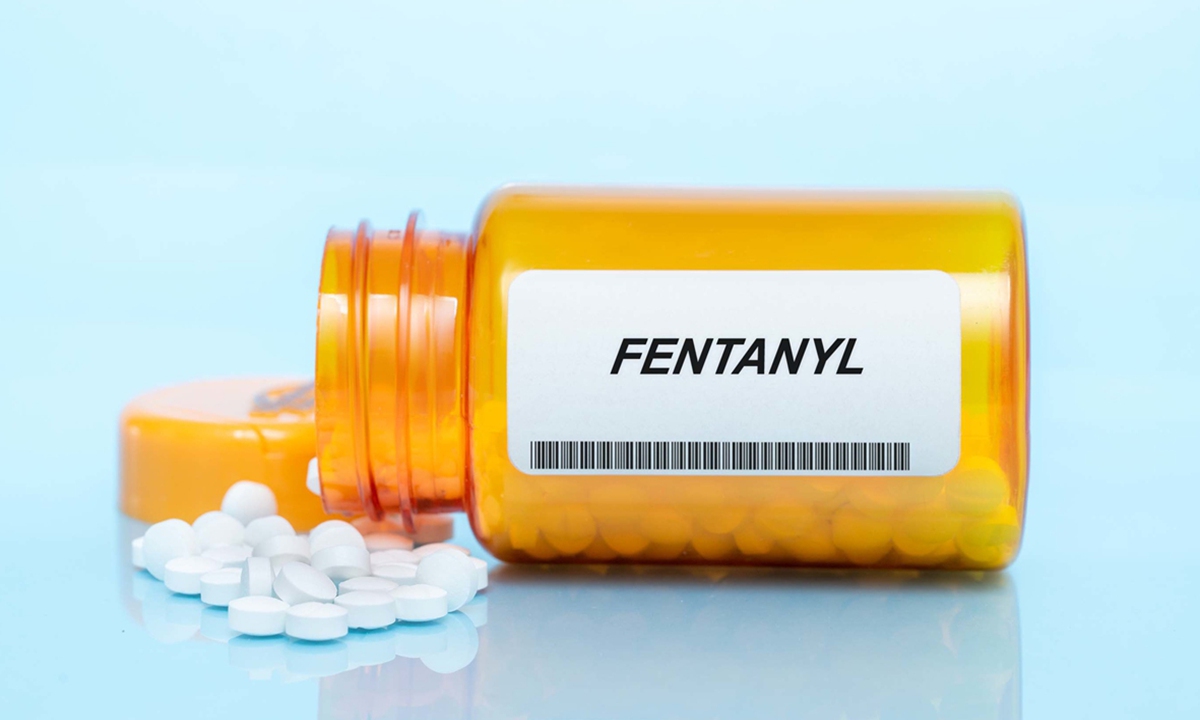
Fentanyl Photo:VCG
Chinese police have intensified their crackdown on cross-border drug-related crimes, including the smuggling and trafficking of drug-making precursor chemicals and new psychoactive substances, solving 29 criminal cases and arresting 157 suspects since 2025, the Ministry of Public Security (MPS) announced on Friday.
Police have also seized 720 kilograms of drugs, 1.3 tons of new psychoactive substances, 0.9 kilograms of stimulants and 27.7 tons of non-scheduled precursor chemicals, the MPS said, according to a release sent to the Global Times on Friday.
In recent years, China's national narcotics control authority has repeatedly issued notices warning of the legal risks of selling drug-making precursor chemicals and new psychoactive substances overseas. However, some illicit traders have still trafficked controlled and non-scheduled precursor chemicals and new psychoactive substances to overseas markets, gradually forming illicit or gray-market supply chains in the chemical sector, according to the MPS release.
To give full play to their role in warning and educating the public, the MPS also released 10 cases involving cross-border trade in such substances. Details of the cases showed that some suspects posted advertisements online to solicit orders from overseas clients, obtained or produced the chemicals domestically, and then smuggled them abroad.
In some cases, suspects posted false advertisements on overseas online chemical trading platforms, falsely claiming they could sell state-controlled psychotropic drugs to induce overseas clients to place orders. After receiving payment, they passed off cheap substances such as flour, rock sugar and monosodium glutamate as the sensitive chemicals sought by overseas clients, thereby defrauding them of their money.
China has issued arrest warrants for some of the suspects involved in these cases or taken criminal coercive measures against them. Others were sentenced in accordance with the law. The charges or suspected offenses included smuggling, trafficking, transporting or manufacturing drugs, as well as illegal business operation, environmental pollution and fraud, according to the MPS.
In recent years, the global spread of synthetic drugs, including the fentanyl crisis in some countries, has brought new challenges to global drug governance. Although China does not face large-scale fentanyl substances abuse and did not cause the crisis in other countries, it has taken comprehensive measures, such as expanding controlled substance lists, strengthening supervision and enforcement, and promoting global cooperation, Zhang Li, an expert from Drug Control Theory and Policy Research Center of People's Public Security University of China, told the Global Times.
China has also actively helped the US and other countries address fentanyl substances-related threats, achieving effective control over the issue, said Zhang.
China has worked with the US to crack drug trafficking cases. For example, on Monday, the MPS announced that anti-drug agencies from China and the US had jointly cracked a drug trafficking and smuggling case, arresting five suspects, according to the Xinhua News Agency.
Zhang noted that the measures China has taken to advance the governance of fentanyl-related substances have offered a “Chinese solution.” For example, China has strictly implemented rules on online chemical trading platforms, including real-name registration, content review, online monitoring, and the reporting and removal of harmful information. It has continued to launch special campaigns against the manufacture and trafficking of fentanyl-related substances and other new types of drugs, in order to crack down on fentanyl substances-related illegal and criminal activities to the greatest extent possible.
Through concrete actions, China has fulfilled its responsibility as a major country and contributed valuable Chinese wisdom and strength to global drug governance, said Zhang.