


Washington DC (People's Daily) - A series of viral short videos have captured the hearts of internet users across China.
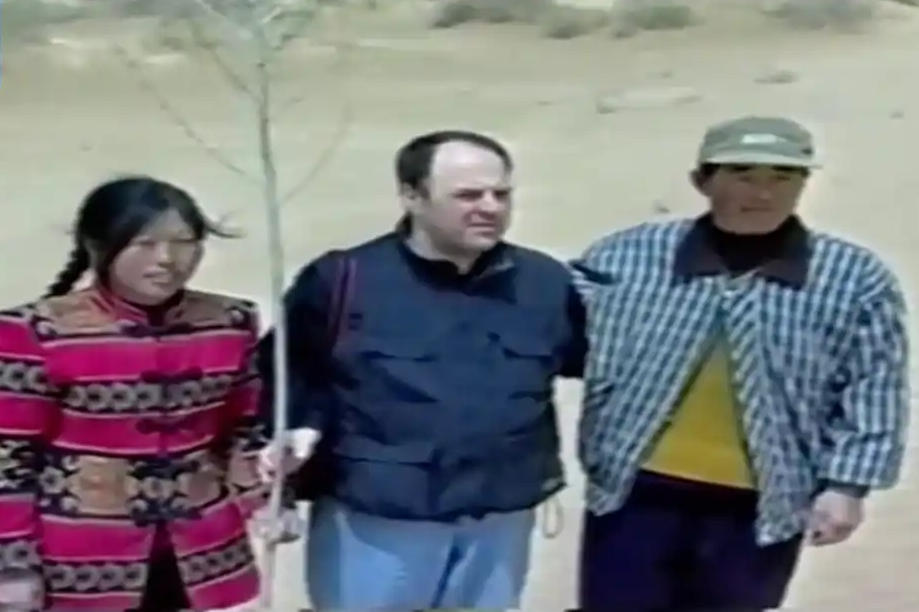
Yin Yuzhen (left) and Ronald Sakolsky (center) hold a sapling in the Mu Us Desert.
Yin Yuzhen, a renowned national sand control hero, earlier this year took to social media with a deeply personal mission: to find her long-lost American friend, Ronald Sakolsky, and invite him back to North China's Inner Mongolia Autonomous Region to see the forest they built together.
The story began in 1999 when Sakolsky, then working as an American foreign teacher in Luoyang, Central China's Henan Province, coordinated to donate $5,000 to support Yin's tree-planting efforts in the Mu Us Desert: one of China's four major sandy lands, stretching across 42,200 square kilometers.
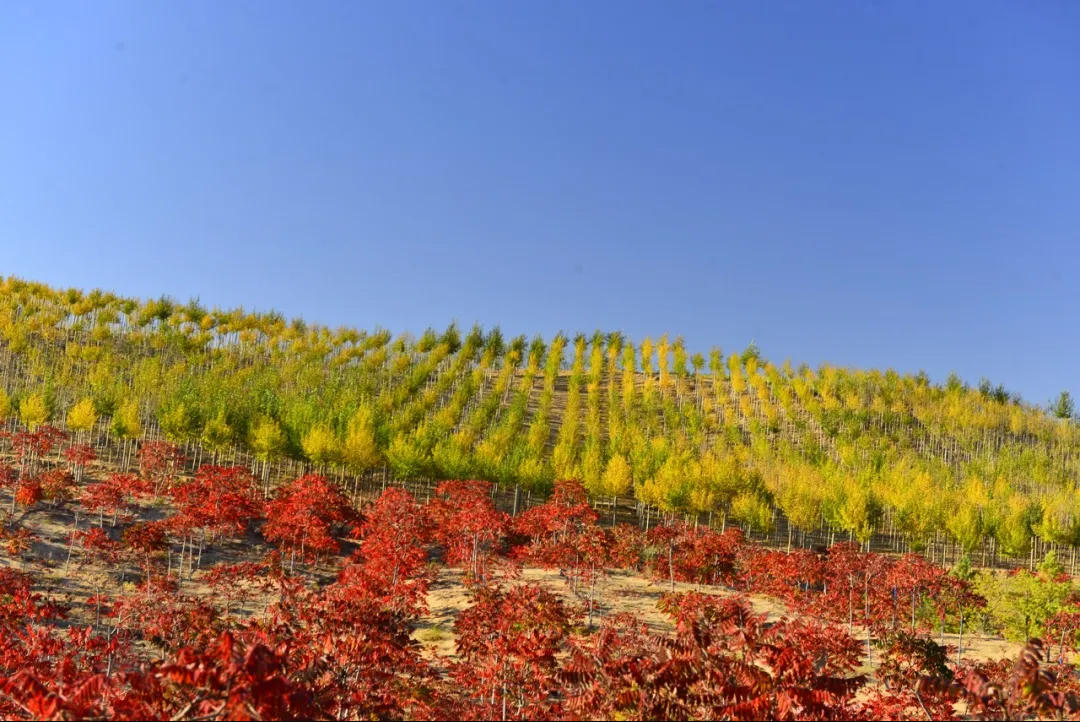
A forest planted from saplings in the Mu Us Desert.
Turning this barren wasteland green has been Yin's lifelong mission. Since 1986, she has devoted 40 years of hard labor to sand control and afforestation, achieving the remarkable feat of pushing back desert expansion.
At the time, that sum was an astronomical figure for Yin, who even had to budget carefully to buy a shovel. Deeply moved by this act of generosity, Yin knew the donation represented a profound trust that transcended national borders and language barriers. She turned the funds into truckloads of saplings and planted them deep within the arid soil.
Today, that $5,000 donation has blossomed into a thriving forest of over 50,000 trees, standing as a lush oasis within the Mu Us Desert.
Armed only with the knowledge of his name and his former job in Luoyang, Yin turned to social media to bridge the gap of time and distance.
In a heartwarming video message, she expressed her long-held wish: "If you happen to see this video, I sincerely invite you to come back to China. I want you to see the vast green forest that grew from the $5,000 you donated all those years ago."
A People's Daily reporter reached out to Sakolsky by phone on May 18 local time.
His full name is Ronald Sakolsky.
Now retired, he once worked as a social studies and history teacher at a senior high school in Plum, near Pittsburgh, Pennsylvania.

Ronald Sakolsky, his wife and their granddaughter Kensley. (Photo courtesy of Ronald Sakolsky)
Sakolsky said that in 1999, he signed up for the US-China Teachers Exchange Program, an initiative launched in 1996 by the National Committee on United States-China Relations.
The program facilitated mutual exchanges, sending American educators to teach oral English across China while bringing Chinese primary school teachers to the United States.
Sakolsky chose Luoyang specifically because he disliked overly modern metropolises. Located near Beijing and Xi'an, the ancient city allowed him to experience ordinary local life and visit historic sites like the Terracotta Army.
During his stay in Luoyang, he used to watch China Central Television English news every day.
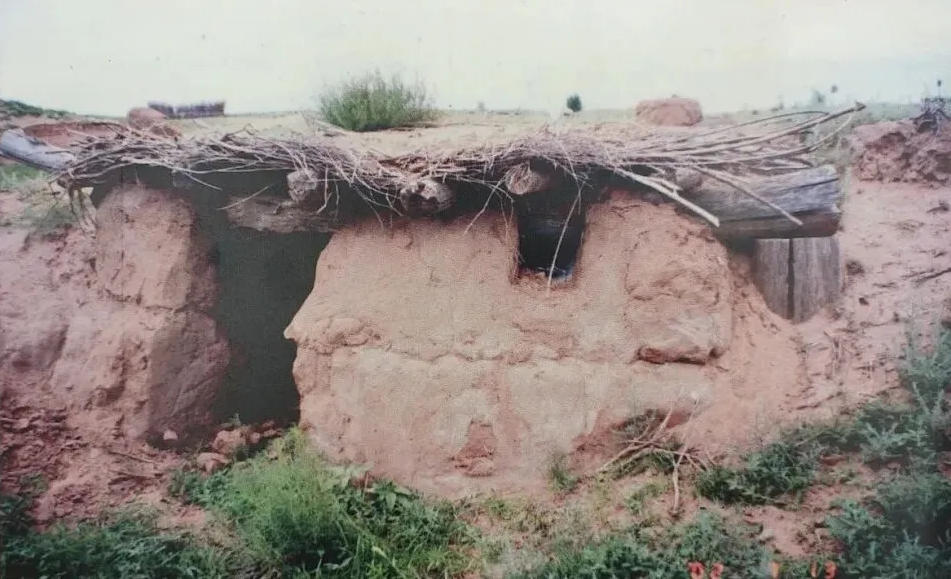
Yin Suzhen and her husband's home
In October 1999, he watched a news report about Yin and her husband persisting in planting trees in deserts to prevent sandstorms and improve the ecological environment of barren lands.
"I was so touched that I began to cry and I said I needed some way to help them," he said. "I started to look for organizations that would help them plant the trees."
He sent emails to American public welfare organizations and finally an institution based in Boston, Massachusetts, agreed to offer $5,000 funding.
In 2000, Sakolsky paid a field visit to the Mu Us Desert with his colleague Bai Fan, a school principal.
Upon their arrival, Yin walked over from the desert water supply station, showed him the surrounding woods and said repeatedly that all these trees belonged to him while planning to name the forest after him.
He declined the proposal, stating that the forest belonged entirely to Yin.
"She is the hero," Sakolsky said. "I am just a person who wanted to help and to thank China for everything China had done for me and given me."
He also planted saplings in the sandy land before returning to the United States.
That was two decades ago. About a week ago, Sakolsky received text messages and emails from former students, colleagues and strangers, all confirming whether he was the foreign teacher who made the donation decades ago.
"I was amazed," he said. "I never thought I would ever talk about China again, would certainly never talk to her or be able to go back and see the forest."
He said that he had a video call with Yin not long ago with the help of Bai Fan.
"This is a dream come true," he said. "It's a miracle. She's the hero."
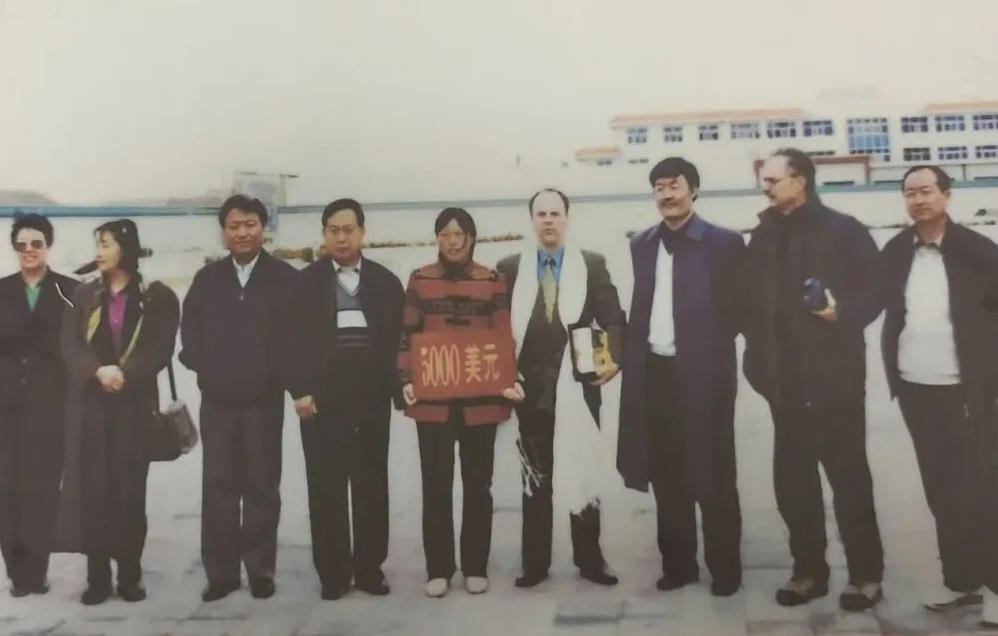
Ronald Sakolsky (center, wearing white scarf) donates $5,000 to Yin Yuzhen to support her buying saplings for desertification control efforts.
Sakolsky spoke of China's achievements in environmental protection. He said he has witnessed China's rapid development, especially the outstanding progress in ecological management and western regional development.
It was truly amazing to see those saplings planted by Yin grow into vast stretches of forests today, he said.
The touching story between Yin and Sakolsky serves as a vivid epitome of numerous warm stories featuring mutual understanding, friendship and mutual assistance between ordinary Chinese and American people.
Sakolsky told the reporter that he still remembers the speech he delivered at the auditorium of a school in Hohhot back in 2000: "We live on this one earth. We must find a way to live together and become brothers."
He holds the view that people of China and the United States share the same home planet and should coexist peacefully.
Both sides should seek more common ground rather than dwell on differences, he said.
"We are all people," he said. "We need to find a way to live on this earth in peace."