


Chinese running shoes are gaining global prominence as international influencers showcase their performance and affordability on social media. This trend is reinforced by China's advanced cross-border e-commerce and logistics infrastructure, which delivers greater convenience to overseas consumers through three key strengths: faster delivery, diversified purchasing channels and steadily improving shopping experiences.
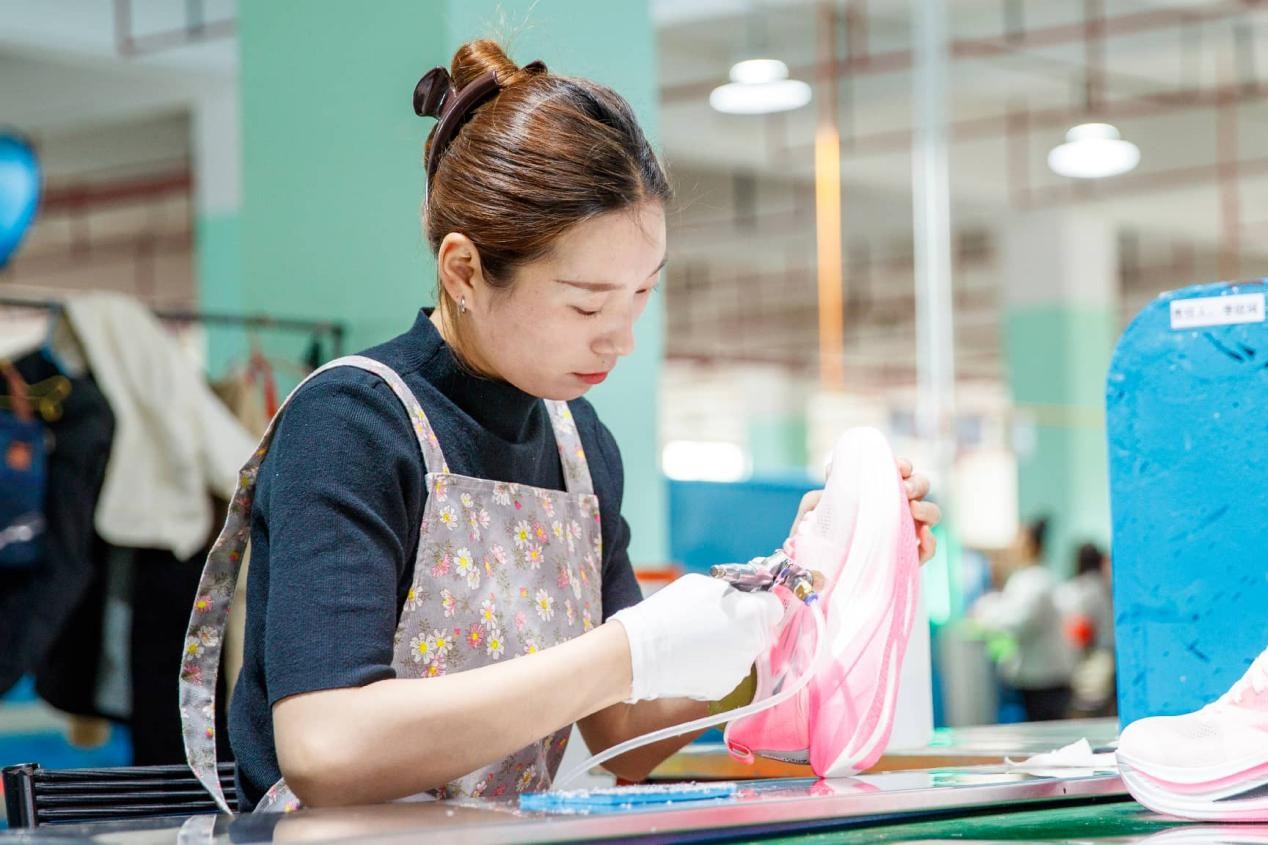
A worker manufactures running shoes at a shoemaking enterprise in Shangqiu, Central China's Henan Province. (Photo: Xu Zeyuan/People's Daily)
Cross-border e-commerce has become a new growth driver of China's international competitiveness, with trade in 2025 reaching 2.75 trillion yuan (about $400 billion). As a key part of the producer services sector, cross-border logistics helps Chinese companies sharply shorten delivery times, reduce operation costs and improve the shopping experience for overseas consumers, providing strong support for Chinese brands expanding into global markets.
Last year's government work report called for promoting the development of cross-border e-commerce, improving international delivery and logistics systems, and strengthening the construction of overseas warehouses. At the national conference on the service sector held in April this year, authorities stressed the need to pursue both capacity expansion and quality improvement, and to balance development with regulation to promote high-quality, efficient growth of the service industry.
Against this backdrop, how can cross-border logistics build on current momentum and achieve higher-quality development?
One priority is faster transportation.
Guidelines issued by the State Council on promoting the expansion and upgrading of the service sector call for the vigorous development of international maritime and air transport services. In the first quarter, China's international cargo and mail volume exceeded 1.1 million tons, up 17.6 percent year on year. Demand has been particularly strong for high-value-added goods such as cross-border e-commerce products, high-end manufacturing equipment and biopharmaceuticals.
At the same time, customs clearance is becoming more convenient. The "9610" direct mail export model for cross-border e-commerce is unleashing greater potential, enabling more small and medium-sized sellers to achieve rapid customs clearance for small parcels and high-frequency shipments.
Another focus is improving capacity for overseas storage and distribution.
Guidelines jointly issued by six departments, including the Ministry of Commerce, call for stronger support for overseas warehouses and for improving intelligent overseas logistics platforms. So far, Chinese companies have built more than 2,500 overseas warehouses, totaling more than 30 million square meters. The US and Europe alone account for more than 70 percent of this area.
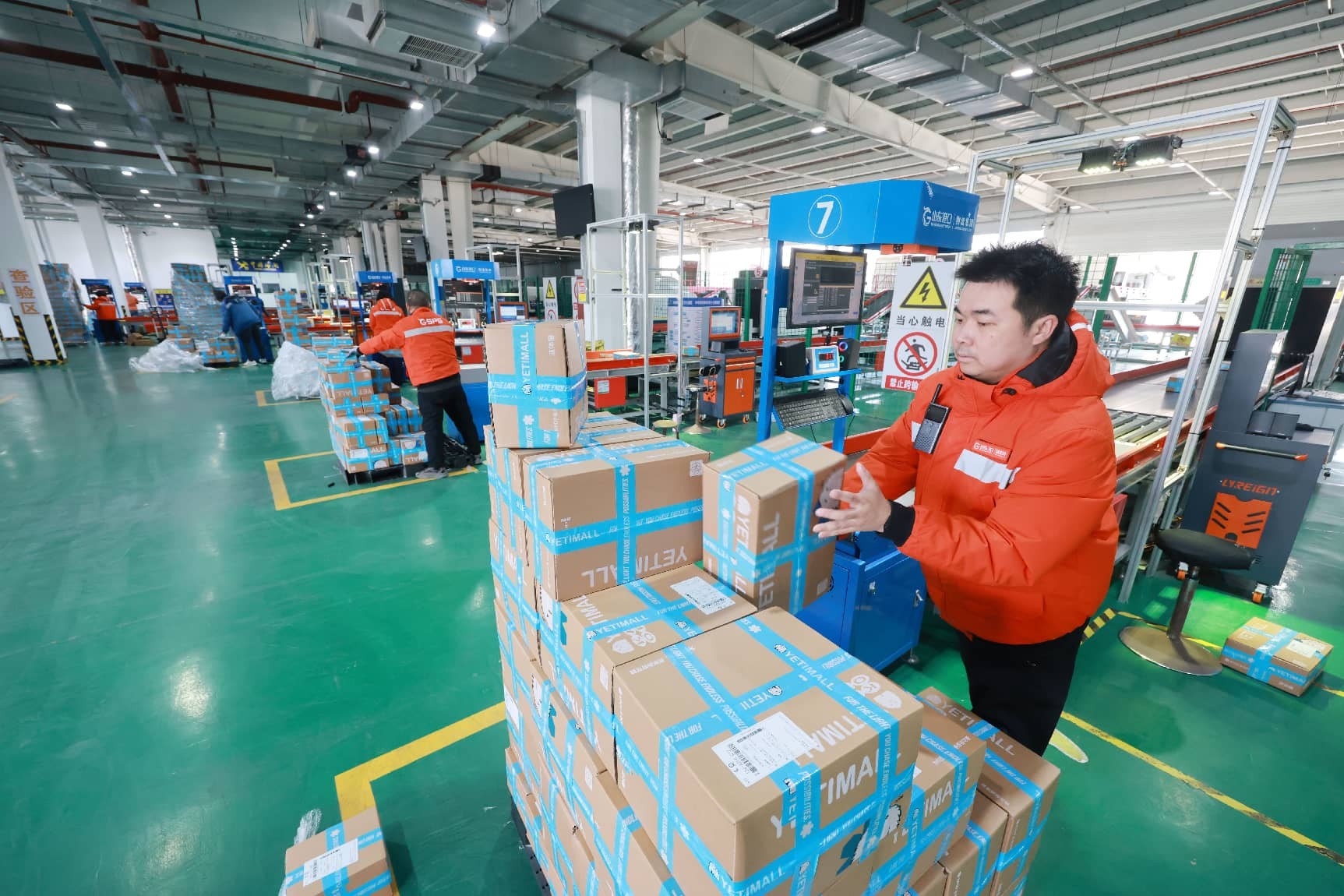
Cross-border e-commerce parcels are sorted at a logistics park operated by Shandong Port Land-Sea International Logistics Group Co., Ltd. in Weihai, East China's Shandong Province. (Photo: Zhu Chunxiao/People's Daily)
Returns are also becoming easier.
Since April 1, the General Administration of Customs has implemented a nationwide cross-regional return mechanism for cross-border e-commerce retail exports. Under the new model, goods returned from overseas no longer have to re-enter China through the original customs office of export. Companies can instead choose any customs port nationwide to handle return procedures. This reform helps address long-standing industry problems such as difficult, costly and time-consuming return processing.
The boom in this sector is also driving demand for talent. A recent white paper on cross-border e-commerce talent development estimates that by 2025, China's cross-border e-commerce sector will face a shortfall of about 4 million professionals. In supply chain and logistics roles, cross-border data analysts command a clear premium over traditional positions, with annual salaries typically ranging from 250,000 to 500,000 yuan.
The global popularity of Chinese running shoes reflects not only the strong appeal of "Made in China," but also the ongoing upgrading of "China services" as China goes global. Together, they are becoming a new, eye-catching calling card for Chinese industries competing on the international stage.