


It can mow your lawn, scrub your swimming pool and wipe your windows clean -- all without being asked twice. And in its latest iteration, one model doesn't even bother with the stairs. It flies.
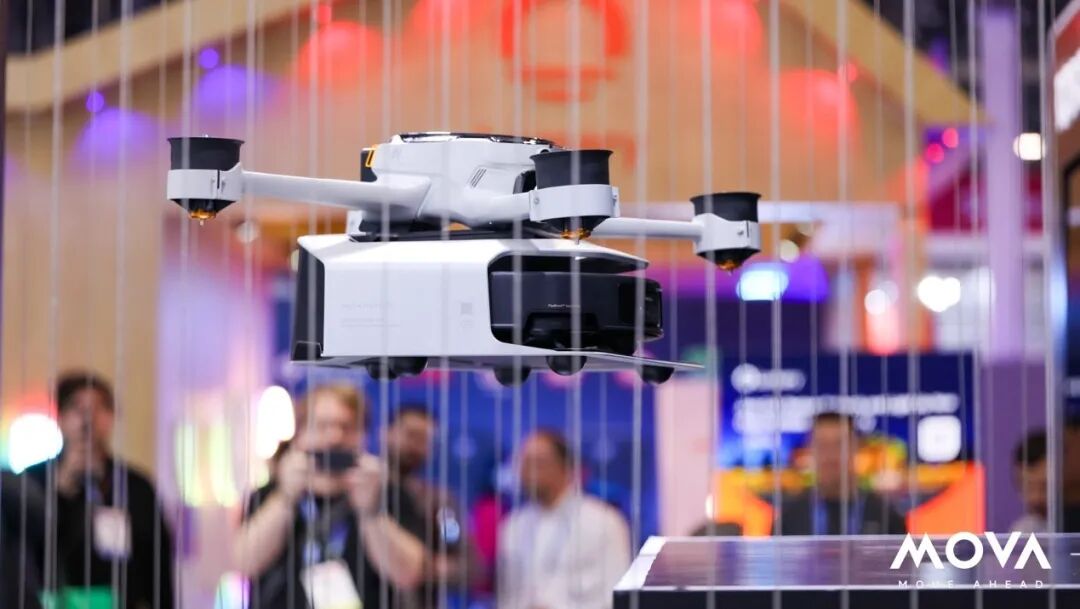
China's MOVA showcases its first flying cleaning robot, the Pilot 70, at the 2026 Consumer Electronics Show (CES), the world's premier technology event, in Las Vegas, US. (Photo: MOVA)
China's cleaning robots have come a long way from the disc-shaped vacuum bumping into furniture legs. Today, a new generation of machines built by Chinese manufacturers can map an entire home on their first run using LiDAR and AI-powered cameras, dodge a sleeping cat mid-route, and remember exactly how you like your living room cleaned. Leave for work in the morning, and the apartment is spotless by the time you return -- floors mopped, carpets vacuumed, every corner cleaned without a single piece of furniture nudged out of place.
Some models feature a wheel-leg hybrid design that lets them step over thresholds and climb stairs. Others go even further: engineers have developed prototypes with built-in flight modules that let the robot lift off, float to a different floor and resume cleaning -- a concept rapidly moving from lab to living room.
From living rooms to the world
These robots are no longer just a domestic success story. In the first quarter of 2026, China exported 11.32 billion yuan worth of robots to 148 countries and regions, with cleaning robots alone accounting for 7.75 billion yuan -- nearly 70 percent of the total.
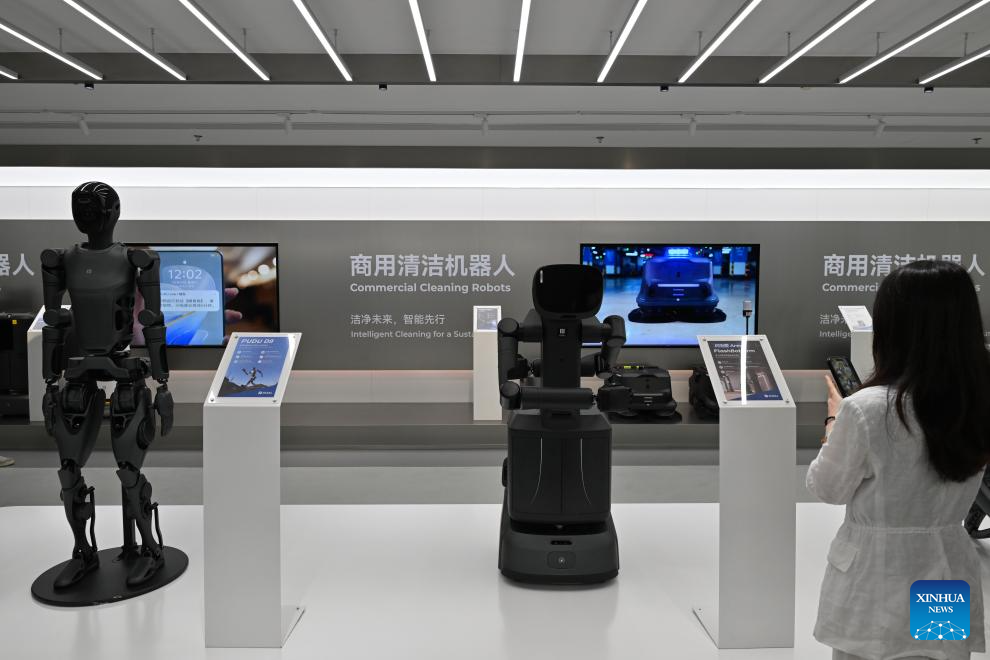
Different models of robots are displayed at Pudu Robotics in Nanshan District of Shenzhen, south China's Guangdong Province, March 27, 2026. (Photo: Xinhua)
What gives Chinese manufacturers their competitive edge? Industry analysts point to China's incredibly diverse domestic market. With homes of every size, layout and climate, Chinese companies have had one of the world's most demanding real-world testing grounds.
The tight feedback loop helps, too. Millions of users posting reviews and suggestions online have pushed manufacturers into relentless iteration -- refining algorithms, improving performance and shaving minutes off cleaning cycles with each update.
Smart enough to adapt
The latest models go beyond preset routes. Using AI-powered scene recognition and learning from cleaning history, they intelligently adjust to different floor types, room layouts and household habits. Over time, they become truly tailored to the homes they serve.
This ability to iterate quickly and respond to real user needs helps explain why Chinese cleaning robots are gaining ground globally -- not just as affordable appliances, but as competitive smart-home devices.
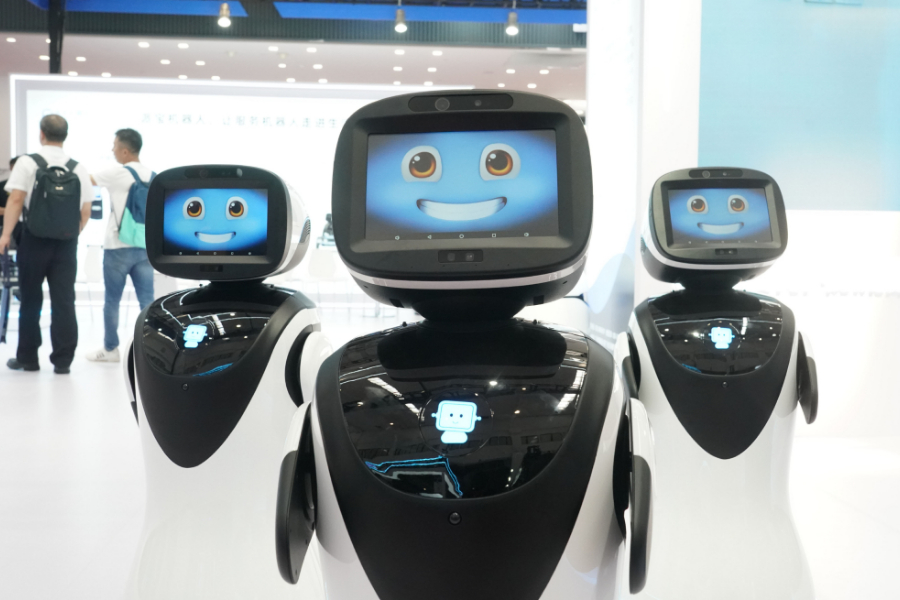
Service robots are pictured at the World Robot Conference 2023 in Beijing, capital of China, Aug. 17, 2023. (Photo: Xinhua)
More than a vacuum
The global journey of Chinese cleaning robots reflects a broader transformation in what "Made in China" represents on the world stage. In the first four months of the year, China's exports of high-tech manufactured goods rose 17.6 percent year-on-year. Electric vehicles surged 68.1 percent, lithium batteries climbed 43.2 percent and wind turbines grew by 40.7 percent.
It's a small machine that cleans floors, learns preferences and occasionally takes flight. And for a growing number of households around the world, it was made in China.
(Compiled by Fu Xuan, Zhao Yangyang and Ye Chenyang; Edited by Zhao Zhengting and Lu Dong)