


SINGAPORE, May 30 (Xinhua) -- The China-proposed Global Security Initiative and the Global Governance Initiative offer Chinese wisdom and Chinese solutions for the international community in responding to global challenges, said Meng Xiangqing, head of the Chinese People's Liberation Army expert delegation and a professor at China's National Defense University, here on Saturday.
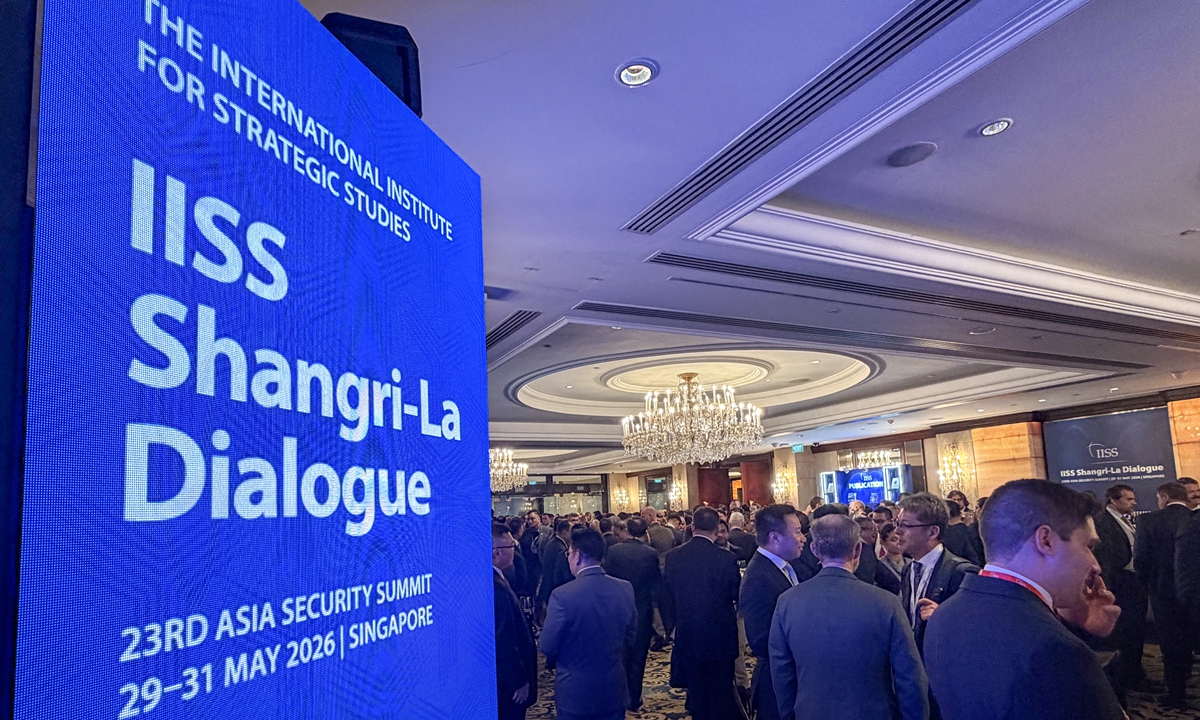
Participants attend the 23rd Shangri-La Dialogue in Singapore on May 29, 2026. (Photo: Su Yaxuan/GT)
The world today is confronted with a range of challenges, including the impact of hegemonism on regional security, rising risks of nuclear conflict, the serious erosion of the international arms control, disarmament and nuclear non-proliferation regime, and growing disorder in global governance, Meng said in a speech at a session at the Shangri-La Dialogue 2026 in Singapore.
Against this backdrop, China has put forward the Global Security Initiative and the Global Governance Initiative, advocating a vision of common, comprehensive, cooperative and sustainable security. The initiatives uphold multilateralism and the rule of law in international affairs, providing important ideas and solutions for addressing global challenges, he said.
On jointly tackling the complex global challenges, Meng said that all countries should firmly safeguard the post-war international order and strengthen the political foundation for strategic stability. He emphasized the need to remain alert to any resurgence of militarism and to uphold the outcomes of World War II and the post-war international order.
Meng also said that all countries should actively advance inclusive governance to build a fair and equitable global security governance system, strengthen consensus on arms control and uphold the nuclear non-proliferation and disarmament regime, and proactively manage risks from emerging technologies to prevent a "regulatory vacuum" in the military domain.
"We hope all countries will join hands to practice true multilateralism and inject positive energy into global strategic stability," the professor said.