


When Dr. Muhammad Shahbaz's family suggested he study medicine in China in 2006, the 18-year-old from Pakistan had already been fascinated by the country. He had read Ibn-e-Insha's famous travelogue Chalty ho to Cheen ko Chaliye and dreamed of a land of kung fu masters and bicycles.
"At the age of 18, I thought that coming to China to study would be a great experience," he recalled.
But after landing in Jinan, east China's Shandong Province, he found cars, electric buses, metered taxis and a country on the verge of an immense transformation.
China then and now
Shahbaz recalled that in 2006, Jinan's tallest building stood at just 20 stories. At the time, the fastest trains crawled at about 150 kilometers per hour – similar to Pakistan's railways. The journey from Jinan to Mount Taishan took nearly an hour, while a night coach from Jinan to Shanghai consumed 10 hours. He relied on IP cards to make international calls home.
"There were fewer skyscrapers, less advanced public transport systems, and fewer international facilities," he said. "Many areas looked more traditional and less technologically connected."
China was accelerating, and Shahbaz had a front-row seat. Today, he marvels at high-speed rail, digital payments, and 5G networks. "The speed and scale of China's progress have amazed me," he said.
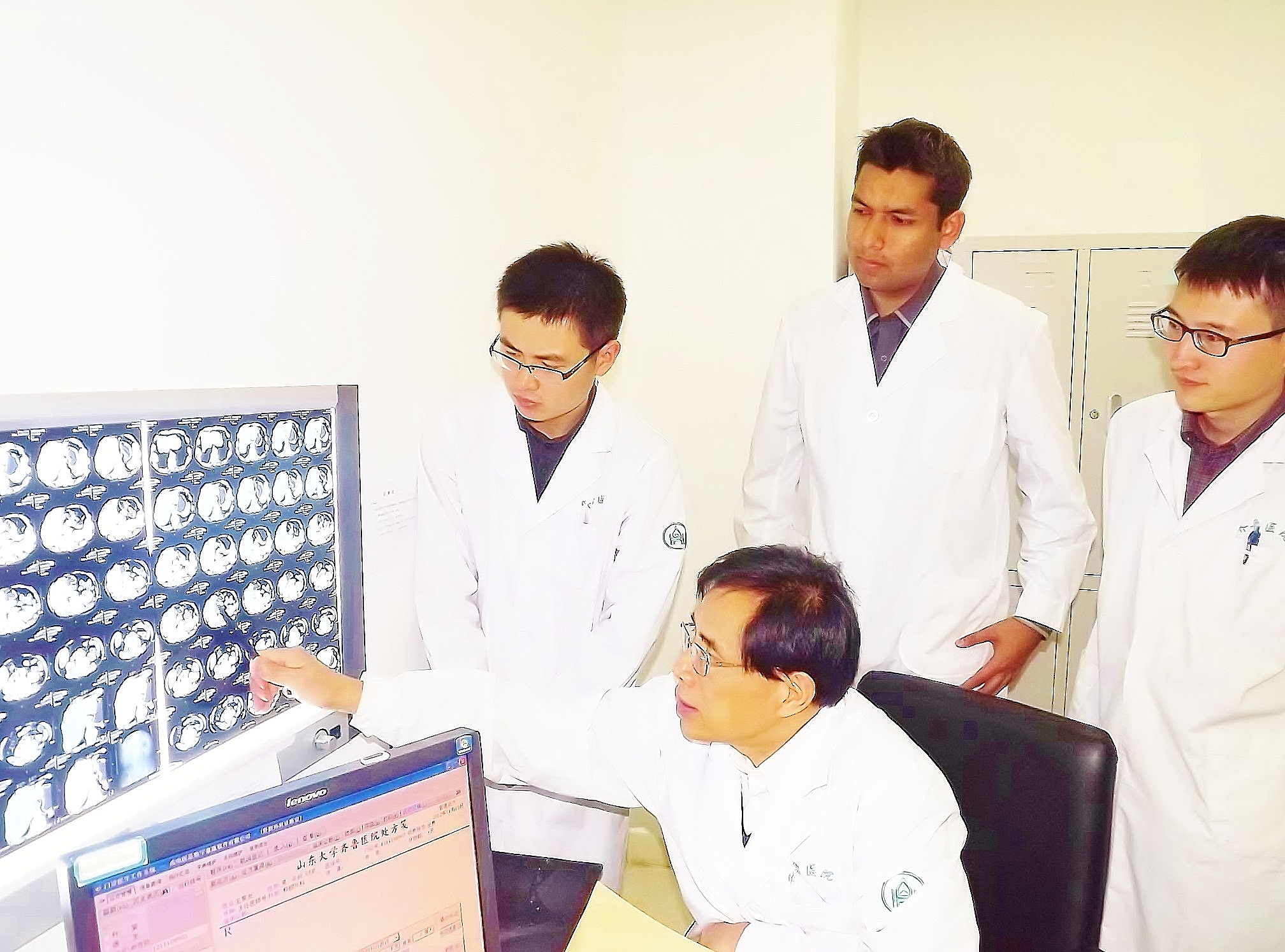
Muhammad Shahbaz (standing, center) looks at a scan with Professor Niu Jun and other doctors at Qilu Hospital of Shandong University in Jinan, China, 2010. (Photos provided by Muhammad Shahbaz)
The long road to medicine
With zero Chinese upon arrival, Shahbaz survived on phrases like "duo shao qian" (how much) and "wo xiang mai cai" (I want to buy vegetables). A shared dormitory kitchen became a lifeline. Classmates cooked and ate together, turning food from a challenge into a bonding ritual.
Academically, the sheer volume was daunting. Medical school meant 45 subjects over four years, from anatomy and surgery to gynecology and pediatrics. But mentors like Professors Sun Jinhao, Jia Jihui, Liu Zhiyu and Niu Jun guided him toward research. In 2009, he was named Best Young Speaker at an international conference in Sydney.
What kept him going through the long years of training, language barrier challenges, and homesickness was family. "They used to tell me, 'Shahbaz, you must become a big and famous doctor and come back to serve the poor and needy people of our village, city, and country.' So, I had a continuous passion and enthusiasm to excel and achieve the goals," said Shahbaz.
Traditional Chinese Medicine (TCM) became part of his curriculum in his third year. Thanks to early mentorship, Shahbaz translated anatomy and TCM books into English. When acupuncture, moxibustion, and pulse diagnosis were formally introduced, he approached them not with skepticism but with genuine curiosity. He has also tried acupuncture and cupping therapy himself for back pain and even explored eye diagnosis with advanced AI TCM tools.
"We need to combine Western, TCM, and alternative herbal therapies for maximum patient relief," he said.
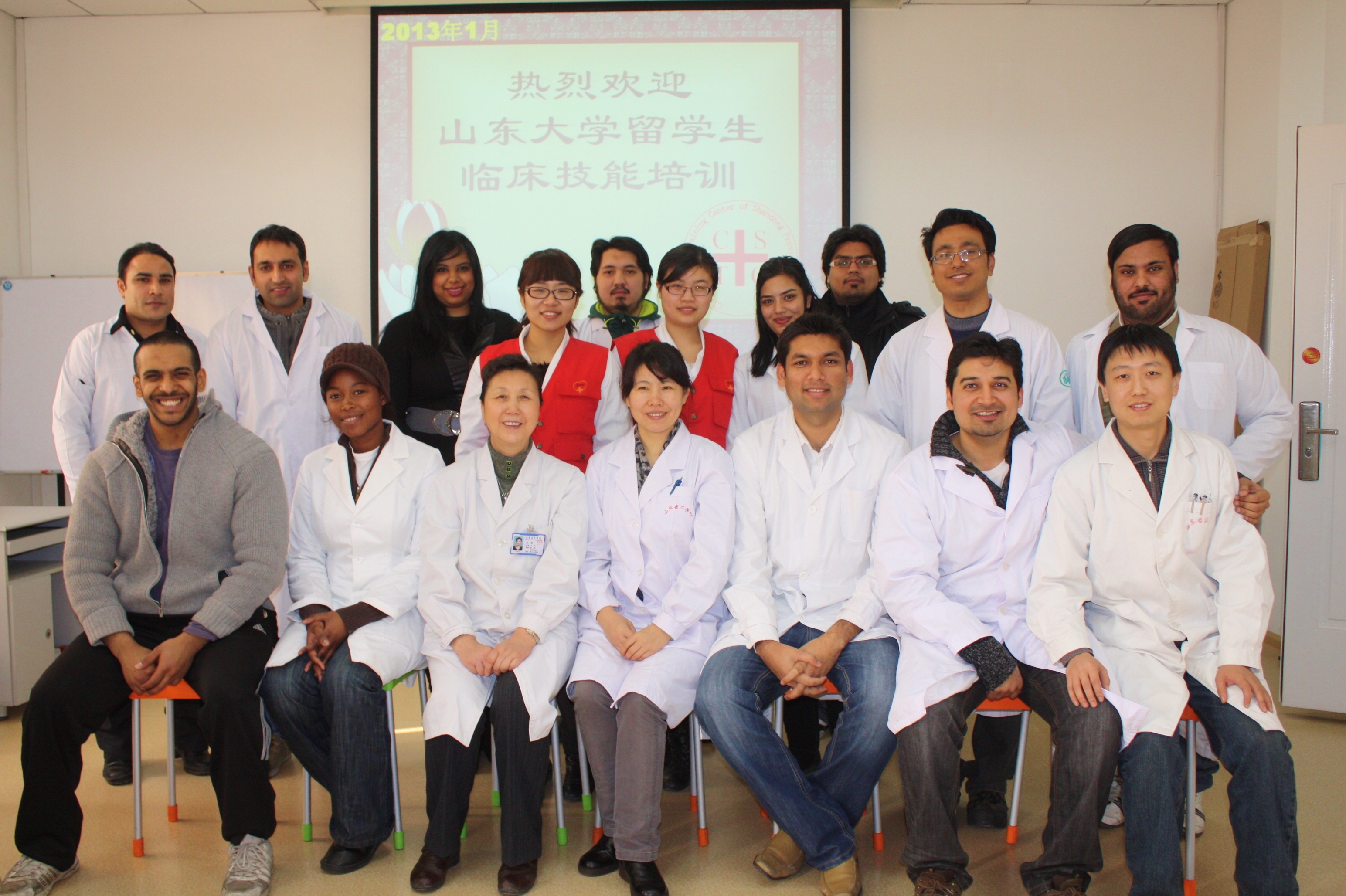
Muhammad Shahbaz (front row, third from right) takes a group photo with doctors and fellows at the inaugural Physical Examination and Surgery Operational Techniques Program at Shandong Provincial Hospital, China, 2013.
On July 2, 2017, while Shahbaz was traveling from Beijing to Paris, the captain called for a doctor. The crew found a Chinese woman in distress, vomiting profusely and experiencing hypothermia. With limited in-flight resources, Shahbaz managed to stabilize her for the remaining three hours of the flight. An ambulance met the plane upon landing, and the cabin crew applauded.
"It was the best day of my life, as I used to see these scenes only in movies," he said. "I felt proud of my profession for being able to save a person's life."
In the following years, he continued advancing his medical education through a Chinese government scholarship for a PhD, a robotic surgery fellowship in France, and postdoctoral study at Qilu Hospital of Shandong University in Jinan.
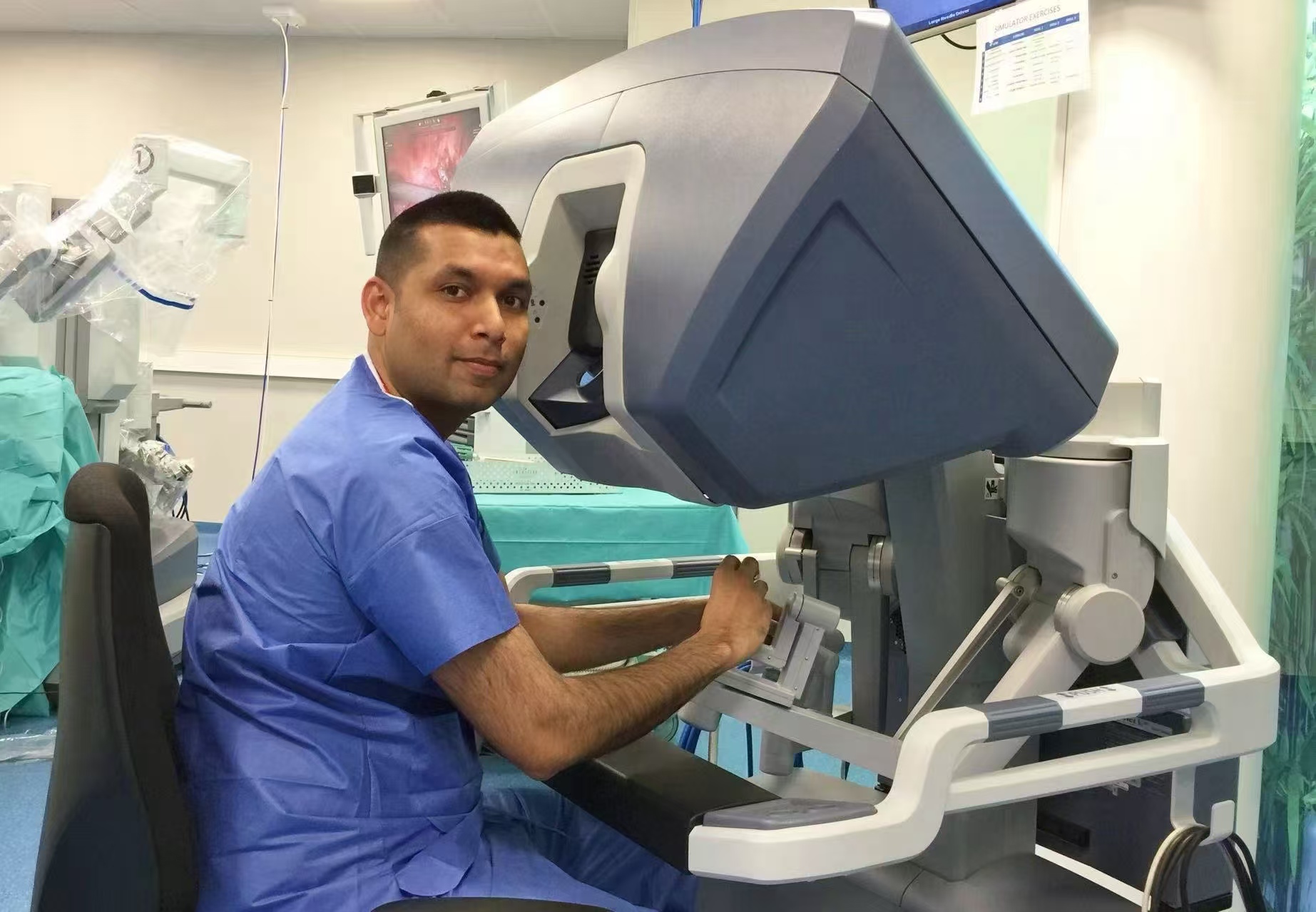
Muhammad Shahbaz operates a robotic surgical system at IRCAD France, 2017.
In 2021, he initiated the establishment of the China-Pakistan Medical Association (CPMA). In 2025, he co-founded the Neo International Hospital and Research Center in Lahore, Pakistan's first medical tourism hospital, which is set to open by the end of 2027.
After two decades in China, Shahbaz speaks fluent Mandarin. He has played a key role in bridging communication, translating seamlessly between delegates from both sides. His determination to help Pakistani patients has never wavered, and his journey has inspired his family – his younger brothers and a sister have also studied in China.
The future of China-Pakistan medical cooperation
Currently based in Chongqing, southwest China, Shahbaz serves as director of the International Cooperation Department at FDS Consortium, a company focused on research and development in advanced nuclear systems and the application of nuclear technology.
As president of the CPMA, Shahbaz has witnessed remarkable progress in bilateral medical cooperation, from joint research labs and neurosurgery training centers to sister university partnerships.
For example, in 2026, the China Pakistan Training and Medical Education Center was established in Jinan, followed by the China Pakistan Joint Neurosurgery Training Center and Medical Tourism Center at Zhongnan Hospital of Wuhan University in Wuhan, the capital of Hubei Province in central China.
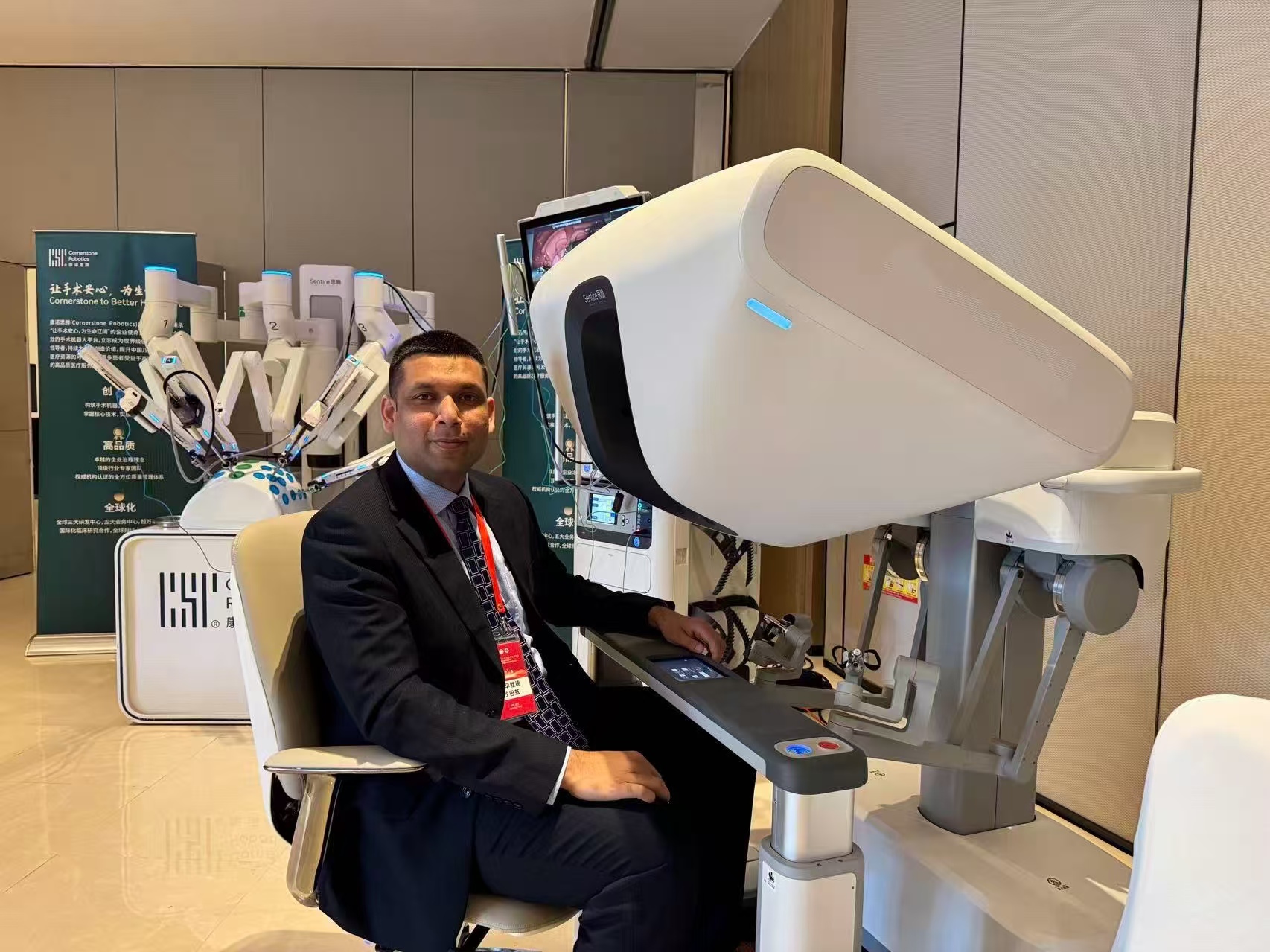
Muhammad Shahbaz is pictured at a robotic surgery training activity in Chengdu, southwest China's Sichuan Province, 2025.
"All the work that CPMA has done over the past five years is institutional cooperation and joint projects," he said. "I am hopeful that I, along with the team, will carry on the work to achieve excellence in healthcare cooperation between China and Pakistan, which will benefit patients, medical students, doctors, and allied healthcare professionals in Pakistan."
Shahbaz hopes to establish a permanent center of excellence, whether for China-Pakistan joint research, medical education, or healthcare, that would serve as a continuous, on-the-ground hub for bilateral medical cooperation.