


As football fever sweeps across China, the country's most talked-about grassroots leagues are doing something unusual this weekend: stopping play at the height of their popularity.
The pause is not due to bad weather, scheduling conflicts or government directives. Instead, it is a voluntary gesture of respect for millions of students sitting for one of the most consequential examinations of their lives.
Across China, amateur intercity football competitions, including the Su Super League, as well as emerging regional tournaments in Guangdong and northeast China, have adjusted their schedules to avoid overlapping with the national college entrance examination, or gaokao, which begins Sunday.
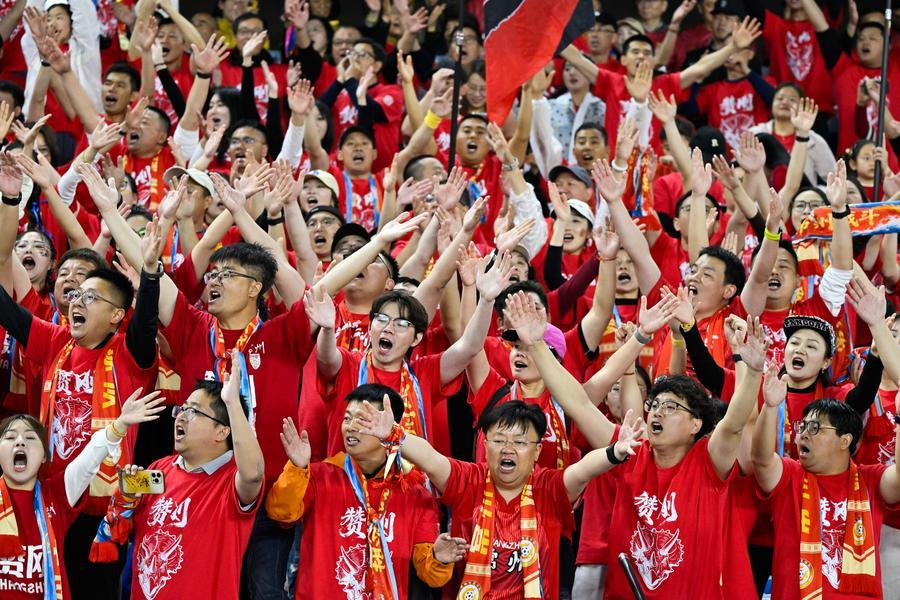
upporters celebrate victory of Changzhou after the opening match against Nantong of the 2026 Jiangsu Football City League in Changzhou, east China's Jiangsu Province, April 11, 2026. (Photo: Xinhua)
The decision offers a glimpse into the values underpinning China's rapidly growing grassroots sports movement: even amid packed stadiums, soaring online viewership and unprecedented public enthusiasm, sport remains ultimately centered on people.
The rise of China's city-based football leagues has become one of the country's most compelling sporting stories. The Su Super League features 13 teams representing each city in Jiangsu. What began as a regional amateur competition has evolved into a nationwide phenomenon, drawing billions of online views and attracting crowds that in some cases surpass those of established professional leagues.
Yet when confronted with a choice between maintaining momentum and making room for students preparing for their futures, organizers chose the latter.
This year, 12.9 million students are set to participate in gaokao, widely regarded as one of China's most equitable mechanisms for talent selection.
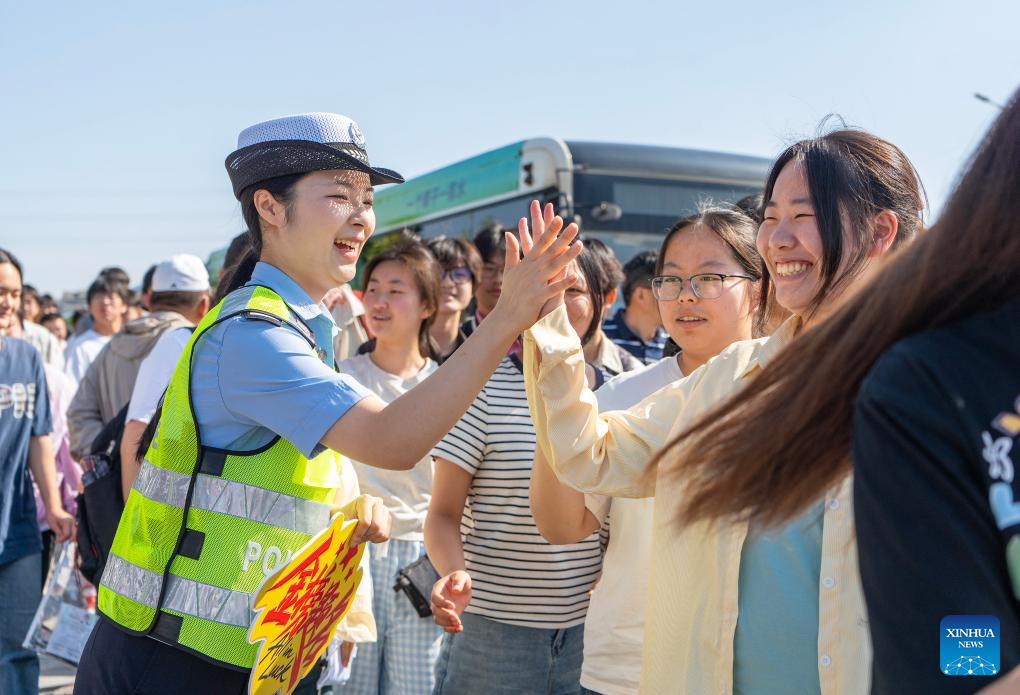
A police officer claps hands with a student outside a national college entrance examination site in Nantong, east China's Jiangsu Province, June 7, 2026. (Photo: Xinhua)
Each June, the examination draws extraordinary public attention. Construction sites often suspend noisy work. Drivers avoid unnecessary honking near test centers. Communities organize themselves around creating the quietest possible environment for students. The annual ritual reflects a collective belief that educational opportunity deserves protection.
Grassroots football organizers have embraced the same philosophy.
Many leagues deliberately avoided scheduling matches during the examination period when designing this season's calendar. The goal is to allow young people to focus on an important milestone without distraction, signaling society's support for the next generation.
The gesture carries particular significance because these leagues themselves emerged from ordinary communities. Their players are not full-time professionals but students, delivery workers, office employees, factory staff and software engineers. Some are high school students. A few are even gaokao candidates themselves, now able to turn their attention from football pitches to examination halls.
That shared sense of identity helps explain why the public has broadly welcomed the temporary suspension.
In provinces such as Jiangsu, league organizers have described the move as consistent with both the spirit of football and the ideals of education.
The message is clear: competition is important, but nurturing future generations matters more.
The decision also highlights a distinctive feature of China's grassroots football boom. These leagues derive much of their appeal from their close connection to everyday life, belong to the communities that created them and naturally reflect the priorities of those communities.
China's absence from the upcoming FIFA World Cup has done little to diminish the country's affection for the game. That passion has simply taken root elsewhere - in neighborhoods, industrial parks, university campuses and city rivalries.
Across these grassroots leagues, football has evolved into something larger than competition. It has become a community festival, a source of local identity and a celebration of shared belonging. The cheers reveal a sporting culture that is vibrant precisely because it remains close to ordinary life.
When the World Cup finally kicks off, many of this year's gaokao candidates will join the global audience, their examinations behind them. By then, the excitement generated by local city leagues will intersect with the world's biggest football event.
For now, however, the loudest statement comes not from a roaring crowd or a dramatic last-minute goal, but from a moment of collective silence.
In choosing to pause, China's grassroots football leagues have demonstrated that the true strength of sport lies not merely in competition, but in its capacity to serve the people whose dreams it accompanies.