


Ms. Zhou, a resident of Wenjiang District in Chengdu, southwest China's Sichuan Province, began experiencing symptoms of coughing, expectoration and hemoptysis in February.
With a chest CT scan, a community doctor diagnosed her with a possible lung tumor. Through the two-way referral platform of a local medical consortium, Zhou was transferred to the Fifth People's Hospital of Chengdu for tumor removal surgery, without having to register and wait in line herself. After her condition stabilized following the surgery, she was transferred back to the community health center for rehabilitation.
"I come back for a check-up once a month. Treatment here is more affordable, and it's close to home," Zhou told China Media Group in a recent interview.
"With the two-way referral system, we enable residents to have their illnesses detected at the grassroots level, get rapid referrals for severe cases, and receive proper rehabilitation after recovery," said Huang Junhua, vice president of the Fifth People's Hospital of Chengdu.

File photo: VCG
China has built the world's largest medical service system. As of the end of 2024, there are 1.09 million medical and health institutions nationwide, employing 15.78 million health personnel. More than 90% of residents in the country can reach the nearest medical institution within 15 minutes, and regular mobile medical services fill the gaps in remote areas.
According to data from the National Health Commission (NHC), in 2025, primary-level medical institutions recorded 5.56 billion patient visits, accounting for 52.6% of the national total, which effectively eased pressure on large hospitals. Meanwhile, two-way referrals in 2025 increased by more than 50% compared with 2020.
Medical insurance settlement has also been extended. More than 90% of village clinics in China have their services covered by basic medical insurance.
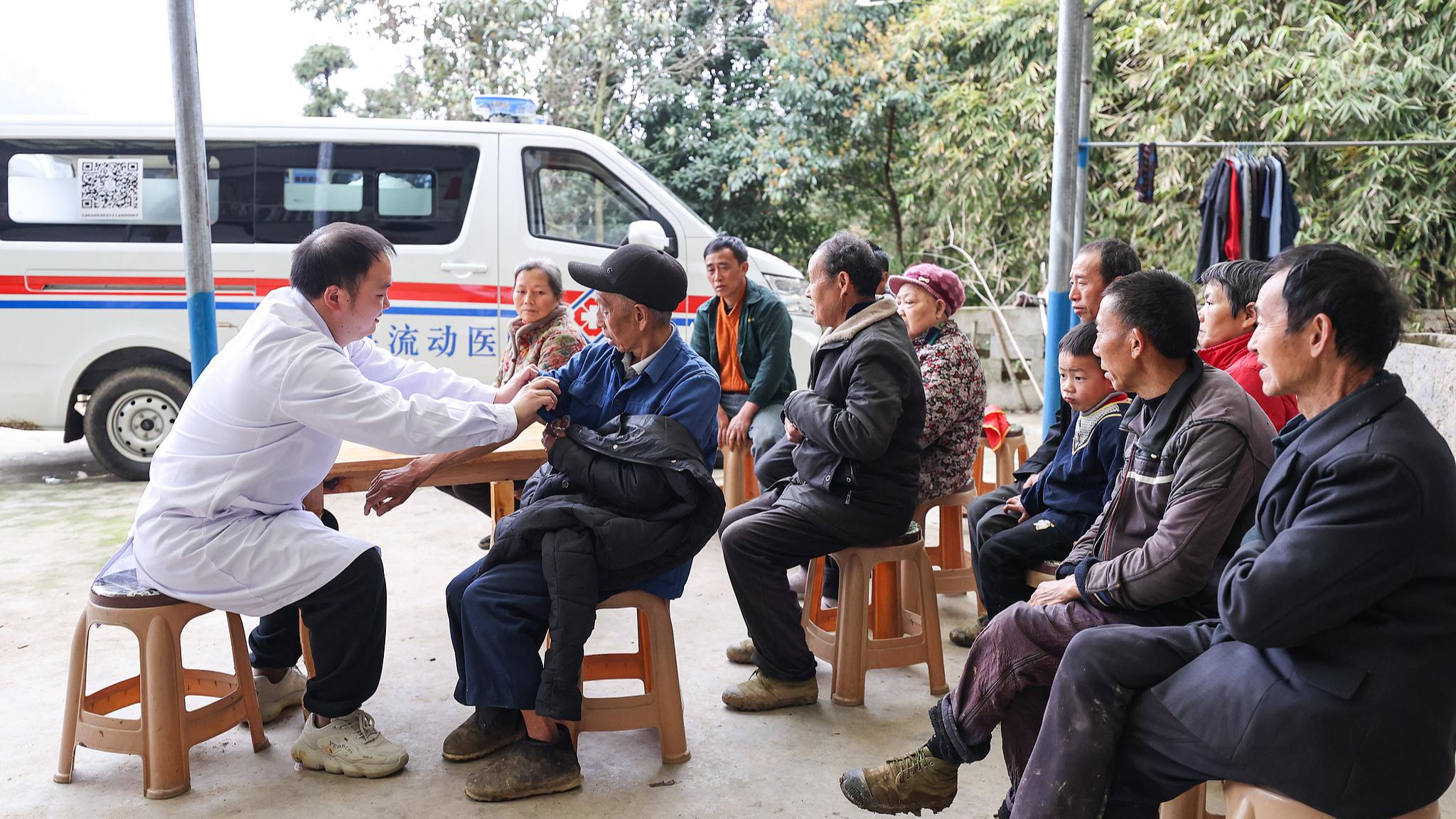
A doctor from the mobile hospital of the Heba Subdistrict Health Center in Fenggang County, Zunyi City, southwest China's Guizhou Province, measures the villagers' blood pressure, March 21, 2026. (Photo: VCG)
Optimizing resources through tiered diagnosis and treatment
In its ongoing effort to improve primary healthcare accessibility, China has made significant strides in developing closely integrated medical consortia at the county level.
The initiative aims to establish a triage system that is led by county-level hospitals and improve the capacity of medical institutions at the township and village levels. Within a medical consortium, these medical institutions function under unified management of personnel, finances, business, drugs, and information.
For example, in Gongyi, a county-level city in central China's Henan Province, a general hospital leads a consortium covering three city-level hospitals, four community health centers, 15 township health centers, and 310 village clinics. Over five years, the consortium's patient visit rate reached over 99%, and primary-level outpatient and emergency visits accounted for 68%.
In Dunhuang, northwest China's Gansu Province, referrals from branch hospitals to the general hospital dropped by 81% in 2025, while downward referrals for rehabilitation increased by 168%. Patient satisfaction reached 92%.
Through sharing resources like medical imaging and laboratory test results, these medical consortia allow primary-level examinations to be diagnosed by higher-level institutions, bringing quality care closer to patients' homes.
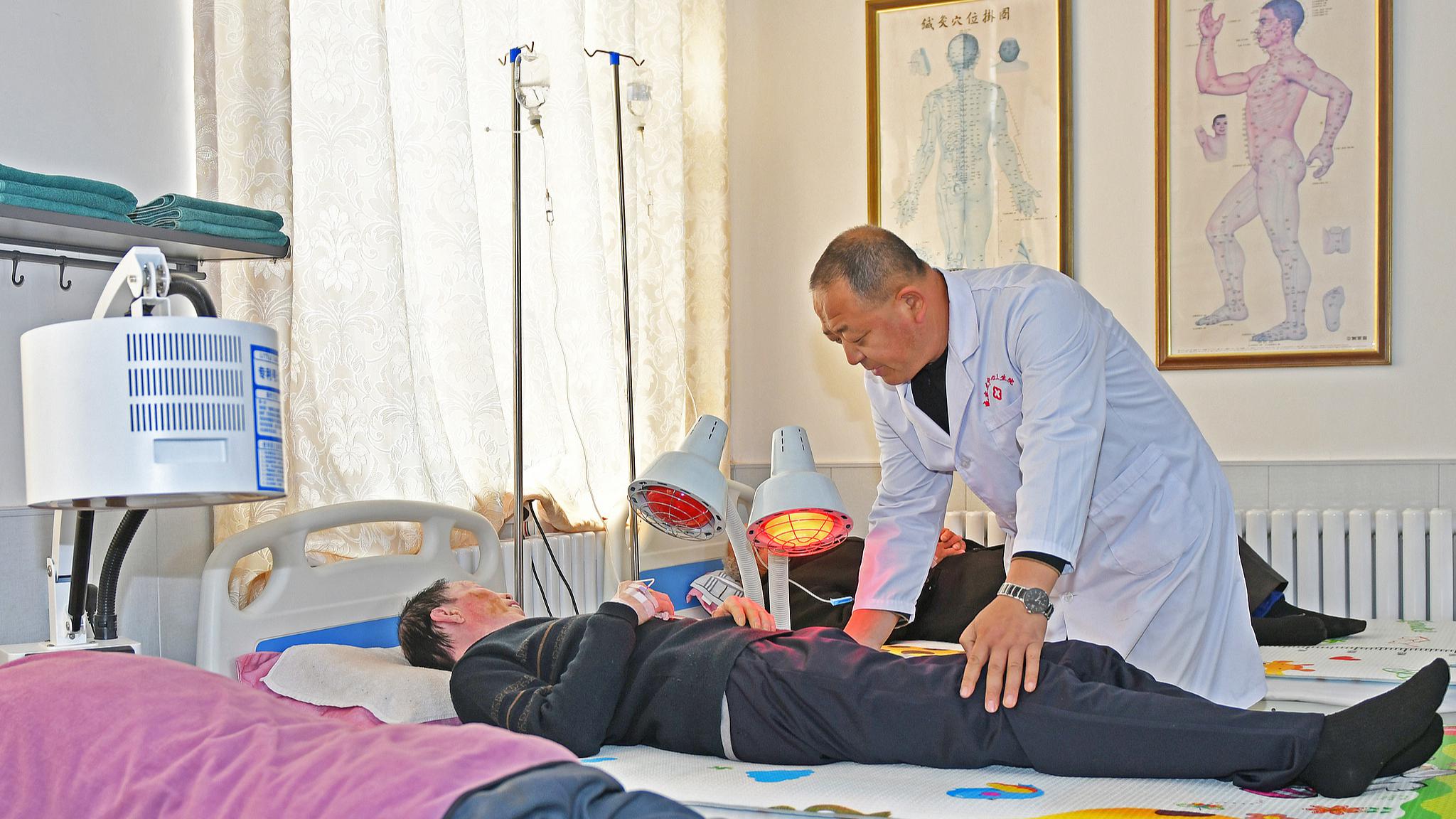
A doctor provides traditional Chinese medicine physiotherapy services to local villagers, in Wujia Village Clinic of Zangjiazhuang Town, Fushan District, Yantai City, east China's Shandong Province, March 15, 2026. (Photo: VCG)
Since the targeted training program was launched in 2010, it has trained nearly 100,000 medical students for townships. More than 10,000 medical university graduates have been recruited to work in township health centers through the special program, strengthening the grassroots workforce.
Digital and smart healthcare
The future of primary healthcare lies in digitalization and the use of artificial intelligence. The 15th Five-Year Plan (2026-2030) calls for promoting digital and smart technologies in the nationwide healthcare system.
Zhoukou City, also in Henan Province, invested 160 million yuan ($ 23.6 million) to build a city-wide health information platform, integrating health data from city, county, township and village levels. The platform covers the basic information of 11.05 million people, stores over 530 million medical records, and has established more than 8 million electronic health records. Teleconsultation and mutual recognition of test results among different hospitals are fully realized.
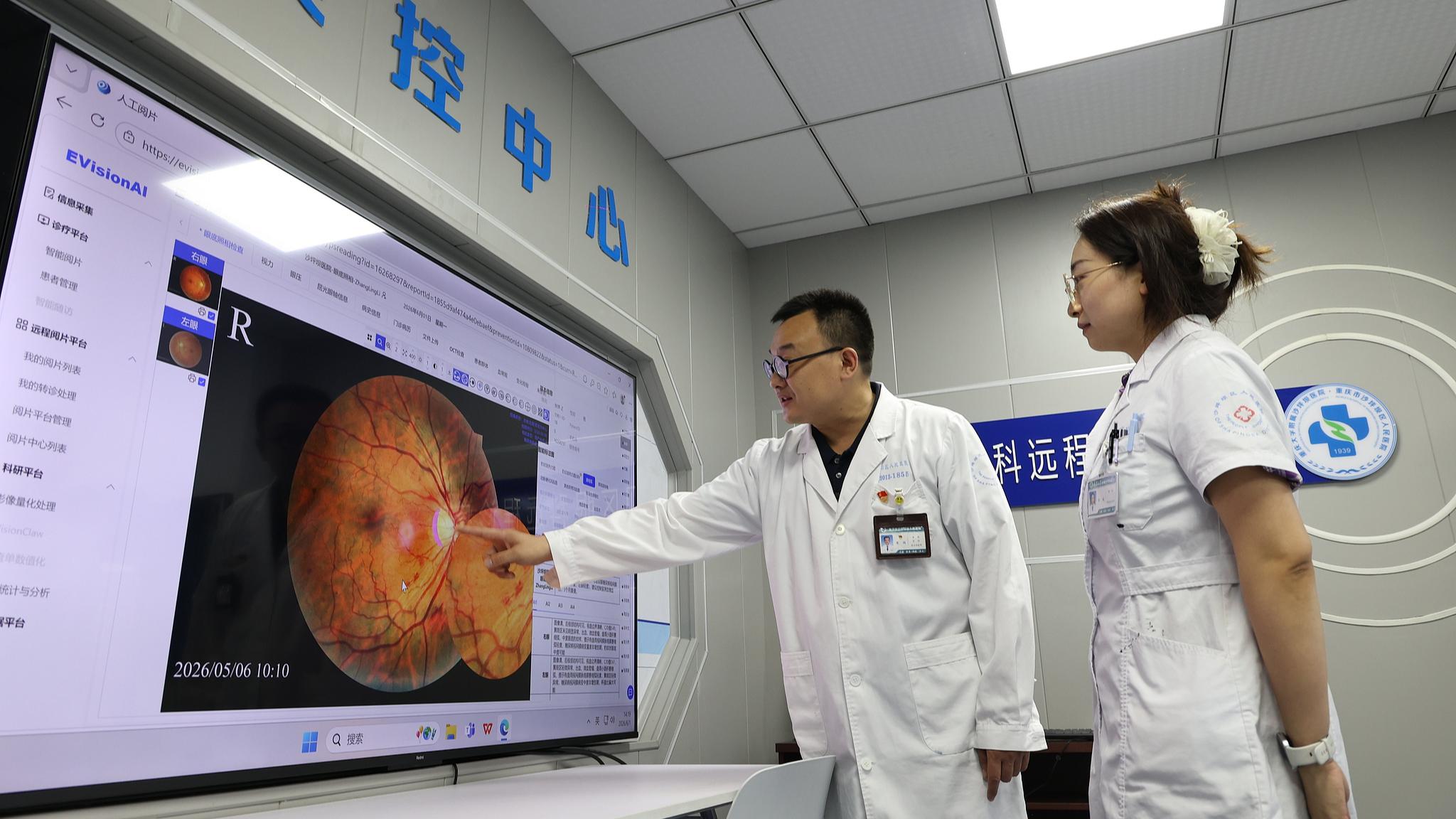
Doctors perform quantitative fundus analysis via a remote eye disease diagnosis platform at Shapingba Hospital Affiliated to Chongqing University, in Chongqing, southwest China, June 1, 2026. (Photo: VCG)
AI-assisted diagnosis systems are empowering grassroots doctors. Zhoukou City has also deployed AI-assisted diagnosis systems in all primary-level institutions, helping identify critical conditions like stroke and enabling timely referrals.
The NHC has piloted AI-assisted diagnosis systems in 27 counties across nine provinces. In the future, digitalization will further integrate services. Electronic medical records and health records will be shared across all levels; shared resource centers within medical consortia will be standardized; and intelligent clinical decision support applications will bring expert knowledge directly to village clinics.
Health is a fundamental condition for human survival and social development. The right to health is a basic human right and a guarantee of a dignified life. From medical consortia to data-proven accessibility and digital transformation, the world's largest medical and health system is charting a people-centered path to health for 1.4 billion people.