


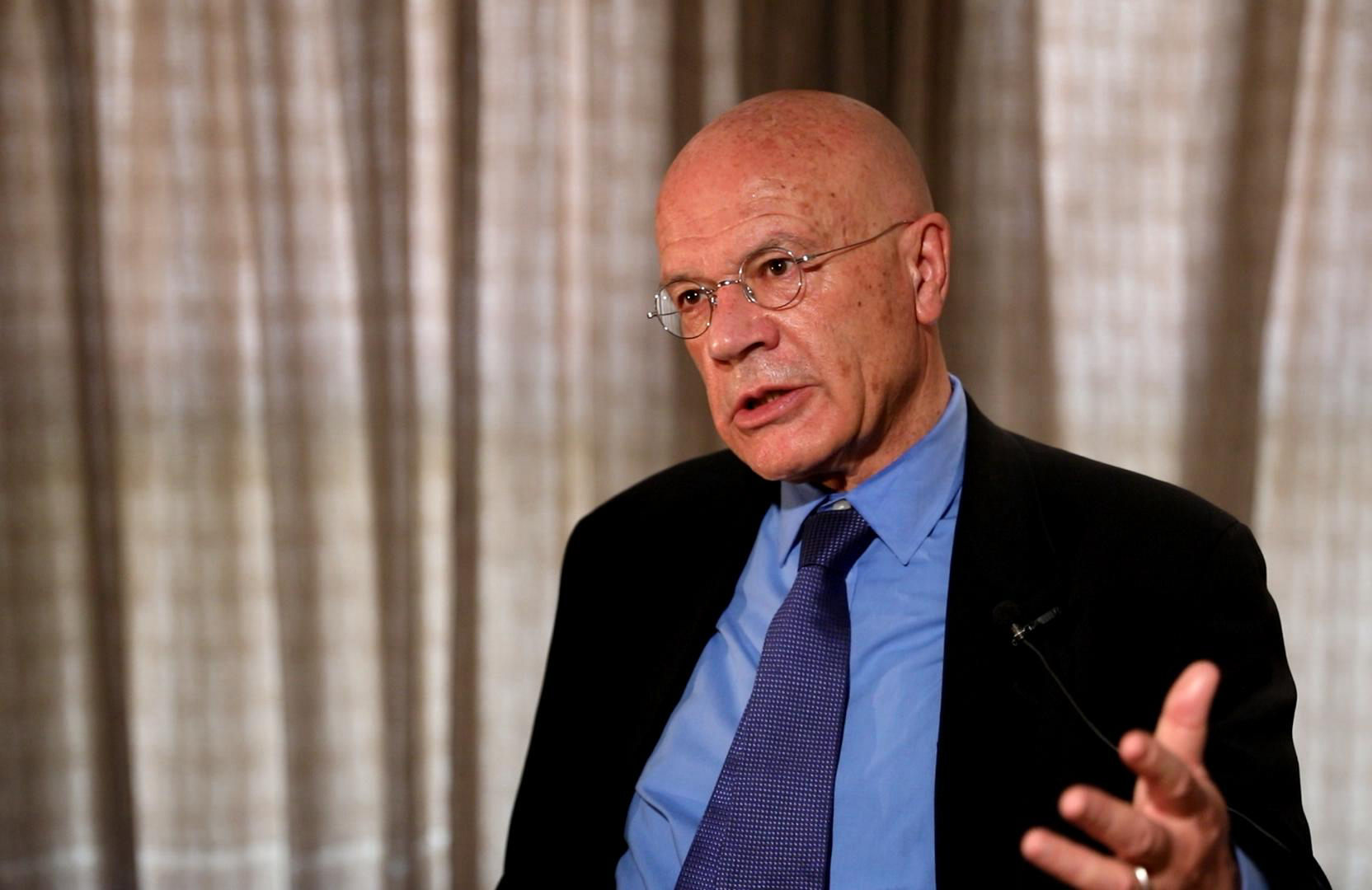
Martin Jacques (File photo: People's Daily Online)
On May 26, prominent British scholar Martin Jacques shared his analysis of Chinese modernization in an exclusive interview with People's Daily, examining the nation's trajectory through the lenses of civilizational evolution, governance and the global order.
As a long-time China observer and author of the influential book When China Rules the World: The End of the Western World and the Birth of a New Global Order, Jacques has established himself as a leading international voice on China's development and contends that the country has fundamentally shattered long-standing Western assumptions that Westernization—specifically the adoption of Western political and economic systems—is a prerequisite for successful modernization.
Jacques identifies the Communist Party of China's (CPC) effective state capacity as the pivotal driver behind the nation's economic transformation—what he characterizes as the "intellectual engine" of China's historic progress. He emphasizes that achieving modernization at China's unprecedented scale represents a unique phenomenon in human history.
Between 1979 and 2023, China's economy expanded at an extraordinary average annual rate of 8.9 percent, far exceeding global averages. Jacques notes this combination of speed and scale has created a distinctive industrialization model, achievable only through the CPC's decisive leadership—a factor he deems indispensable to China's modernization.
The scholar describes China as developing a novel governance approach he terms "science-based governance," enabling simultaneous focus on immediate priorities and long-term strategy—a capability he believes eludes many nations. He further highlights China's adaptive governance system, which maintains stability while avoiding institutional rigidity through continuous reform.
Jacques attributes China's sustained development momentum to its robust public opinion mechanisms coupled with strategic foresight. Crucially, he identifies civilizational continuity as central to China's stability, noting that millennia of history have forged strong cultural confidence—from the 5,000-year-old roots of Chinese civilization to the imperial unification two millennia ago.
Beyond transforming China itself, Jacques asserts that Chinese modernization is reshaping global dynamics. Since joining the WTO, China has consistently advocated for more equitable international systems. He credits China with catalyzing the Global South's collective rise through both its development model and initiatives such as the Belt and Road Initiative.
As Global South nations move toward international centrality, Jacques observes history accelerating at unprecedented rates. He notes the expanding influence of China's four major global initiatives (Global Development, Security, Civilization and Governance Initiatives), positioning China as an increasingly vital force for global stability.
Looking ahead, Jacques expresses strong confidence in China's trajectory, highlighting technological parity with the US and leadership in fields like artificial intelligence. He positions China as an increasingly significant development model offering valuable lessons worldwide.
Over the next decade, Jacques anticipates that China will come to symbolize modernity worldwide.