


Dubbed the "capital of the Chinese medicinal herb industry," Bozhou in east China's Anhui Province exports Chinese medicinal herbs to more than 90 countries and regions.
From January through April this year, Bozhou's exports of Chinese medicinal herbs reached 303 million yuan ($44.73 million), up 37.15 percent year on year.
At 7 a.m., Bozhou's Chinese medicinal herb wholesale market, which sells more than 2,800 varieties of Chinese medicinal herbs, was already alive with activity. The market welcomes 40,000 to 60,000 visitors a day on average and records annual turnover exceeding 56 billion yuan.
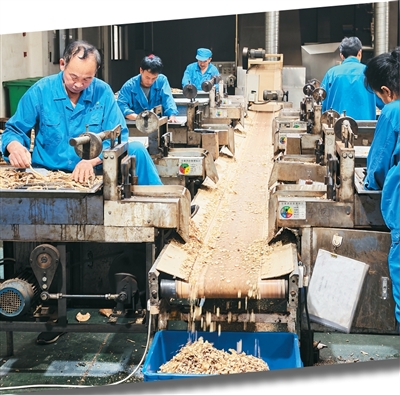
Workers prepare traditional Chinese medicine products at Anhui Shenglin Pharmaceutical Industry Co., Ltd. in Bozhou, east China's Anhui Province. (People's Daily Overseas Edition/Luo Yangqi)
In 2025, the city's modern traditional Chinese medicine (TCM) and health industry generated an output value of 230.18 billion yuan, with pharmaceutical manufacturers above designated size contributing 45.84 billion yuan.
At the warehouse of Anhui Shenglin Pharmaceutical Industry Co., Ltd. in Bozhou's high-tech zone, workers loaded ready-for-use TCM products bearing Korean-language labels bound for South Korea. The company exports more than 200 varieties of ready-for-use TCM products to several countries and regions, and recorded total trade exceeding 100 million yuan last year.
"More and more countries and people have begun embracing TCM in recent years," said Yang Haifeng, head of the company's international trade department, noting a steady rise in overseas orders for ready-for-use TCM.
Shenglin's export journey reflects the industry's broader shift from primary processing to higher-value, deep processing.
The company has filed more than 20 patents and developed a proprietary processing method that ensures its ready-for-use TCM products meet export quality standards for uniformity, appearance and freshness.
Sound product quality, backed by a raft of supportive policies, has accelerated the pace at which Bozhou's medicines are going global, said an official with the city's bureau of pharmaceutical industry development.
A Bozhou-developed herbal granule product has been sold through German pharmacy chains for more than six years, with nearly 200,000 bottles sold at 39.9 euros ($44) each. Additionally, 193 TCM formula granule varieties have passed German regulatory inspections and entered the European Union market as registered medicines. In 2025, Bozhou's total import-export volume of Chinese medicinal herbs reached 770 million yuan, accounting for nearly 90 percent of Anhui Province's total.
Wang Peng, general manager of Anhui Weibo Pharmaceutical Co., Ltd. in Bozhou's Qiaocheng district, has spent a decade building his company's export business from scratch to more than $4 million annually. The company ships the city's ready-for-use TCM products to Vietnam, Thailand, Malaysia and other countries.
The company's herbal products, including white peony root, white atractylodes rhizome, licorice, and rehmannia glutinosa libosch, have become well-recognized names in Southeast Asian markets. In 2025, the company's total import-export volume exceeded $4 million, with its products reaching more than 10 countries and regions.
In September 2024, the second China (Bozhou)-RCEP Traditional Chinese Medicine Industry Cooperation Conference was held, at which the RCEP Traditional Chinese Medicine Industry Cooperation Council was established with its permanent secretariat based in Bozhou.
The council has opened channels for investment and market development across Regional Comprehensive Economic Partnership (RCEP) member states. Today, Bozhou operates 15 overseas offices in RCEP countries, and 210 local enterprises conduct trade with these countries.
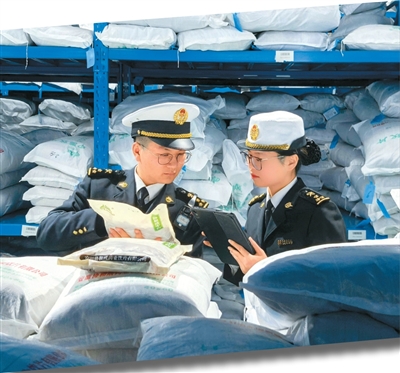
Bozhou Customs officers conduct an on-site inspection of traditional Chinese medicine herbs designated for export. (Photo courtesy of Bozhou Customs)
Behind the export push is a targeted support system. Bozhou Customs has provided company-specific services and held regular roundtable sessions with key local TCM import and export enterprises, gathering and analyzing trade data to help them expand in both domestic and overseas markets.