


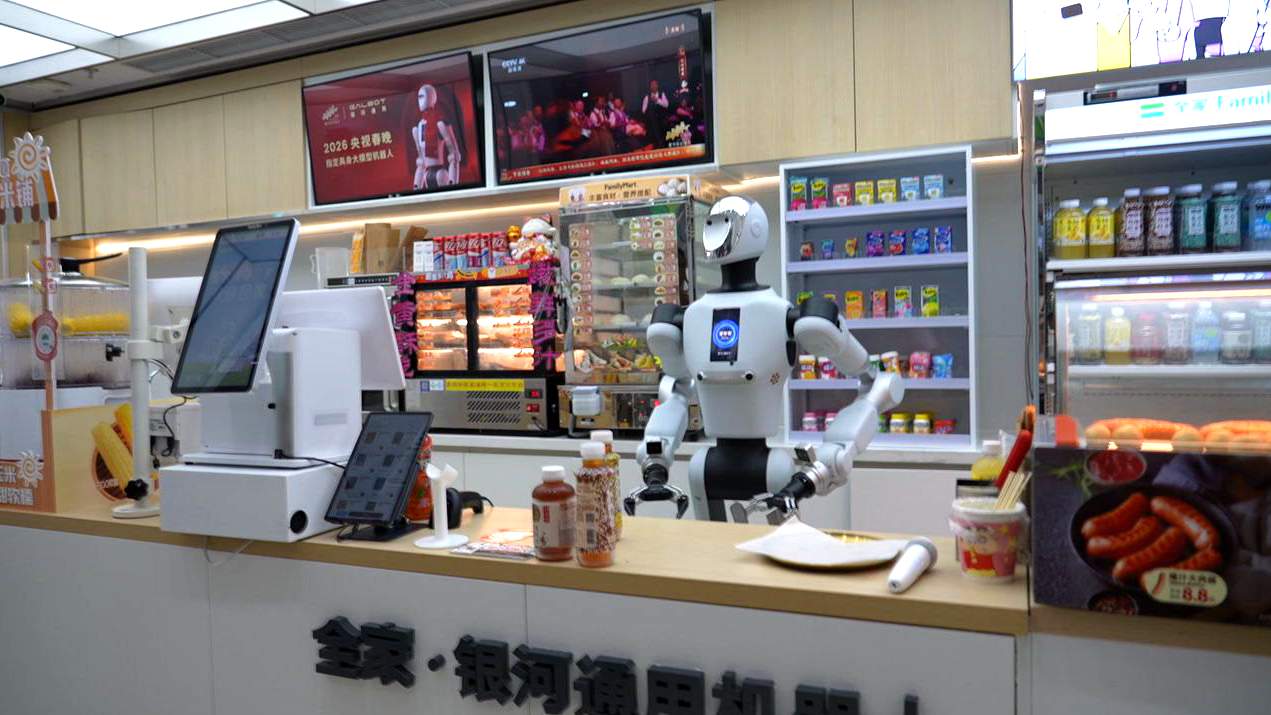
Galbot G1 in daily operation at a FamilyMart store in Beijing's Zhongguancun. (Photo: CGTN)
Over the next five years, China aims to cultivate a group of emerging pillar industries with strong growth potential, advanced technologies and broad industrial penetration. Its 15th Five-Year Plan identifies eight strategic emerging sectors for accelerated development: next-generation information technology, new energy, advanced materials, intelligent connected new energy vehicles, robotics, biomedicine, high-end equipment and aerospace and aviation.
Following the national strategy, Beijing is actively advancing its industrial development roadmap. The city has launched a three-year action plan aimed at building an embodied AI industrial ecosystem with international influence by 2027. At a recent municipal government executive meeting, officials emphasized the need to foster emerging pillar industries such as artificial intelligence (AI), robotics and intelligent manufacturing, to develop a modern high-tech industrial system driven by competitive new quality productive forces.
As China's leading center for technological innovation, Beijing holds unique advantages in developing embodied intelligence robotics. According to Zhai Tianrui, deputy director of the Beijing Municipal Science and Technology Commission and the Zhongguancun Administrative Commission, the city's technology contract transaction value approached 1 trillion yuan (about $147.6 billion) in 2025. Beijing is also home to more than 2,500 AI enterprises, with the largest number of large AI models in the country. The city has built a comprehensive innovation ecosystem to support both R&D and industrial deployment of embodied intelligence technologies.
Embodied intelligence, which integrates AI with robotics, enables robots to perceive, understand, decide and act autonomously in the physical world. A key technical challenge in this field is generalization, the ability to perform diverse tasks reliably in complex, unstructured environments. Chinese companies are leveraging large-scale local datasets and self-developed AI models to address this challenge and continuously improve robots' real-world operational capabilities.
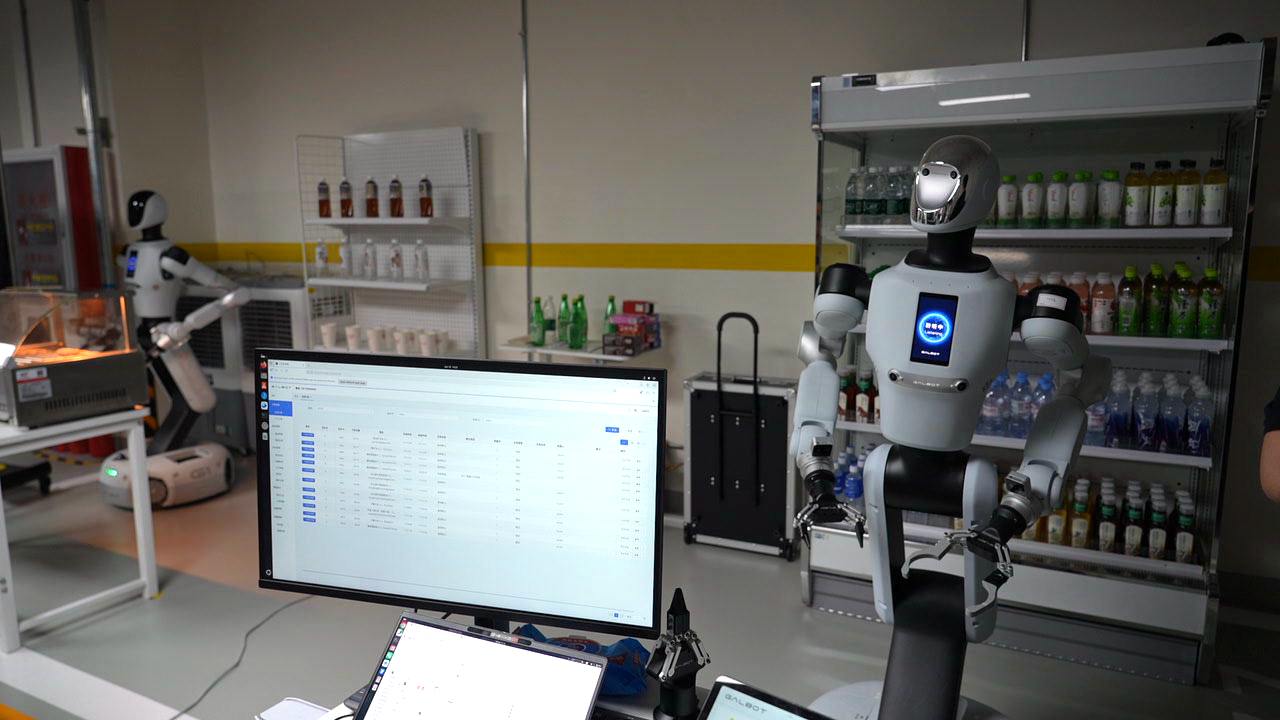
The Galbot G1 robot provide service for customers at a local store. (Photo: CGTN)
At a FamilyMart store in Beijing's Zhongguancun, Galbot G1, a humanoid robot developed by Beijing Galaxy General Robot Co., Ltd. (Galbot), is now in daily operation. Responding to voice commands, the robot retrieves drinks and snacks for customers, marking the first time that an embodied intelligence robot has entered the daily operations of a global convenience store, moving from demonstration to continuous service.
The robot can autonomously handle high-frequency retail tasks, such as retrieving and delivering drinks, grilled items and coffee, and managing items of varying shapes, temperatures and packaging, helping reduce staff workload in one of the most dynamic and labor-intensive retail environments.
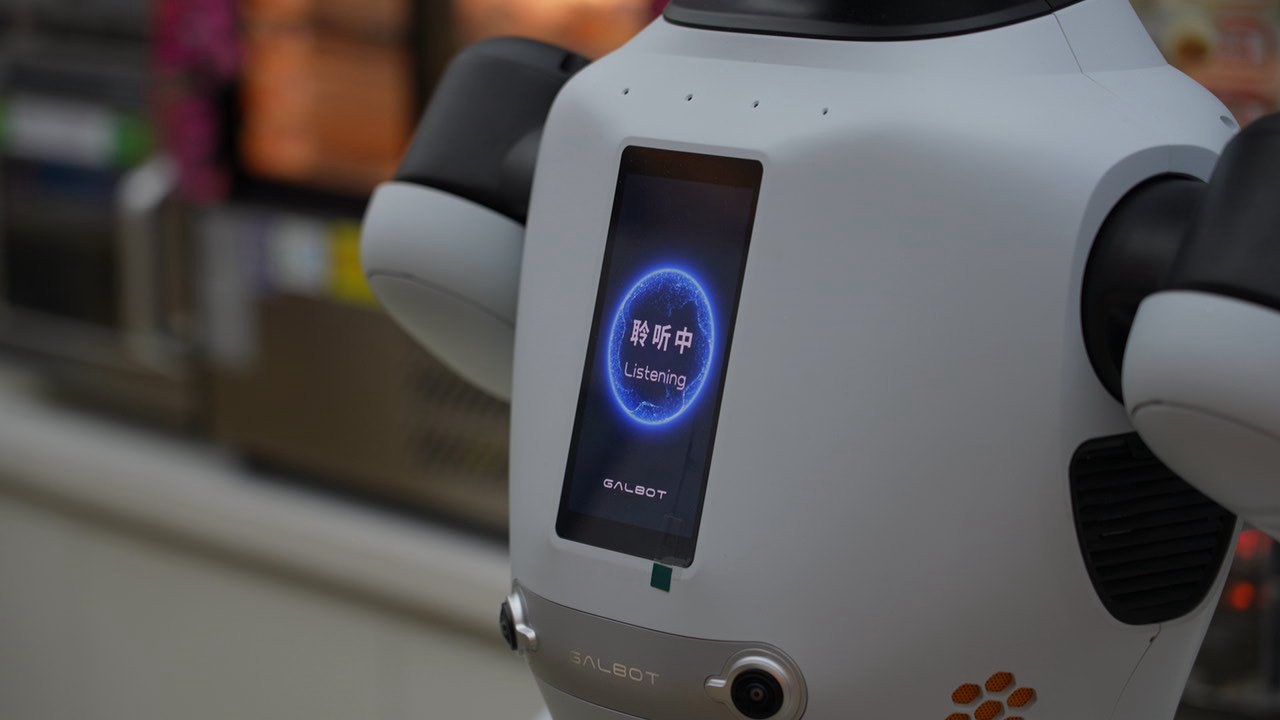
The Galbot G1 robot "listening" to customers. (Photo: CGTN)
According to Galbot co-founder Zhang Zhizheng, the robot's performance is powered by the company's self-developed "AstraBrain" system, the world's first end-to-end humanoid embodied AI architecture integrating brain (task planning), cerebellum (motion control) and neural control (dexterous manipulation). Supported by the company's "AstraSynth" data pyramid, which combines internet data, human behavioral data, simulation data, teleoperation data and real-world feedback, the system enables real-time intent understanding, path planning and action execution, realizing strong task generalization in complex, unstructured environments.
"In the past, robots could only perform predefined tasks in structured environments. Now, embodied intelligence robots can adjust strategies in real time across different scenarios. They truly have a 'brain,'" the company noted.
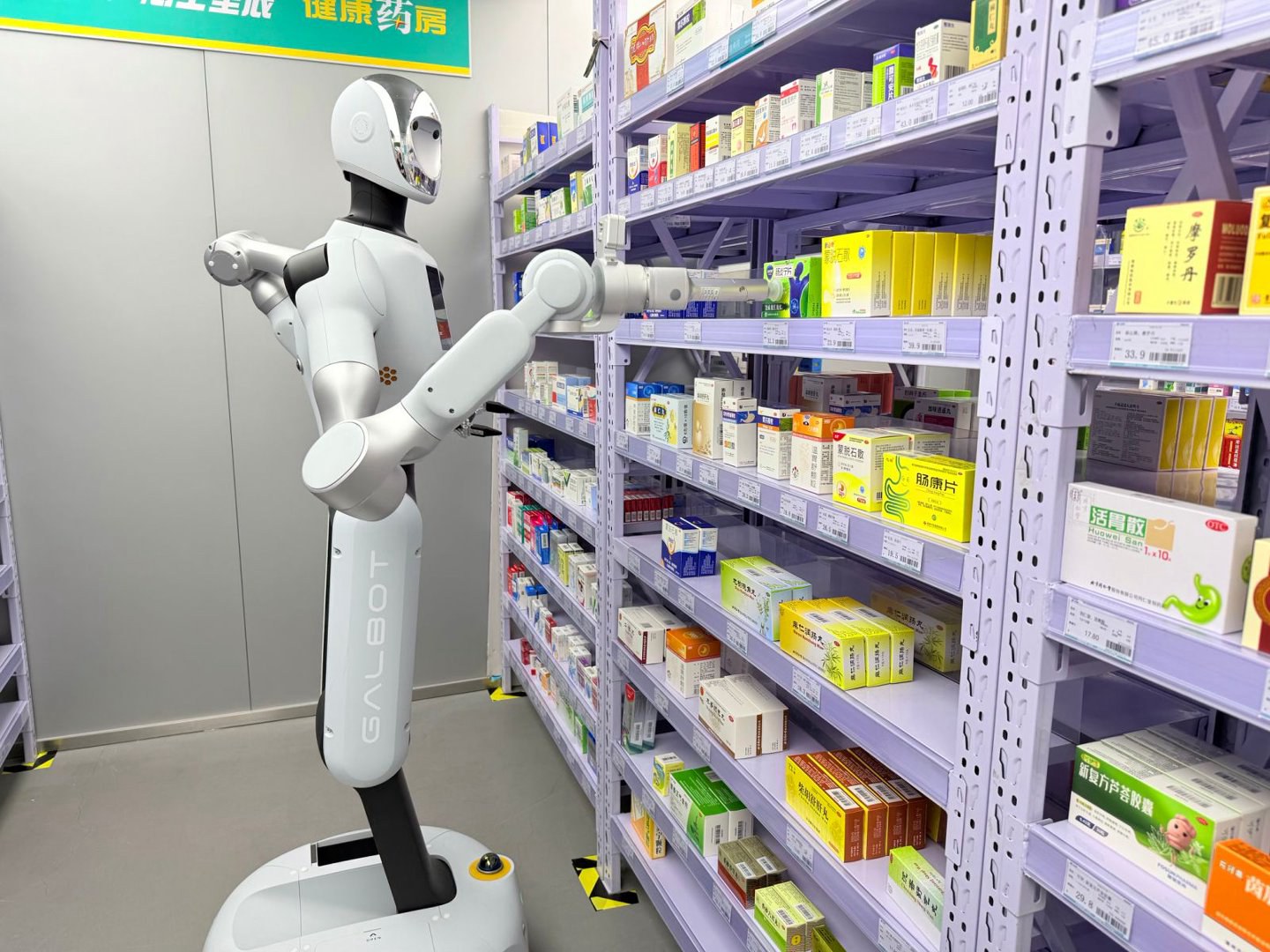
The Galbot G1 robot can also work in a pharmacy. (Photo: CGTN)
Logistics has also emerged as a key sector for the large-scale deployment of embodied intelligence robots. At the exhibition site of Beijing-based Robot Era, the M7 sorting robot identifies parcels on conveyor belts and dynamically adjusts its grasping actions to complete sorting tasks. The robot can process up to 1,200 parcels per hour, with continuous operational data feeding back into model training to further improve accuracy and stability.
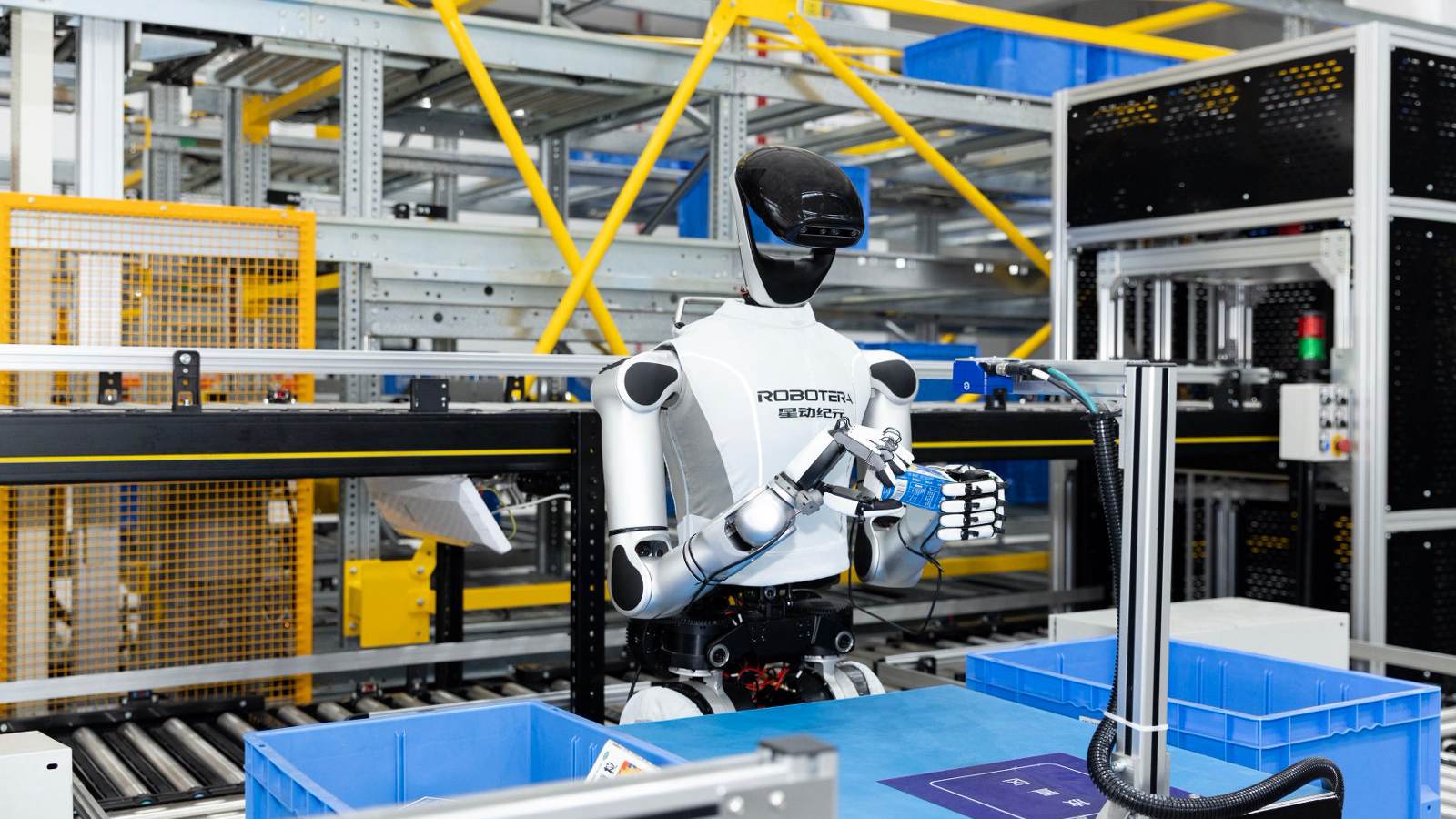
A Robot Era robot sorting parcels. (Photo: CGTN)
Co-founder Chen Jianyu told CGTN that logistics was chosen as a priority for commercialization for three main reasons: strong and urgent demand for intelligent upgrades, a vast market scale potentially exceeding that of the automotive industry, and technical requirements that closely match the current maturity of robotics, making it suitable for large-scale deployment.
The company has secured roughly 1,000 unit orders and is currently delivering deployments. It has also formed partnerships with major logistics operators including China Post and SF Express, with robots now operating across more than 10 logistics centers in five provinces and cities nationwide. In some scenarios, sorting efficiency has reached up to 90% of human-level performance, the company said.
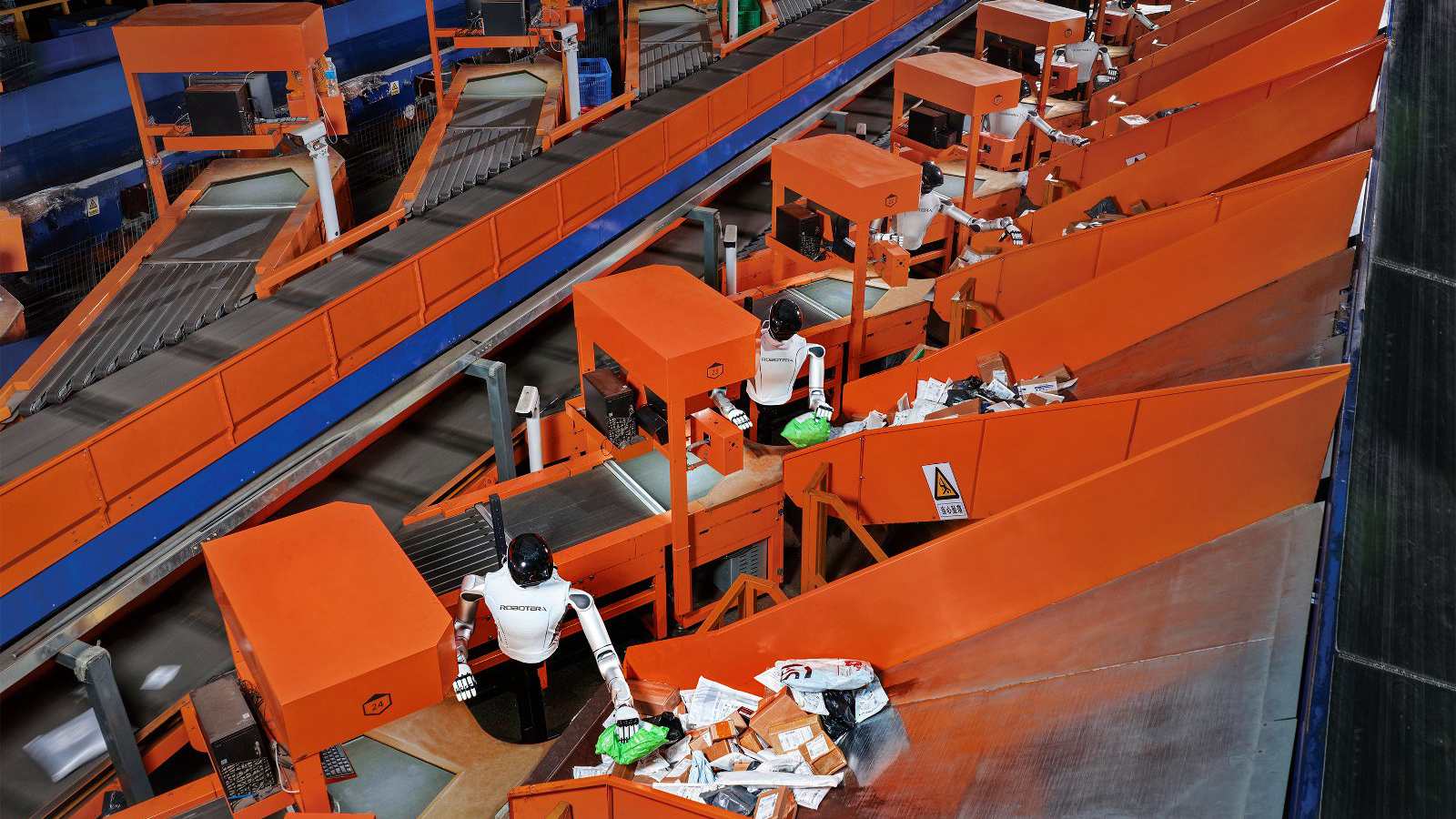
Robot Era robots operating at a logistics sorting line. (Photo: Robot Era)
From breakthroughs in AI models to core technological advances, and from scenario testing to large-scale commercialization, Beijing is leveraging policy support, innovation resources and market demand to accelerate the development of its embodied intelligence robotics industry.