


As artificial intelligence drives up demand for electricity-hungry data centers, North China's Inner Mongolia autonomous region is seeking to turn its vast renewable energy resources into a competitive edge in green computing.
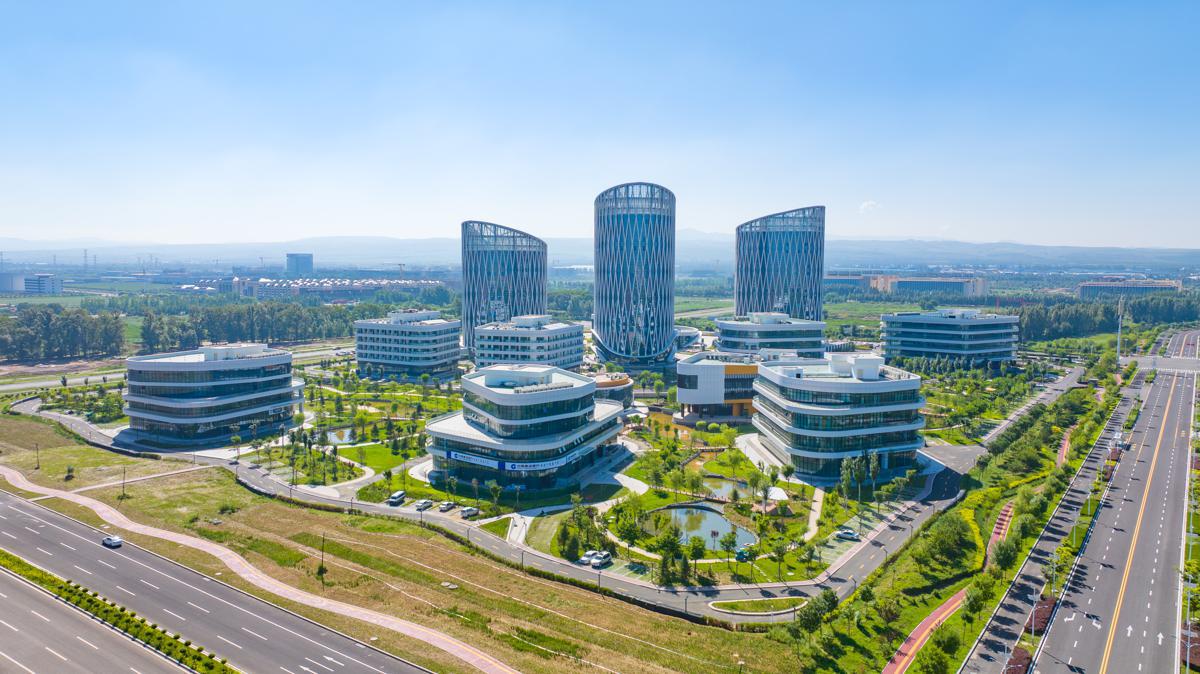
The Talent Innovation Valley in Horinger New Area, Hohhot, Inner Mongolia autonomous region. The area is developing a green computing and AI industry cluster supported by renewable power and low-latency networks. (Photo provided to chinadaily.com.cn)
At a recent news conference attended by domestic and international media, local officials cited International Energy Agency data showing that data centers accounted for about 1.5 percent of global electricity consumption in 2024, with their electricity use projected to more than double by 2030.
The rapid expansion of AI has made power supply, cost and carbon emissions key concerns for the industry.
"The growing demand for computing power in the AI era is underpinned by electricity," Huang Zhiqiang, executive vice-chairman of the region, said. He said Inner Mongolia aims to shift from exporting resources to empowering computing, turning its wind and solar resources into electricity and then into computing capacity.
As of May 2026, the region's total computing power had reached 315,000 petaflops, including 297,000 petaflops of intelligent computing power, accounting for about one-seventh of China's total.
The Horinger Data Center Cluster, which includes major data center parks in Hohhot and Ulanqab, had 291,000 petaflops of total computing capacity and 273,000 petaflops of intelligent computing capacity.
As one of China's major data center clusters, it has attracted the country's major telecom operators, leading technology companies, national financial institutions and other data center operators.
At Horinger New Area, data centers use more than 80 percent green power, according to Cao Zhanwei, director of the local Enterprise Development Service Center. Cao said electricity accounts for 60 to 70 percent of a data center's operating costs, making stable and competitively priced power a key factor in attracting investment.
That power advantage is also helping the area look beyond data centers themselves.
"The area is also trying to build a broader industrial ecosystem that links upstream equipment manufacturing, midstream data centers and downstream data applications," Cao said.
Local authorities said Inner Mongolia plans to further integrate into China's national computing network, expand green computing infrastructure and develop itself into a base for "green computing power plus AI" applications.
Under preliminary plans, Inner Mongolia aims by 2030 to deploy around 50 general-purpose and industry-specific large models and create 100 typical AI application scenarios.