


For villagers in the hilly regions of Myanmar's Shan State, access to clean drinking water was once a daily challenge. They had to walk for hours to collect water from lakes or natural springs, and waterborne illnesses were widespread. Today, taps deliver clean water treated through a filtration system within minutes' reach, thanks to projects supported by the Lancang-Mekong Cooperation (LMC) Special Fund.
As communities are benefiting from such programs, China and Myanmar took another step forward under the decade-long LMC mechanism on May 28, as the agreement on 2026 LMC Special Fund projects was signed in Nay Pyi Taw.
Since its launch in 2016, the mechanism has supported numerous projects across countries along the Langcang-Mekong River, helping enhance economic ties, improve livelihoods and strengthen people-to-people bonds among the six member countries.
China and Myanmar are close neighbors connected by mountains and rivers, sharing a deep "pauk-phaw" friendship. In the Myanmar language, "pauk-phaw" refers to siblings born of the same mother. The term reflects the unique bond between the two peoples.
Rooted in centuries of friendly exchanges and characterized by mutual trust and shared development, the friendship has stood the test of time. As China and Myanmar deepen partnership across a wide range of fields, the enduring bond is set to open a new chapter in building a shared future and promoting common prosperity.
Small projects, big impact
Myanmar has received support for 132 projects across eight batches under the LMC Special Fund by 2025 – the highest number among the Mekong countries.
In Shan State, nearly 2,000 villagers from Kone Chan, Sin Taung and Kyauktaw villages gained access to safe drinking water through LMC-funded water supply systems.
Similar movements have taken root in other parts of the country, helping address the most pressing challenges facing local residents such as access to clean water and electricity, poverty alleviation, agricultural development and vocational training.
Chinese Ambassador to Myanmar Ma Jia described the initiatives as "small and beautiful" projects – community-focused programs that may be modest in scale but deliver tangible and lasting improvements to people's daily lives.
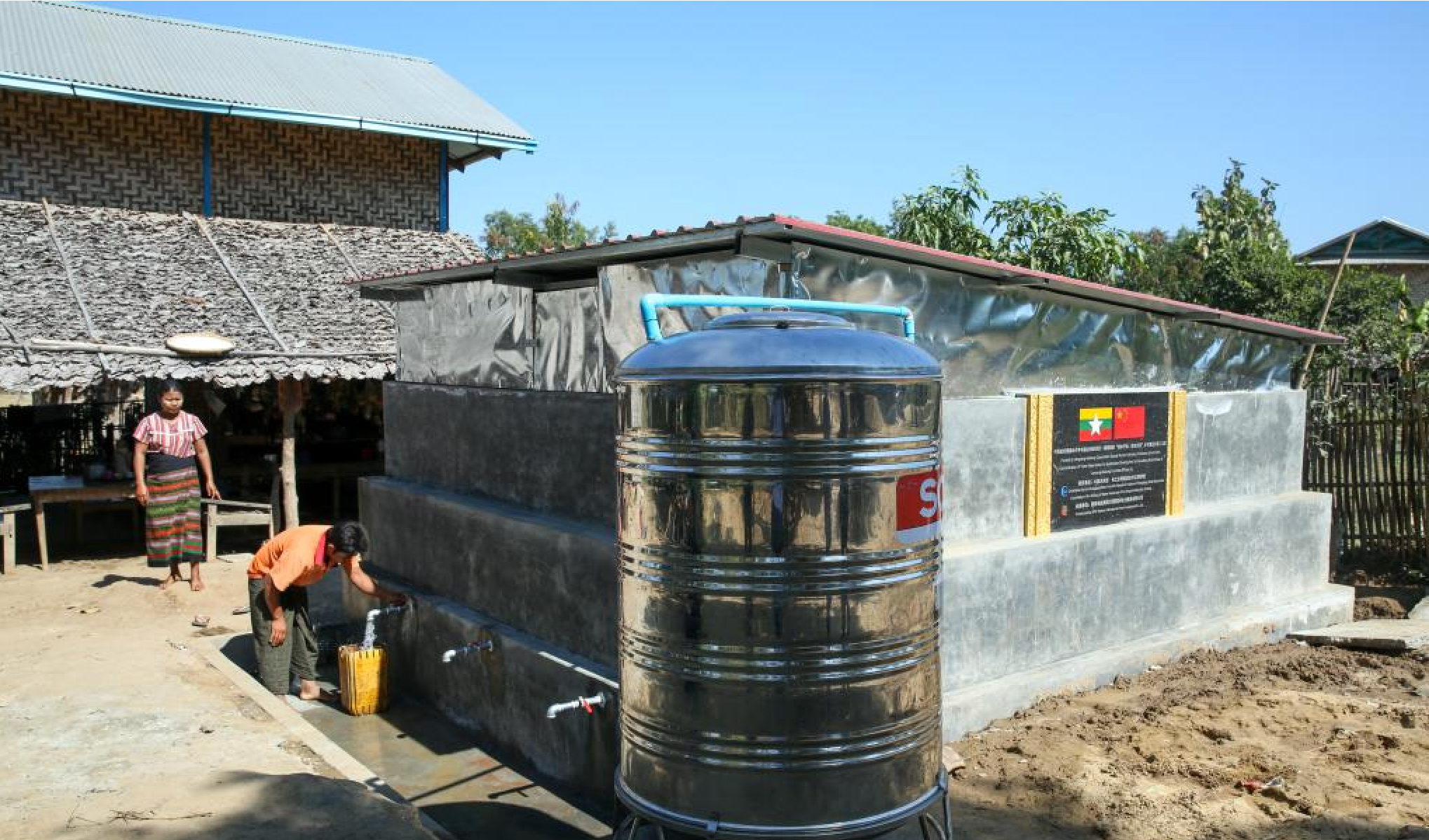
A villager collects water from a water storage tank aided by Lancang-Mekong Cooperation (LMC) Special Fund at Aung Thar village in Lewe township, Nay Pyi Taw, Myanmar, December 27, 2024. /Xinhua
"They installed high-quality pipelines, built a filtration system and a water storage tank. And that ensured that every household in our village receives reliable water supply," said Sai Khaung Hla from Loilem township in Shan State.
In southern Myanmar's Tanintharyi region, solar-powered microgrids now provide 24-hour electricity to more than 2,700 residents, reducing energy costs by over 60%. Other agricultural programs involving coffee, rubber, fruit cultivation, sericulture and aquaculture have distributed quality seedlings, provided technical training and created employment opportunities for tens of thousands of farmers.
According to Myanmar official data, LMC projects implemented between 2017 and 2025 were valued at about $38.6 million, with more than 100 projects already completed.
Myanmar's Minister for Foreign Affairs Tin Maung Swe has described the LMC as one of the most effective regional cooperation mechanisms, noting that it has made significant contributions to the economic and social development within the region.
Belt and Road cooperation enhances connectivity
Sharing a border of more than 2,000 kilometers, China and Myanmar are natural partners in advancing regional connectivity and common development. Over the years, the two countries have achieved substantial results through cooperation under the Belt and Road Initiative (BRI).
The China-Myanmar Economic Corridor, one of the flagship projects of Belt and Road cooperation, stretches from China's Yunnan Province through the China-Myanmar border to Mandalay, the second-largest city of Myanmar, then extending southward to the New Yangon City and the Kyaukphyu Special Economic Zone on Myanmar's western coast.
Major projects under the corridor, including the China-Myanmar oil and gas pipelines and the Kyaukphyu Special Economic Zone, have made steady progress in recent years. Through investments in transport, energy and other infrastructure, the corridor has promoted regional integration and created new opportunities for economic growth.
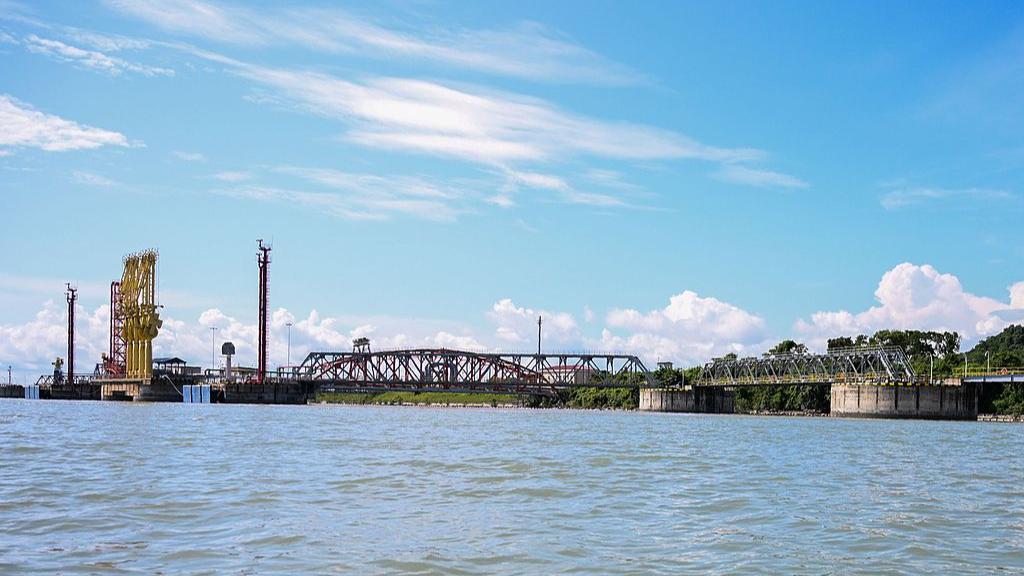
A file photo showing China-Myanmar oil and gas pipelines beginning at Made Island, Kyaukphyu, Rakhine State, Myanmar. /VCG
The elevated connectivity has also strengthened economic and trade relations. The two sides have deepened collaboration across a wide range of sectors, ranging from agriculture, manufacturing to mining and power generation.
The textile and garment industry remains one of Myanmar's key economic pillars and a major source of employment and foreign exchange earnings. Ma Shwe Hla, an industry representative from Myanmar Texmall Group, said Chinese investment, technology and professional expertise have played a significant role in the sector's development, providing strong support for industrial upgrading and business growth.
With such boosted ties, China has remained Myanmar's largest trading partner and second-largest source of foreign investment in recent years. Bilateral trade reached $19.4 billion in 2025, up 19.1% year on year, as China's exports to Myanmar totaled $11.36 billion and imports from Myanmar reached $8.04 billion, according to Chinese Ministry of Foreign Affairs.