



A speaker presents new AI research during the 8th Beijing Academy of AI Conference in Beijing, China, June 2026. (Photo: BAAI)
Artificial intelligence (AI) has become increasingly capable of generating text, images and video. But can AI understand how the physical world works?
Researchers at the Beijing Academy of Artificial Intelligence (BAAI) believe that may be one of the next major frontiers in AI development.
At the 8th Beijing Academy of AI Conference launched on Friday, BAAI unveiled Physis-v0.1, which it describes as the world's first general world foundation model.
Unlike large language models that primarily learn patterns from text, world models are designed to learn and predict how the real world behaves.
Researchers say such systems could help AI applications understand physical laws, spatial relationships and common-sense knowledge while integrating information from multiple sources, including text, images and videos.
The goal is to build a model of how the world works. Just as humans build mental models to anticipate how objects move, interact or break, world models aim to enable AI systems to predict what might happen next and make decisions based on an understanding of cause and effect.
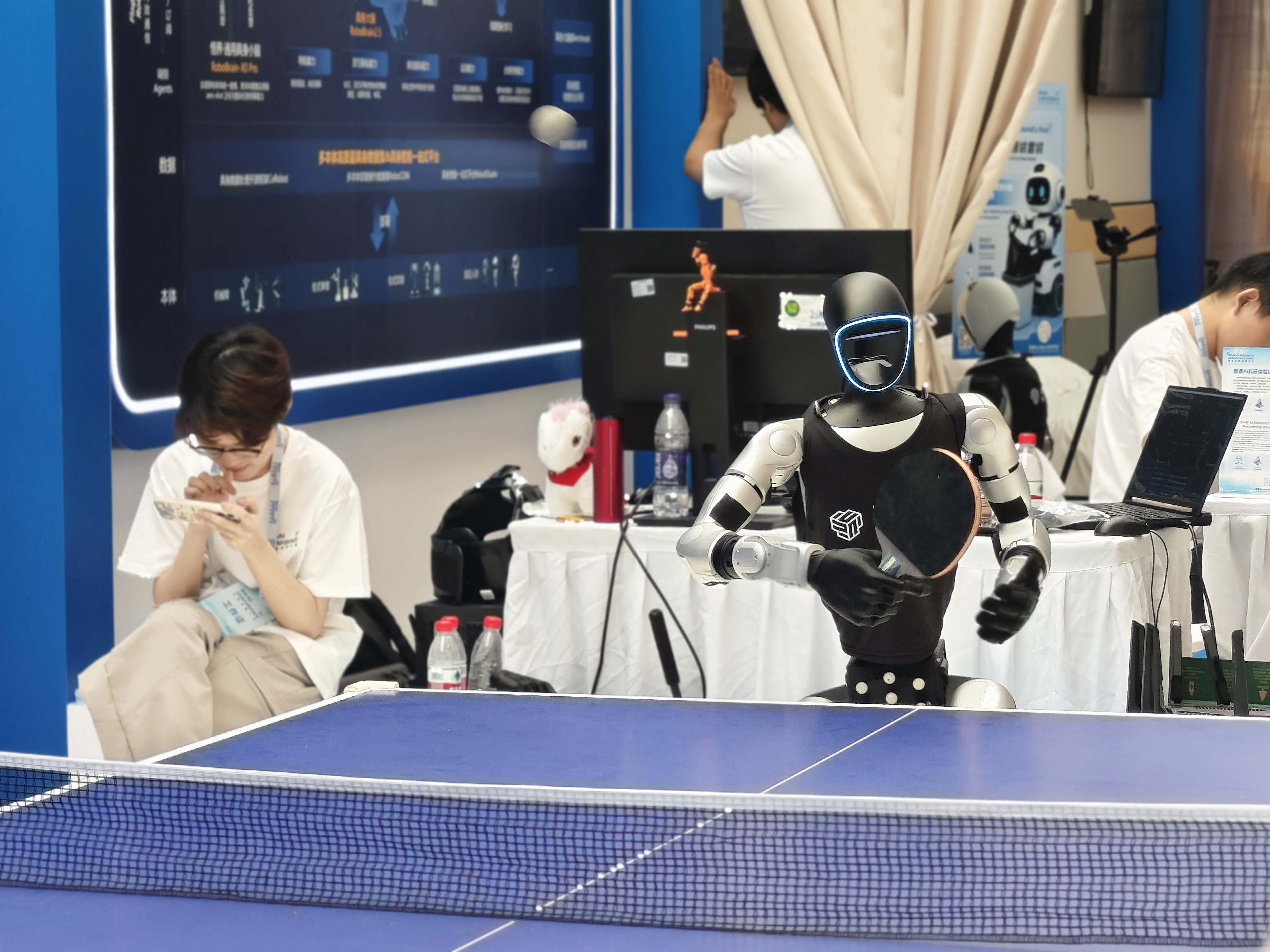
A humanoid robot plays table tennis during the 8th Beijing Academy of AI Conference in Beijing, China, June 12, 2026. (Photo: VCG)
Wang Zhongyuan, president of BAAI, said current AI systems still face significant limitations when deployed in real-world environments.
For example, humans can instinctively judge whether an object is fragile or recognize potential hazards in their surroundings, while robots often struggle with such tasks.
Researchers say this challenge has become increasingly important as AI moves beyond digital applications into robotics and other real-world settings. They see embodied AI and robotics as among the most critical application areas for world models.
Wang said future demand is also expected to grow in fields such as scientific research, simulation and digital twins, where AI systems need to model complex real-world processes before taking action.
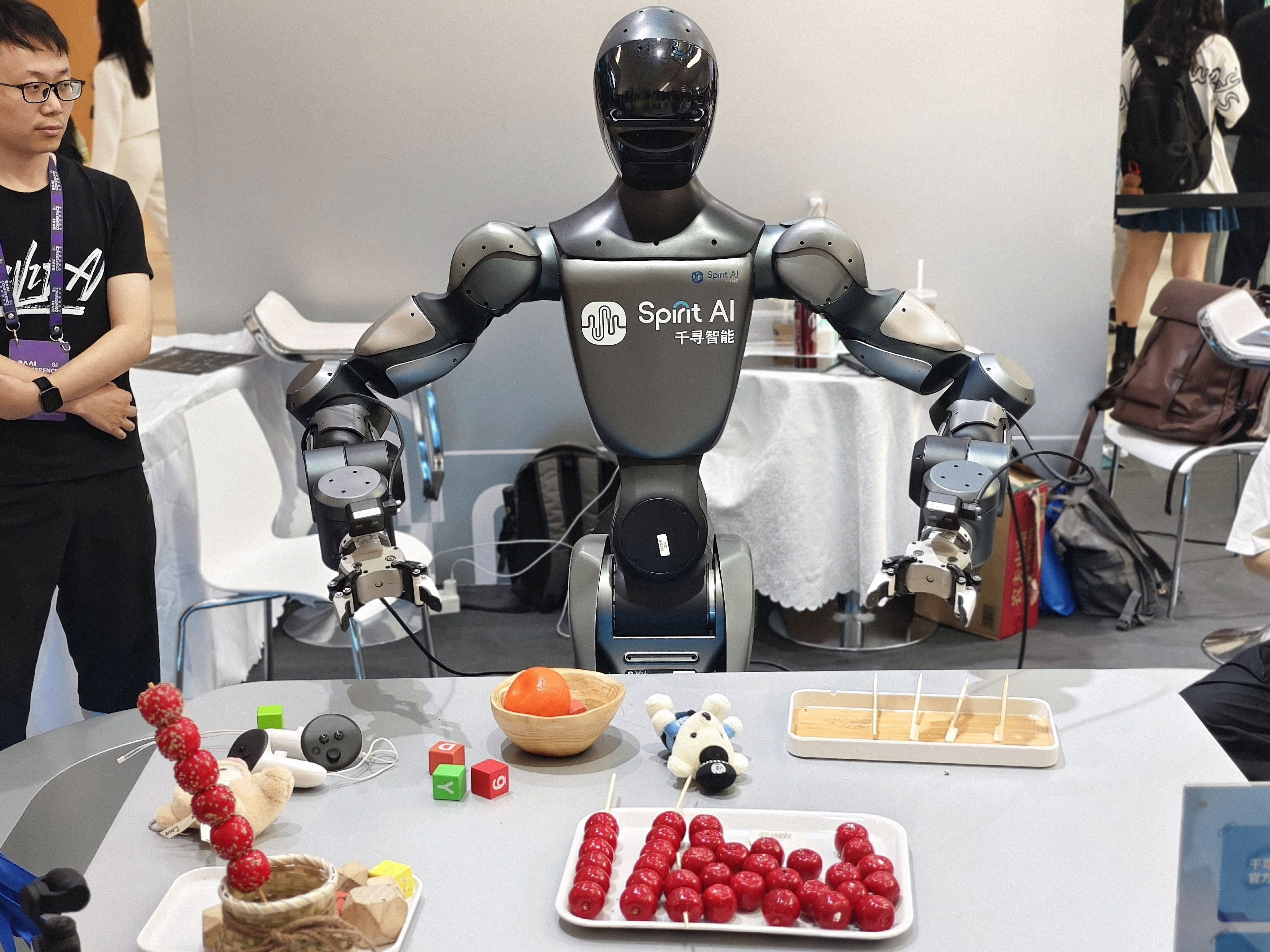
A humanoid robot demonstrates object manipulation at the 8th Beijing Academy of AI Conference in Beijing, China, June 12, 2026. (Photo: VCG)
Industry experts believe advances in world models could mark a new phase in AI development. While large language models have transformed how machines process information, world models aim to help AI reason about and interact with the world itself.
Andrew Barto, a Turing Award laureate and professor emeritus at the University of Massachusetts Amherst, said combining the computational capabilities of deep reinforcement learning with growing knowledge of the brain's reward systems could help drive the next wave of progress in AI.
The conference brought together researchers, AI industry leaders and young scientists to discuss topics including world models, AI agents, embodied intelligence and AI safety.