


Sam's Club China has replaced its chairman following a regulatory interview with China's top market regulator over food safety concerns, according to corporate filings.
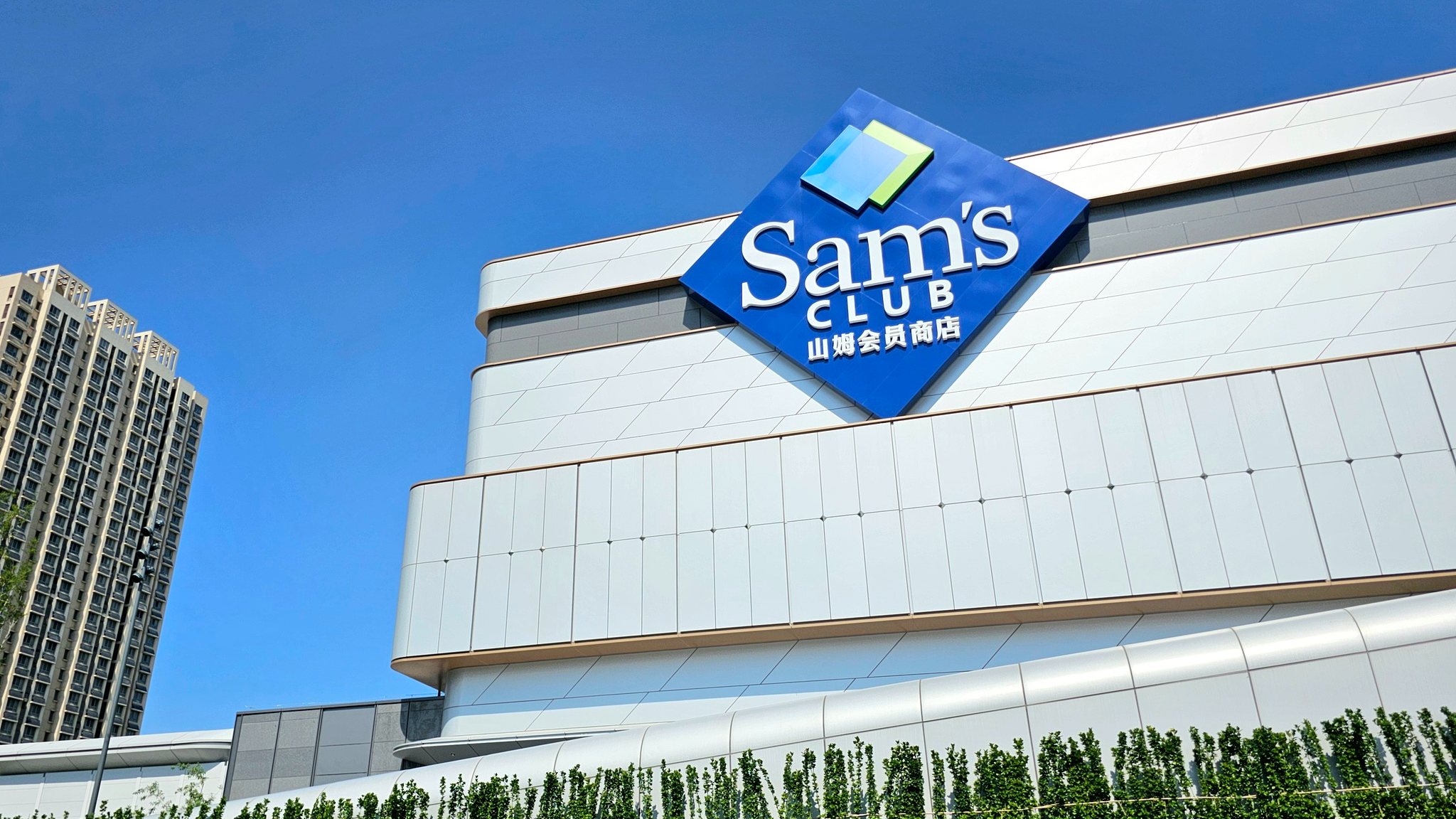
A Sam's Club store operated by Walmart China. (File photo: VCG)
Walmart (China) Investment, the entity overseeing the warehouse club, or Sam's Club, business in China, updated its registration on June 15, showing that Muk Sook Yee had stepped down as legal representative and chairman, and Liu Peng had been appointed to both roles, according to data from Tianyancha, China's corporate information provider, said reports.
The change came on the same day the State Administration for Market Regulation, or SAMR, summoned Walmart (China) Investment's local unit for an interview, citing food safety issues identified through regulatory inspections and media reports across Sam's Club's physical stores and online channels. The regulator said the company must strengthen compliance, improve supply chain oversight, and ensure full accountability for food safety controls.
The company said in a statement that it has accepted the regulator's guidance and established a senior management-led task force to conduct a full review of its food safety systems. It added that it will implement corrective measures across procurement, logistics, and retail operations and report progress to the authorities.
Liu's appointment formalizes his expanded role within the business. He joined Walmart (China) Investment in late 2025, as president of Sam's Club, reporting to Walmart (China) Investment's president and CEO, Zhu Xiaojing.
Liu previously held senior positions at Alibaba Group, including leadership roles across Tmall Global and its cross-border and B2C retail operations.
The leadership change comes as Walmart's business in China continues to post solid growth. In its latest quarterly results, Walmart reported China net sales of about $8 billion, up 22.3 percent year-on-year, with comparable sales rising 13.1 percent driven by strong seasonal demand.
Sam's Club continued its expansion, with new store openings during the past 12 months. The company's e-commerce sales rose 31 percent and now account for roughly half of Walmart's China revenue.