


June 17 marks World Day to Combat Desertification and Drought, under the 2026 theme, "Rangelands: Recognize. Respect. Restore."
Rangelands cover more than half of the Earth's land surface and support around two billion people, yet up to half of them are already degraded or at risk. Restoring these landscapes is increasingly important for food security, water security, biodiversity and climate resilience.

A view of the Hulunbuir Grassland in Inner Mongolia Autonomous Region, north China. (Photos: VCG)
According to the National Forestry and Grassland Administration, the country's desertified land is now shrinking by an average of 10 million mu (about 667,000 hectares) annually, compared with an annual expansion of 5.15 million mu at the end of the last century.
Soil wind erosion across China's major deserts and sandy lands has fallen by about 40% since 2000, while forest and grassland coverage in the Three-North Shelterbelt Program region has risen to 40.76%.
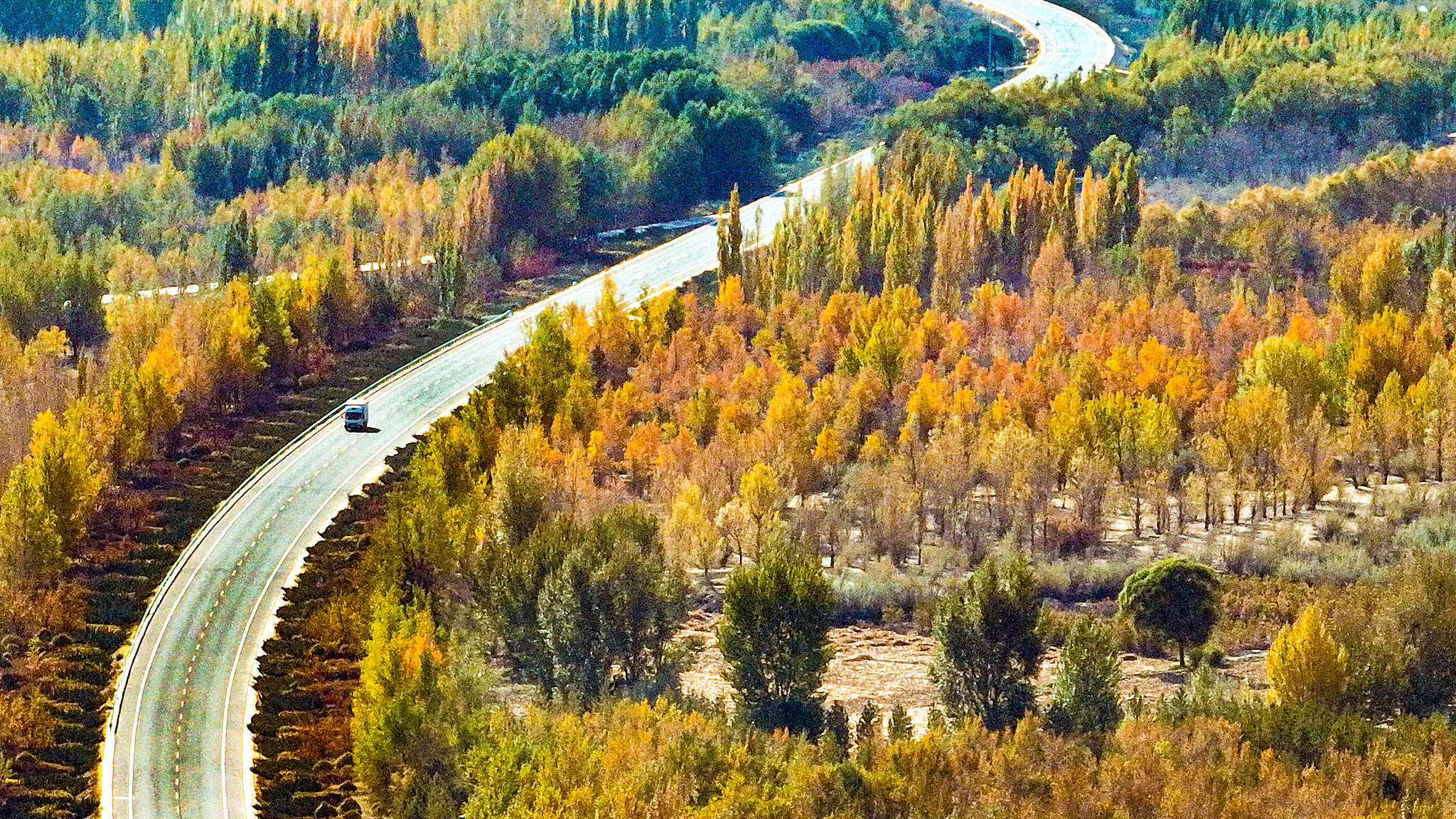
An aerial view of the Three-North Shelterbelt forest network in Linze County, Gansu Province, northwest China, October 20, 2025.
These gains reflect broader improvements in the ecological health of northern China's fragile landscapes.
China's approach has evolved beyond simply stopping sand movement, with ecological restoration increasingly integrated with industrial development and rural livelihoods.
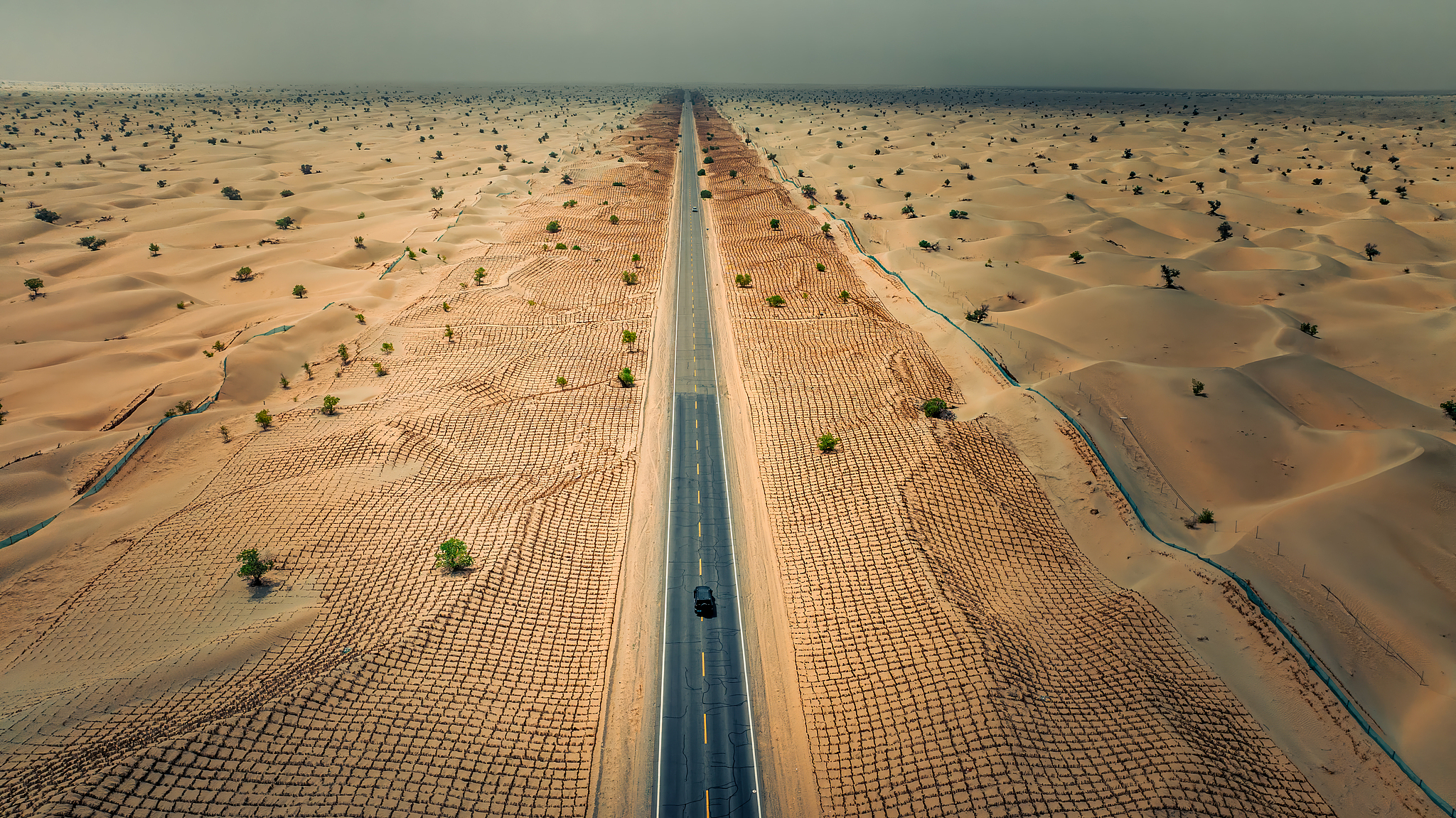
The edge-locking project encircling the Taklimakan Desert in Hotan Prefecture, Xinjiang Uygur Autonomous Region, northwest China, June 16, 2024.
In Hotan, on the southern edge of the Taklimakan Desert in northwest China's Xinjiang Uygur Autonomous region, researchers have promoted a three-dimensional model combining shelter forests, economic crops and under-forest cultivation.
Elsewhere in Xinjiang, medicinal herbs and specialty crops are helping turn desert control into a source of rural prosperity.
Lei Jiaqiang, a researcher at the Xinjiang Institute of Ecology and Geography under the Chinese Academy of Sciences, said China is increasingly pursuing "systematic governance" that combines ecological protection with economic development.
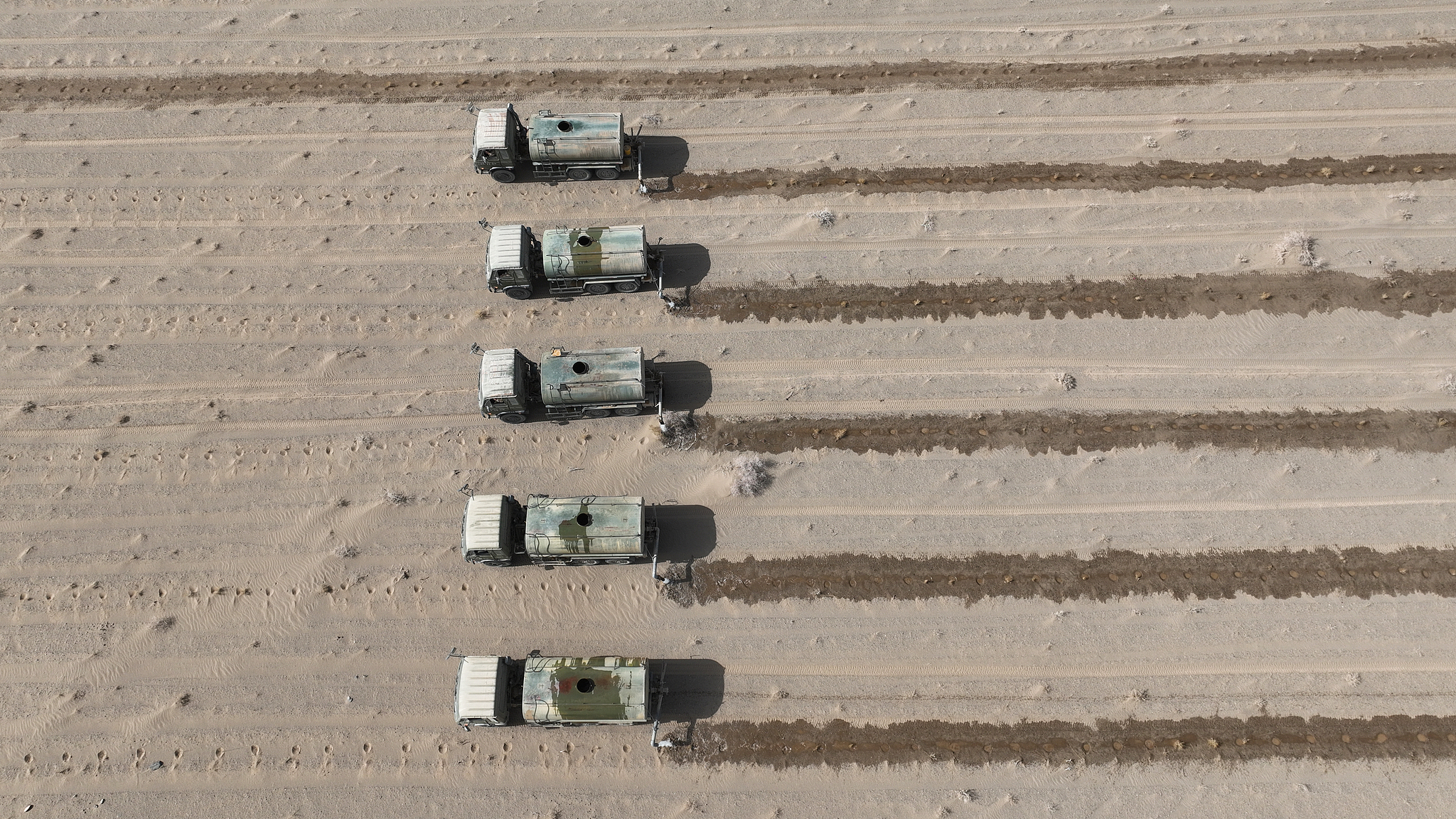
Workers water newly planted saxaul shrubs at a desertification-control site in Jinta County, Gansu Province, northwest China, March 24, 2026.
In Jinta County, northwest China's Gansu Province, extensive shelterbelts of saxaul and other drought-resistant shrubs help stabilize shifting dunes, while medicinal plants such as cistanche generate additional income for local communities. Lei said China's desertification-control efforts increasingly combine ecological restoration with local economic development and livelihood improvement.
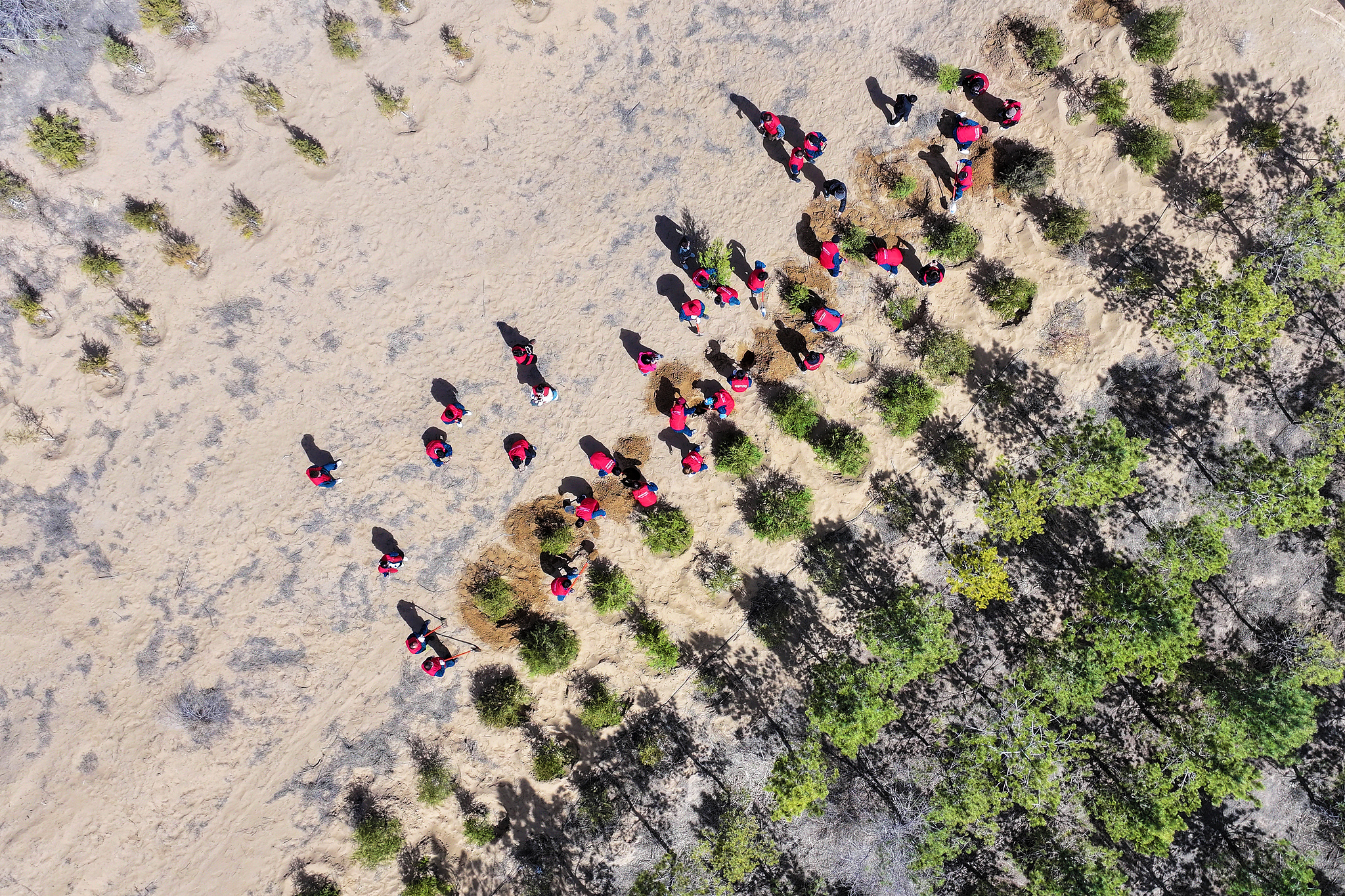
People plant trees on the edge of the Mu Us Sandy Land in Yinchuan, Ningxia Hui Autonomous Region, northwest China, March 28, 2025.
Ningxia Hui Autonomous Region, one of the country's pioneering regions in desertification control, has completed a continuous protective green belt along its section of the Tengger Desert and fully stabilized mobile dunes in the Mu Us Sandy Land.
It has also hosted seven international training programs, providing desertification-control training to participants from 74 countries and regions. China is also sharing desertification-control technologies and experience through cooperation platforms with Central Asia and countries participating in the Belt and Road Initiative.

Strong winds whip up dust across urban areas of Harbin, Heilongjiang Province, northeast China, May 31, 2026.
Yet significant challenges remain. Earlier this year, several dust storms affected northern China, with monitoring indicating that a significant share originated in neighboring Mongolia.
Barron J. Orr, chief scientist of the UN Convention to Combat Desertification (UNCCD), warned that Northeast Asia remains one of the world's major dust-source regions, where climate change and land degradation are increasing wind-erosion risks. He emphasized that stronger early-warning systems, information sharing and technical cooperation among source and downwind countries are essential for reducing future impacts.
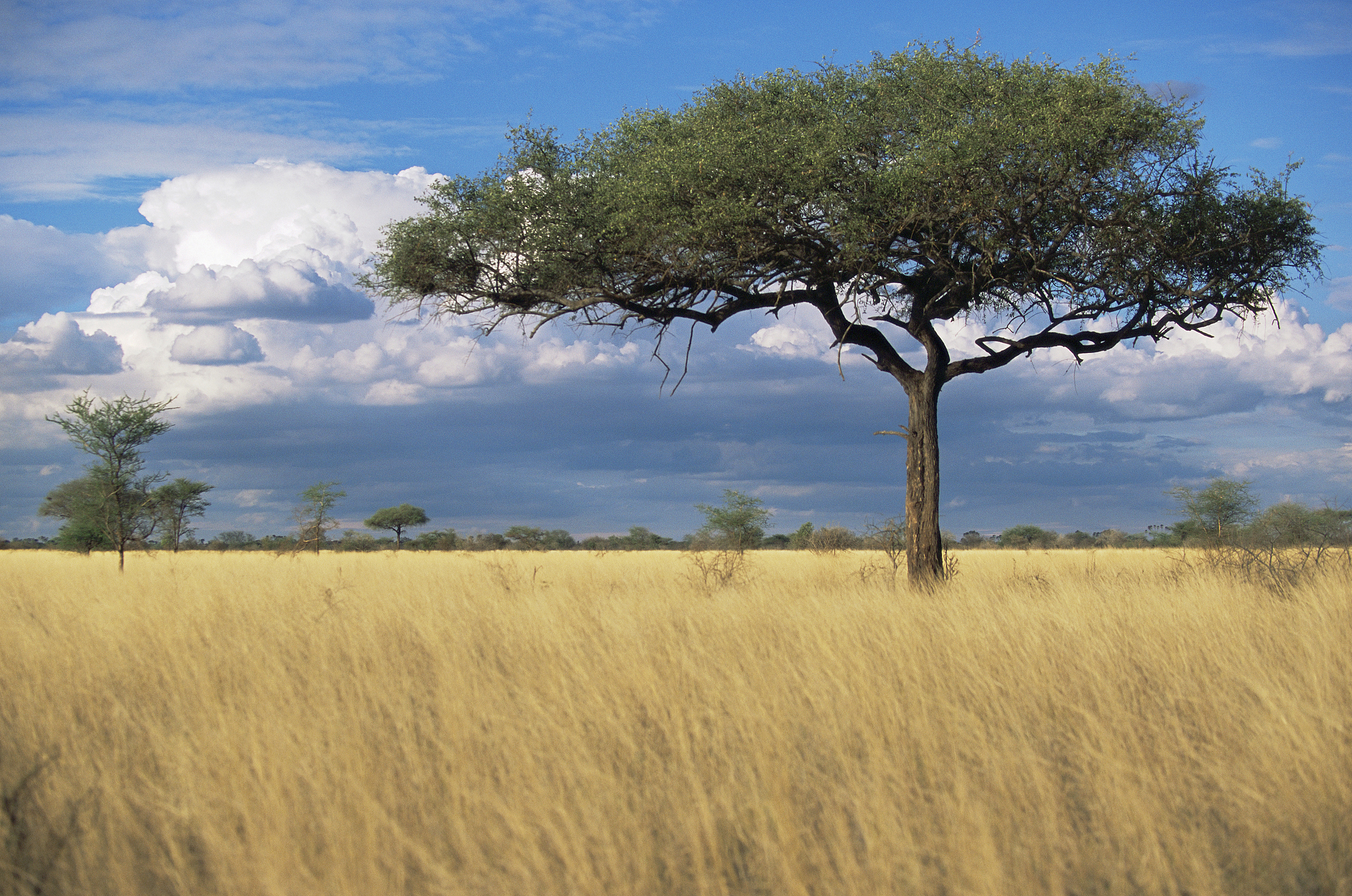
A view of the dry savannah in Meru National Park, Kenya.
Kenya hosts this year's global observance of Desertification and Drought Day, while Mongolia will host UNCCD COP17 later this year, placing rangeland restoration, drought resilience and land degradation high on the international agenda.
China's experience shows that desertification control goes beyond stopping the spread of sand. Increasingly, it is about restoring ecosystems, creating livelihoods and building resilience in regions facing a changing climate.