


China has significantly expanded its climate observation network as extreme weather events become more frequent and severe, launching new satellites, radar systems and ground stations to strengthen its adaptation to climate change, according to the 2025 progress report on China's climate change adaptation.
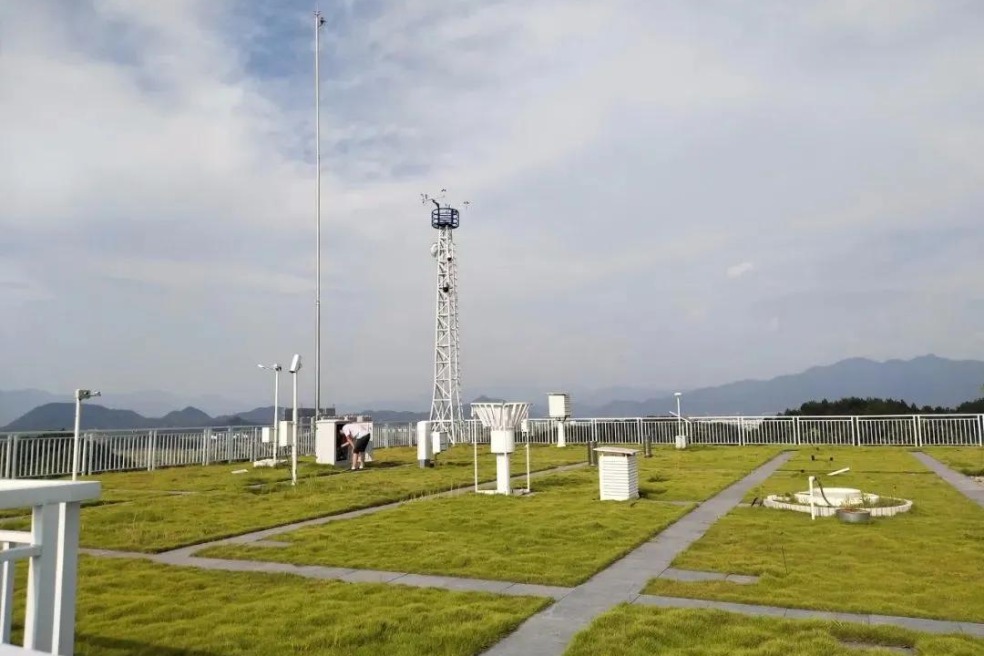
Photo via China Daily
The report, unveiled by the Ministry of Ecology and Environment on Wednesday, which marked the 14th National Low-Carbon Day, detailed advances China has made in strengthening its monitoring network during the 14th Five-Year Plan period (2021-25) as the country seeks to cope with a worsening climate crisis.
China launched six Fengyun meteorological satellites during the period. Its enhanced satellite system now provides services to 133 countries and regions worldwide, the report said.
The report also highlighted a strengthened weather radar network. With 842 radars covering more than 90 percent of populated areas, the network can now identify severe weather events with an accuracy rate of 83 percent.
China has established more than 100,000 ground meteorological observation stations, nine atmospheric baseline stations and 27 national climate observatories, including its first overseas baseline station in Antarctica, according to the report.
It added that the number of jointly built and shared hydrological monitoring stations across government departments has reached 137,000.
The expanded monitoring system comes as China grapples with increasingly volatile weather.
In 2025, the country experienced 40 regional severe convective weather events, above the five-year average, while the national average number of days with gale-force winds — featuring instantaneous wind speeds of 17.2 meters per second or higher — reached 18.6, the highest level since 1991, the report said.
Severe convective weather is characterized by strong winds, hail, thunderstorms and brief but heavy spells of rainfall.
Regional and seasonal droughts have also become more pronounced in China, the report noted. From January to May last year, for instance, Anhui and Jiangsu provinces and the Guangxi Zhuang autonomous region each recorded their highest number of drought days for the period since 1961.
Temperatures remained at record highs, with extreme heat events occurring frequently. The national average temperature in 2025 reached 10.9 C, 1 C above the long-term average and tied with 2024 as the highest on record, the report said.
Speaking at a National Low-Carbon Day event in Nanning, capital of Guangxi, Liu Yang, deputy head of the Ministry of Ecology and Environment's Department of Climate Change, pledged to accelerate upgrades to China's climate adaptation framework to help achieve the country's goal of basically building a climate-resilient society by 2035.
"We will improve the full-cycle mechanism of observation, assessment, action, feedback and enhancement to steadily bolster our ability to prevent and mitigate major climate risks and disasters," she said.